Virology
Viruses
General Characteristics:
Viruses are intracellular(within or inside the cell) obligatory parasites that depend entirely on host cells for reproduction and survival.
They contain either DNA or RNA as their nucleic acid but not both.
Viruses multiply inside host cells by utilizing host cell enzymes and metabolic pathways to replicate their genetic material.
Structurally, viruses are surrounded by a protective protein coat known as a capsid.
They are small enough to pass through bacteriological filters, distinguishing them from larger microorganisms.
Viruses show sensitivity to interferon, a protein that inhibits viral replication.
Viral Components:
Capsids: These are protein shells that encase and protect the genetic material (nucleic acid) of the virus. They are composed of protein subunits called capsomeres.
Nucleic Acids: Viruses can have either single-stranded or double-stranded nucleic acids that carry the genetic instructions for viral replication.
Envelopes: Some viruses have an outer lipid membrane that assists in entering host cells. This envelope may contain spikes, which are carbohydrate-protein complexes that facilitate the binding of the virus to specific receptors on the surface of host cells.
viruses can attack plant cells, animal cells, human cells, and bacteria cells, showcasing their diverse range of hosts and the varying mechanisms by which they can hijack cellular machinery for replication
Morphology of Viruses:
The morphology of viruses can be categorized into different shapes:
Helical viruses: Long rod-like structures, where capsids are hollow cylinders and the protein subunits are spirally arranged. An example is the Ebola virus.
Polyhedral viruses: These viruses have many-sided shapes, showcasing geometric symmetry, with the adenovirus being a notable example.
Enveloped viruses: These have a capsid that is covered by a lipid envelope, adding an additional layer of complexity to their structure.
Complex viruses: These possess a capsid with a tail structure and often exhibit additional features such as asymmetrical shapes and unique surface proteins, which can aid in their infectivity and ability to evade the host's immune system.
Host Range:
The host range of a virus is determined by:
The specific attachment requirements of the virus, which dictate which types of cells the virus can infect.
The availability of cellular factors (enzymes needed for multiplication) necessary for viral multiplication.
Examples of viruses and their host cells include:
Hepatitis B: Primarily infects human liver cells.
Poliovirus: Infects primate small intestinal and nerve cells.
Rabies: Affects various mammal cells.
Bacteriophages: A specific type of virus that infects bacteria, showing a rich diversity in their structure and lifecycle.
General Structure of Viruses:
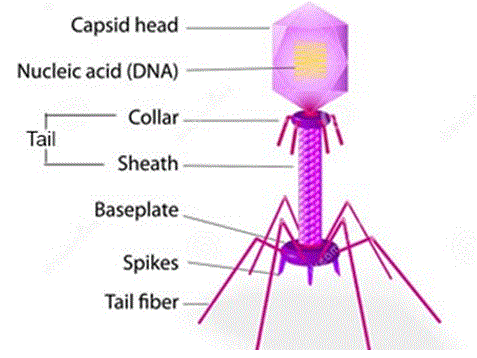
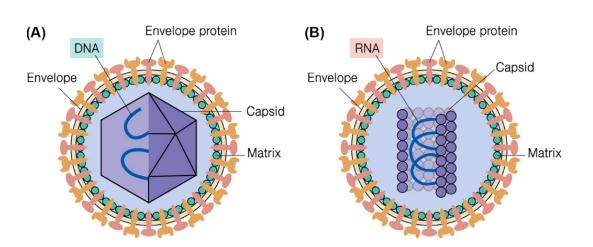
Generally, viruses are very small, typically less than 0.2 μm in diameter. They can only be visualized with an electron microscope due to their size.
Example sizes of viruses include:
Poxvirus: 250 nm
Herpes simplex: 150 nm
HIV: 110 nm (enveloped virus)
Influenza: 100 nm
Adenovirus: 75 nm
Poliomyelitis: 30 nm
Animal and Human Viruses contain spikes made up of glycoproteins and envelopes that are made up of carbohydrates, lipids, and proteins that aid in the attachment and entry of the virus into host cells. These structural components are crucial for the infectivity and immune evasion of the virus.
They also contain spikes that can range between H spikes (hemagglutinin) and N spikes (neuraminidase), which play a significant role in the virus's ability to infect host cells and evade the immune response.
Morphology of Viruses:
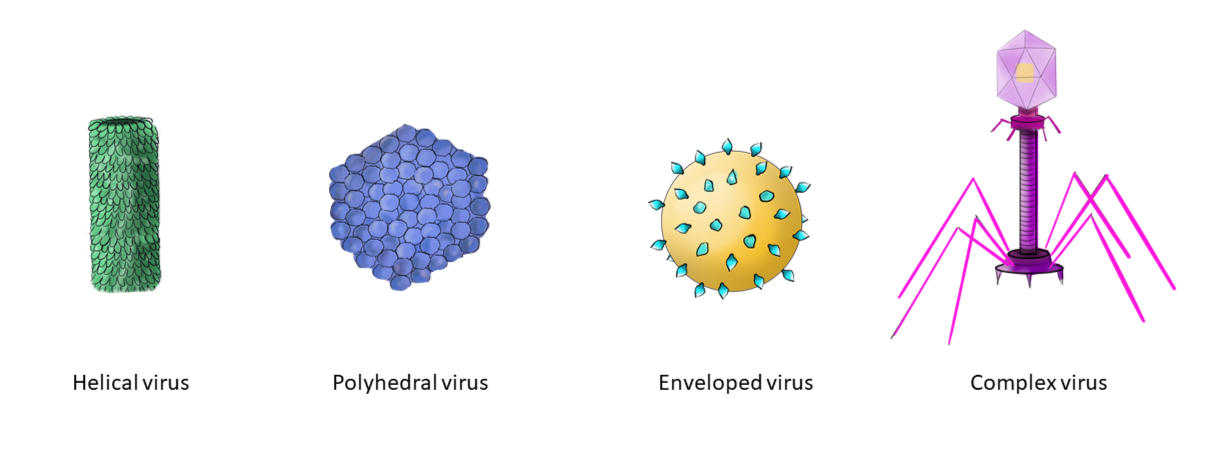
The morphology of viruses can be categorized into different shapes:
Helical viruses: Long rod-like structures, often with a hollow cylindrical capsid (e.g., Ebola virus).
Polyhedral viruses: Many-sided shapes, such as Adenovirus, showcasing geometric symmetry.
Enveloped viruses: These have a capsid that is covered by a lipid envelope, adding an additional layer of complexity.
Complex viruses: These possess a capsid with a tail structure, exemplified by bacteriophages.
Functions of Capsid/Envelope:
The capsid and envelope serve multiple functions including:
Protecting the nucleic acid from degradation in the external environment.
Aiding in the attachment to specific cell surfaces and facilitating the penetration of viral nucleic acid (DNA or RNA) into host cells.
Can be enveloped or non enveloped
Viral Classification:
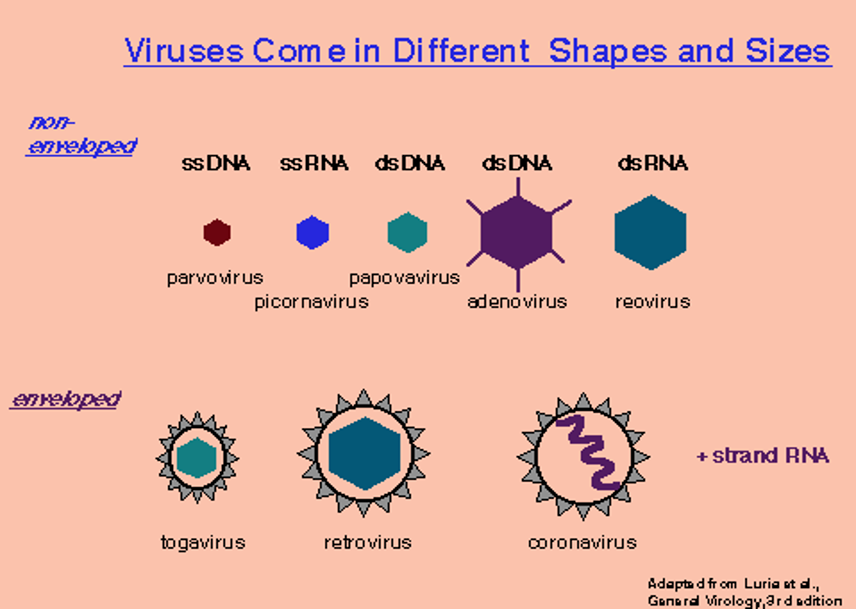
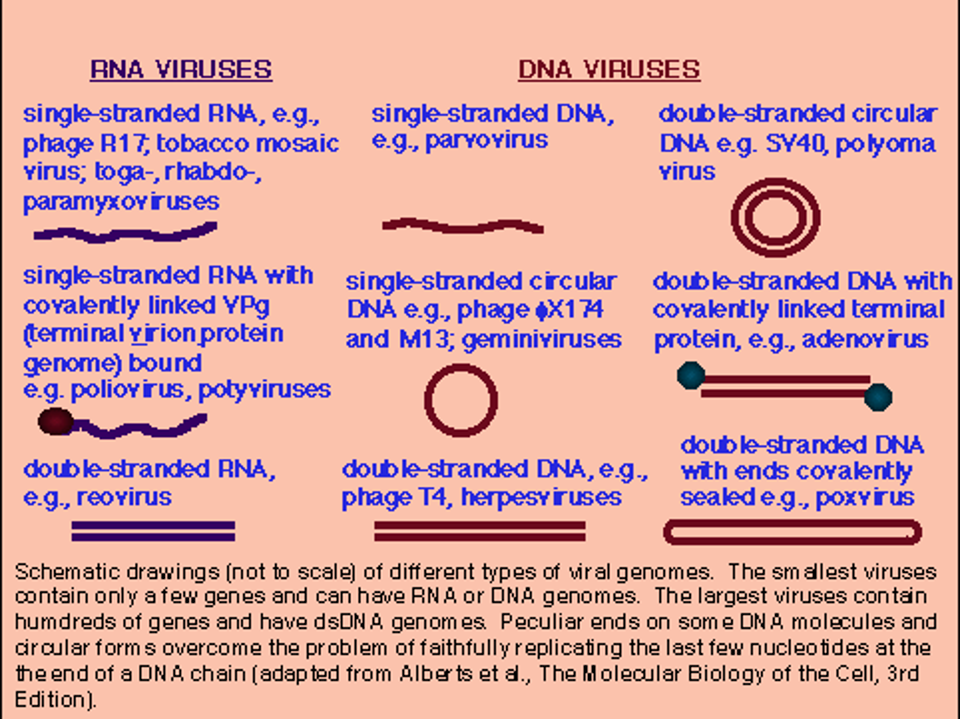
Viruses are classified based on:
Their structural characteristics, including shape and chemical composition.
Their genetic makeup, which can include single or double-stranded RNA or DNA.
Currently, there are 3 orders, 63 families, and 263 genera recognized within viral classification, where family names typically end in -viridae and genus names end in -virus.
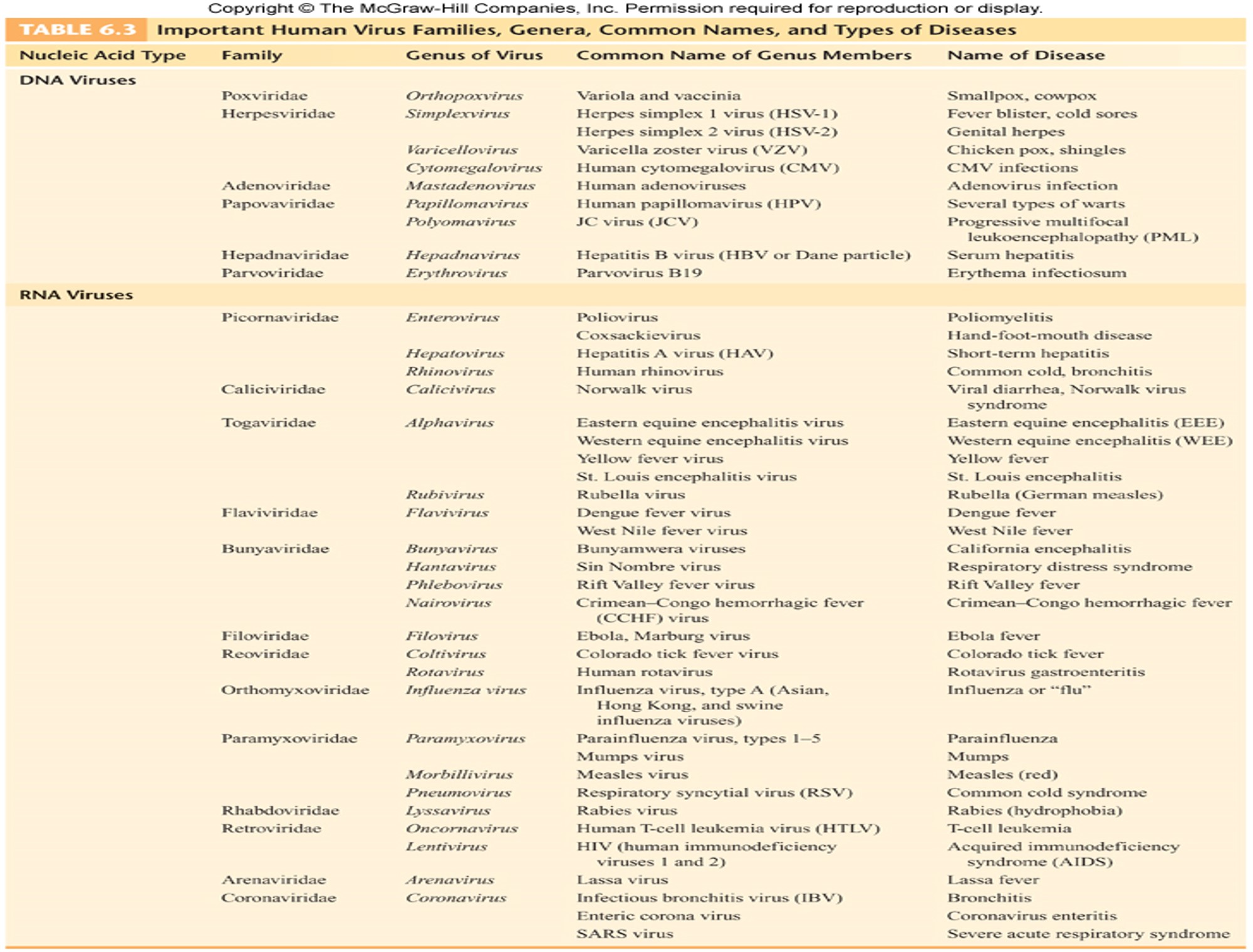
Example: Herpes simplex virus I (HSV-I) belongs to the family Herpesviridae and the genus Simplexvirus.
Important Human Virus Families:
DNA Viruses:
Poxviridae/Orthopoxvirus: Includes notable viruses like smallpox.
Herpesviridae/Simplexvirus: Includes HSV-1 (cold sores) and HSV-2 (genital herpes).
RNA Viruses:
Picornaviridae/Enterovirus: Known for Poliovirus which causes poliomyelitis.
Togaviridae/Alphavirus: Includes the Yellow fever virus, which can spread through mosquito bites.
Mechanism of Viral Multiplication:
The general phases of viral multiplication include:
Adsorption: The virus attaches itself to a susceptible or specific molecule on host cell.
Penetration: The virus enters the host cell.
Uncoating: The viral nucleic acid is released from the capsid, allowing it to access the host cell's machinery for replication.
Synthesis: viral components are produced
Assembly: New viral particles are assembled.
Release: Viruses exit the host cell, typically using one of the following modes:
Budding (exocytosis): A gradual release method where the host cell remains intact for a time.
Lysis: A method where the host cell dies and ruptures to release numerous viruses in a single event.
Entry of Animal Viruses into Host Cells:
Budding (Exocytosis):
In this process, assembled viruses attach to the host cell membrane. The nucleocapsid binds to the membrane, which then pinches off to release the viruses gradually into the extracellular environment.
The host cell continues to survive and is not immediately destroyed by this method, allowing it to potentially produce more viruses in the future.
Lysis:
This method involves the release of nonenveloped or complex viruses upon the death of the host cell. The host cell ruptures, releasing a large number of viral particles into the environment.
The number of viruses released can be highly variable:
Approximately 3,000 - 4,000 viruses may be released by a poxvirus.
More than 100,000 viruses can be released by a poliovirus.
Mechanism of Viral Multiplication:
The general phases of viral multiplication include:
Adsorption: The virus attaches itself to a susceptible or specific molecule on host cell.
Penetration: The virus enters the host cell.
Replication: Viral components are produced.
Assembly: New viral particles are assembled.
Maturation: Completion of viral formation.
Release: Viruses exit the host cell, typically using one of the following modes:
Budding (exocytosis): A gradual release method where the host cell remains intact for a time.
Lysis: A method where the host cell dies and ruptures to release numerous viruses in a single event.
Cytopathic Effects of Viruses:
Virus-induced cellular damage can manifest as:
Alteration in cell size and shape, which affects cellular function.
Formation of cytoplasmic inclusion bodies, which are aggregates of viral proteins.
Infected cells may undergo cell lysis, leading to tissue damage.
Some viruses may induce transformation of normal cells into cancerous cells.
Prions and Viroids:
Prions: These are misfolded proteins that cause diseases such as mad cow disease and Creutzfeldt-Jakob disease (CJD) by converting correctly folded proteins into abnormal forms.
Viroids: Small, infectious RNA molecules that primarily cause diseases in plants. Unlike viruses, viroids do not encode proteins.
Other Noncellular Infectious Agents:
Satellite viruses: These require co-infection with other viruses for replication. They often depend on helper viruses to provide the necessary components for their own replication.
Viroids: These are short, naked RNA molecules that lack a protein coat, with known occurrences only in plant disease syndromes.