Chapter 4
The First Two Years
Infancy (first year) through toddlerhood (2-3ish years)
Changes in Body Proportions
Children grow in a Cephalocaudal trend:
Head to Tail
Head develops more rapidly than lower part of body
Proximodistal trend:
Near to far
Growth proceeds from center of body outward
In puberty, the Proximodistal trend reverses
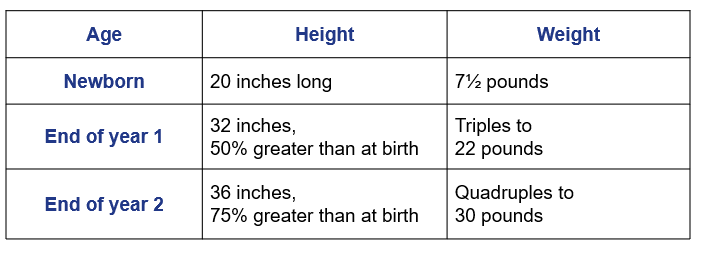
Body Growth
Faster growth than at any other time (occurs in spurts)
Neurons and Their Connective Fibers
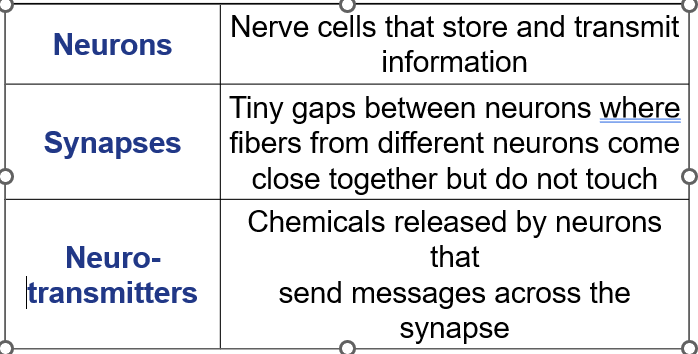
Vocabulary
Neurogenesis: The creation of new neurons
Synaptic connection: the specialized junctions where neurons (nerve cells) communicate with each other or other cells by transmitting electrical or chemical signals
Growing Synaptic connections = growing/creating new neurons and dendrites within the connectome
Synaptogenesis:
We LOVE dendrites because they accept info/signals from other neurons and pass the info into the cell body
the more we have the most efficient we think
Every time you learning something new, you are growing dendrites
9, 32, 66, and 83 are the ages correlated with the connectome (a comprehensive, structural map of the neural connections within a brain)
9: A change in how we use the brain
32: When the brain has “matured”
Development of Neurons
Establish unique functions by forming synaptic connections with neighboring cells
Stimulation vital for survival of neurons; formation of new synapses
Synaptic Pruning: the brain’s natural process of eliminating unused or weaker synapses between neurons to make neural networks more efficient; removing unnecessary synapses, strengthens remaining ones
Age 2ish: massive synaptogenesis followed by pruning
Myelination
Insulating fatty sheath covering nerve fibers
Improves efficiency of message transfer
Glial cells: responsible for myelination
Account for half the brain’s volume
Multiply rapidly in first two years
Regions of Brain Development
Basic functions
Motor & sensory processing
Emotional & memory center
High cognitive functions
Cerebral Cortex and Cortical Regions
Cerebral cortex: 85% of brain's wt, surrounds rest of brain
Cortical regions develop as capacities emerge
1st yr: auditory and visual; body movement areas
Occipital, parietal, cerebellum (sco nak uds)
Infancy - preschool: language areas
PFC, temporal lobe (400 next sido)
Prefrontal cortex:
Responsible for complex thought
Functions more effectively from age 2 most
The main part of the prefrontal cortex is executive function (a group of neurons that direct everything)
The brain
frontal lobe: movement, thinking, personality, and purpose
Occipital lobe: vision
Temporal lobe: hearing, memory, and language processing
Parietal lobe: sensory, touch
Lateralization of the cerebral cortex
Left hemisphere
Sequential, analytic processing
Verbal communication
Positive emotion
Right hemisphere
holistic, integrative processing
Making sense of spatial information
Regulating negative emotion
Brain plasticity
highly plastic cortex during first few years:
Many areas not yet confirmed to specific functions
High capacity for learning
Early experiences influence its organization
If injury occurs and loss of function happens in the brain, the brain will work to improve, learn and reorganize the functions again
If part of cortex is damaged, other areas can take over
If you want a child to know/learn a skill, teach it to them before the age of 11
Sensitive periods in brain development
appropriate stimulation vital for brain growth
Early, extreme sensory deprivation may result in permanent brain damage and loss of functions
Rushing early learning overwhelms neural circuits impedes brain’s potential
Experience-expectant brain growth
occurs early and naturally
Rapidly developing organization
Depends on ordinary experiences “expected” by brain for normal growth
Experience-dependent brain growth
occurs throughout our lives
Growth and refinement
Results from specific, individual learning experiences
Sensitive periods
Sensitive period: A specific window in time where the brain is primed and ready to learn a new skill in the environment
During a sensitive period, any stimuli is/can be learned
Learning languages: birth to age 7
Vision: first two years
Motor skills: first four years
Emotional attachment: first two years (particularly first 6 months)
Changing states of arousal
sleep-wake pattern gradually shifts to night-day schedule, and total sleep time declines
Lower quality of sleep linked with distractibility and behavioral problems
Circadian rhythm isn’t set until a minimum of 2 months of age
According to research, bedtime for toddlers need to be 7 pm is the best time for sleep training
Influences in early growth
heredity
Nutrition
breastfeeding vs bottle-feeding
Malnutrition
Nutrition and Breastfeeding
Crucial for development in first two years
Benefits of breastfeeding:
Nutritional completeness
Correct fat-protein balance
Helps ensure healthy physical growth
Protects against disease
Protects against faulty jaw and tooth development
Digestibility
Smooths transition to solid foods
Colostrum: pre-milk
Emotional Well-Being
affection as vital as food
Growth faltering: weight, height, and head circumference substantially below norm
infants are withdrawn and apathetic
Often result of disturbed parent-child relationship
May cause lasting cognitive and emotional difficulties
Non-organic failure to thrive is interchangeable with the term of an infant growth is faltering but there is no known cause
Psychosocial dwarfism
Reflexes: built-in reactions to stimuli
Rooting reflex: when infant’s cheek is stroked, or the side of the mouth is touched
Sucking reflex: newborns automatically suck an object placed in mouth
Moro reflex: a neonatal startle response that occurs in reaction to a sudden, intense noise or environment
Grasping reflex: occurs when something touches the infant’s palms
Swimming reflex: if you put a newborn in a body of water, they naturally start swimming
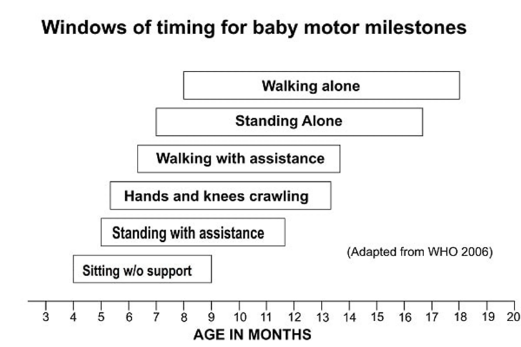
Motor development
Gross-motor development: crawling, standing, walking
Fine-motor development: reaching, grasping
Rate of motor progress varies
Vision
The least developed sense when born
by 3 months
Matches voice to face
Distinguish between male and female
Discriminate between faces of own ethic group and those of others
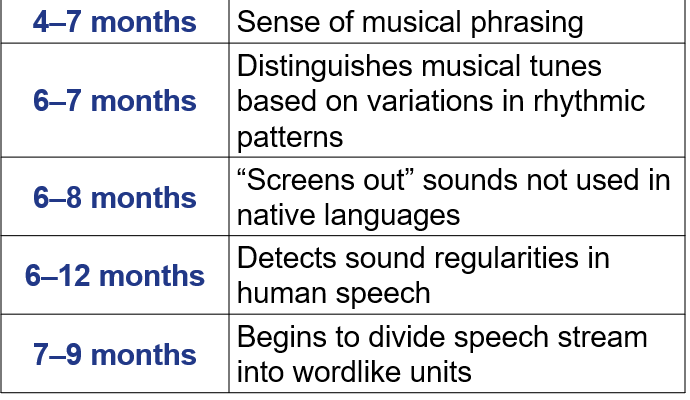
Developments in hearing
One of the most developed sense when born
Smell
one of the most activated senses when born
Smell is better as a newborn than as an adult
Newborns can sniff out their own parents