BESR QUIZ#2 PREFINALS SEM 1
SOCIAL RESPONSIBILITY FRAMEWORKS AND PRACTICES
Corporate Social Responsibility (CSR)
Corporate Social Responsibility is a business model by which companies make a concerted effort to operate in ways that enhance rather than degrade society and the environment.
To guide businesses in understanding their role in society
To refer to a business’s more extensive obligations to society
CSR Models:
Carroll’s Pyramid Model
The Intersecting Circles Model (contradicts Carroll’s)
The Concentric Circles Model
Carroll’s Csr Pyramid (EC.L.EH.P)

Presented society’s expectations using a pyramid with four levels
shows the different responsibilities arranged hierarchically
Economic Responsibility
The base and foundation of social responsibility
Ex. goods and services, payment of salaries, etc.
Legal Responsibility
Obey laws and regulations
Ex. Labor law, tax regulation, quality assurance, rights of workers, etc.
Ethical Responsibility
Do what is right, just, and fair
Going beyond the minimum
Ex. Fair treatment of customers, suppliers, employees, etc.
Philanthropic Responsibility
Discretionary and voluntary
Represents the company’s goodwill to society
Ex. Feeding program, housing projects, humanitarian aid (material, logisitical, and medical assistance provided to people in immediate distress to save lives, alleviate suffering, and maintain human dignity during and after crises such as natural disasters, conflicts, or famines), etc.
The Intersecting Circles Model
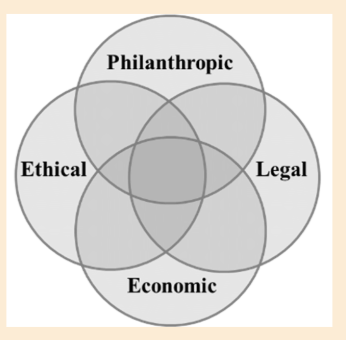
presents the interconnection among the four domains
rejects the hierarchical arrangement
a CSR program can fall under two or more domains
the goal is to cater to multiple domains simultaneously
The Concentric Circles Model
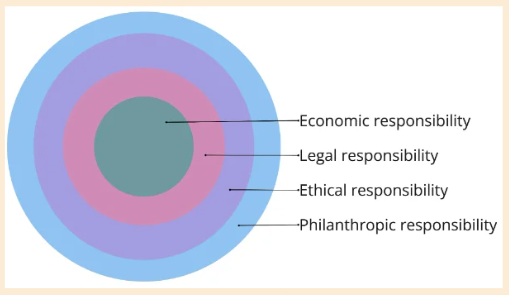
views economic responsibility as the core social responsibility
the various components of CSR are interconnected with each other.
As economic responsibility gets bigger so does the other responsibilities like ripples in the water.
EMPLOYEES AS PART OF DECISION-MAKING
Employee Involvement
It refers to the extent employees participate in the decision-making of an enterprise.
Members are contributing actively to the organization’s growth
Frontline (lower management) employees
have valuable skills, knowledge, expertise, and experience
They recognize problems that executives do not.
They offer practical solutions.
BENEFITS OF EMPLOYEE INVOLVEMENT
Increases Productivity
More involved, focused, and relaxed
Understands the importance of fulfilling their day-to-day tasks
Raises Morale and Commitment
Remain motivated when faced with challenging tasks
Develops healthier relationships
Seniors and juniors learn from each other
fosters trust and understanding
minimizes misunderstandings
Enhances Innovation
Enhances creativity in solving problems
Allows managers to foresee possible shifts
STRATEGIES/TECHNIQUES IN EMPLOYEE INVOLVEMENT
Gathering Feedback
surveys employees to gather qualitative data about their opinions, ideas, and satisfaction levels
Forming Committees for Participation
gathering employees from different departments to address a specific issue
learning about a problem more deeply
Setting Performance Targets
letting employees participate in deciding their performance targets, goals, and standards
Collective Bargaining and Negotiation
giving employees the power to directly influence decisions, particularly on
salaries,
benefits,
rights,
and working conditions
THE CONCEPT OF SOCIAL ENTERPRISE
Social Enterprise
New types of businesses that desire the creation of social value (what actually improves people’s daily lives) over personal profit
unique, socially responsible, and environmentally friendly
MAIN GOAL: is to create social value
The Concept of Social Enterprise
typically work with people from marginalized and disadvantaged sectors
providing solutions and livelihood opportunities
Social Entrepreneurs
Innovative individuals who prioritize their business activities’ impact on social, cultural, and environmental problems
observant of societal needs and demands
Characteristics of Social Enterprises: CSG . RI . M/L . AR
Clear Social Goals
Reinvestment
Monitoring and Learning
Adaptable Roadmap
PRODUCT DEVELOPMENT IN SOCIAL ENTERPRISE
Questions asked: P.S.B/A.A2S
What is the social problem that I want to address?
What are the solutions?
How will the beneficiaries be affected?
What are the current alternatives to the proposed solution?
FRAMEWORKS IN SOCIAL ENTERPRISE (CC . FFS . E&ST . MIC . OS)
Cross Compensation (specific)
a group of customers pays for a product or service, and the profits from this group are used to fund the service for a marginalized or underserved group (people in need or marginalized groups)
Pricing strategy where it would depend on the customer’s class
Example: person a pays for a surgery and the company or hospital that handles that surgery works with a charity, because that person a paid, the beneficiaries get to pay little to no fee)
Fee-for-Service (broad)
sells the social service directly to clients so that the enterprise will be self-sufficient
common among museums, schools, hospitals, eco-tourism destinations.
Goal: Self-sufficient
Employment and Skills Training
provides opportunities for employment, livelihood, and skills training to its beneficiaries
Hires and trains the beneficiaries so they can earn a livelihood
Market Intermediaries and Connector (middleman)
help bring products and services to the consumers
help a particular group of suppliers reach their markets
Organizational Support
employs an independent support model to sell a product or service to an external market
uses profit to fund social programs for the beneficiary