AP Psych- Psychoactive Drugs & Addiction
- Psychoactive Drug: a chemical that changes our states of consciousness, substances that change perceptions & moods, meaning the sensory information is the same but our perception o that info is altered
- ex) touching a table could feel soft, feel like your hand can go through it, etc.
- affect consciousness by influencing how neurotransmitters operate at the synapses
- Some substances can make users biologically & mentally addicted → substance use disorder
- ex) pain killers, cocaine, alcohol, nicotine, caffeine, etc.
- Addiction: bodies chemically adapt to these drugs & require greater amounts each time to achieve an altered state, or in some cases, just to feel normal and devoid of pain
- halting or reducing use of these can cause substantial mental & physical pain
- Withdrawal: the mental & physical pains experienced when the drug use has been halted
- Image of drugs = close to a key b/c keys can duplicate & still function, and drugs mimics body’s neurotransmitters. Body can’t tell which is which
- Agonist: “Key copy”, Drugs that binds to receptors, mimics the operation of a neurotransmitter
- Antagonist: “Lock” Drugs that block receptor sites or block reuptake of neurotransmitters by certain neurons
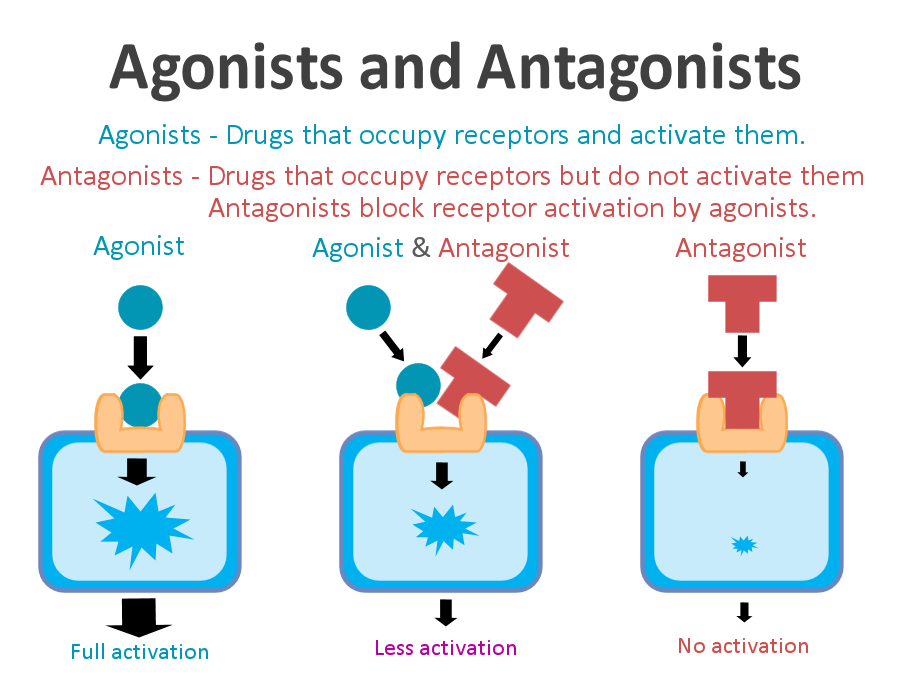
- Tolerance: occurs when the body gets used to a medication, → more medication is needed to give the desired effect, or a different medication is needed
- Addiction: compulsive, sometimes uncontrollable, craving for their drug of choice
- One w/ an addiction can lack impulse control: the frontal lobe inhibitor to make proper judgments about what to do and what not to do
- \
- Depressants “Downers”
- slows the activity of the central NS
- may interfere w/ person’s judgment, motor activity, & concentration
- alcohol
- barbiturates
- opioids
- Alcohol: dis-inhibitor which slows brain activity that controls judgment & inhibitions
- also slows neural processing, reduces coordination, self-awareness, self-control, speech, and other skills
- long term effects: nerve cell death, blackouts, loss of memory, shrink brain, lung and liver damage
- Barbiturates (major), benzodiazepines (minor) : essentially tranquilizers, reduces anxiety and help people sleep
- Opiates: endorphin-mimicking painkillers that bring a rush of warm, euphoric, & lifting feelings that can disrupt natural endorphin use & creation. Causes pupils to constrict, slow breathing, & lethargy as pleasure replaces anxiety.
- morphine, heroin, codeine
- opioids depress the centers that help control emotion
- attach to brain receptor sites that receive endorphins (relieve pain/reduce emotional tension)
- creates tolerance
- \
- Stimulants “Uppers”: drugs that excite neural activity & speed up body functions → causing a rise in breathing, heartbeat, energy, & confidence
- prevents the reuptake of serotonin, dopamine, & norepinephrine
- increase activity of central NS (increased heart rate, alertness, & sped-up behavior and thinking)
- caffeine, nicotine, cocaine, ecstasy, meth, amphetamines
- Also makes one feel alert, lose weight, & boost mood or athletic performance
- Withdrawal→ fatigue, headaches, irritability, depression, develops tolerance
- Nicotine: highly addictive
- Cocaine: provides rush of euphoria, depletes one’s own dopamine, serotonin, & norepinephrine by blocking their reuptake
- → restless, anxious, depressed
- Methamphetamine: crash of irritability, social isolation, depression, possible seizures, hypertension, and likely violent outbursts. Also decreases dopamine.
- \
- Hallucinogens: LSD, “mushrooms”, ecstasy, psychedelic drug
- produces illusions & hallucinations
- floods brain w/ serotonin
- provides visually-stunning images, distortions, better (or worse) tastes of foods, etc.
- Ecstasy (MDMA): both a stimulant & mild hallucinogen
- triggers a dopamine relase, floods neurons w/ serotonin & blocks uptake (makes you experience them much longer)
- dehydration, increases blood pressure, overheating or death
- permanently-depressed mood, suppressed immune system, impaired memory, slowed thought
- LSD: stream of uninterrupted fantastic pictures, shapes, colors, etc. Euphoria, detachment, panic
- Beatles
- THC (found in cannabis): more mild, but can evoke agitations & hallucinations
- relieve pain, calm nerves, & increase appetite
- impairs motor coordination, perceptual skills, & reaction time, amplifies anxiety & depression