feminist film thoery
aims:
introduction to feminist film theory
discussion of gaze theory
theoretical background:
psychoanalytical and marxistt foundations
how cinema reflects and reinforces ideology
gaze theory — the simple questions
who is the camera aligned with?
whose perspective and I sharing?
who is being looked at, and who is doing the looking?
big film theory questions
how does western cinema contribute to maintaining dominant ideologies such as patriarchy?
how is this manifested through representations of gender?
how is the spectator positioned? how is the spectator gendered?
relationship between film and ideology
how does western cinema contribute to maintaining capitalist ideology?
how does western cinema contribute to maintain and reinforce other ideologies such as patriarchy, racism, colonialism, heternormativity as manifested through the representation of class, gender, race and ethnicity, sexuality, and so on?
how do films position the spectator in a particular way to make us accept these ideologies?
mulvey and screen theory — psychoanalytical and marxist foundations
marxist political theory by french theory Louis Althusser
freudian psychoanalysis and the development of freudian psychoanalysis by Jacques Lacan
apparatus theory
althusserian marxism
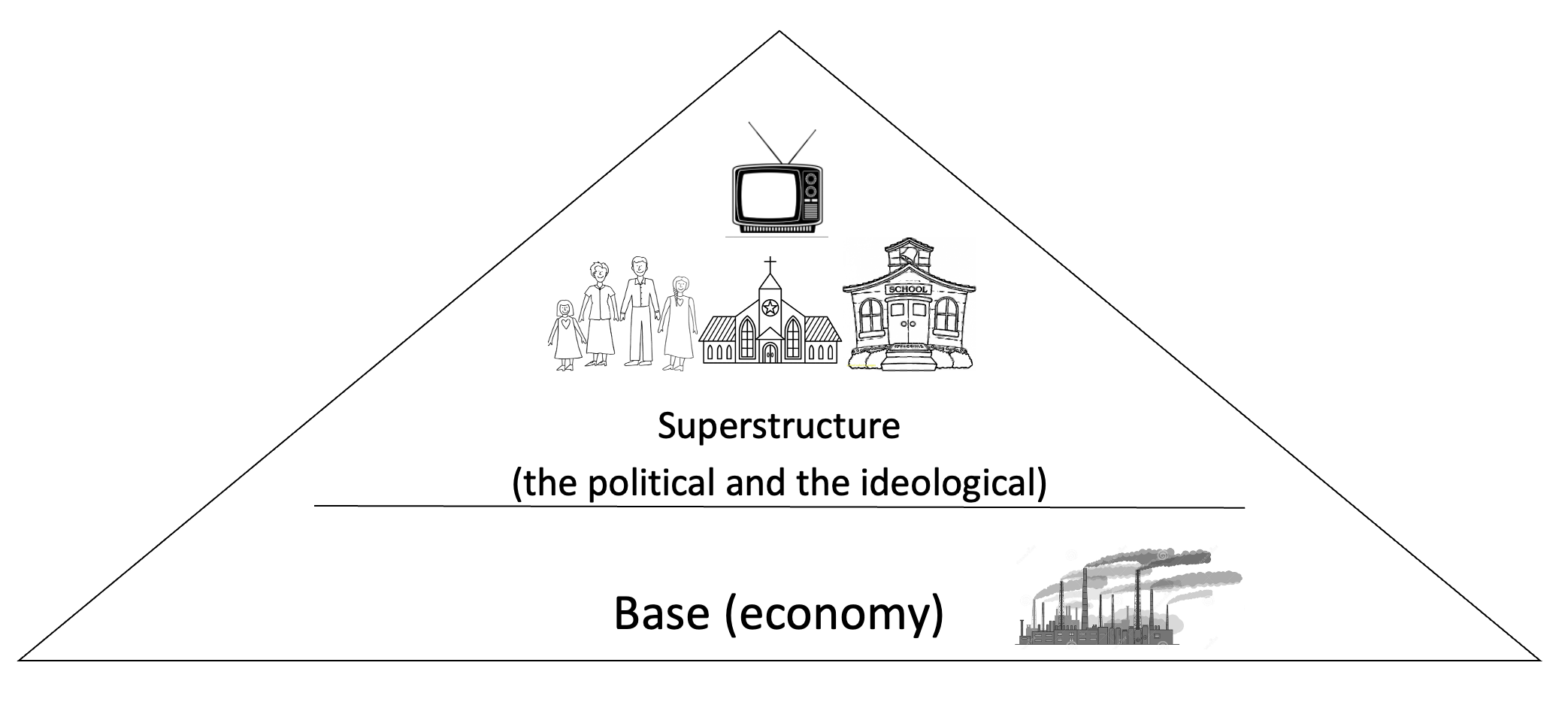
how are we constituted as subject (‘interpellated’) by the dominant ideologies
the Ideological state Apparatuses
religion
family
educational system
media
this is how we gain our sense of identity and our understanding of reality
this influenced film theory, which started exploring how ideology is at work in film to reproduce capitalist ideology
how we are positioned by these structures, yet we (naively) preceive them as reality (the reality effect)
apparatus theory
Baudry’s ‘ideological effects of the basic cinematographic apparatus’ (1970)
classical hollywood promotes (imaginary) unity over (real) difference in a manner that parallels Lacan’s mirror stage
the unifying effect is compounded by the illision of continuity and the persistence of vision of the seamless hollywood style (often also discussed as suture)
political critique of hollywood style, associated with continuity and the reality effect, appealing to the spectator because of its promise of unity and complete control
baudry
“…the cinema is ideological in that it creates an ideal transcendental viewing subject. by this [baudry] meant that the cinema places the spectator, the ‘eye-subject’, at the center of vision. identification with the camera-projector, the seamless flow of images, narratives which restore equilibrium — all of these things give the spectator a sense of unity and control. the apparatus ensures the ‘setting up of the subject’ as the active center and origin of meaning’. furthermore, according to baudry, by hiding the way it created an impression of realism, the cinema enables the viewer to feel that events are simply unfolding — effortlessly — before his eyes” (Creed 1998: 79)
the mirror stage
split between the child’s sense of its own body as fragmented and its imaginary sense of self as unified that it gleans from its mirror reflection (and as confirmed by the caretaker)
mulvey
concentrates on what metz discusses as secondary identification: identification with the characters
a feminist critique of mainstream narrative film — made by and for men
the patriarchal ideology is evident in its formal design
‘the male gaze’
“women as image, man as bearer of the look”
2 types of visual pleasure which align with the male spectator:
voyeuristic pleasure — identification with a (active) male protagonist driving the narrative forward
looking at and objectifying a (passive) female character as spectacle, thus inviting scopophilia (pleasure in looking)
but, the woman always runs the risk of triggering his ‘castration anxiety’, and 2 strategies can be used to alleviates this anxiety:
(sadistic) voyeuristic scopophillia (eg to punish), a narrative strategy
or fetishistic scopophilia (transforming what is threatening to something satistying), a strategy related to woman as spectacle
rigid binary of Mulvey’s theory
male
active
origin of the look
narrative
female
passive
object of the look
spectacle
the male gaze
the male character looking at the event → the camera ‘looking at the event → the spectator looking at the event
this is how the spectator is positioned by mainstream film: we’re locked into the male gaze
critique of mulvey’s ideas
assume a heterosexual male spectator. heterosexual dynamics
focus on white feminity
treat audiences as passive. [and underestimates audience agency]
it leaves little room for female or queer pleasure [queer spectatorship]
the oppositional gaze
“even in the worse cirumstances of domination, the ability to manipulate one’s gaze in the face of structures of domination that would contain it, opens up the possibility of agency” (Hooks 2014, 116)
critical pleasure
political awareness
resistance to domination
the audience’s decoding of media
dominant: accepting the dominant/perferred ideological framework (what the creators want the viewer to accept)
mulvey’s theory of the male gaze would stop here
negotiated: broadly accepting the dominant reading but sometimes resisting in ways that reflect one’s own social position and experiences
oppositional: reading the media against the grain, in a contrary/subversive way