Unit 1 Business: Intro to business managenemt
1.1 What is business?
Business: Any organization that uses resources to meet the needs and wants of costumers by providing a product they demand.
Businesses take inputs and, by processing those inputs, they add value in some way, which leads them to creating a product or service.
Resources:
Human resources: labour.
physical resources: land. materials, machinery (capital goods)
financial resources: Capital.
enterprise: The business idea and determination, entrepreneurs.
Goods:
Capital goods: things an organization uses to make products
Consumer goods: the end result of the production process
Production processes:
Capital-intensive: Processes that use machinery…
labour-intensive: processes that use people.
Business functions:
Human resources dep : to ensure appropriate people employed, pay check…
finance dep: appropriate funds made, forecasting…
marketing dep: business offers products people will like
operations dep: appropriate things used for production quantity, quality control…
Entrepreneurs: individual demonstrating enterprise and initiative to make profit
Intrapreneurs: individual employed who demonstrates entrepreneurial thinking in developing new products. develops them for an organization.
Sectors of activity
Primary: extraction or production of raw materials
secondary: production of finished goods
tertiary: delivery of services
Quarternary: innovation, transmission of info
THIS IS THE PRODUCTION CHAIN
sectoral shift: when economies develop, they change sectors, this is measured in people employed.
How to start a business?
business idea:
Market driven: determined by the market needs
service driven: entrepreneurs have to convince people to buy new products
planning: to try and minimize risks
Steps
Organizing the basics
researching the market
planning the business
establishing legal requirements
raising the finance
testing the market
Opportunity cost: lost benefit derived from an alternative
1.2 Types of business entities
Public sector: orgs controlled by the government to provide needs mostly
Private sector: businesses owned and run by individuals to aim profit (caprichos)
For-profit organizations
profit = total revenue - total cost
revenue = price x quantity over a period of time
sole traders
partnerships
publicly held companies
privately held companies
cooperatives (social ent)
public sector companies (social ent)
private sector companies (social ent)
Sole trader
owns the business
limited access to finance
close to the costumer
unlimited liability
privacy
limited accountability
easy and cheap to set up
Advantages:
keeps all profits
control
flexibility
minimal legal formalities
close to costumer
disadvantages
hard competition
one person has all responsibility
death of owner could mean the end
no room for growth
unlimited liability
Partnerships
owned by 2-20 people
joint decisions (deeds of partnership)
better financing opportunities
silent partners
more variety
stability
unlimited liability
advantages
more skills mean more efficiency
more areas of expertise
more stability less risk
greater chance of continuity
disadvantages
less access to loans than companies
sharing profit
disagreements
unlimited liability
Companies, corporations, incorporated businesses
multiple owners
limited liability
Publicly held companies: traded freely in the stock market, anyone can buy them
Privately held companies: not in the stock market, shares are sold after agreements
privately held companies: documents
memorandum of association: records characteristics and external activities of it
articles of association:specifies how it will be regulated internally
Asset appreciation: increase in value of the stock overtime
dividends: distribution of profits to stakeholders
Companies: features
shareholders own but dont run the business
grater stability more chance of success
higher degree of accountability
greater financing opportunities
advantages
easier access to finance
more opportunities of expansion
limited liability
continuity
disadvantages
timely and costly
loss os control
loss of privacy
not close to costumer
division of profit
companies: going public
IPO: initial public offering: first sale of the stock to the public
For-profit social enterprises
high degree of collaboration
cooperatives are more democratic
same functions
advantages
favorable legal status
strong communal identity
communities are benefited
disadvantages
timely and costly to make decisions
insufficient capital for required growth
insufficient capital for financial strength
Types of FPSE: Cooperatives
financial: to provide members with lower rate interest loans or finance to members who wouldnt be able to borrow money
housing: provide housing for its members
workers: business owned and operated by the workers
producer: groups of producers work together in stages of production
consumer: provides service to its consumers, also owners
Micro-financiers: provide small sums of money to help people who previously didnt have access to money, money is lent to hive independence and empowerment
Non-profit Social enterprises
total revenues - total costs = surplus
NPSE: similar to normal enterprise but isnt willing to get profit (save the whales)
NGO: independent of the government but they receive funding and cooperate with it. Charities
NPO: features
no profit but surplus
donations
unclear ownership
advantages
help people
philanthropic spirit
able to innovate
disadvantages
lack of control
irregular funding
passion could lead to illegalities
1.3 Business objectives
mission statement: motivating declaration of an orgs core purpose remains unchanged overtime every day
vision statement: statement of an orgs overall objectives made to help decision making it should never change one day
Vision statement
forward looking
shouldnt change
less specific
internal stakeholder
objectives
Measurable targets that a business must meet to achieve its aims
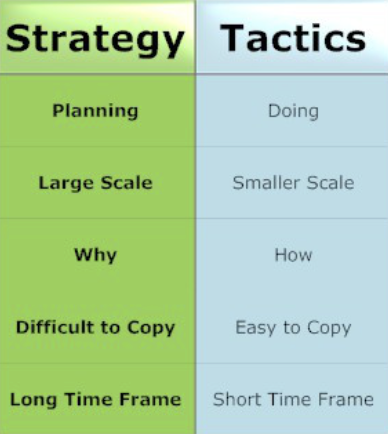
strategic objectives: long-term goals (board of directors) why and when
tactical objectives: short to medium term. If consistently met, will help reach strategic objectives (executive management). where and how
operational objectives: day-to-day goals. what
ethical objectives: to treat employees correctly
Strategy Vs Tactic
strategy: plan to achieve a strategic objective to work towards the aim of the business
tactic: plan to achieve a tactical objective to work towards the strategies of business
S M A R T Objectives
Help set objectives by translating mission statements into targets.
S: specific
M: measurable
A: achievable
R: relevant
T: time-specific
Common objectives
growth
higher sales revenue and profit: as a firm grows this increases
economies of scale: cost-saving benefits for firms as they grow
reduced risks: less vulnerable to changes in the external environment
internal growth (organic): happens when an organization grows without help of an external partner
external growth (inorganic): expansion and evolution by using a third party resources.
profit
a reward for the owners and investors of a business
a source of finance for further development of the business
its a top priority
protecting shareholder value
survival
profit - financial return for shareholders
growth
market share
ethical objectives and corporate social responsibility
ethical objectives
costumer loyalty
positive image
better work environment
meet expectations
higher profits
lower legal costs
Corporate social responsibility (CSR)
The concept that a business has an obligation to operate in a way that will have a positive impact on society.
impacts of ethical objectives
business itself: may imply costs and changes and employees may resist
competitors: they will have to respond
suppliers: if we only buy from suppliers with ethics, other implement it too
customers: likely to trust more the company and be loyal
local communities: stronger relationships
government: increasingly recognize businesses with ethical objectives.
Change in objectives
due to changes in the internal environment
leadership: new leaders have different styles so different objectives
HR
product: the performance of a product may require a change
organization: merger or acquisition can cause organization to rethink their objectives
opperation: constant innovation
finance: when finance changes strategies must change
due to changes in the external environment
STEEPLE analysis can help frame issues:
social: changes in society or culture
technological: a product can become uncompetitive
economic: changes in market conditions
ethical: values of companies may change overtime
political: change in the political system “country risk assessments”
legal: when responsibility for legislation changes
ecological: growing environmental awareness and the “green” revolution
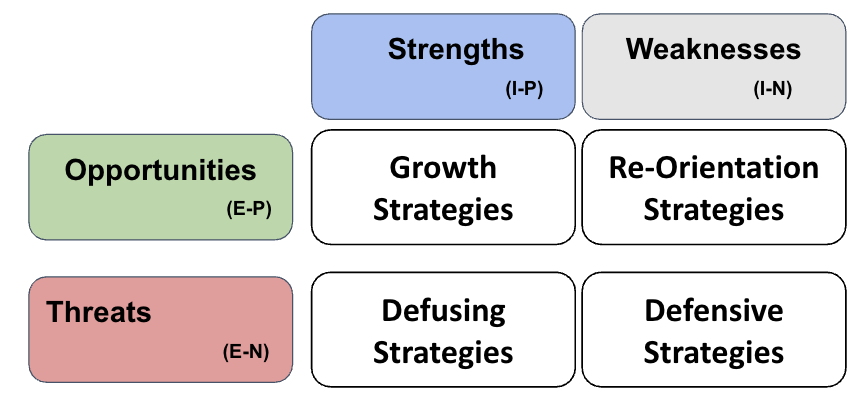
S W O T analysis
tool to help set these SMART objectives
S: strengths
W: weaknesses
O: opportunities
T: threats
Ansoff matrix
Decision making tool which help businesses set and plan objectives
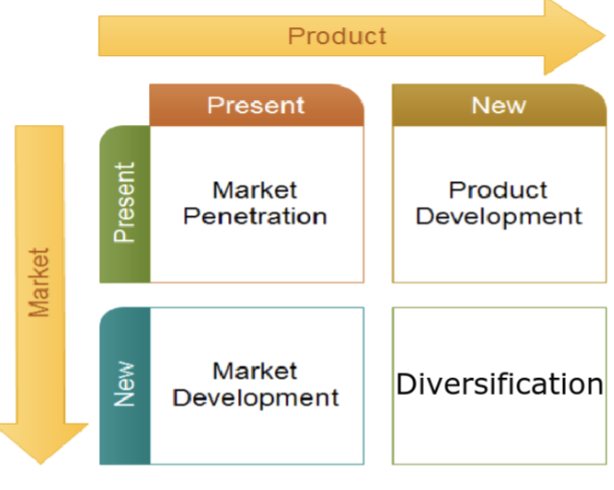
Diversification
related: business adds or expands its existing product lines or market
unrelated: business adds new or unrelated product lines to their existing markets.
1.4 Stakeholders
individuals or group of individuals who have direct or indirect interest in the activities and success of a business.
internal: inside the business (employees, shareholders, managers)
external: outside (government, customer, suppliers, competitors, the community)
interest of different stakeholders
internal
returns of their investments
coordinating the business
strategic and tactical objectives
salaries an working conditions
external
how the business operated in the environment
suppliers care about a stable relationship
best product that meets their needs
returns on investments
conflicts between stakeholders
ex: employees may want higher wages but shareholders may not as it reduces profit. Managers can be conflicted in this case. local community may support the higher wages. forms alliances
in smaller businesses it is easier to meet interests.
stakeholder theory: states that business should consider the interests of all stakeholders.
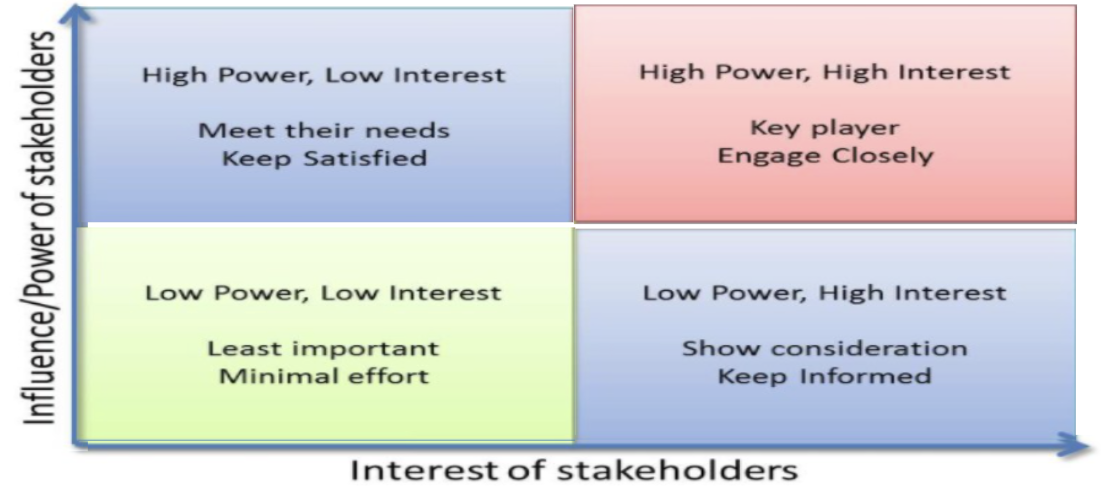
stakeholder analysis: see which ones are of higher importance and interest.
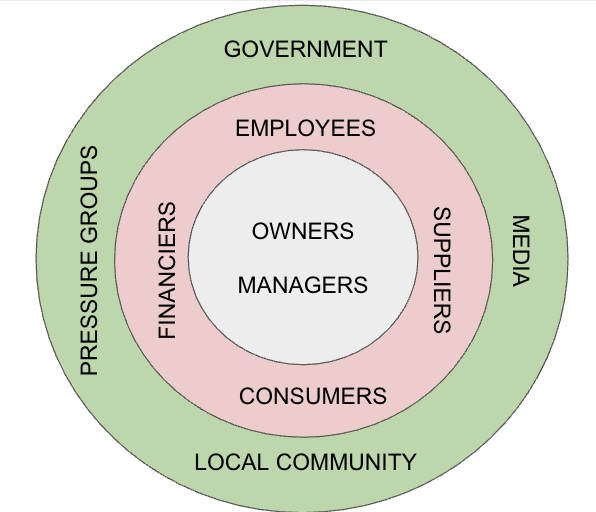
stakeholder MAPPING: Power-interest model
1.5 Growth and Evolution
STEEPLE
Sociocultural
lifestyle
demographics
education
technological
infrastructure
new tech
R & D
economic
inflation
unemployment
interest rates
ethical
fair trade
corruption
Political
trade policies
regional policies
political stability
legal
regulations
employment laws
ecological
global warming
carbon footprint
costs
total costs = fixed costs + variable costs
fixed costs: do not change as production changes
variable costs: do vary as production changes
average cost = cost per unit = cost / quantity produced (cost = fixed + variable)
economies and diseconomies of scale
economies of scale: scale of operations become more efficient. average unit cost goes down
diseconomies of scale: average unit cost goes up as the business size increases.
scale of operations: size of business activities (output level, number of employees…)
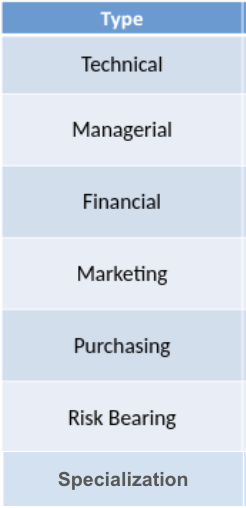
internal economies of scale
efficiency that the business itself can achieve. example:
Tech economy: can invest in better machinery and make the production more efficient
external economies of scale
efficiency achieved because someone else has expanded
improved infrastructure
access to specialist labour
technological process
suppliers moving closer to firms
research and development facilities
internal and external diseconomies of scale
causes for diseconomies:
poor infrastructure
rising rent
higher wages
pollution
resource scarcity
advantages of being small vs big
advantages of being small
greater focus
exclusiveness
motivation
competitive advantage
less competition
advantages of being big
survival
economies of scale
higher status
market leader status
increased market share
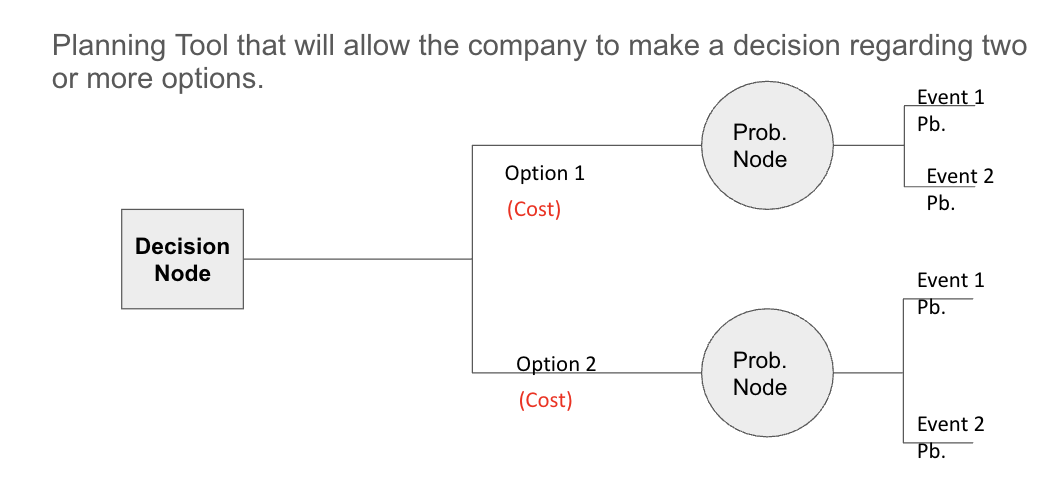
Decision trees
decision nodes: (square) represent a decision
chance nodes: (circle) represent a possible outcome
External growth methods
M&A and takeovers
merger: occurs when two companies that are “equal” legally become one company
acquisitions: one company purchases the majority or all shares of another.
takeover: a business acquires a majority or all shares in another company gaining control over its operations. occur against the wishes of the other company
Integration
horizontal: purchasing companies that more or less do the same thing in same sector. larger market share and power
forwards: purchasing companies that are later in the production chain. ensure outlet for their products.
backwards: purchasing companies that are earlier in the production chain. ensure reliable supply
conglomerates
When two businesses in completely unrelated industries merge or one acquires another. also known as diversification.
advantages:
risk
revenue stream
growth opportunities in different markets
disadvantages:
high risk
management complexity
lack of expertise
difficult to achieve synergies
advantages and disadvantages of M&A and takeovers
advantages:
quick
greater EOS
spread fixed costs and risk
greater profits and market share
more competitiveness
new markets
disadvantages:
expensive
loss of management control
unsettling for stakeholders
DOS
new management styles
deterioration of costumer loyalty
difficult to revert
Joint ventures
two or more organizations agree to create a new business entity, not permanent.
advantages:
flexible
shared expertise
cheaper
maintains corporate identity
local partner knowledge
disadvantages:
potential conflicts
legally complex to terminate
short-lived
profits must be shared among parent companies
strategic alliances
cooperative arrangement between 2 + companies that enhances value for all, members remain independent. o new organization created
advantages:
synergies
corporate identity maintained
promotes cooperation
flexible membership
disadvantages:
reduced commitment
short-term
risk of mistakes or misconduct
conflicts
Franchises
growth method where a franchisor licenses a franchisee to sell goods or services under franchisors brand and business model.
features:
franchisee pays franchisee fee (cost for using the brand)
franchisee pays royalties (a percentage of sales or flat fee)
franchisee operates the business, often as a soletrader, partnership or larger org
requirements:
significant upfront financial investment
ability to work within the franchisors framework to ensure mutual success
purpose:
allows franchisor to expand and franchisee gains access to an established brand and proven business model.
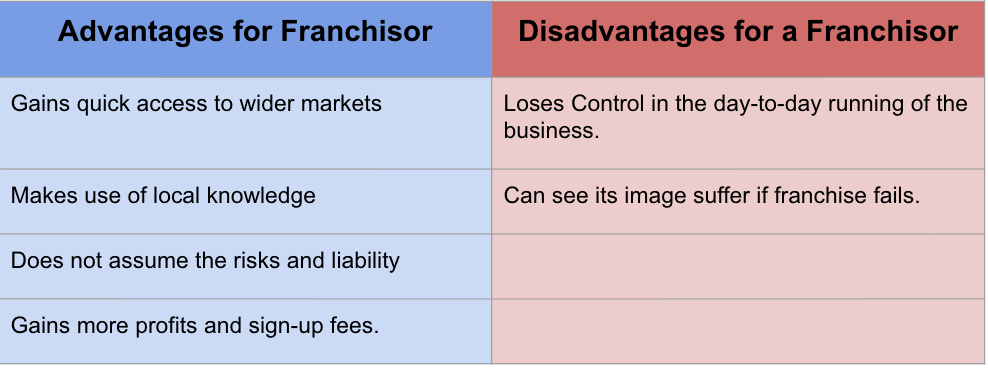
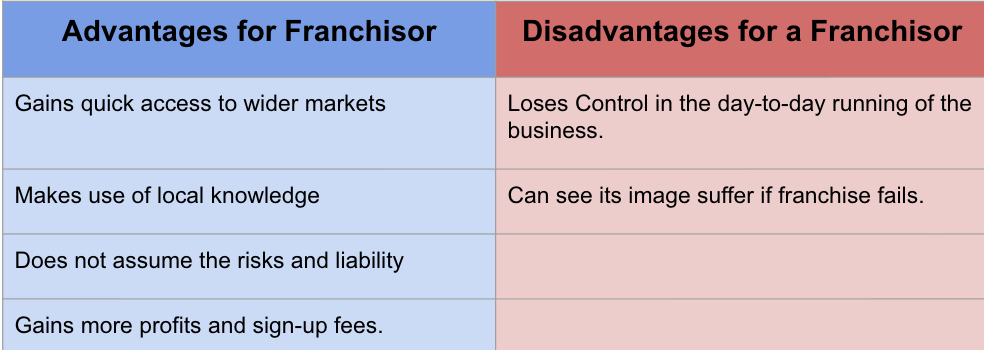
Franchisor advantages and disadvantages
franchisee advantages and disadvantages
1.6 Multinacional companies
globalization
the process of integrating regional economies into a single global economy, where people and organizations think globally but act locally.
international companies:
only import and export, dont invest
operations in one country
multinacional companies:
locations in multiple countries
each location functions independently, overall structure in home country
global companies:
locations in multiple countries
unified company culture and standardized processes for efficiency
impact of globalization on businesses
increased competition: foreign costumers force domestic producers to become more efficient
greater brand awareness: domestic businesses must develop a USP.
skill transfer: local workforce in foreign businesses enables two-way knowledge.
closer collaboration: create new business opportunities
reasons to become a MNC
increased costumer base: access ton more customers —> higher potential revenue.
cheaper production costs: lower labor costs in developing countries reduce expenses.
global EOS
avoiding protectionism: forming alliances of JV helps enter protected markets
spreading risk: failure in one country may be offset by success in another.
Multinacional companies
business that operates in more than one country. operate overseas through foreign direct investment FDI, can produce goods or provide services internationally.
reasons for their growth
improved communications
dismantling of trade barriers
deregulation of the worlds financial markets
increasing economic and political power of multinacional companies
advantages and disadvantages of MNCs on host countries
advantages:
growth
new ideas
skill transfer
more product choice
short-term infrastructure projects
disadvantages:
profit repatriated
loss of cultural identity
brain drain
loss of market share
short term plans