Stems 1: Form, Anatomy, and Bark
What is a stem?
The stem is the primary axis of the tree, that contains lateral buds. It does not include branches or leaves. Also called a bole.
Notable stems
Redwoods (heights to 370 ft)
Tultiptree (heights to 198ft)
Giant sequioa
American chestnut
Tree growth forms
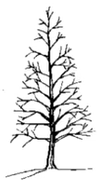
Excurrent
central leader trees, triangle form
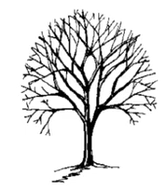
Decurrent
deliquescent, multiple scaffold branches, rounder shape
Tree growth form: crown shape and competition
Tree growth: roots versus shoots
open conditions versus forested
Stand age
Something important: the allocation of energy to roots versus shoots is determined when a tree is a tiny seedling. If the seedling is in a forest, it will allocate more resources to growing straight and tall, to reach the canopy as soon as possible so it can compete. If it is in an open area, it will allocate more energy to its root system (because light is not a limiting factor) and the crowns will spread wide. But once that allocation is set, it does not change--so you can understand land history a bit from tree growth form. You will see many large, spreading trees at Umstead Park and elsewhere, where old homesteads used to be, which tells you that these trees began their lives in open conditions, even though they are now in a forest. Likewise, a tree will continue its narrow crown growth pattern even if you cut down the trees around it.
How a seed becomes a tree (where does the bark come from):
Trees pull in CO2 and, through photosynthesis, generate ATP (energy), which creates organic compounds (carbon) that make up wood).
This is why forests are considered carbon sinks, because the carbon comes from the air in the form of CO2
Stem function
Provide structure and support for leaves
Vascular tissue
carry water and nutrients to crown (xylem)
carry photosynthate from leavings (phloem)
Store water and food
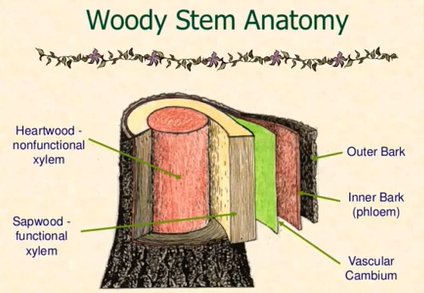
Bark
bark becomes useful for identification as trees age and mature; most bark starts out smooth
descriptive terms: smooth, ridged, fibrous, plated, scaly, cobbled, “ski trails,” warty, braided, shreddy