The Prince Chapter 15 - Machiavelli
The Prince
Written as a “mirror for princes.”
Recognized as advice for rulers
Chapter 1-11: Kinds of principalities (types of regimes)
Chapters 12-14: Military foundations
Chapters 15-23: How a ruler should rule
Chapters 24-26: Why rulers lose, Italy’s predicament, and a call to action
Chapter 15 - Of The Things For Which Men, and Especially Princes, Are Praised or Blamed
This is about guidance
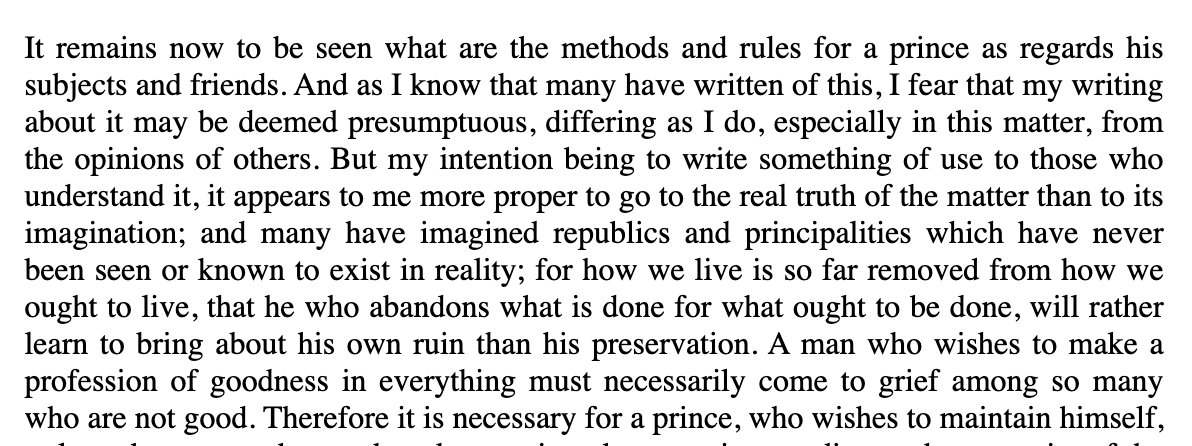
He intends to write something useful to those who understand it
The Effectual Truth
Looking at the actual causes and effects of decisions, without thinking of how things could be.
Sometimes, you have to do the “not good” for the better.
Truth vs. Imagination
This is not about ideals, about what ought to be done; it is about what actually works
The Aim of Ruling
The distance between is/ought
What a ruler should do is whatever is needed to avoid ruin
The best regime is one that preserves itself
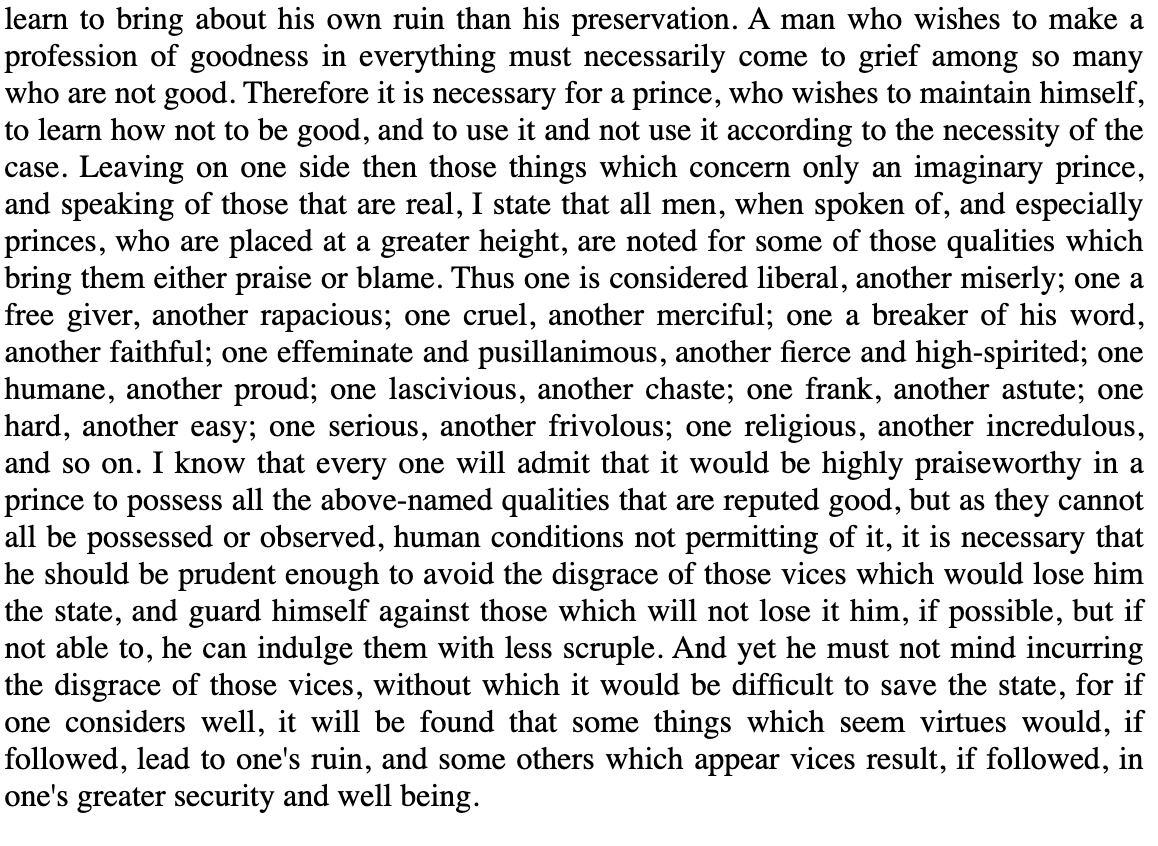
When you can do good, you’ll do good, but the inverse is also true. When you can’t, you need to know when not to be good.
When you have to be bad, some people will not like you.
Hence, a prince must learn to be able to be not good.
The end goal for a prince is to maintain power
Given that you must preserve power, and given that you will be morally categorized, which reputation can you afford?
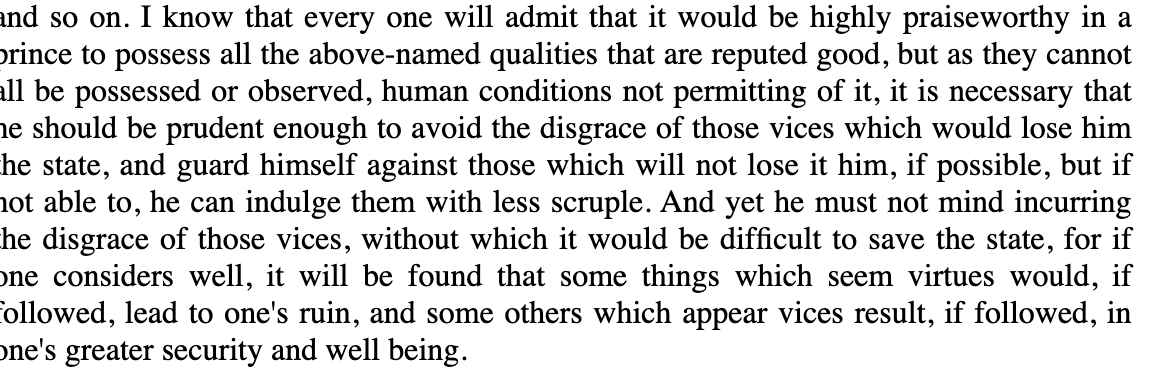
Human conditions do not permit being all good
He must be so prudent that he knows how to contain the infamy of his vices, which keeps his state.
It is necessary for him to be so prudent…
Circumstances
We all want to be virtuous or seem virtuous, but we cannot be. Makes it impossible for us to always “do the right thing”.
The Effectual Truth
But that means we need to rethink what “the right thing” means; it cannot be the case that the right thing is against my aims.
Prudence is about knowing when to do good or bad.
The Aim of Ruling
Conceded the ideal of full virtue
Denied its practicability because of “human conditions.”
Elevated prudence over moral consistency
Redefined vice as necessary
Good comes into the equation when there is no necessity
Machiavelli is a “teacher of evil”