Meth Mouth 3.04
What do you see?
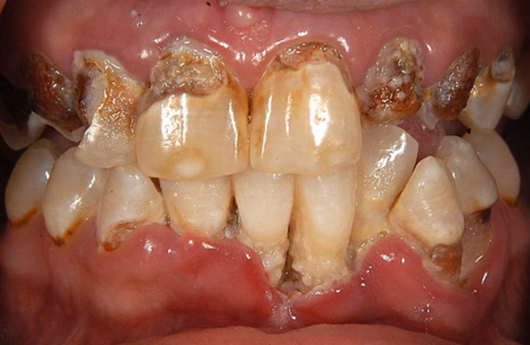
A lot of pathology
Gross deposits of plaque
Gingival and periodontal destruction
Extensive cervical caries (particularly on the buccal margins and facial surfaces of the teeth)
How Has it Arisen?
Decisions and the drivers for those decisions
Behaviours
Chaotic lifestyle, violence, homelessness, exclusion, debt, criminality, earlier death
Application of Background Knowledge
S&F: Neurology
OB: Caries, xerostomia
PH: Cost, impact and financial burden
Comms
Professionalism: Safeguarding, signposting
Addiction – What you may encounter in your career
Depends where you work
Recognition of addiction – behavioural, clinical, and safety of the team
Referrals for treatment of drug–dependent individuals – drugs teams, GMPs, prisons
Care and Treatment Planning
Realistic
Liaison with others if identifying surgical risk
Excellent background knowledge
Dental Interventions
Prevention
Xerostomia: artificial saliva, Duraphat toothpaste, Duraphat varnish
OHI: provide toothbrush and realistic advice
Interventions
LA: care with LA adrenaline. No active treatment if recently taken methamphetamine
If in doubt, seek advice
Extractions: may have other conditions e.g. Hep B, HIV related to IV drug abuse – care with haemostasis. May need FBC, coagulation screen, and LFT. Seek advice if in doubt.
Restorative care anything you place will be subject to the same environment of destruction
Dependency and Drug Harm
Multi-Criteria Drug Analysis modelling showed that heroin, crack cocaine and methamphetamine were the most harmful drugs to individuals whereas alcohol, heroin and crack cocaine were the most harmful to others
Overall, alcohol was the most harmful drug with heroin and crack cocaine in second and third places.
Conclusion
Be knowledgeable
Be vigilant
Be kind
Be realistic
Be careful