P5 UNFORMATED
Scalars and vectors:
A scalar quantity is one that only has magnitude:
e.g.: Temperature, time mass speed, energy
A vector quantity is one that has direction and magnitude:
displacement, velocity, acceleration, force, and momentum.
You will commonly get questions on displacment and distance in which youll often need to calculate the overall distance from the start and overall distance travelled
Displacement: Overall distance traveled from the start
FORCES’
These allow objects to interact with eachother
Force A push or pull that an object experiences due to the interaction with another object
They can change the speed direction or hape of an object:
There are 2 types:
Contact forces- Need two objects to be touching to interact e.g.:
Friction
Thrust
Upthrust
Normal (reaction) force
Tension
Air resistance
Force aplied
Work done
Non contact- Dont Need two objects to be touching to interact:
e.g.:
Gravity
electrostatic
Magnetism
Nuclear
Friction- a contact force which opposes motion (creating wasted energy)
This can be reduced by lubrication or smothing
The faster an object is moving the more friction air resistance
Tension- the force that tries to pull streatched objects back into shape
Electrostatic attraction- Opposite negative
Magnets- Poles
Gravitational- All masses, gravity, Orbits, always attracts
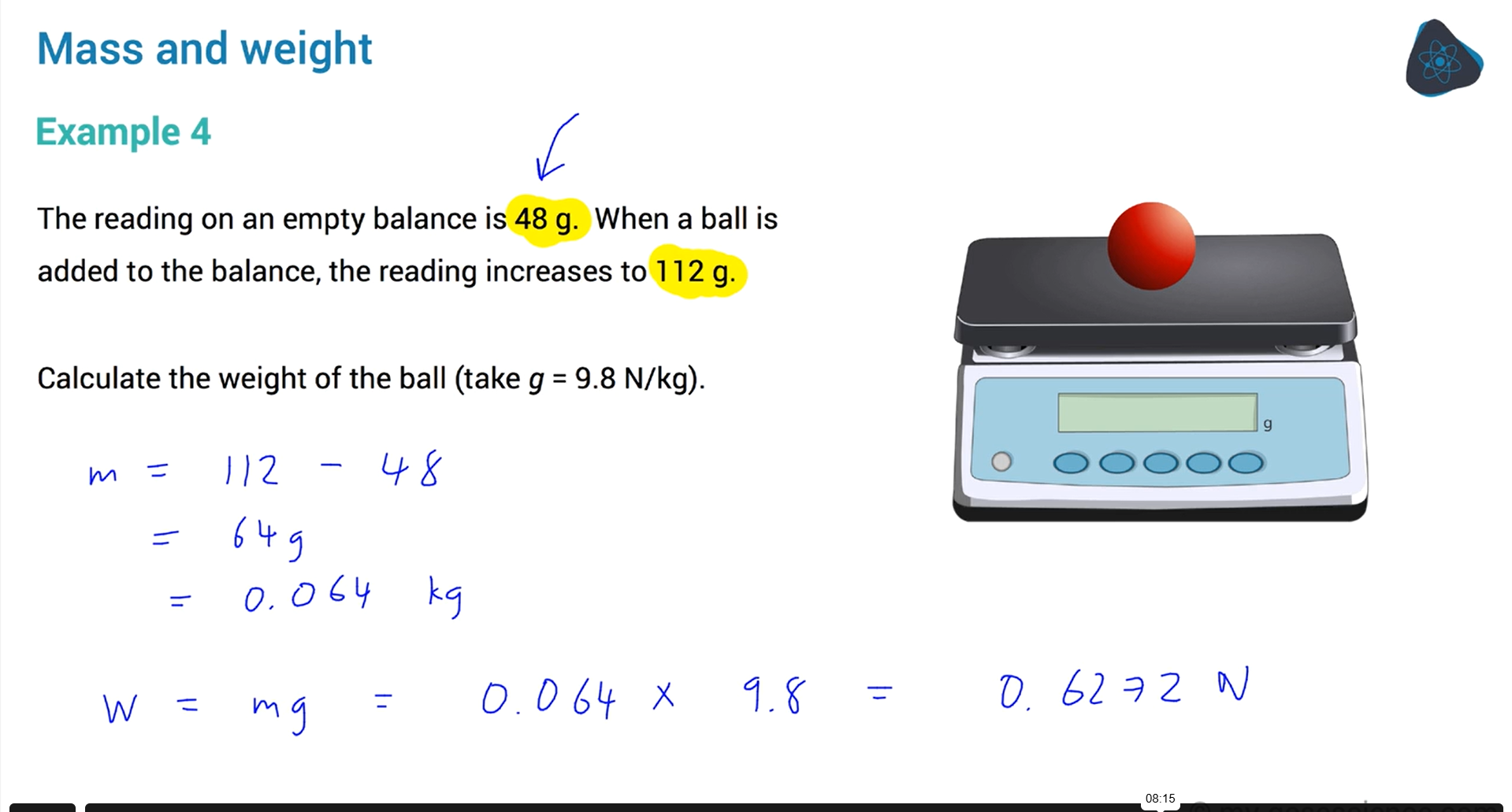
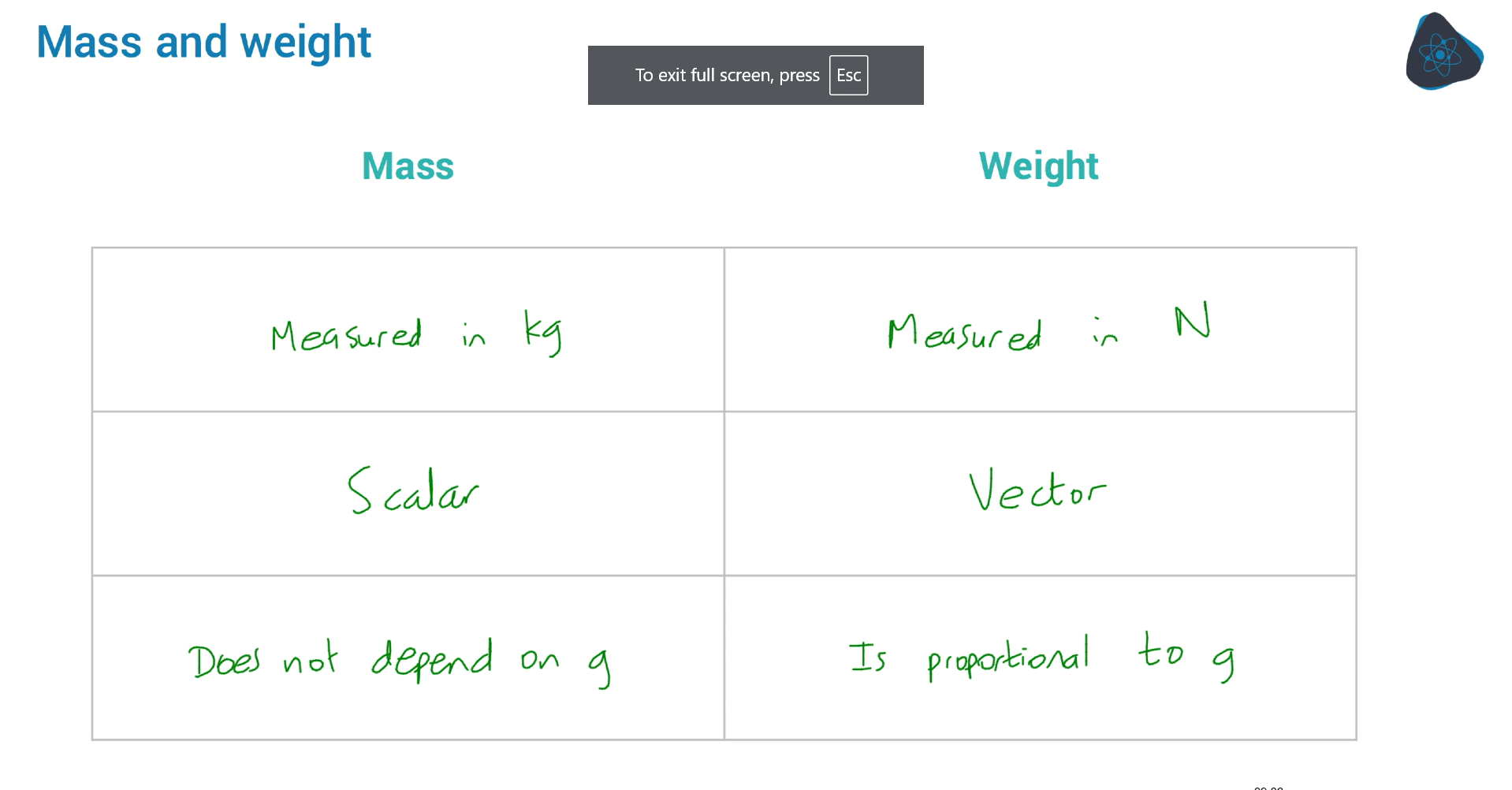
Mass- how much matter is in an object “KG/g”
Weight- How much an object weights in a certain gravitational field “Newtons”
Gravity- the larger the mass of an object the more gravity (Pull) they have on eachother THE CLOSER THE MORE TOO
It always opperates pointing to the core of the object
Weight= Mass (N)*gravitational feild streangth (N/KG) (9.8 kg on earth
Centre of mass- the point at which an object’s weight will act and point downards from
e.g.:
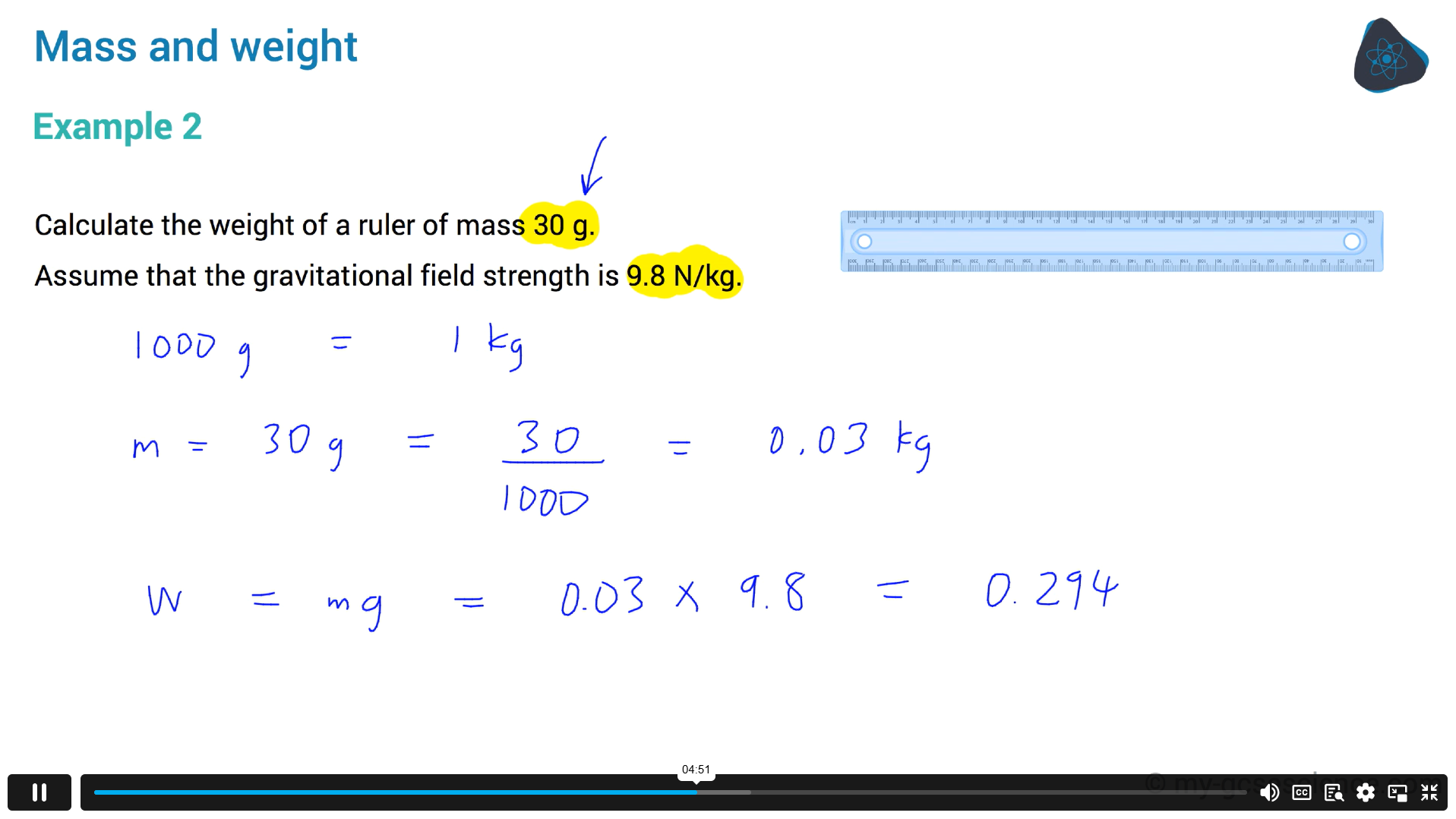
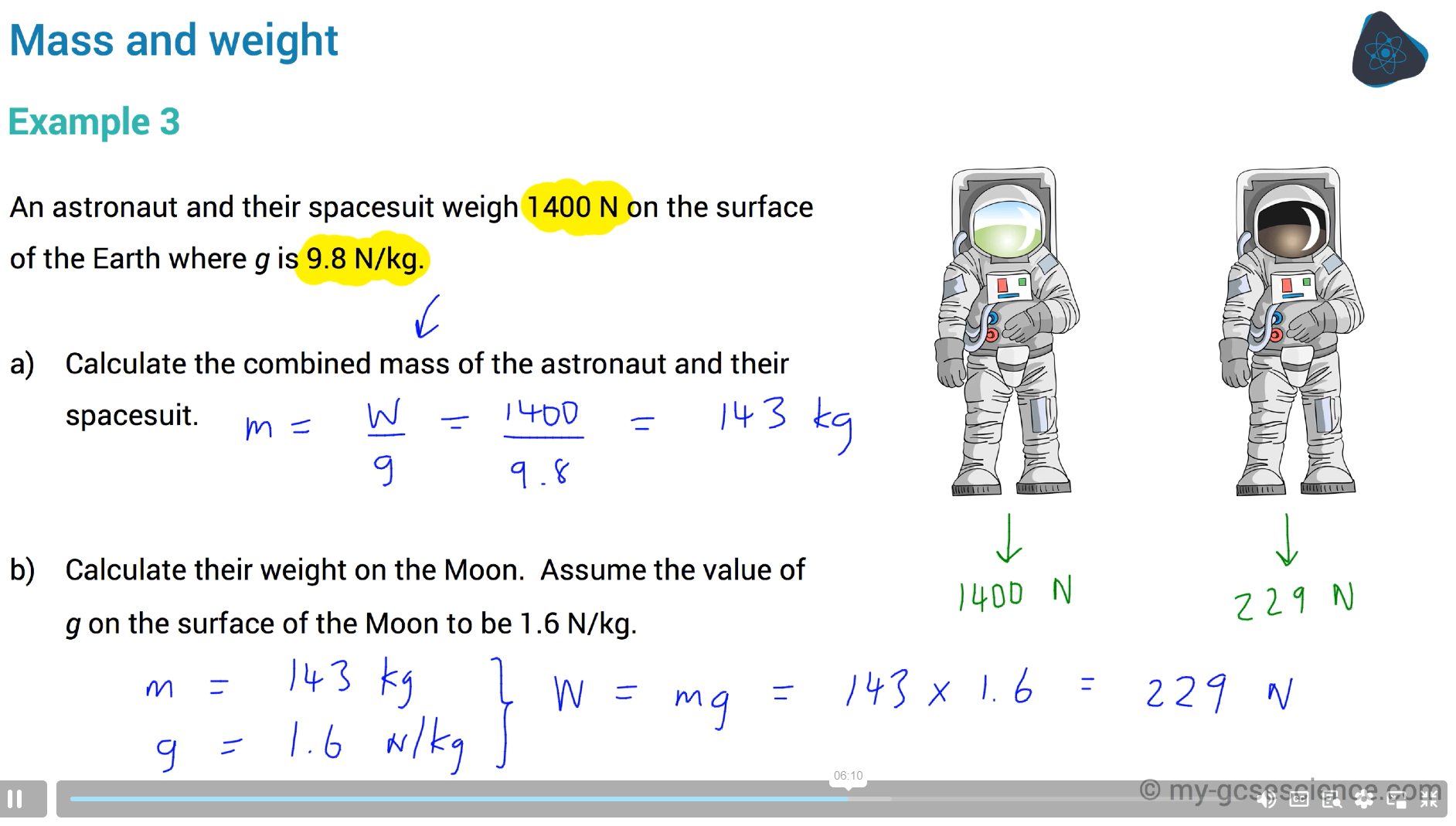
Mass is constant, weight is variable and has a direction( towards centre of mass)
Resultant forces
When 2 or more forces are acting on an object they can be replaced by a single force with the same effect called the resultant force
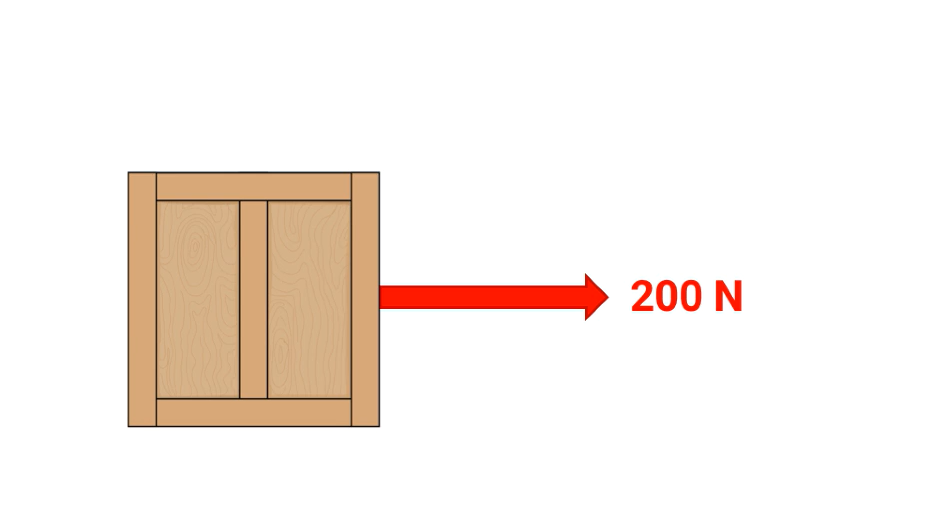
Opposite forces directly cancel eachother BUT IF NOT THEN itll cause diagonal forces
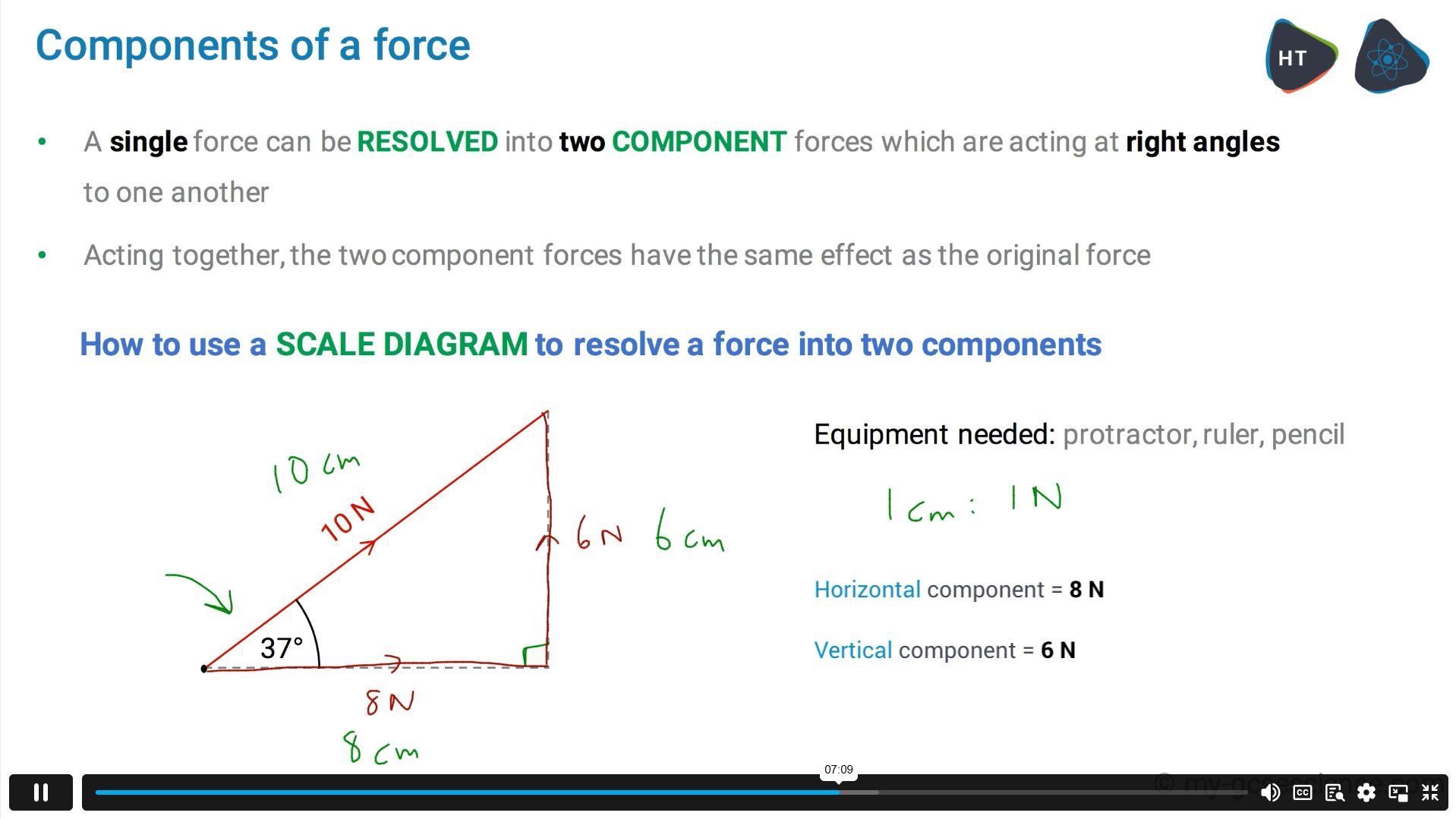
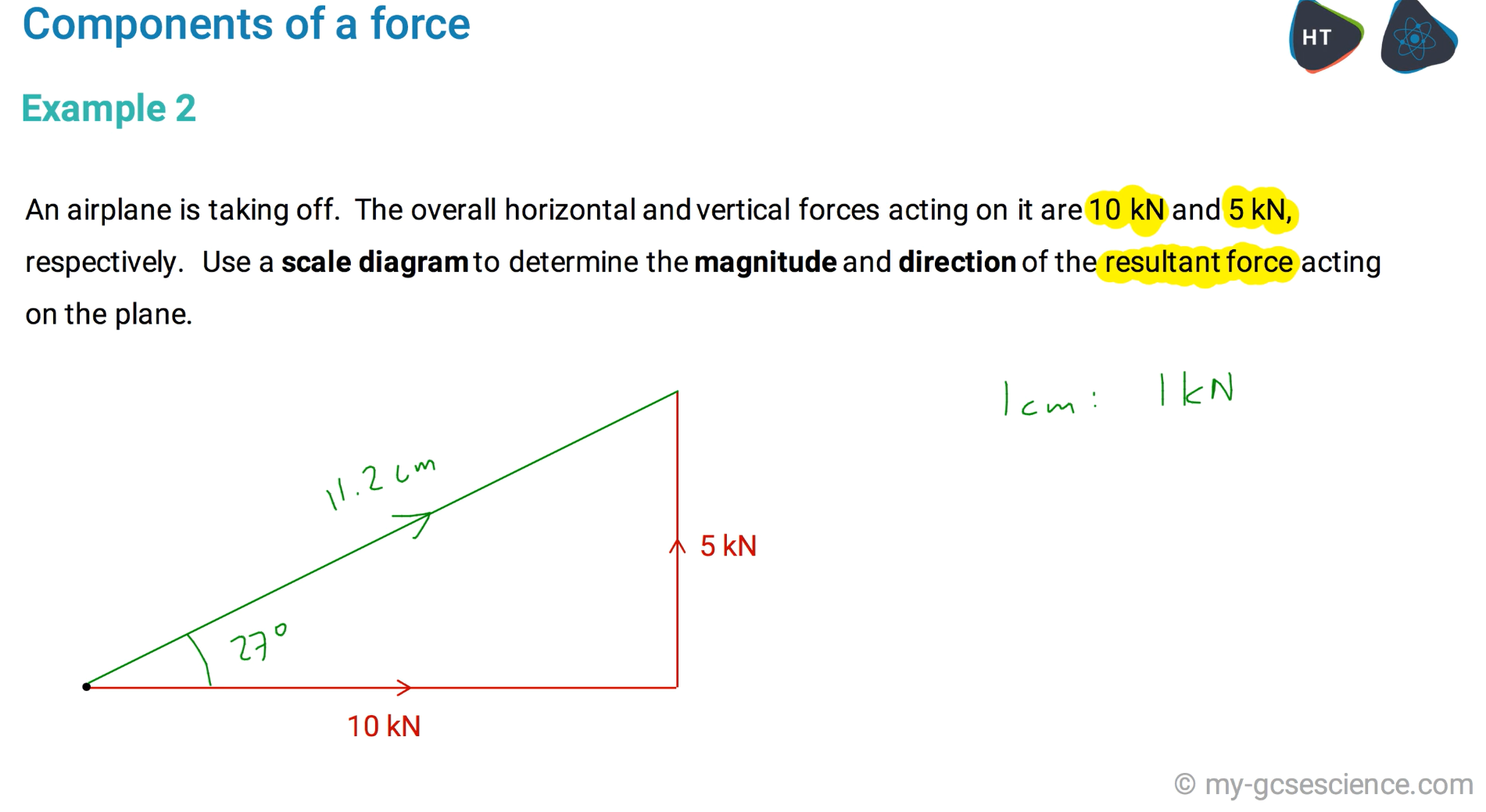
Components of forces:
potractor ruluer and pencil: This is forces with direction
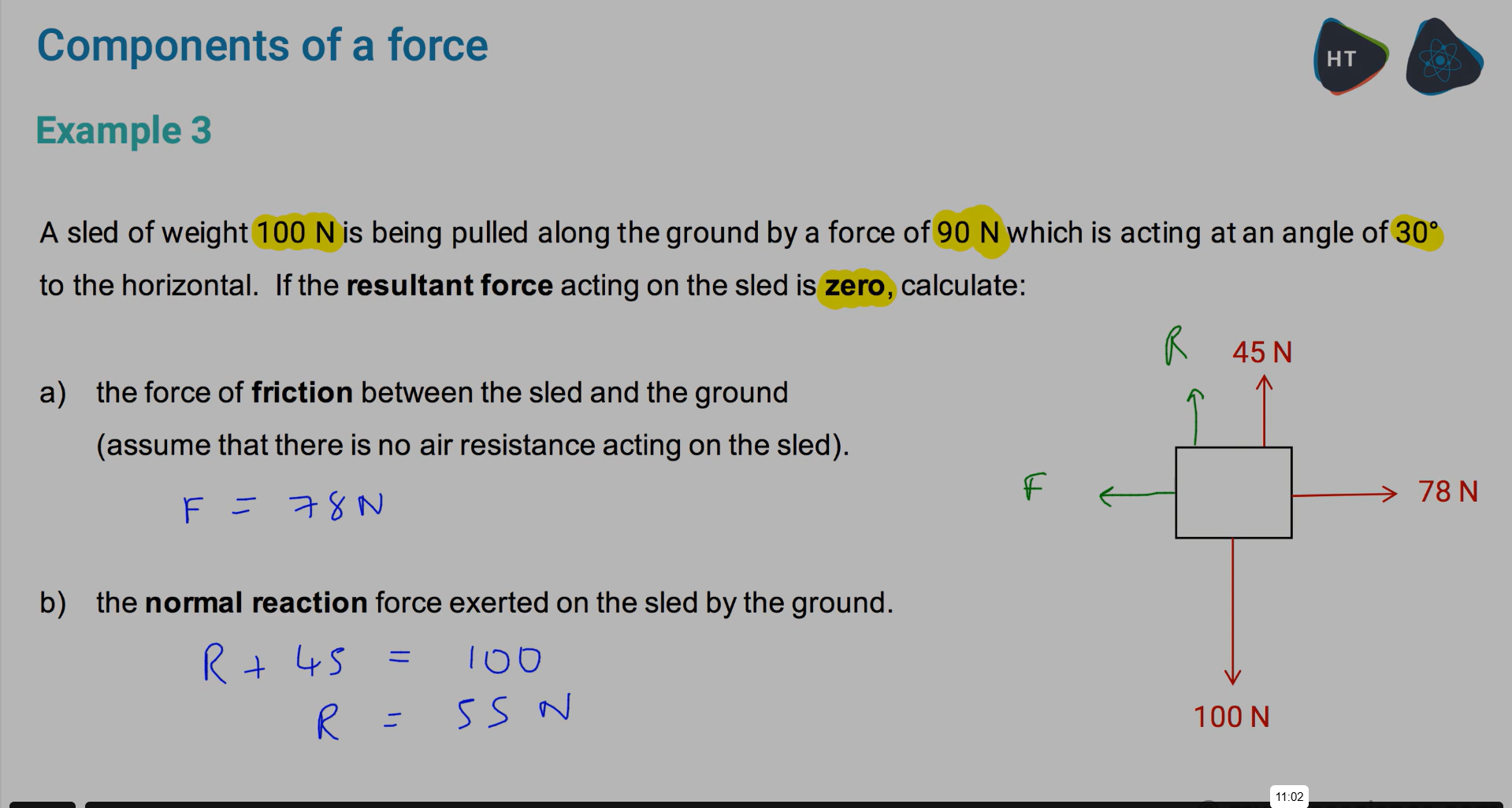
The resultant force is the work done
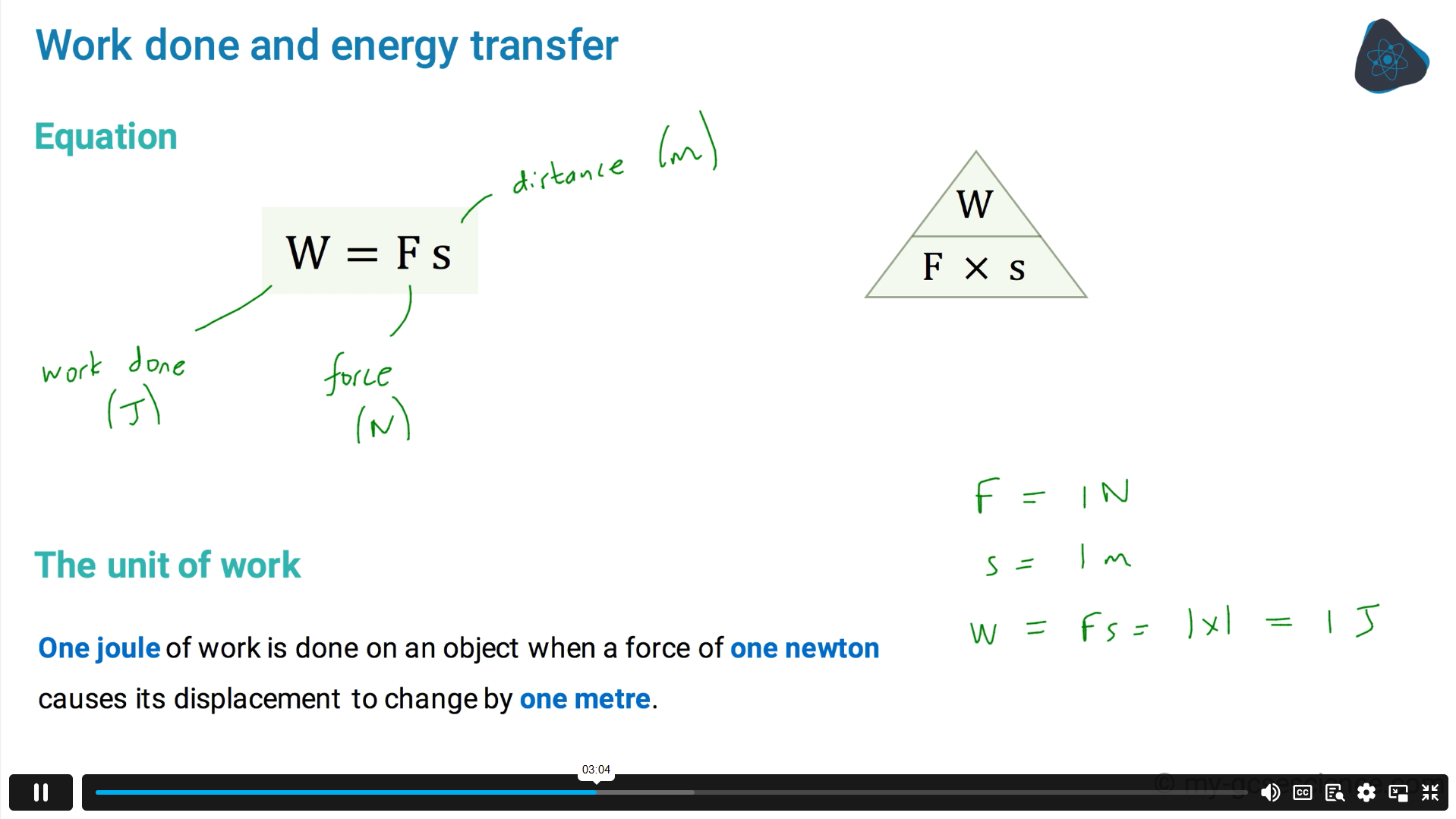
Work is done when a force moes an object over a distance
Work isnt being done when the resultant force is 0
Work done (J)= Force(N) * Distance (+ direction) M
1 JOULE == 1NM