micro labour market notes
labour market elasticities
substitutes
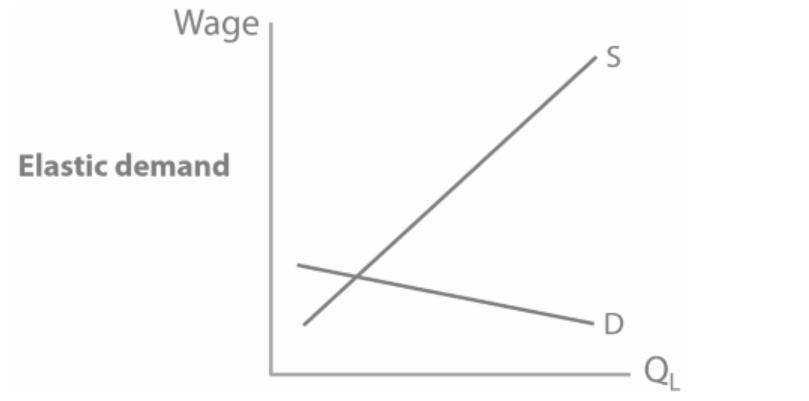
how easy it is to substitute workers when their wages go up. for example McDonald’s workers are considered unskilled therefore if they request a higher pay, they can just be replaced with another unskilled worker or with capital (self-service checkout), so the demand is responsive → elastic demand → lots of substitutes
percentage of total cost
what percentage of total cost is made up of workers’ wages?
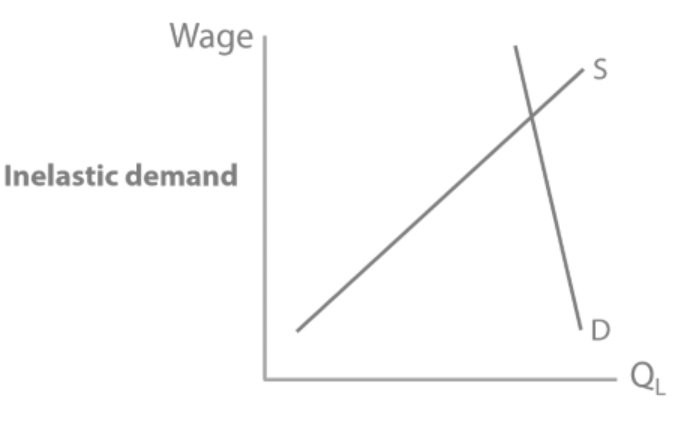
for example, the company Ford’s total costs are mostly made up of machinery costs so wages make up a small percent. so even if the workers wages increase a lot, firms won’t care as much because wages are such a small percentage of their costs. so demand will be unresponsive to changes in wage suggesting inelastic demand
wages are a small % → inelastic demand
wages are a large % → elastic demand
Time (LED)
if wages increase in the short run, demand will be inelastic because there’s not enough time to find substitutes → unresponsive
in the long run however, if wages increase, demand will be elastic because there is enough time to find substitutes