COW-CALF MANAGEMENT
8/19: Intro to Beef Production

History
Cattle were some of the first domesticated animals.
There are stories and evidence of cattle in the Bible and in Turkey, dating back to 6500 B.C.
Even as early as 10,000 years ago.
First introduced in 1519 to the New World by the Spanish.
Specifically, Texas, Arizona, and New Mexico.
Later settled into Florida.
Spread further north in the 1600s and established in farms.
Primarily used for…
Draft work, currency, meat/milk, leather, tools made from bone/horn/hooves.
Facts (United States)
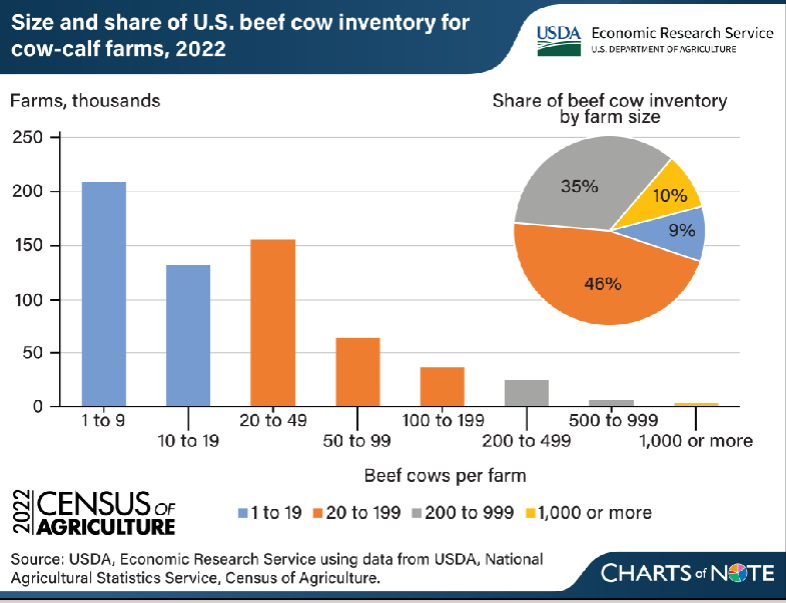
1.88m cattle farms in the U.S. in 2022.
Encompassing 876 million acres.
622,162 farms had beef cattle totaling 29.2m head.
79% of beef farms had 1-49 cows.
Avg. = 47 cows.
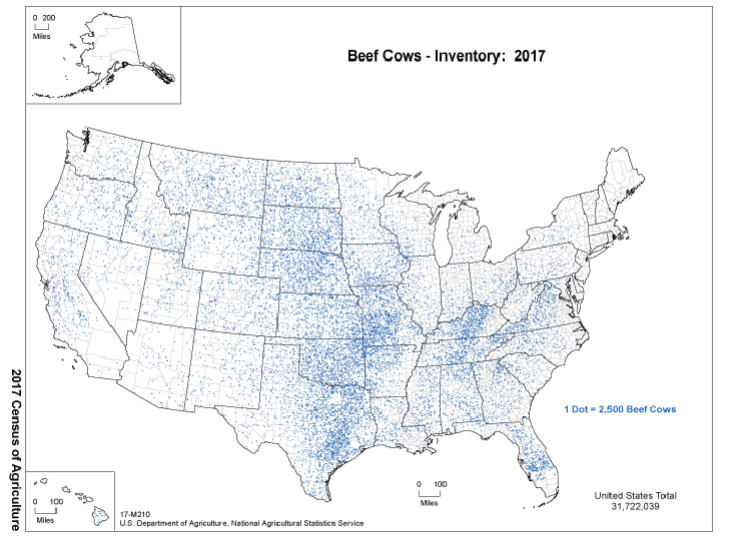
Top States for Beef Cattle
Texas (4.04m)
Oklahoma (1.97m)
Missouri (1.8m)
Nebraska (1.6m)
South Dakota (1.4m)
Kansas (1.1m)
Arkansas ranks #11 (0.88m)
19,647 beef farms with 23% having 1-9 cows.
$791m contributed to the economy.
6th largest agricultural state.
Washington Count. is #1 (most of NWA).
Structure of U.S. Cattle Industry

Sustainability
Environmental stewardship
Economic viability
Social responsibility
Methane?
Biogenic carbon cycle.
Cow/Calf Producers
convert pasture/range and other low-quality feed into marketable beef.
keep in mind costs → feed is expensive.
keep reproductive efficiency and weaning weights while keeping feed costs low.
Stocker/Backgrounder
use high-quality forage/feed to put weight on weaned calves before finishing.
consider buy/sell margins, performance, and ownership in correlation with price and sustainability.
Cattle Feedlots
use high-quality feeds to finish cattle so that products are high-quality.
consider price, cost of gain, feed prices/conversion, health problems, and death.
81% of total feed is usually forage that is inedible to humans.
Packer
consolidated into 4 large operations…
JBS USA
Tyson Foods
Cargill
National Beef
provides 80-80% of fresh/frozen beef in the U.S.
Product
produces high-quality protein sources that are nutritious and good to eat.
40% of live cattle end up as retail product.
60% end up as leather, gelatin, fatty acids, plasma, etc.
Consumer Choices
Conventional
Natural
Branded
Organic
Consumer Issues include…
Safety, tenderness, value, and welfare.
Resources
Land, water, capital, knowledge.
Marketing
Collusion or “conspiracy” to lower prices to cattlemen while raising prices in-store.
Infrastructure.
COVID
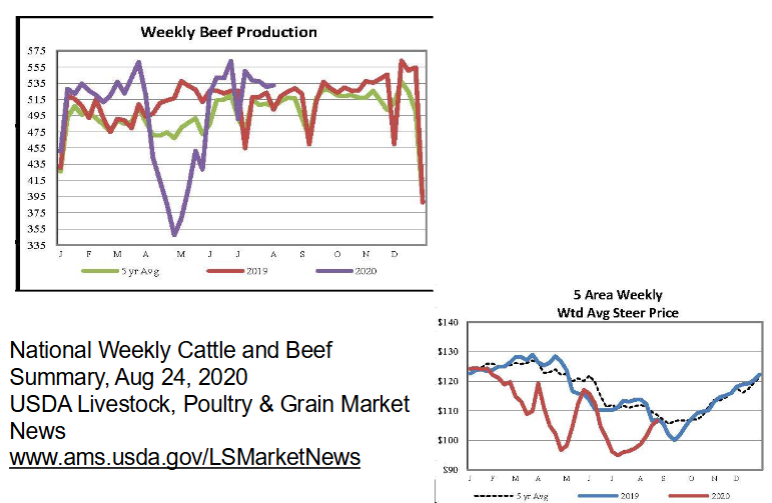
8/26: Reproduction Parturition and Neonatal Calf Management
Pregnancy
Begins with the heifer going into estrus and ovulating.
During that period, the cow will be mated naturally or via AI service.
Fertilization occurs in the upper end of the oviduct.
Within 3-4 days, the zygote moves down the fallopian tube to the horn of the uterus.
For up to 30 days the zygote lies free within the uterine cavity before implanting to the wall of the uterus.
The placental membranes form the attachment of the fetus with the dam.
This creates a system for both nutritional and respiratory exchange.
Ruminants have a cotyledonary placenta.
Fetal Membranes
Composed of 3 structures
Chorion
Outer membrane that extends through both horns of the uterus into the body. Its blood vessels exchange materials with uterine blood vessels.
Amnion
Begins at the naval and surrounds the fetus. Contains about 6-7qt of amniotic fluid that protects the fetus.
Allantois
Separates the chorion and amnion, containing fetal urine and other fluids.
The umbilical cord unites the fetus to the placenta.

Pregnancy Detection
Methods include:
Cessation of estrus or heat.
Manual palpation via rectum of reproductive tract.
A fetus as young as 40d can be detected, with 60d being the most reliable age.
Blood samples
Within 28 days.
ELISA (Enzyme Linked Immunosorbent Acids) is a test that detects a protein produced in the placenta.
Must be 75 days since last calving to reduce false positives.
Producers that test for pregnancy exponentially increase their economic expenses.
Cows are expensive to keep. If a cow isn’t breeding and a producer is unaware, those are lost resources.
Open cows can be culled for that reason (sold to other breeders OR for meat).
Salvage value: the estimated residual worth of an asset at the end of its useful life.
Calving
Gestation period: 283d.
End is marked by parturition.
Management can have a profound effect on how successful the calving season and subsequent breeding season can be.
Comes with its own challenges.
6-10% of all calves born in beef cow herds in the U.S. die at/soon after birth.
Usually due to dystocia (50%).
80% of those calves are anatomically normal, and most die due to injury / suffocation from difficult birth.
Calving Difficulties
3 Categories
Calf effects
Heavy birth weights
Cow effects
Age
Pelvic area
Fetal position at birth
5% of calves come in abnormal positions.
Signs of Calving
Red, swollen vulva
Prominent tail head / pelvic bones indicate relaxed pelvic ligaments.
Full tight udder.
Isolating behaviors.
Discharge of liquefied mucous plug.
Endocrinology
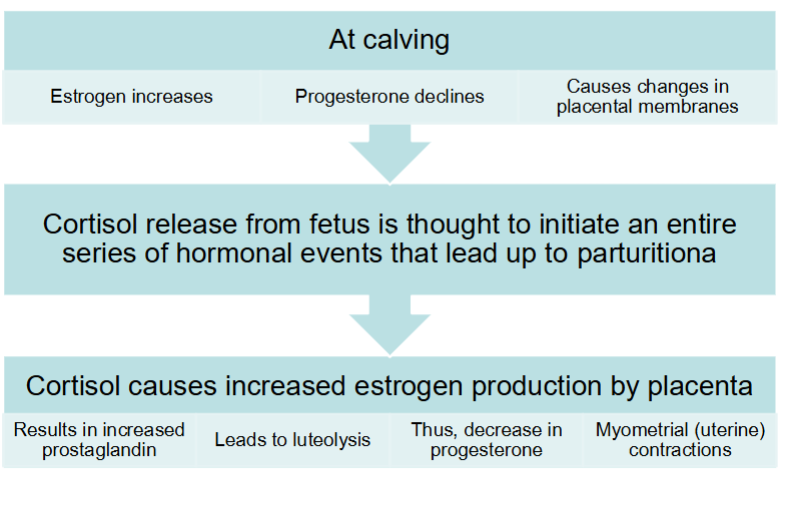
Prostaglandin also signals the hypothalamus to trigger pituitary to release oxytocin, which causes smooth muscle contractions (uterus).
Oxytocin works in extremely small quantities. Use with caution and under veterinary advice.
Stages of Calving
9/2: Cattle Behavior & Cattle Facilities
Cattle in General
Cattle are prey and herd animals, and therefore are…
Vigilant.
Prefer to be with others.
Want to see where they are going.
Dark → light area movement is preferable.
Want to return to where they came from (what is known and safe).
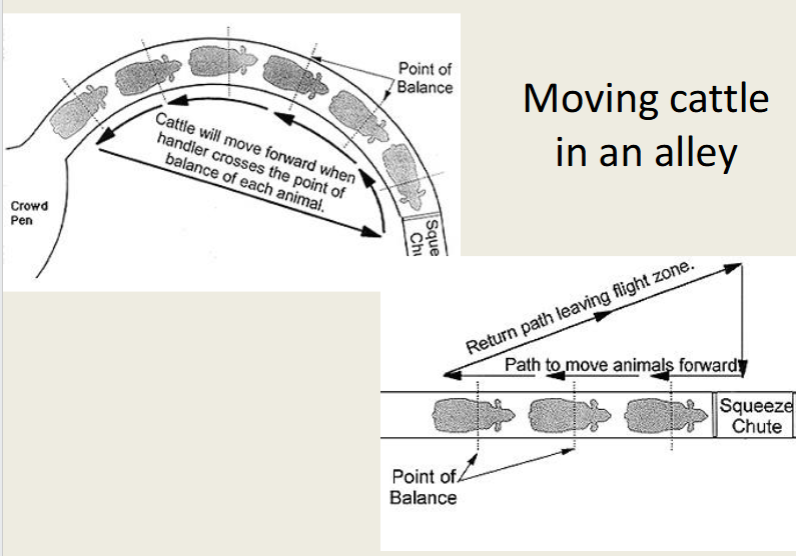
Curved alleys are often an effective way to move cattle.
Cattle Activity
A cow on pasture with adequate forage available will spend:
~8hrs/day grazing.
~8hrs/day resting.
~8hrs/day ruminating.
Most cattle are active in early morning and around dusk.
Cows express social interactions and establish dominance within a herd.
Rank is influenced by sex and age → typically matriarchal.
Bonds and hierarchy are established by mock fighting and allogrooming.
Subordinate animals often do most of the grooming, and dominant animals initiate mock fighting.
How Do Cattle Perceive Their Environment?
Vision
Cattle have an extremely wide field of view (300 degrees).
Cattle are sensitive to motion and contrasts of light/dark.
Cattle struggle with visual acuity and focus → cannot detect specific features, so they rely on other sense to properly identify others.
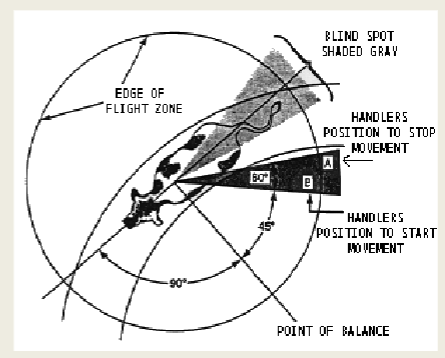
Cows have a 60-degree blind spot behind them.
Cattle have dichromatic vision.
They cannot see red, but can see yellow/green/blue/purple/grey.
This enhances their night vision and ability to detect motion.
Due to their vision, cattle are cautious of shadows and changes in the ground or floor.
They have poor depth perception (60 degrees of vertical vision).
Poor focus.
Hearing
Cattle are sensitive to tone and pitch.
Ears are able to move independently of each other and orient toward objects.
Vocalizations
Moo
Low pitched, calm.
Call, hoot, or roar
Higher pitched, brief, repetitive, distressed.
Bulls roar in a high amplitude.
“Menh”
A sound that hungry calves make.
Body Language
Fear
Whites of the eyes show.
Raised heads.
Swishing tails, increasing with agitation.
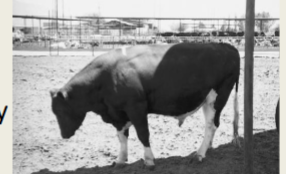
Aggression
Lowered head.
Broadside threat display.
Sickness
Lethargic.
Hunched posture.
Panting, coughing, etc.
Cows hide sickness very well.
Moving and Handling Cattle
Calm cattle are easier to work.
Excited cows take about 20-30 minutes to calm down.
In order to keep cows calm, handlers should be quiet and focus on leading cows rather than driving them.
It is important to care for the cow’s mental and emotional needs, not just their physical needs.
Always keep a positive and compassionate attitude.
Flight zones / point of balance
Flight zones indicate personal space and comfort zones.
Varies by cow, and depends on calmness or agitation.
Bigger when approached head-on.
Point of balance is a pivot point.
Consequences of poor temperament.
Research indicates that undesirable temperaments result in cows that have reduced weight gain, reduced meat tenderness, and reduced immune response.
There are some benefits to keeping an aggressive cow in regions where potential predators threaten a calf.
Moving Cattle

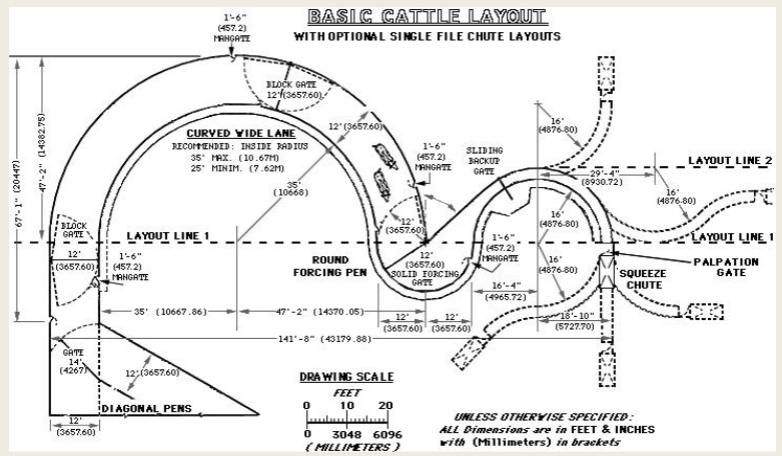
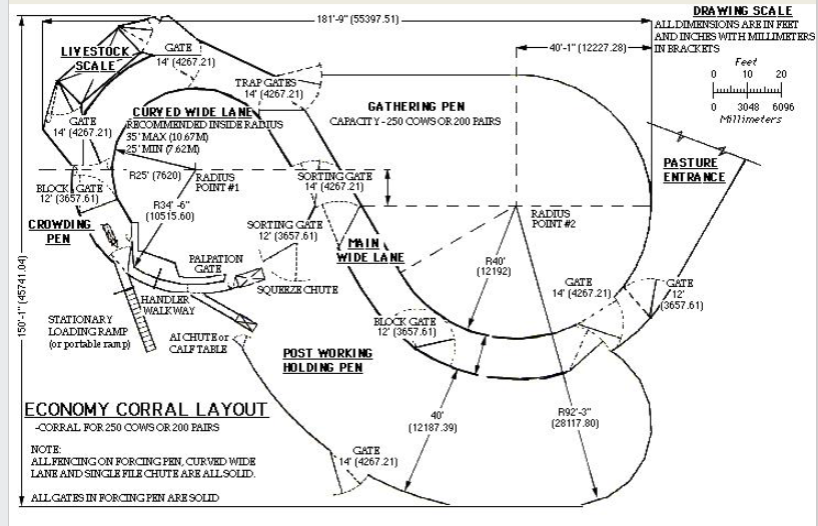
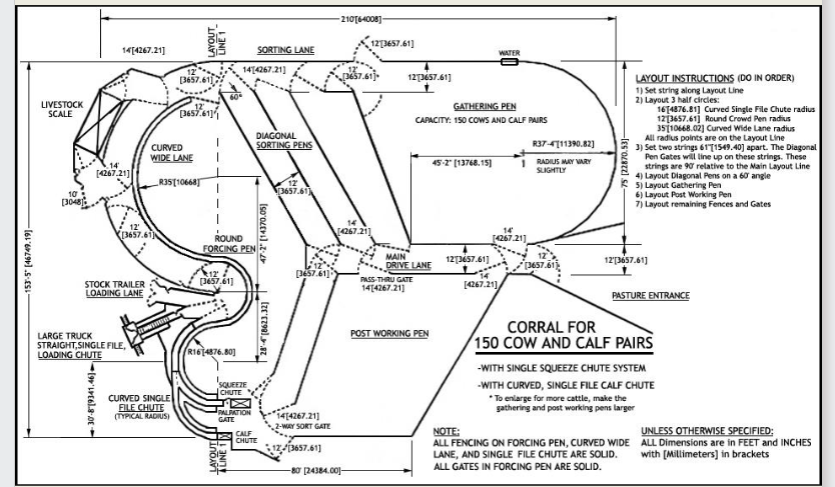
Facilities and Cattle Handling
It is important that facilities are safe for bother workers AND cattle.
Production agriculture has inherent physical risks, and human error is a factor in many accidents.
Head chutes help restrain animals for health procedures in a safe fashion for both the cow and the workers.
Facilities should include (via priority):
Head gate
Squeeze chute
Loading chute
Pens
Crowding alley
Electricity
Water
A roofed/covered work area
Facilities should flow nicely and be simple.
Always leave enough room for air circulation, growth, and drainage.
Alleys should be 12ft wide and 6ft high (minimum).
Facilities should be quiet.
Solid sides limit view.
Curves help limit backups and balking.
Move cattle in small bunches.
Handlers should…
Use knowledge of cattle behavior to their advantage.
Be attentive, creative, and assess problems promptly.
Facility Layout Examples