5.2 earths structure
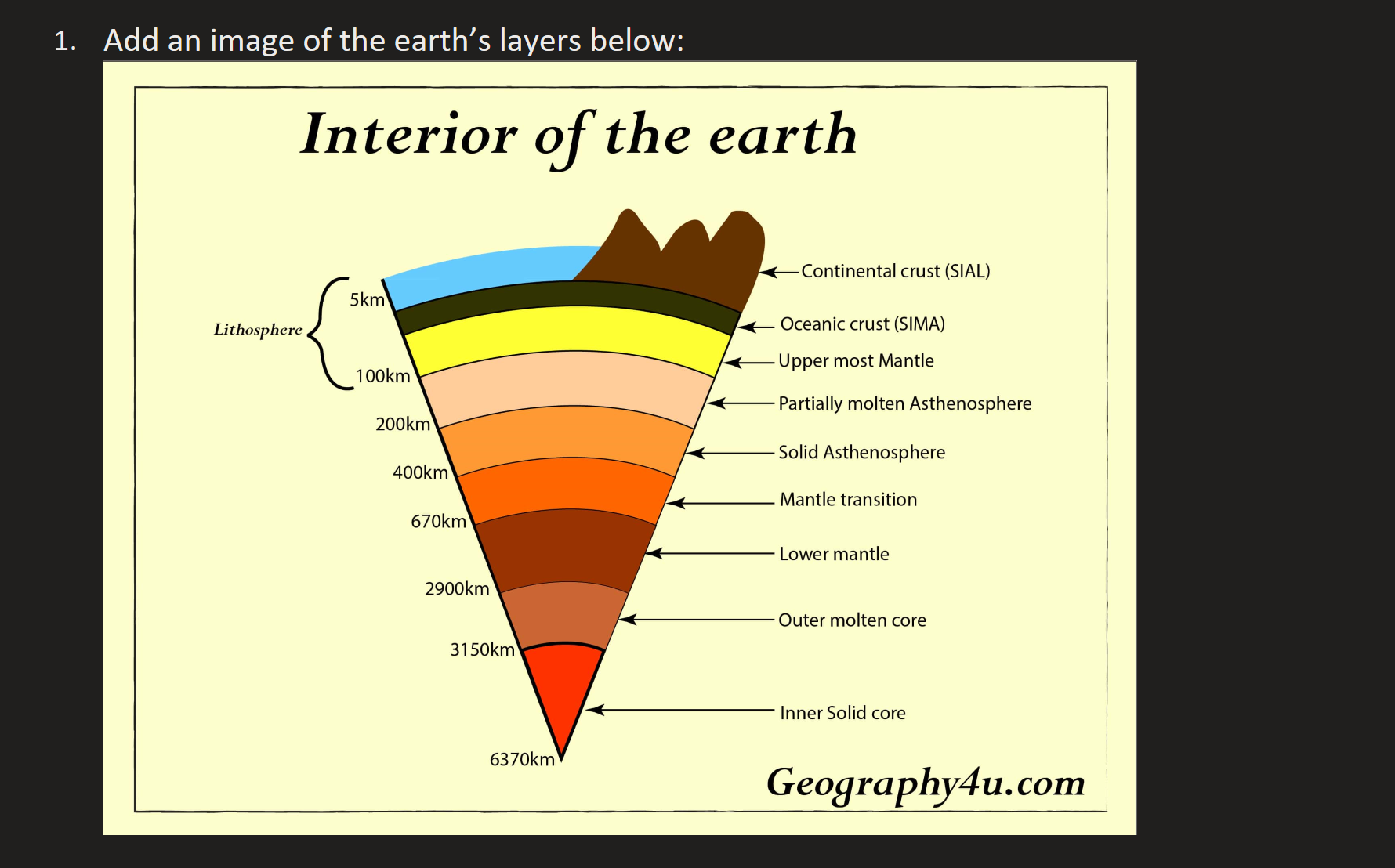
Add a definition of the following words:
Lithosphere - layer of rock that makes up the crust and upper mantle
Crust - the outermost surface of the earth, 5-10km thick under oceans and up to 70km thick under continents, oceanic is an occasionally broken layer of basaltic rocks called sima (silica and magnesium), continental are bodies of mainly granite rocks called sial (silica and aluminium), sial is the upper layer of the crust and makes continents and land masses, sima lower layer of crust and oceanic crust, sial is thicker but less dense
Mantle - rock and silica in a thick liquid state making up the thickest layer of the earth, 2900 km thick, silicate rocks are a thick liquid due to high temperature and pressure, they are denser the deeper they are, upper mantle rocks are solid and sit on top of the asthenosphere which is plastic like rock which moves slowly while carrying the lithosphere.
Core - the center made of molten iron and nickel at 5000 Celsius
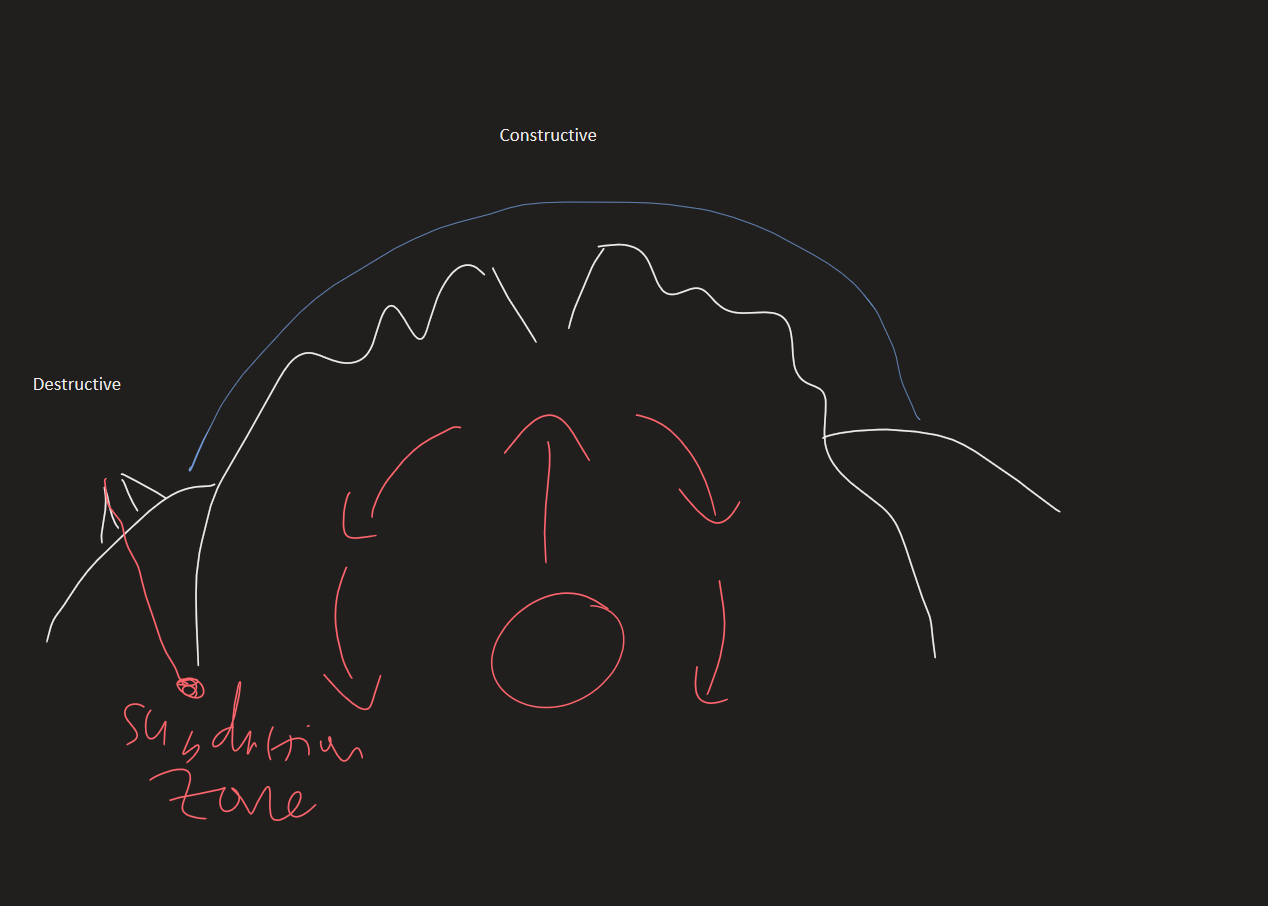
Convection Current - circular heat driven movements of magma caused by density differences
Magma - liquid, gas and molten rock, inside the earth's mantle
How does an intrusive rock form?
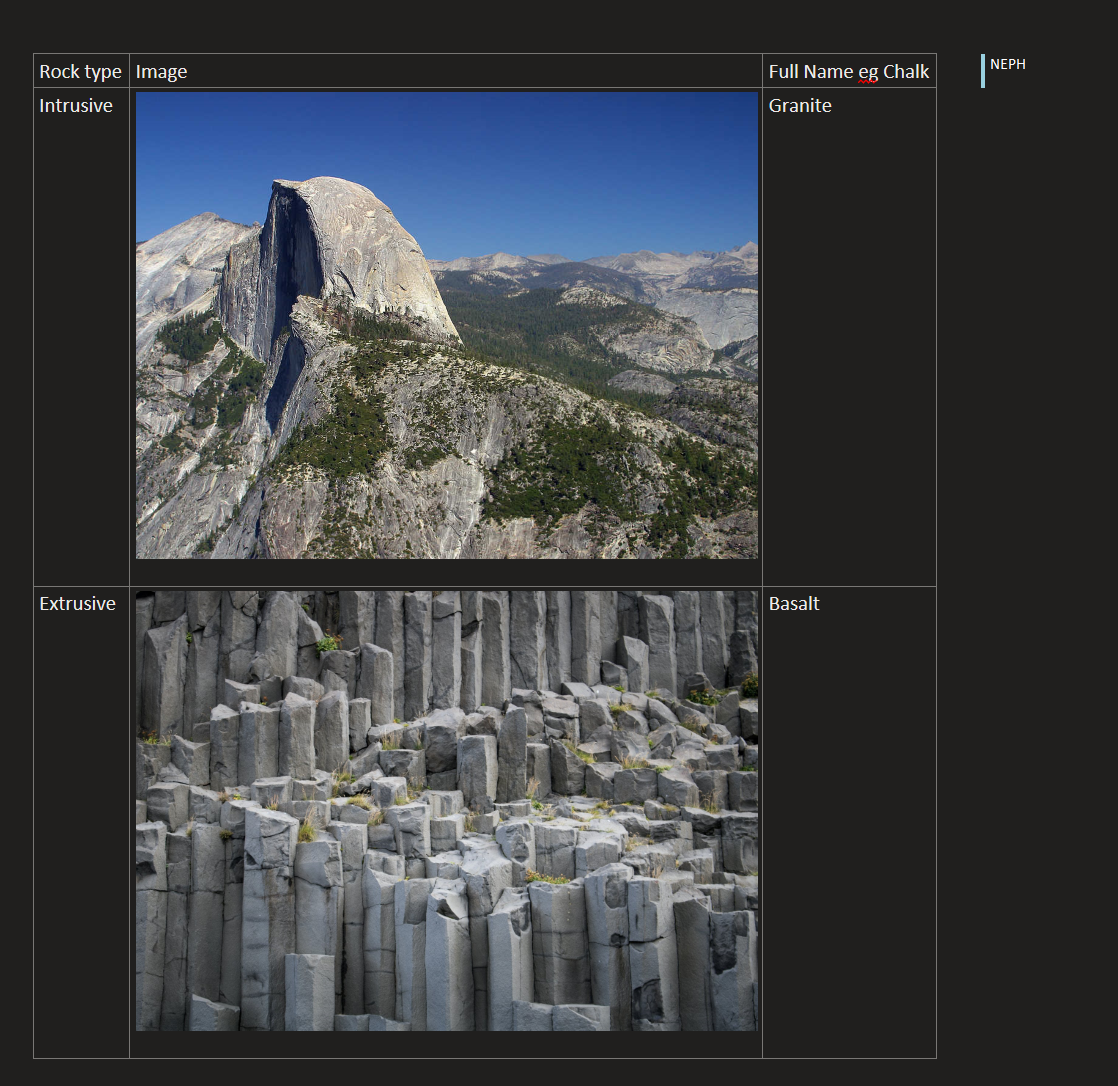
When magma cools and solidifies below the earth's surface, it becomes intrusive. Coarse grained igneous rocks are made like granite. Then when rocks above this are eroded away or appear through uplift due to convergent plate boundaries, the igneous landforms become more present.
Why does an extrusive igneous rock look different to an intrusive rock and why?
Because they are cooled and crystalized quicker by the air or sea as they are not insulated by the mantle and crust which means that they are made up of smaller crystals and are finer grained resulting in rocks like basalt instead of coarse and large grained granite. Nevada
Watch the videos about Alfred Wegener and Marie Tharp, how did they help us understand the structure of the earth?
Alfred Wegener helped by realising that some of the continents fit together, and that there was the chance that it was once a single large continent that has broken apart through continental drift. Then he gathered evidence for this by proving that matching fossils and rock geology were present on the coasts of different continents which backs up his idea. This helped us understand the concept of plate tectonics and how the earth can change throughout time. However this theory went completely against science at the time and made Wegener incredibly unpopular, with people refusing to believe him, even after his death. Marie Tharp, however, went on to prove his theory when she started plotting maps of the ocean floor, finding massive valleys running through the ocean, where plates had moved away from each other, however people didn't believe her either until she found another map of where earthquakes occur and realised that they corresponded, proving that Wegener was right about continental drift and helped us work out how plate tectonics and convection currents work.