Chapter Six: Proteins
What Are Proteins?
macronutrients found in each cell in the body
participate in every cellular activity that helps the body to function
all enzymes are made from protein
some hormones are made from protein
Proteins Differ Structurally from Carbohydrates and Lipids
made up of chains of amino acids that are made based on an individual’s DNA
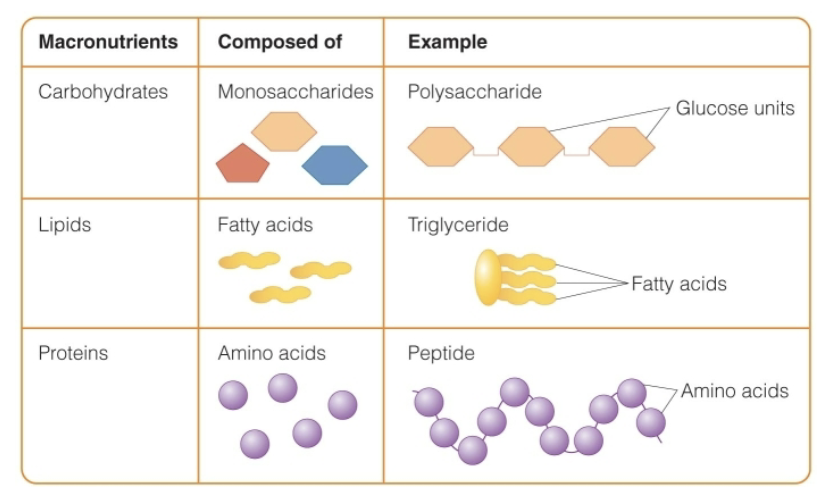
excess dietary protein cannot be stored in the body
proteins contain nitrogen, in addition to carbon, hydrogen, and oxygen
some protein foods contain sulfur, which is not found in carbohydrates or lipids
The Building Blocks of Proteins are Amino Acids
there are 20 amino acids that are used to make proteins
the proteins are classified by the number of amino acids in the chain
peptides: fewer than 50 amino acids
dipeptides: 2 amino acids
tripeptides: 3 amino acids
polypeptides: more than 10 amino acids
proteins: more than 50 amino acids
typically 100 to 100,000 amino acids linked together
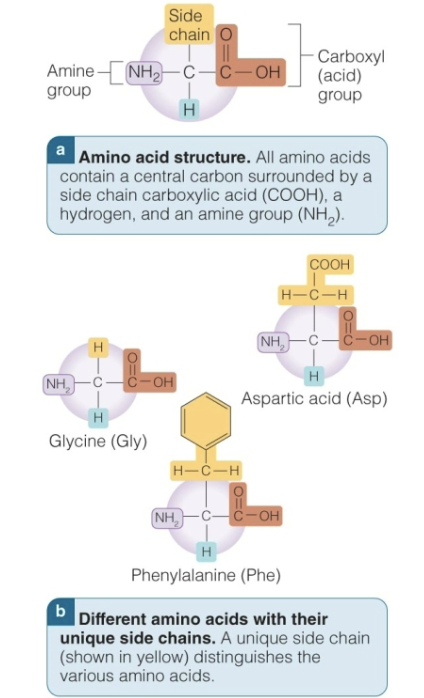
anatomy of an amino acid
contains an amine group (NH2), a carboxylic acid group (COOH), and a side chain (R group)
the side chains make each amino acid unique and influence the function of each amino acid
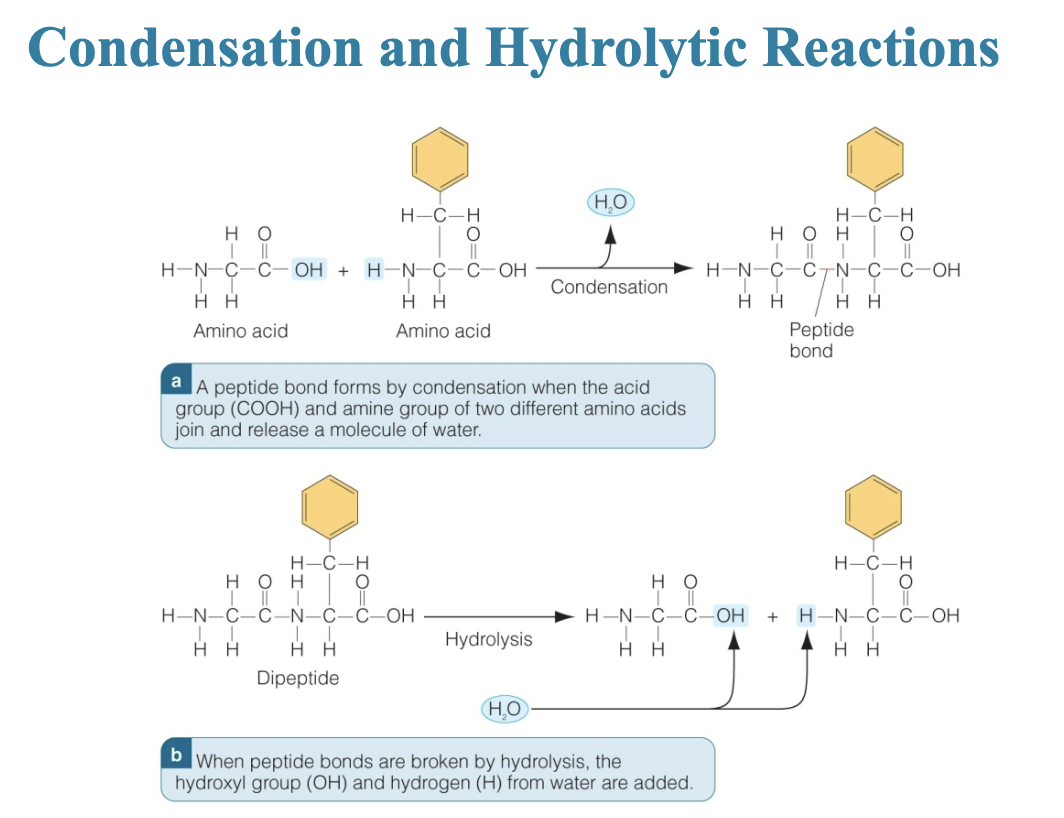
peptide bonds
form when the carbon of the acid group of one amino acid joins with the nitrogen atom of the amine group of a second amino acid
formed through condensation
broken through hydrolysis
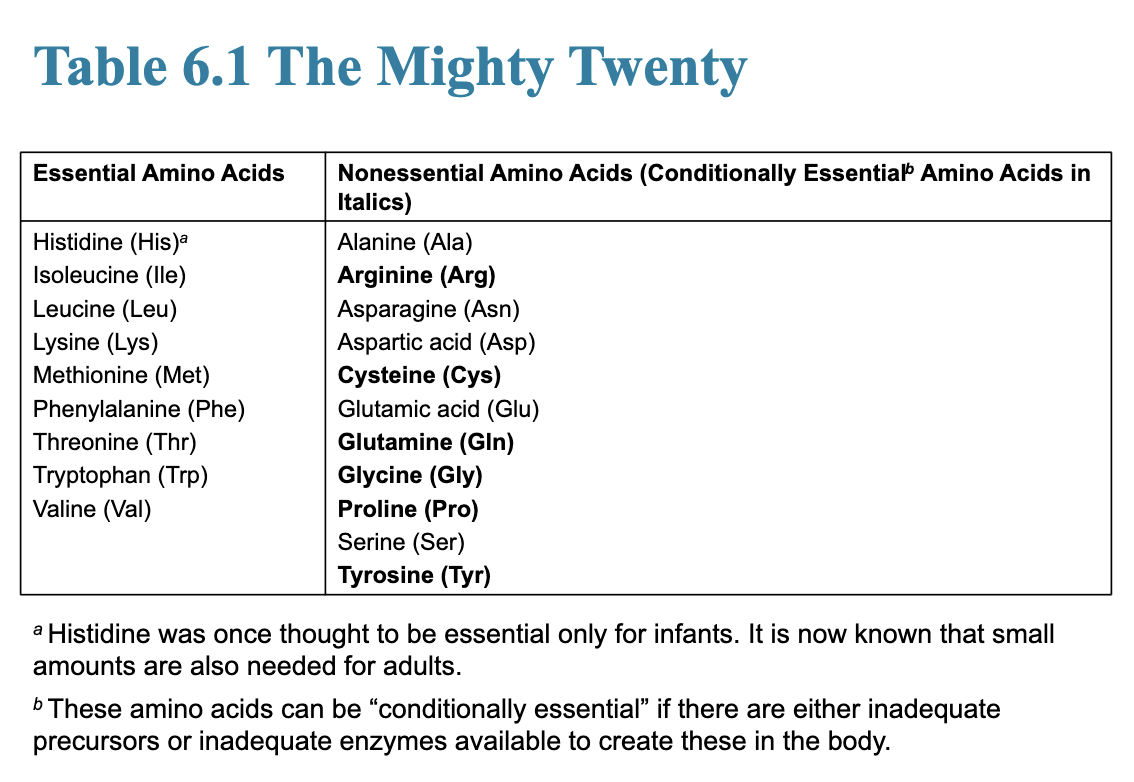
Essential, Nonessential, and Conditional Amino Acids
essential
must be consumed in the diet
nine essential amino acids
nonessential
can be synthesized in the body
eleven essential amino acids
conditionally essential
nonessential amino acids that become essential because the body cannot make them
ex: tyrosine and glycine
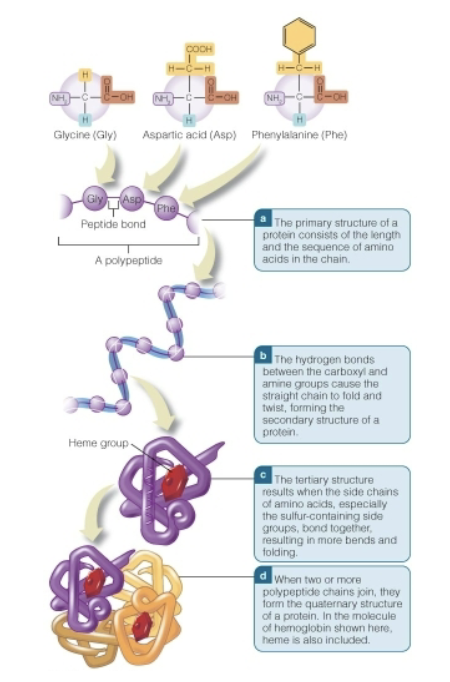
The Organization and Shape of Proteins Affect Their Function
four levels of structure
primary structure: amino acids are linked together to form a simple linear chain
secondary structure: geometric shape of the protein that is folded and twisted
tertiary structure: 3-dimensional globular shape of the protein
quaternary structure: two or more polypeptide chains bond together
What are the Key Steps in Digesting and Absorbing Protein?
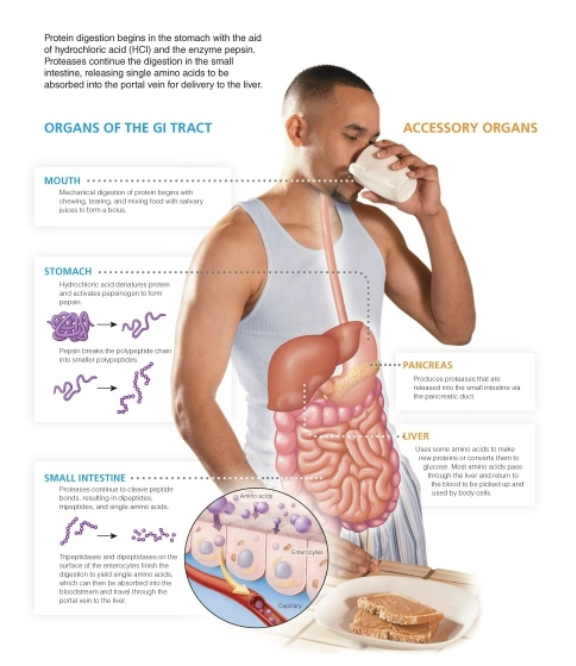
protein digestion begins in the stomach
the bolus enters the stomach
gastrin stimulates the release of HCl
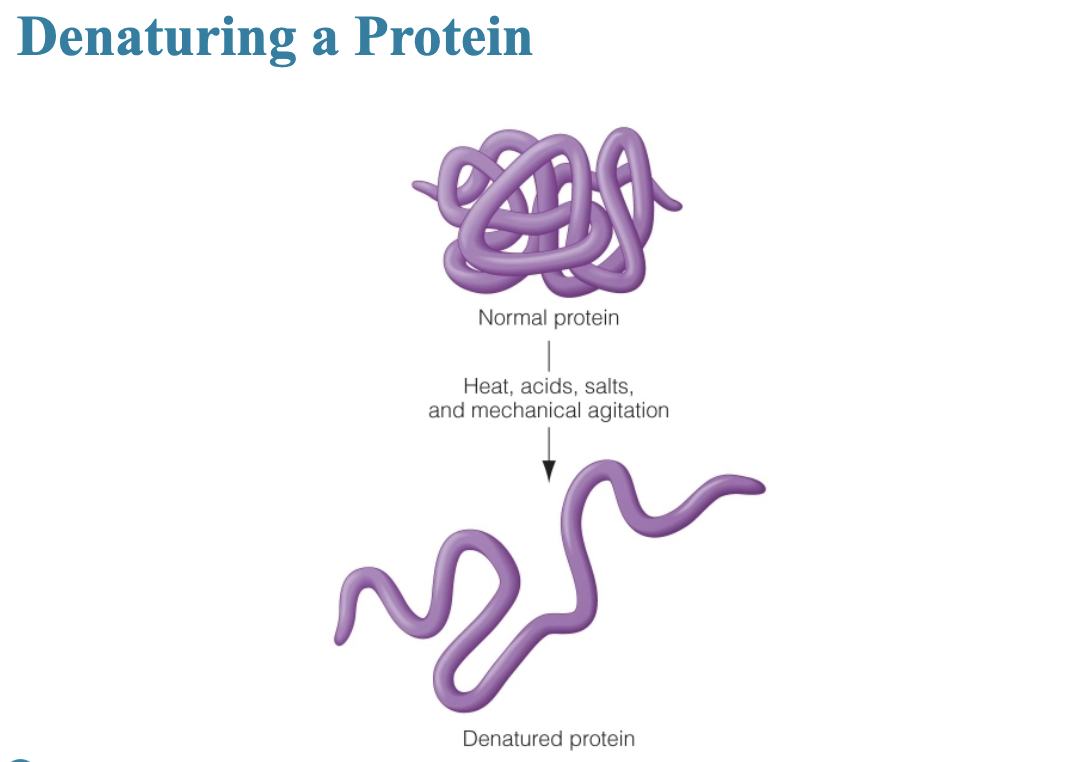
HCl denatures the protein and converts pepsinogen to pepsin
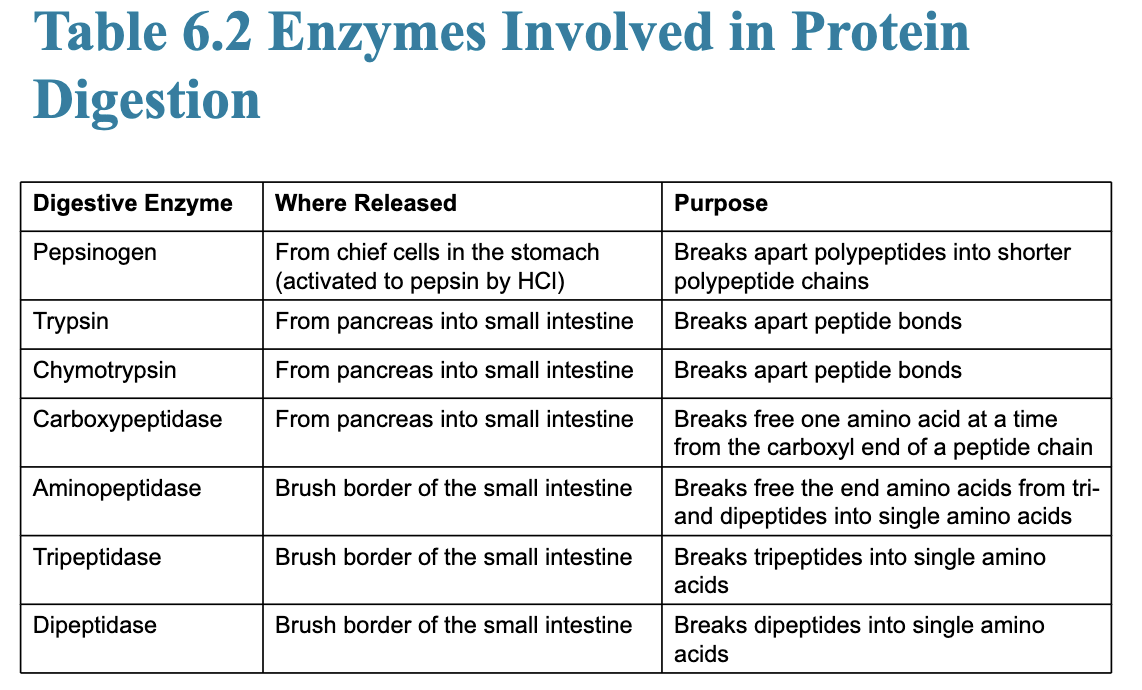
pepsin breaks polypeptides into shorter chains
digestion continues in the small intestine
polypeptides enter the small intestine and are broken down into smaller peptides
cholecystokinin stimulates the release of proteases by the pancreas
proteases break apart the polypeptides to tripeptides and dipeptides
dipeptidases and tripeptidases break the dipeptides and tripeptides into amino acids
amino acid absorption
amino acids are absorbed in the small intestine
amino acids are transported to the liver from the intestines via the portal vein
in the liver, amino acids are:
used to synthesize new proteins
converted to energy, glucose, or fat
released to the bloodstream and transported to cells throughout the body
How are Amino Acids Metabolized?
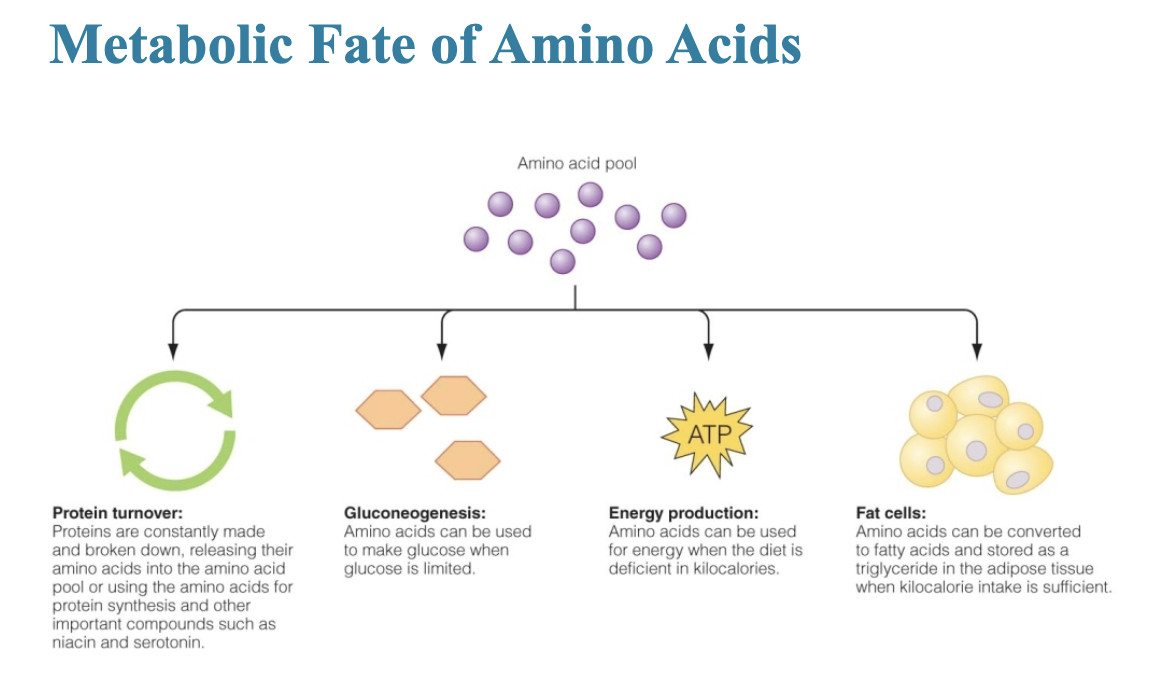
the liver metabolizes amino acids, depending on bodily needs
most amino acids are sent into the blood to be picked up and used by the cells
if the diet is low in carbohydrate, the amino acids are converted into glucose
amino acid pools supply the body’s ongoing need for protein synthesis
the body breaks down and makes proteins daily to maintain body structures such as tissues and organs
amino acid pools provide a ready supply of amino acids the body uses to create proteins on demand
extra protein is used to help the body heal if a person has extensive wounds
protein turnover is the process of degrading and synthesizing proteins
more than 200 grams of protein is turned over daily
Protein Synthesis is Regulated by Your Genes
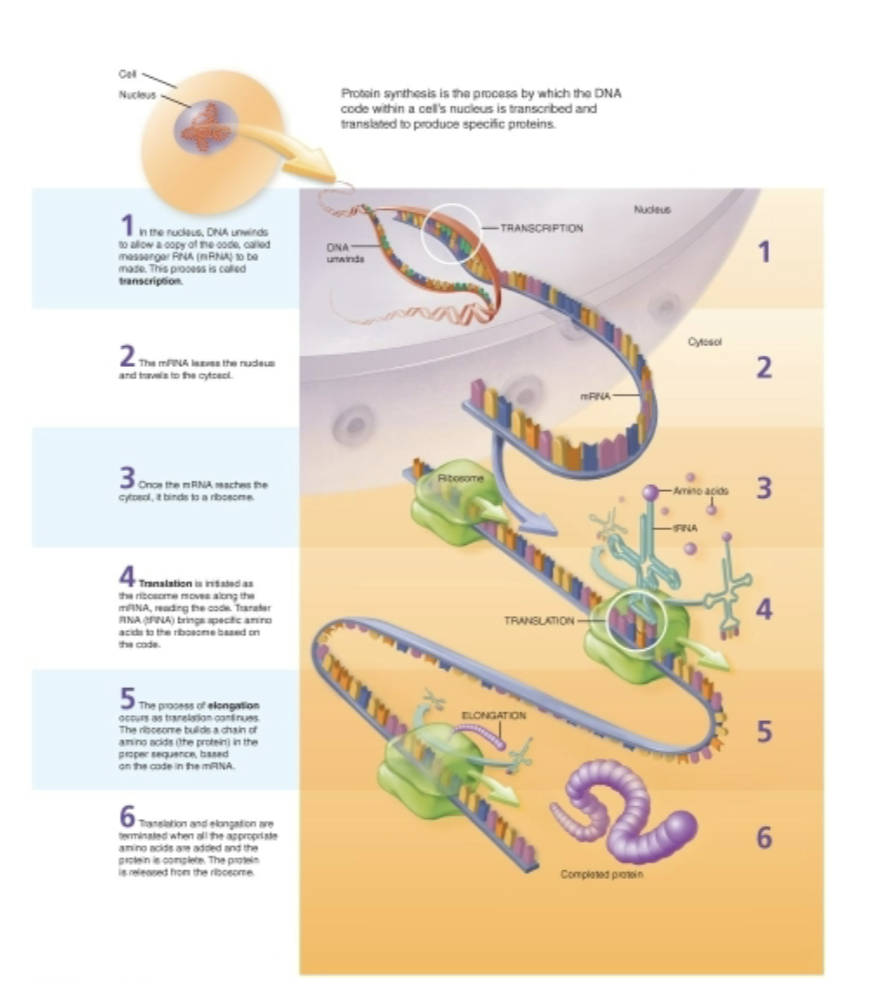
3 steps of protein synthesis
transcription: information about building or repairing old proteins is stored in DNA. When a new polypeptide chain is needed, an inverse copy of the DNA is generates forming messenger RNA (mRNA)
translation: mRNA binds to a ribosome. the code on the mRNA is ‘read’ and a transfer RNA (tRNA) brings a specific amino acids to the ribosome, based on the code
elongation: the translation process continues as amino acids are collected by transfer RNA (tRNA) and brought to the ribosomes to build a chain in the proper sequence, continuing until the sequence is finished and the new protein is released
sickle-cell anemia is a common blood disorder that involves abnormal or flawed protein formation
Deamination Removes the Amine Group from Amino Acids
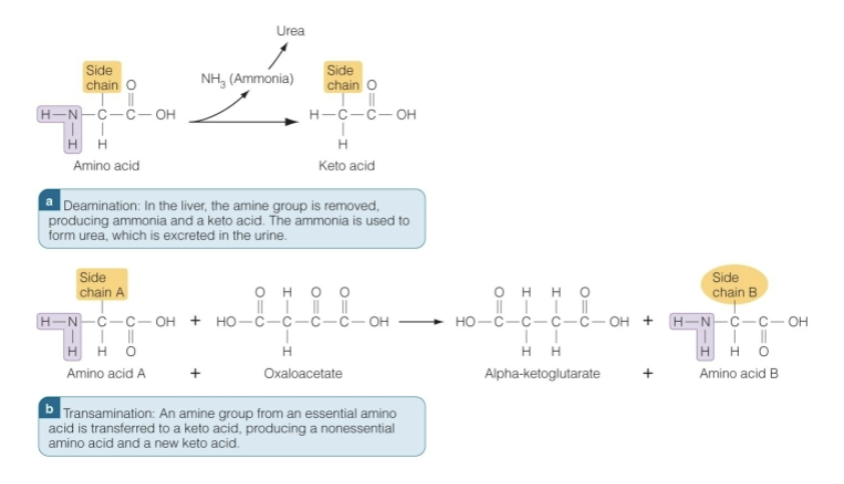
when the amino acid pool reaches capacity, the amino acids are broken down to their component parts for other uses
deamination occurs when the amine group is removed from the amino acid. ammonia is formed
ammonia is converted to urea in the liver. urea is subsequently excreted in the urine
carbon-containing remnants are:
converted to glucose, if they are glucogenic amino acids, through gluconeogenesis
converted to fatty acids and stored as triglycerides in adipose tissue
oxidized for energy via metabolic pathways
Nonessential Amino Acids are Synthesized Through Transamination
transamination is the process of forming nonessential amino acids by transferring the nitrogen from one amino acid to a keto acid to form a new nonessential amino acid
How is Protein Metabolized?
protein can be used for gluconeogenesis
if too few carbohydrates are consumed, the body converts glucogenic amino acids into glucose
excess protein is converted to fatty acids and stored as triglycerides in adipose tissue
if too few kilocalories are consumed, protein will be oxidized for energy
What is the Function of Protein in the Body?
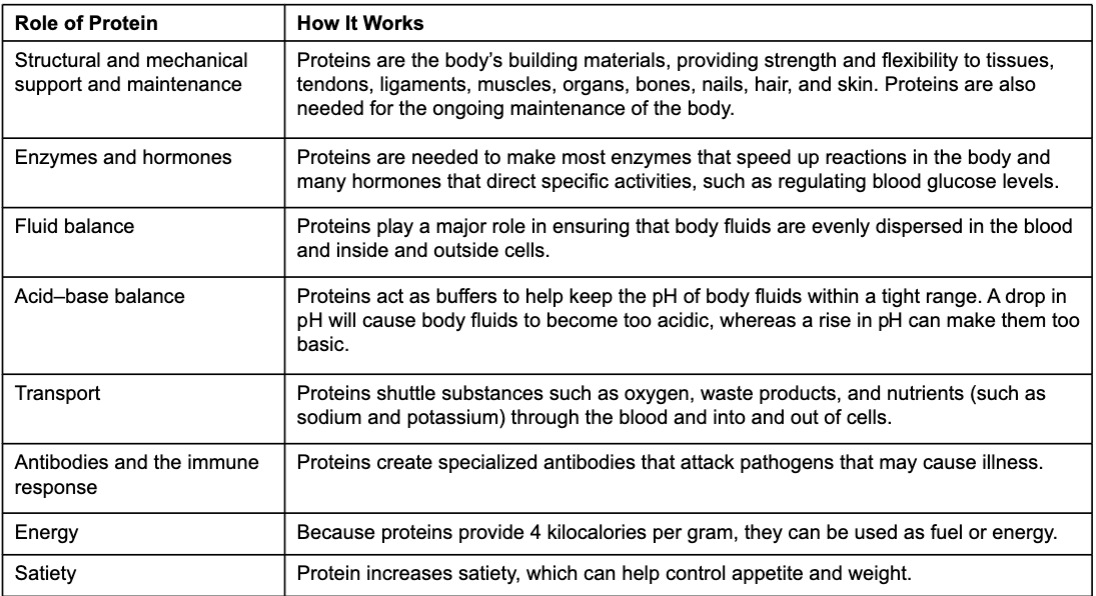
provide structural support and enable movement
act as a catalyst
enzymes speed up reactions
act as a chemical messenger
hormones regulate cell actions
regulare fluid balance
help maintain acid-base balance
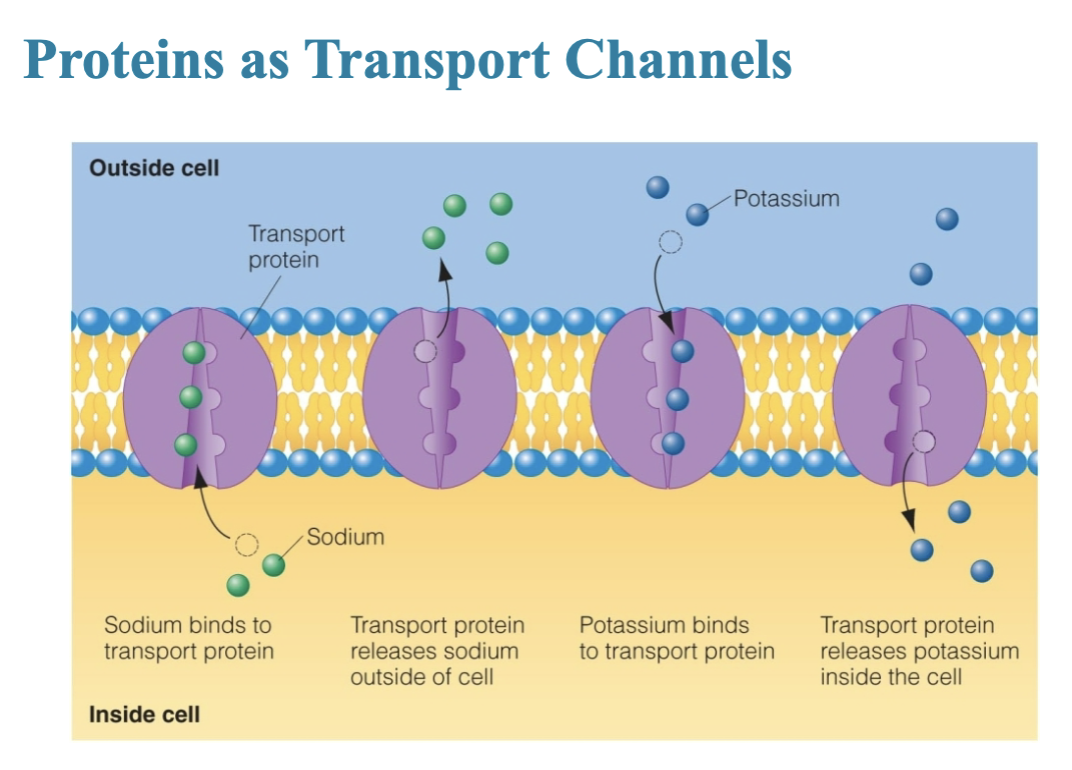
transport substances throughout the body
transport proteins shuttle oxygen, waste products, lipids, some vitamins and sodium and potassium through the blood and cell membranes
contribute to a healthy immune system
antibodies are proteins that bind and neutralize pathogens that would harm the body
provide energy
4kcals/grams
improve satiety and appetite control
How Much Protein Do You Need Daily?
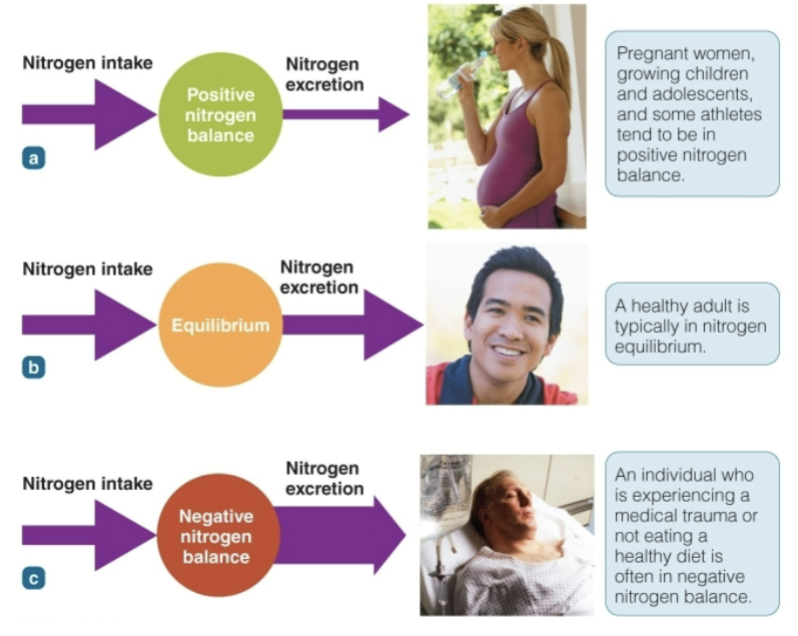
healthy adults should be in nitrogen balance
should consume enough to replace what is used everyday
individuals in positive nitrogen balance
pregnant woman, people recovering from surgery or injury, and growing children
should consume enough to build new tissue
individuals in negative nitrogen balance
immediately after surgery, fighting an infection, or severe emotional trauma
need to consume enough kilocalories and protein to meet demand
You Can Determine Your Own Protein Needs
protein intake recommendations
RDA: 0.8 g/kg daily for adults over 18
AMDR: 10 to 35% of total daily kilocalories
overweight individuals’ needs are not much greater than normal-weight individuals of similar height
the American College of Sports Medicine, the Academy of Nutrition and Dietetics, and other experts advocate:
50 to 100 percent more protein for competitive athletes participating in endurance exercise or resistance exercise (typically this population eats more and therefore gets additional protein)
What are the Best Food Sources of Protein
not all protein is created equal
high-quality protein:
is digestible
contains all essential amino acids
provides sufficient protein to synthesize nonessential amino acids
several methods have been developed to determine the protein quality of foods
amino acid score
composition of essential amino acids of a protein compared with a standard, usually egg protein
protein digestibility corrected aminoa cid score (PDCAAS)
includes the digestibility of the protein and the amino acid score
used by the FDA to determine the DV% of proteins in a serving of food
biological value
how quickly the nitrogen from the absorbed protein is synthesized into body protein
What are the Best Food Sources of Protein?
complementary and complete proteins
complete proteins
contain all nine essential amino acids
usually, animal sources are complete proteins
exception: soy protein
are considered higher quality
incomplete proteins
low in one or more essential amino acids, referred to as limiting amino acids
usually plant sources
complementary proteins
combining an incomplete protein with a food that supplies the limiting amino acids (e.g., combining grains and legumes)
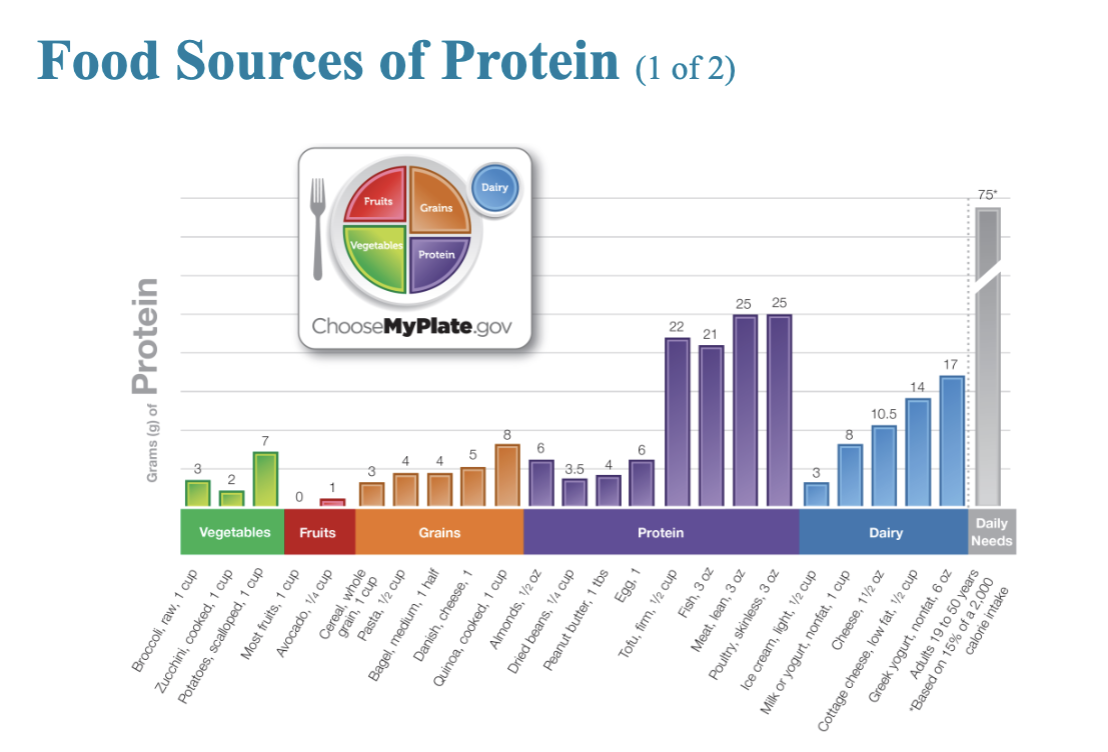
eggs, meat, fish, soy, and dairy contain significant amounts of proteins
a 3-ounce serving of cooked meat, poultry, or fish:
provides 21 to 25 grams of protein
provides about 7 grams of protein per ounce
is about the size of a deck of cards
is an adequate amount for one meal
eating a wide variety of foods is the best approach to meeting protein needs
taking protein supplements is unnecessary and generally not recommended
What Happens if you Eat Too Much or Too Little Protein
too much protein:
may increase risk for heart disease
high intake of protein sources with high saturated fat
choose a variety of plant sources of protein to reduce risk for heart disease
increases risk for kidney stones
a diet high in animal protein and low in carbohydrates lowers urine pH, which can raise the risk of developing kidney stones
increases risk for osteoporosis
high protein intake with too low calcium intake can lead to increased urinary calcium losses
high-protein diets with adequate calcium (especially from dairy sources) protect bone
too low protein intake can lead to bone loss in elderly men and women
too much emphasis on protein in a diet can crowd out or displace other nourishing, equally important food choices from the diet such as whole grains, fruit, and vegetables
too little protein
protein-energy malnutrition (PEM)
protein is used for energy rather than for its other functions in the body
other important nutrients are in short supply
more prevalent in infants and children
inadequate protein
cells lining the GI tract are not sufficiently replaced as they slough off
digestive function is inhibited
absorption of food is reduced
intestinal bacteria get into the blood ad cause septicemia
the immune system is compromised due to malnutrition and cannot fight infection
eating too little protein can lead to protein-energy malnutrition (PEM)
one in eight people in the world (most are children) do not have adequate protein intake, kcal intake, or both
the available protein is used as an energy source rather than for its other roles in the body
lack of protein damages the GI tract lining which inhibits the cells ability to absorb nutrients
malnourished individuals have compromised immune systems
3 types of PEM: Kwashiorkor, marasmus, marasmic kwashiorkor
Types of PEM: Kwashiorkor
severe protein deficiency
generally the result of a diet high in grains and deficient in protein
symptoms include:
edema in legs, feet, and stomach
diminished muscle tone and strength
brittle hair that is easy to pull out
a pale, sad, and apathetic appearance
being prone to infection, rapid heart rate, excess fluid in lungs, pneumonia, septicemia, and water and electrolyte imbalances
Types of PEM: Marasmus
results from a severe deficiency in kilocalories
frail, emaciated appearance
weakened and appear apathetic
often cannot stand without support
appears old beyond their years
hair thin, dry, and lacks sheen
low body temperature and blood pressure
prone to dehydration, infections and unnecessary blood clotting
Types of PEM: Marasmic Kwashiorkor
chronic deficiency in kilocalories and protein
edema in legs and arms
a ‘skin and bones’ appearance
with treatment, the edema subsides and appearance becomes more like someone with marasmus
Treatment for PEM
medical and nutritional treatment can dramatically reduce the mortality rate
should be implemented carefully and slowly
step 1: address life-threatening factors
severe dehydration
fluid and nutrient imbalances
step 2: restore depleted tissue
gradually provide nutritionally dense kilocalories and high-quality protein
step 3: transition to foods and introduce physical activity
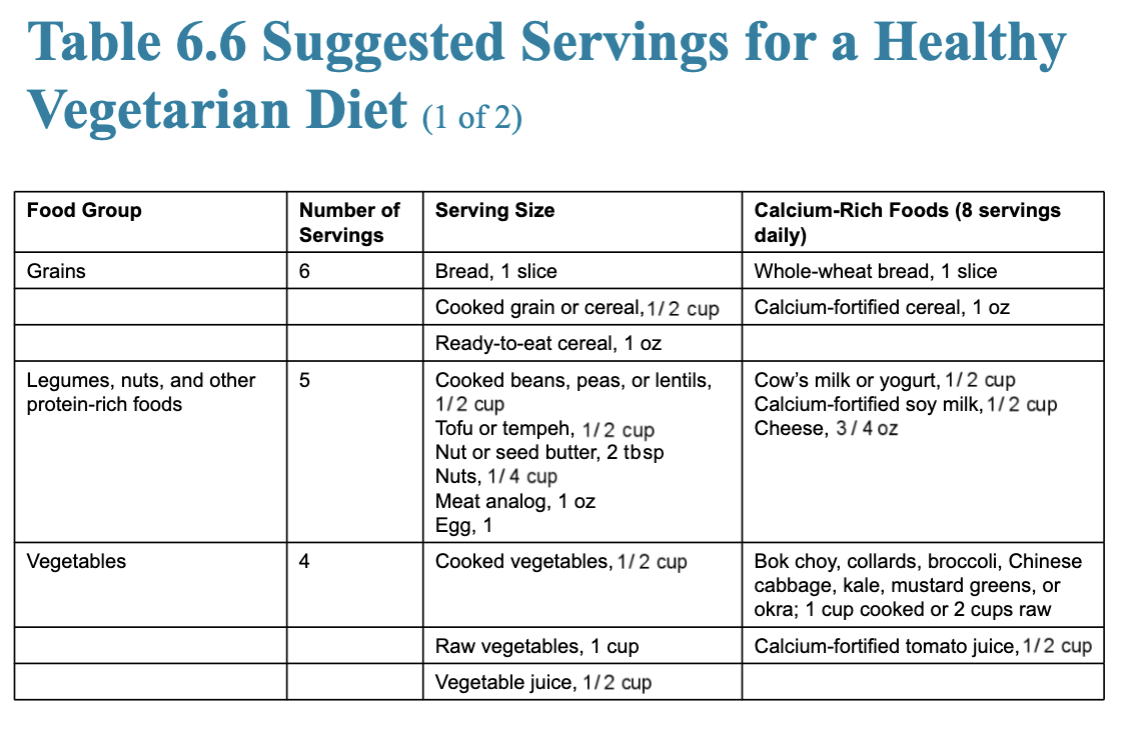
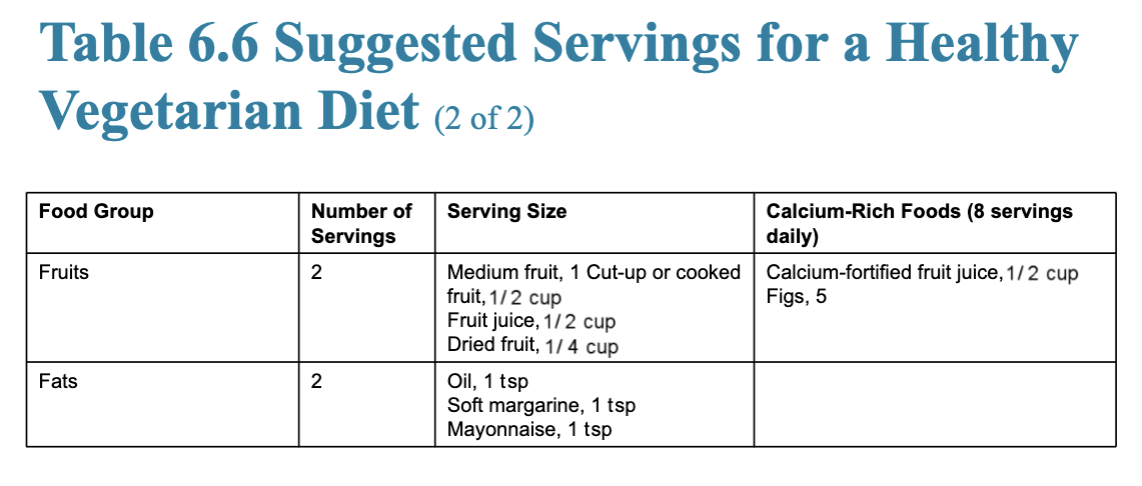
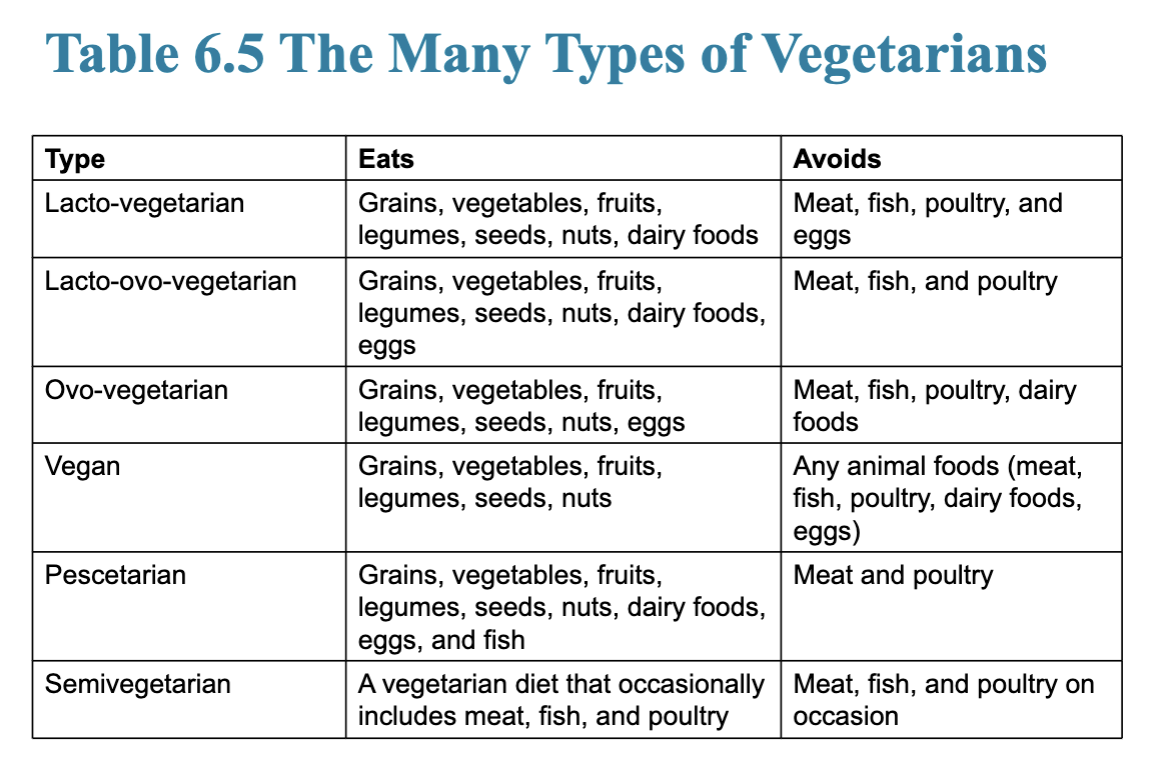
What is a Vegetarian Diet?
people choose vegetarian diets for a variety of reasons
ethical
religious
environmental
health
vegetarians must consume adequate amounts of a variety of foods and should plan meals well
benefits of a healthy vegetarian diet include reduced risks of:
heart disease
high blood pressure
diabetes
cancer
stroke
obesity
potential risks of a vegetarian diet include low intake of key nutrients
protein
calcium
iron
vitamin B12
zinc
vitamins A and D
omega-3 fatty acids