Lecture 3: expenses, non-current assets, debts.
Accrued Expenses
Definition: expenses that are outstanding at the end of the reporting period.
o Example: Accrued Utilities
Utilities (e.g., electricity, water, and gas) are consumed continuously but are
typically billed after usage. If a company uses these utilities throughout the
month, the cost of the utilities used but not yet billed by the end of the month
represents an accrued expense. This is recorded as a liability as the service was
received (and thus the expense incurred) but payment has not yet been made.
o Recorded as liabilities on the SoFP, usually current liabilities (i.e., expected to be
settled within one year from the date of the SoFP).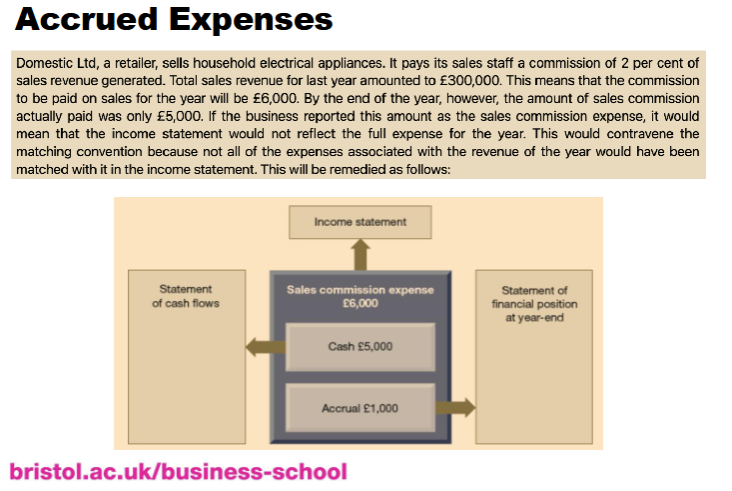
Prepaid Expenses
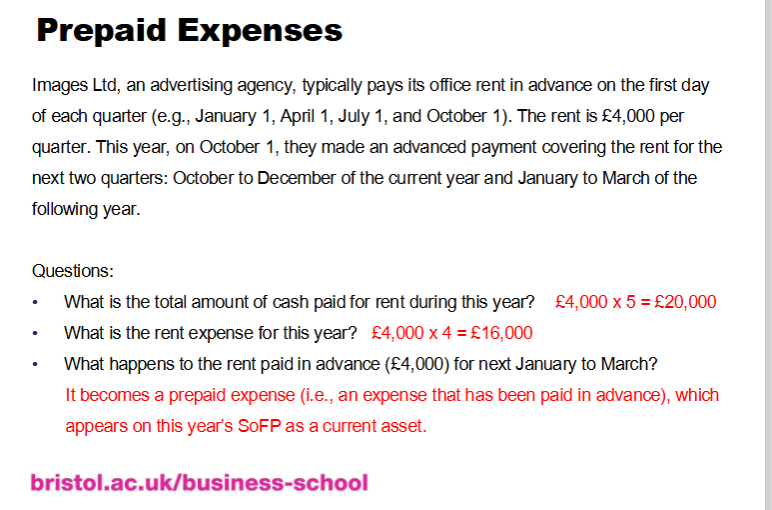
Definition: expenses that have been paid in advance at the end of the reporting period
o Examples: advance payments for expenses such as insurance premiums, rent,
or subscriptions.
o Recorded as assets on the SoFP, usually current assets (i.e., expected to be
consumed within one year from the date of the SoFP)
Non-current assets
Valuing NCAs
Non-current assets with finite lives:
• Definition: provides benefits for a limited period due to market changes, wear and
tear, etc.
• The amount used up is referred to as depreciation for tangible non-current
assets (or amortisation for intangible non-current assets).
• Carrying amount (aka net book value or NBV) = cost – accumulated depreciation (or amortisation)Non -current assets with Indefinite lives:
Definition: provides continuous benefits without a foreseeable time limit.
• An example: land.
• They are not subject to depreciation/amortisation.
Depreciation
Two commonly used depreciation methods:
▪ Straight-line method
▪ Reducing-balance method
which depreciation method should be used?:The one that reflects the consumption of economic benefits provided by the asset.
- Use straight-line method when economic benefits are consumed evenly over time
(e.g., buildings).
- Use reducing-balance method when economic benefits consumed decline over
time (e.g., motor vehicles, certain machinery that loses efficiency).
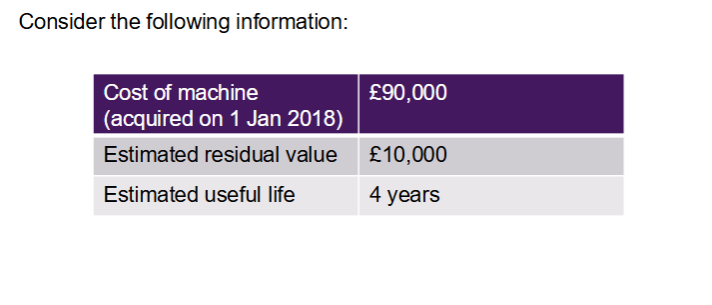
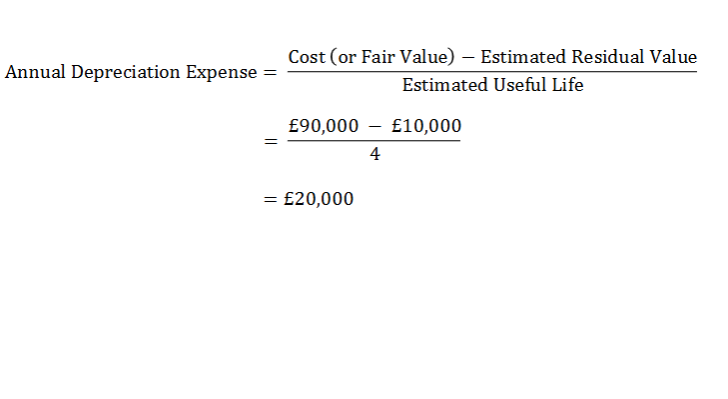
straight-line method example:
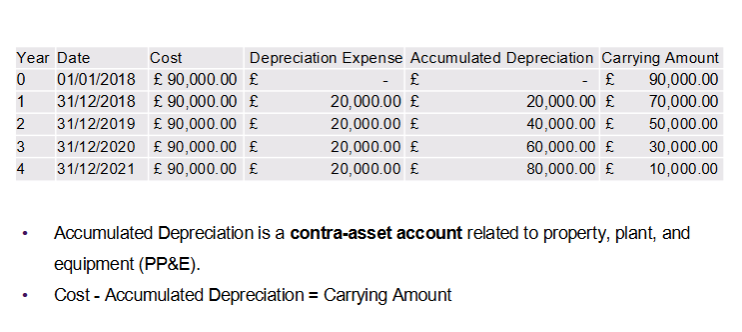
Reducing-Balance Method Example:
Annual Depreciation Expense = Carrying Amount x Depreciation Rate
Suppose we apply a fixed depreciation rate of 40%:

Disposal
When an asset is sold, we need to calculate the gain or loss on disposal:
Gain (or Loss) on Disposal = Sale Proceeds – Carrying Amount
Example:
a
n asset, purchased two years ago for £100,000, has an estimated residual
value of £20,000 and a useful economic life of four years. Depreciation has been
applied on a straight-line basis over the past two years. Calculate the gain or loss
from the disposal if the asset is sold in the third year for £50,000.
• Annual Depreciation Expense = (£100,000 – £20,000) / 4 = £20,000
• Carrying Amount = Acquisition Cost – Accumulated Depreciation
= (£100,000 – £20,000 x 2)
= £60,000
• Gain (or Loss) on Disposal = Sale Proceeds – Carrying Amount
= £50,000 – £60,000
= –£10,000 → A loss of £10,000
Fair Values of NCAs
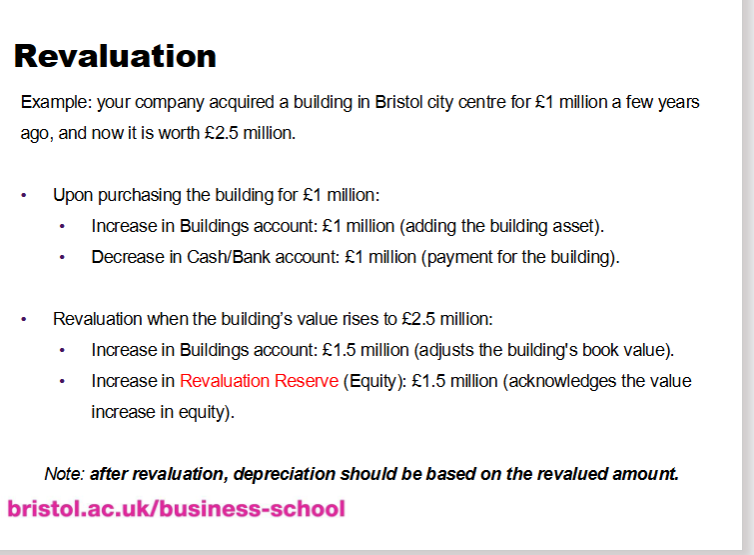
Initial recording: at historic cost.
Subsequent measurement: at fair value, when reliably measurable.
Impacts:
Provides more up-to-date information about the business
Potentially enhances business image due to value appreciation over time.
Revaluation
Statement of Comprehensive Income
Extends the conventional income statement to include Other Comprehensive Income (OCI): unrealised gains and some unrealised losses that affect equity
An unrealised gain (loss) refers to an increase (decrease) in the value of an asset/investment that has not been sold.
Examples of OCI items:
Property revaluation gain
Unrealised gains/losses from marketable equity shares
Foreign currency translation differences for foreign operations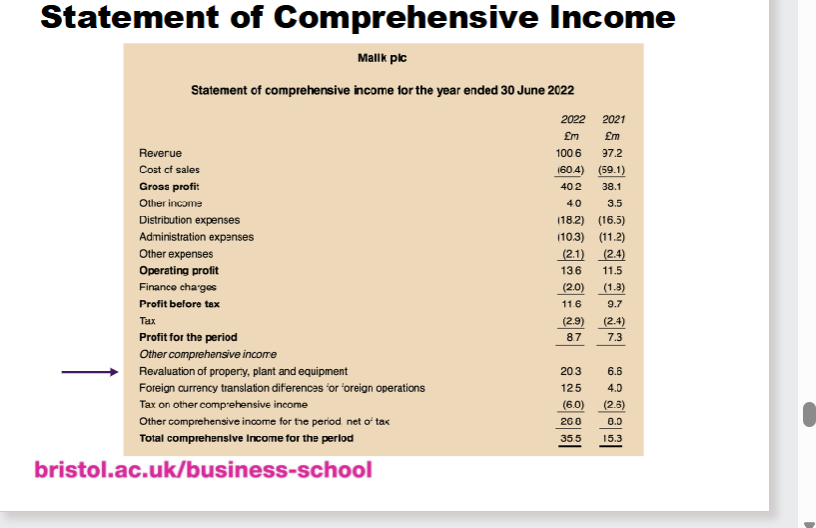
Bad Debts
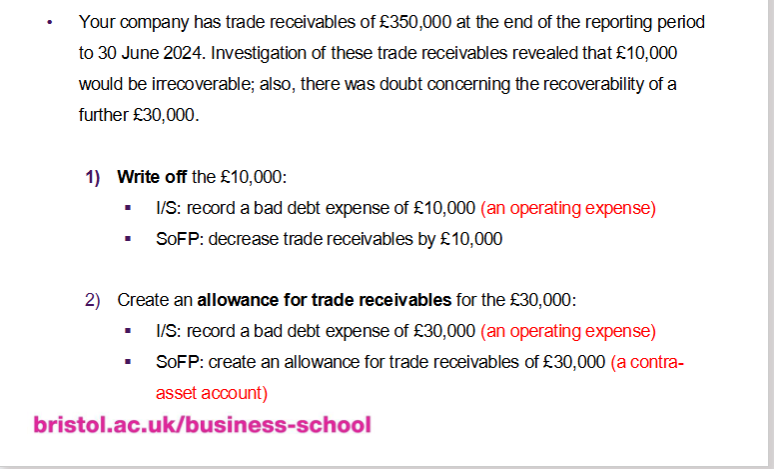
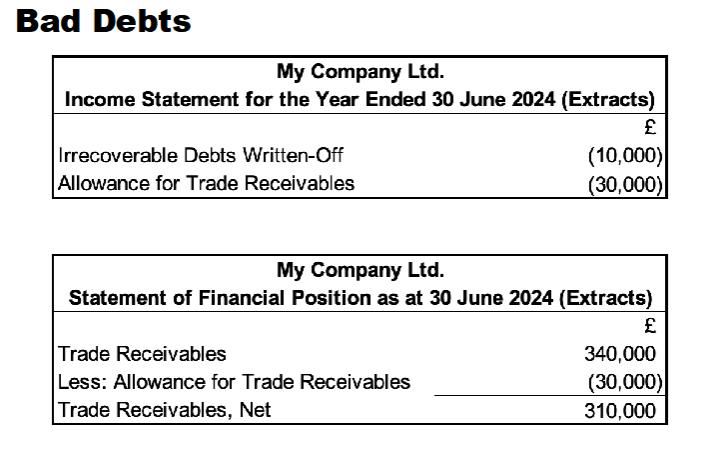
Credit sales: some customers may not pay the amount due.
Impact on financial statements:
• Where it is reasonably certain that the customer will not pay,
the amount owed is considered an irrecoverable debt (or
bad debt) and written off.
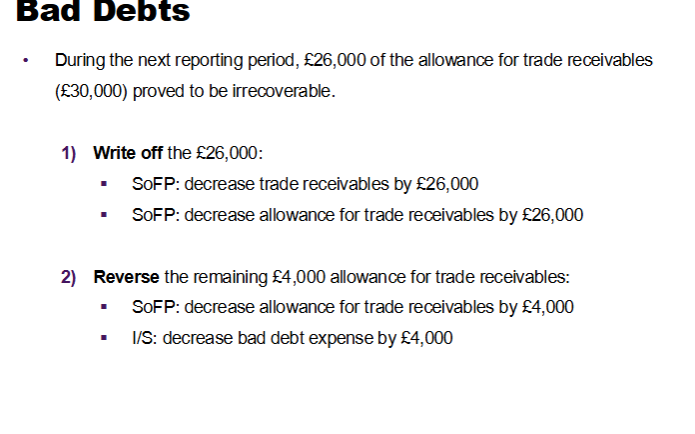
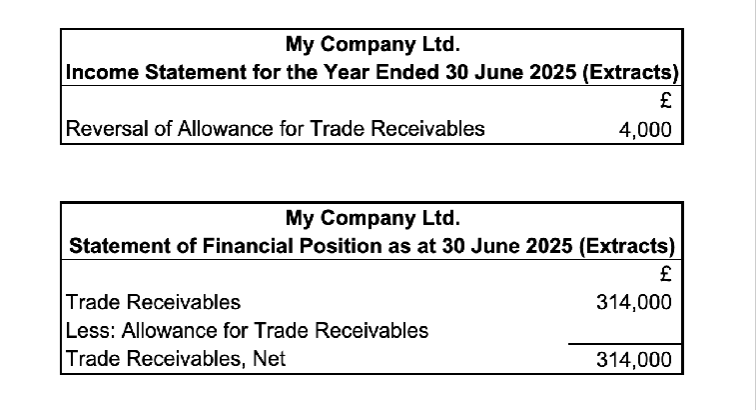
• Where it is doubtful that a credit customer will pay, an
allowance for trade receivables expense should be
created.