Chapter 13 - Gene Mutations and DNA Repair
Mutations are inherited alterations in the DNA Sequence
Mutation: an inherited change in the DNA sequence of genetic information; the descendants that inherit the change may be cells or organisms.
Importance of Mutations
Mutation is the source of all genetic variation
genetic dissection: Finding or creating mutations that affect different components of a biological system and studying their effects can often lead to a better understanding of the system.
Categories of mutations
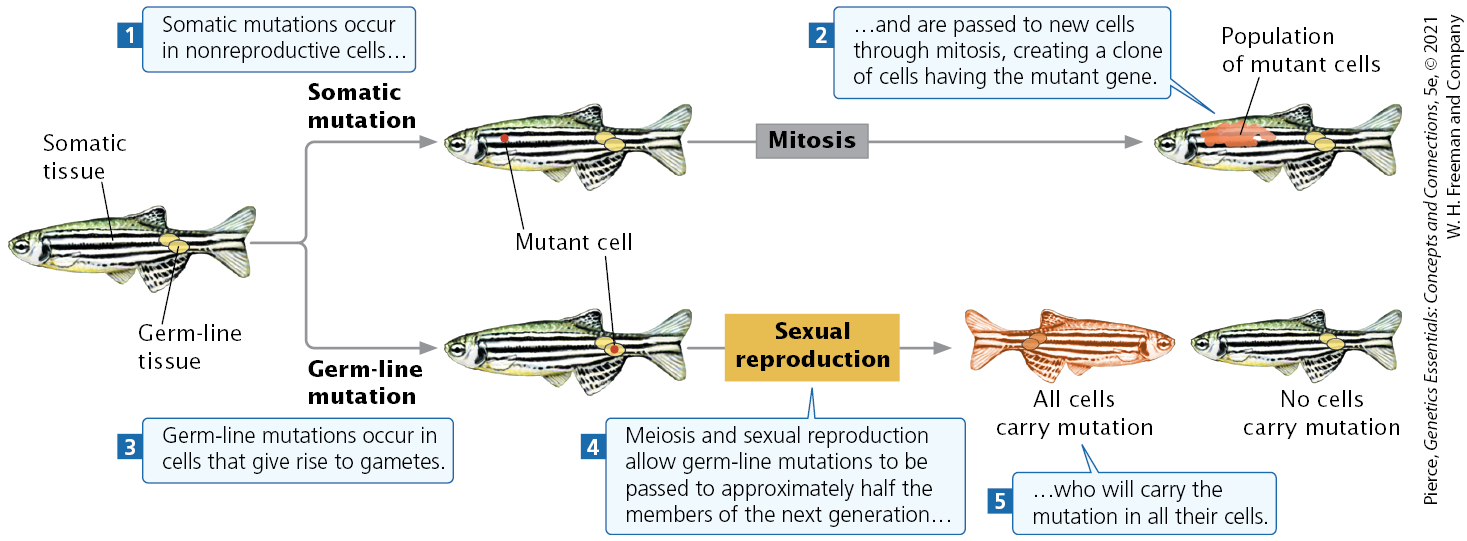
Somatic Mutations: arise in somatic tissues, which do not produce gametes. They are passed to new cells through mitosis, creating a clone of cells with the mutant gene.
The earlier in development a somatic mutation occurs, the larger the clone of cells that contain the mutation will be.
Germ Line Mutations: arise in cells that ultimately produce gametes. A germ-line mutation can be passed to future generations, producing offspring that carry the mutation in all their somatic and germline cells
Types of Gene Mutations
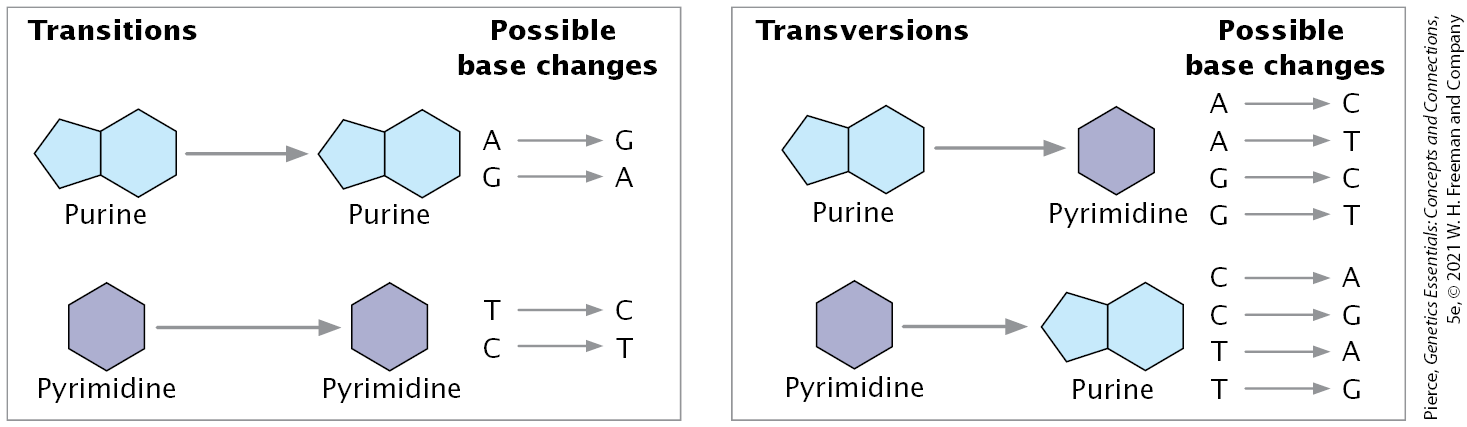
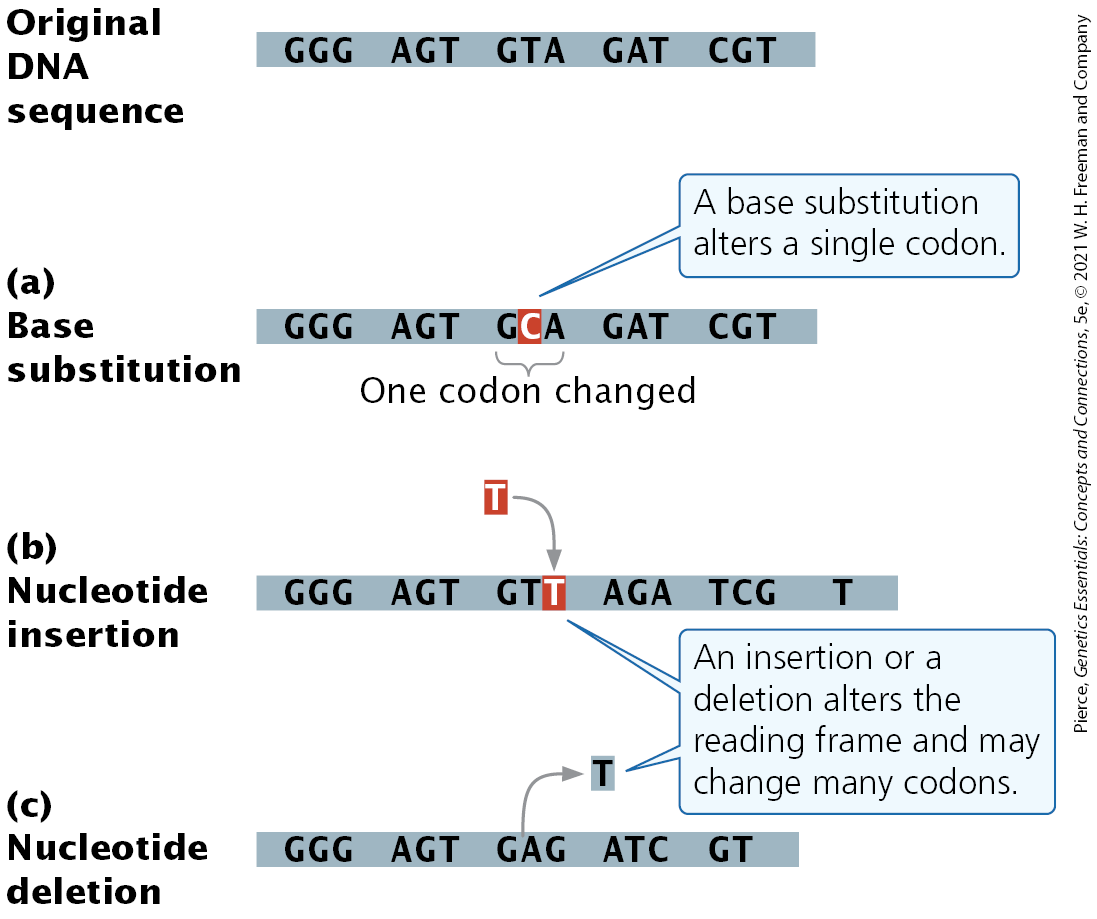
Base Substitutions: the alteration of a single nucleotide in the
DNA
Transition: a purine is replaced by a different purine or, alternatively, a pyrimidine is replaced by a different pyrimidine
Transversion: a purine is replaced by a pyrimidine or a pyrimidine is replaced by a purine
The Indels (insertions + deletions)
Insertions: Mutation in which one or more nucleotide pairs are added to a DNA sequence.
Deletions: Mutation in which one or more nucleotides are deleted from a DNA sequence.
insertions and deletions within sequences that encode proteins may lead to frameshift mutations
Frameshift Mutations: changes in the reading frame of the gene. usually alter all amino acids encoded by the nucleotides following the mutation, so they generally have drastic effects on the phenotype
insertions and deletions consisting of any multiple of three nucleotides leave the reading frame intact, although the addition or removal of one or more amino acids may still affect the phenotype.
in-frame insertions: Insertion of some multiple of three nucleotides that do not alter the reading frame of the gene.
in-frame deletions: Deletion of some multiple of three nucleotides that do not alter the reading frame of the gene.
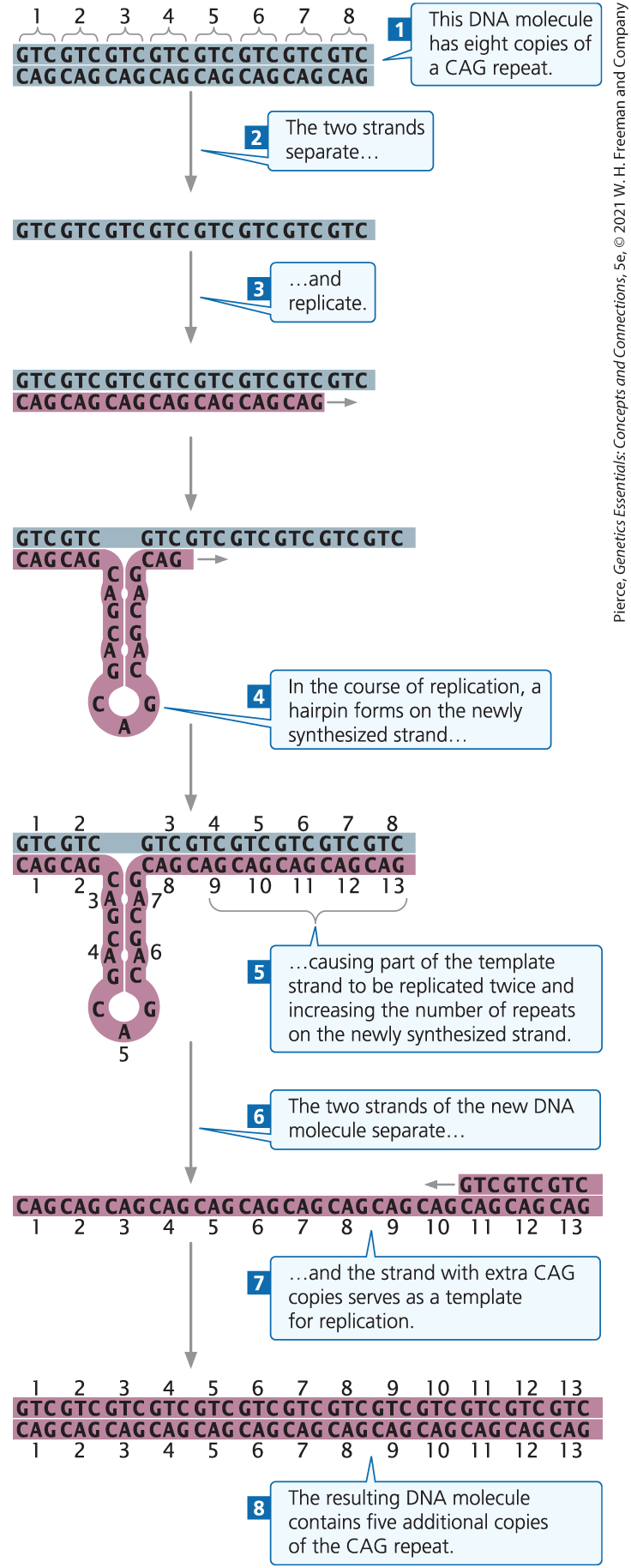
Expanding nucleotide repeats: Type of mutation in which the number of copies of a set of nucleotides (most often three nucleotides) increases in succeeding generations.
Functional Effects of Mutations
Forward Mutation: A mutation that alters the wild-type phenotype
Reverse mutation (reversion): changes a mutant phenotype back into the wild type.
Missense mutation: A base substitution that results in a different amino acid in the protein
nonsense mutation: changes a sense codon (one that specifies an amino acid) into a nonsense codon (one that terminates translation
silent mutation: changes a codon to a synonymous codon that specifies the same amino acid, altering the DNA sequence without changing the amino acid sequence of the protein. While a majority of silent mutations do not result in phenotypic effects, there are a few exceptions.
neutral mutation: a missense mutation that alters the amino acid sequence of a protein but does not significantly change its function. Neutral mutations occur when one amino acid is replaced by another that is chemically similar, or when the affected amino acid has little influence on protein function.
loss of function mutations: the complete or partial absence of normal protein function
can affect proteins in one of two ways:
by altering the structure of the protein
such that the protein no longer works correctly or
by occurring in regulatory regions that affect the transcription, translation, or splicing of the protein.
frequently recessive, in which case a diploid individual must be homozygous for the mutation before the effects of the loss of the functional protein can be exhibited
gain of function mutations: causes the cell to produce a protein or gene product whose function is not normally present. The result could be an entirely new gene product or one produced in an inappropriate tissue or at an inappropriate time in development
frequently dominant in their expression, because a single copy of the mutation leads to the presence of a new gene product
conditional mutations: mutations which are expressed only under certain conditions
lethal mutations: mutations which cause premature death
Suppressor Mutations: a genetic change that hides or suppresses the effect of another mutation.
Point Mutations: changes in a single nucleotide base pair that can lead to silent, missense, or nonsense mutations.
different from a reverse mutation, where the mutated site is changed back to the original wild-type sequence. A suppressor mutation occurs at a site distinct from the site of the original mutation; thus, an individual with a suppressor mutation is a double mutant, possessing both the original mutation and the suppressor mutation but exhibiting the phenotype of the non-mutated wild type.
Geneticists distinguish between two classes of suppressor mutations:
intragenic suppressor mutation: takes place in the same gene that contains the mutation being
suppressed.
may work in any of several ways.
The suppressor may change a second nucleotide in the same codon altered by the original mutation, producing a codon that specifies the same amino acid that was specified by the original, non mutated codon
suppressing a frameshift mutation. If the original mutation, for example, is a one-base deletion, then the addition of a single base elsewhere in the gene will restore the former reading frame.
by making compensatory changes in the protein. A first missense mutation can alter the folding of a polypeptide chain by changing the way in which amino acids in the protein interact with one another. A second missense mutation at a different site (the suppressor mutation) can re-create the original folding pattern by restoring the interactions between the amino acids.
intergenic suppressor mutation: occurs in a gene other than the one bearing the original mutation that it suppresses. These suppressors sometimes work by changing the way the mRNA is translated.
Mutation Rates: The frequency with which a wild-type allele at a locus changes into a mutant allele
Mutations May Be Caused by a Number of Different Factors
spontaneous mutations: Mutation that arises from natural changes in DNA structure or from errors in
replication.
induced mutation: Mutation that results from environmental agents, such as chemicals or radiation.
Spontaneous Replication Errors
Tautomeric Shifts: the positions of protons (hydrogen atoms) in the DNA bases change.
Mispairing due to other structures, can arise through wobble, in which normal, protonated, and other forms of the bases are able to pair because of flexibility in the DNA helical structure
Incorporated Errors and Replicated Errors
incorporated error: When a base substitution causes a mispaired base to be incorporated into a newly synthesized nucleotide chain,
replicated error: An incorporated error that is replicated, leading to a permanent mutation.
Spontaneous Chemical Changes
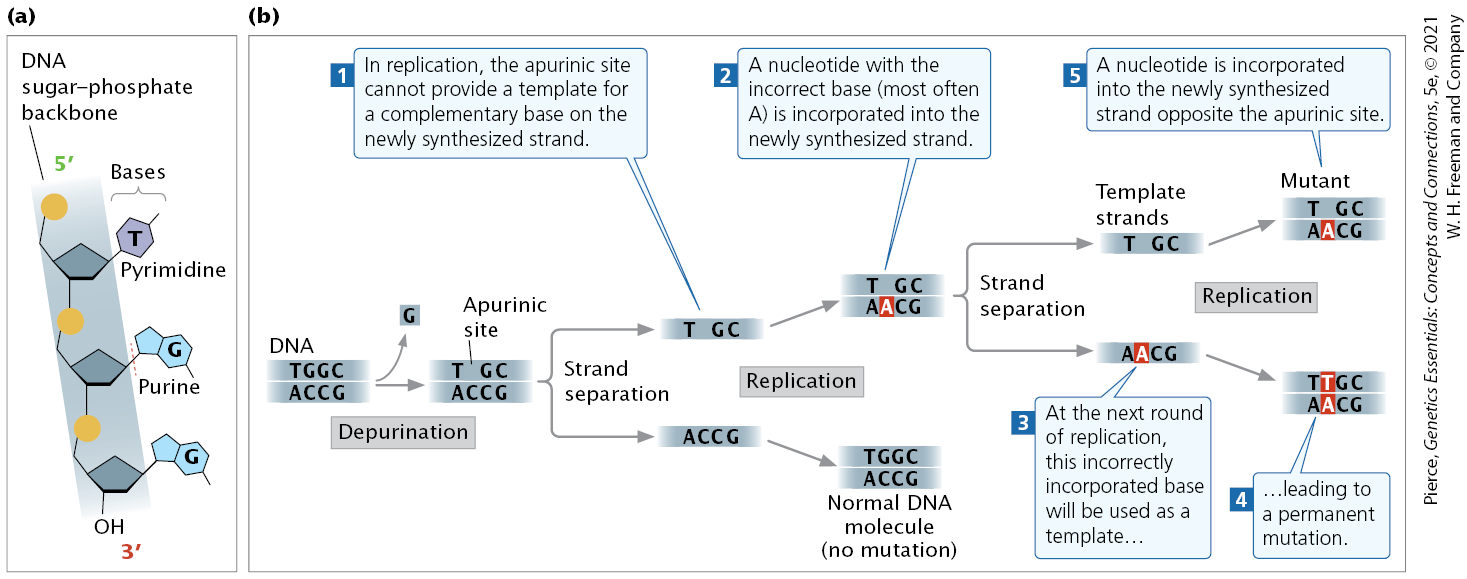
depurination: Break in the covalent bond connecting a purine base to the 1′-carbon atom of deoxyribose sugar, resulting in the loss of the purine base and producing an apurinic site
apurinic site: a nucleotide that lacks its purine base cannot act as a template for a complementary base in replication. In the absence of base-pairing constraints, an incorrect nucleotide (most often adenine) is incorporated into the newly synthesized DNA strand opposite the apurinic site, frequently leading to an incorporated error.
common cause of spontaneous mutation
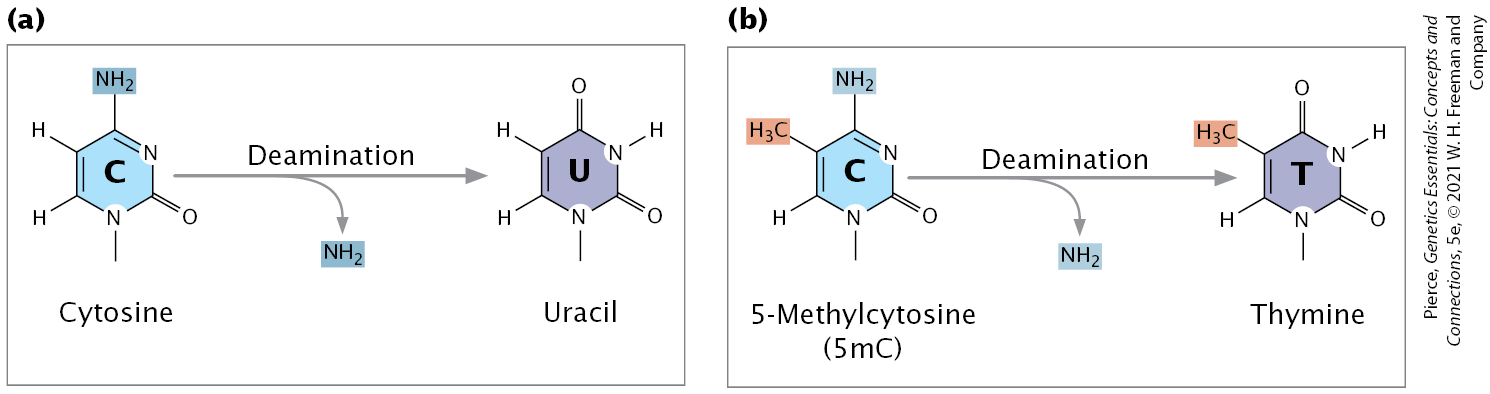
Deamination: Loss of an amino group (NH2) from a base.
may be spontaneous or may be induced by mutagenic chemicals.
can alter the pairing properties of a base
Causes of Deletions and Insertions
Small insertions and deletions can arise spontaneously in replication and crossing over
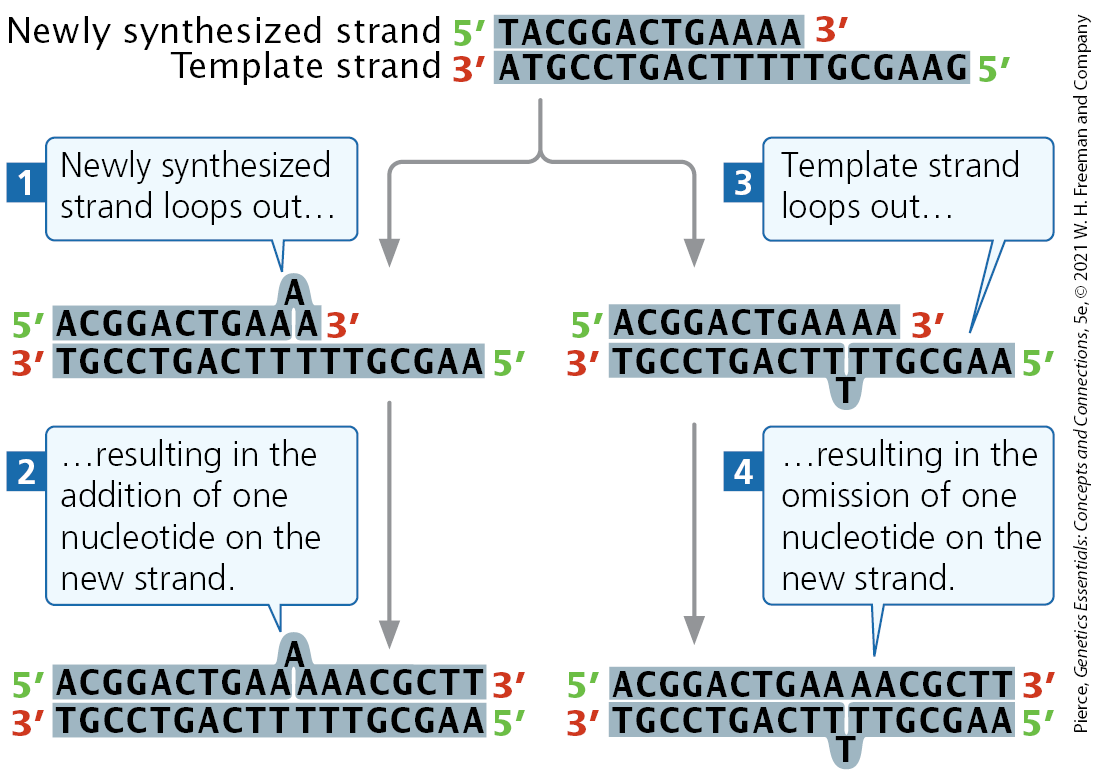
strand slippage: Slipping of the template and newly synthesized strands in replication in which one of the strands loops out from the other and nucleotides are inserted or deleted on the newly synthesized strand.
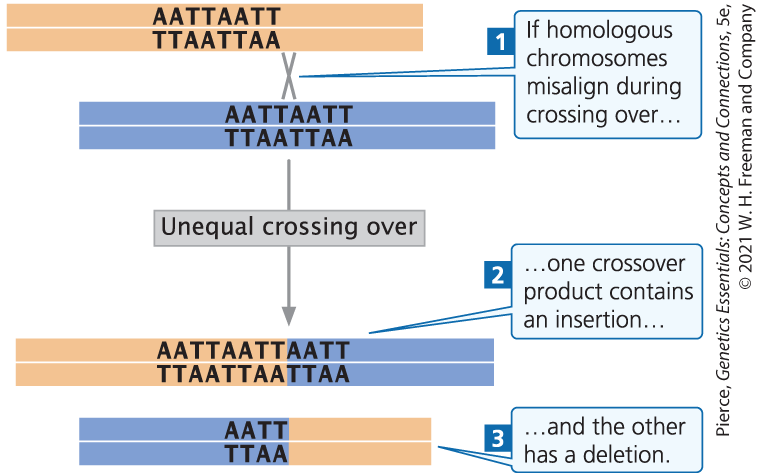
unequal crossing over: Misalignment of the two DNA molecules during crossing over, resulting in one DNA molecule with an insertion and the other with a deletion.
Chemically Induced Mutations
Mutagen: Any environmental agent that significantly increases the rate of mutation above the spontaneous rate
Base Analogs: chemicals with structures similar to those of any of the four standard nitrogenous bases of DNA.
DNA polymerases cannot distinguish these analogs from the standard bases, so if base analogs are present during replication, they may be incorporated into newly synthesized DNA molecules

Alkylating Agents: chemicals that donate alkyl groups, such as methyl (CH3) and ethyl (CH3–CH2) groups, to nucleotide bases
Deaminating Chemicals: deamination can be induced by some chemicals
Hydroxylamine: a very specific base-modifying mutagen that adds a hydroxyl group to cytosine, converting it into hydroxylaminocytosine. This conversion increases the frequency of a rare tautomer that pairs with adenine instead of guanine and leads to C • G → T • A transitions. Because hydroxylamine acts only on cytosine, it does not generate T • A → C • G transitions; thus, hydroxylamine will not reverse the mutations that it produces.
Intercalating Agents: produce mutations by sandwiching themselves (intercalating) between adjacent bases in DNA, distorting the three-dimensional structure of the helix and causing single-nucleotide insertions and deletions in replication. produce mutations by sandwiching themselves (intercalating) between adjacent bases in DNA, distorting the three-dimensional structure of the helix and causing single-nucleotide insertions and deletions in replication
Radiation
Because of their high energies, X-rays, gamma rays, and cosmic rays are all capable of penetrating tissues and damaging DNA. These forms of radiation, called ionizing radiation, dislodge electrons from the atoms they encounter, changing stable molecules into free radicals and reactive ions, which then alter the structures of bases and break phosphodiester bonds in DNA
Ultraviolet (UV) light has less energy than ionizing radiation and does not dislodge electrons, but it is nevertheless highly mutagenic.
Pyrimidine bases readily absorb UV light, which causes chemical bonds to form between adjacent pyrimidine molecules on the same strand of DNA, creating pyrimidine dimers
pyrimidine dimers: Structure in which a bond forms between two adjacent pyrimidine molecules on the same strand of DNA; distorts the normal configuration of the DNA molecule and often blocks replication.
Bacteria can sometimes
circumvent replication blocks produced by pyrimidine dimers and other types of DNA damage by means of the SOS system
SOS system: System of proteins and enzymes that allows a cell to replicate its DNA in the presence of a distortion in DNA structure; makes numerous mistakes in replication and increases the rate of mutation.
Detecting Mutagens with the Ames Test
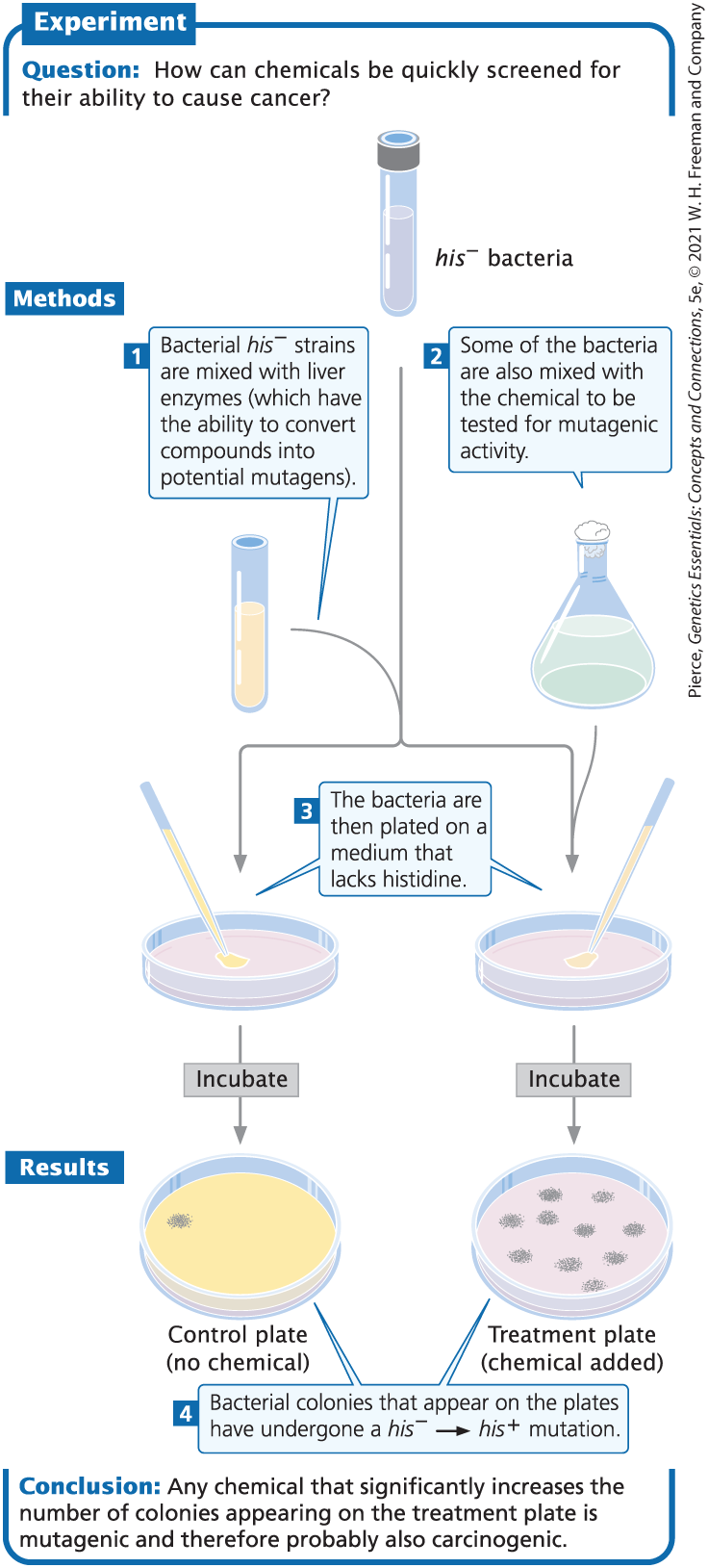
In 1974, Bruce Ames developed a simple test for evaluating the potential of chemicals to cause cancer
Ames test: Test in which special strains of bacteria are used to evaluate the potential of chemicals to cause cancer.
Transposable elements can cause mutations
Transposable elements: DNA sequences that can move about in the genome
General Characteristics of Transposable Elements
flanking direct repeat: Short, directly repeated sequence produced on either side of a transposable element when the element inserts into DNA.
terminal inverted repeats: Sequences found at both ends of a transposable element that are inverted complements of one another.
The Process of Transposition
transposition: the movement of a transposable element from one location to another
all types of transposition share several steps
staggered breaks are made in the target DNA
A transposase enzyme, often encoded by the transposable element, is used to make the staggered breaks in DNA and to integrate the transposable element into a new site.
transposase: Enzyme encoded by many types of transposable elements that is required for their transposition. The enzyme makes single-strand breaks at each end of the transposable element and on either side of the target sequence where the element inserts.
the transposable element is joined to single-stranded ends of the target DNA
DNA is replicated at the single-strand gaps.
DNA transposons or Class II transposable elements: Transposable element that transposes as DNA.
retrotransposons or Class I transposons: transpose through an RNA intermediate
transposition may be replicative or nonreplicative
replicative transposition (also called copy-and paste transposition): the transposable element is excised from the old site and inserted at a new site without any increase in the number of its copies
Retrotransposons use replicative transposition only.
nonreplicative transposition (cut-and-paste transposition): the transposable element is excised from the old site and inserted at a new site without any increase in the number of its copies.
Nonreplicative transposition requires the replication of only the few nucleotides that constitute the flanking direct repeats.
The Mutagenic Effects of Transposition
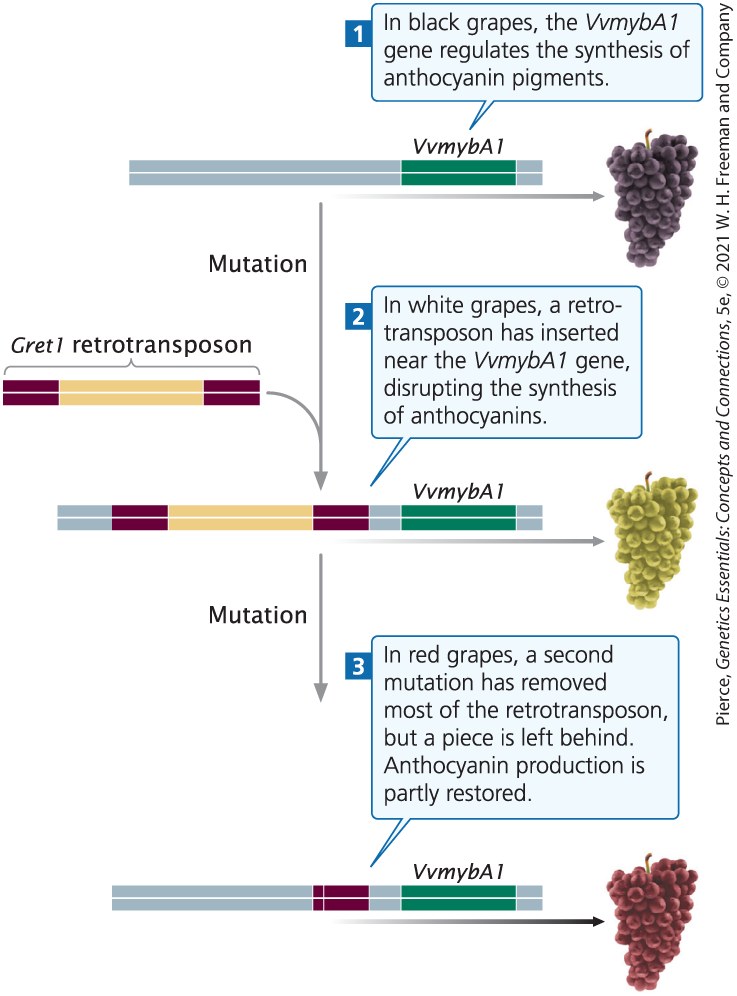
Because transposable elements can insert into genes and disrupt their function, transposition is generally mutagenic
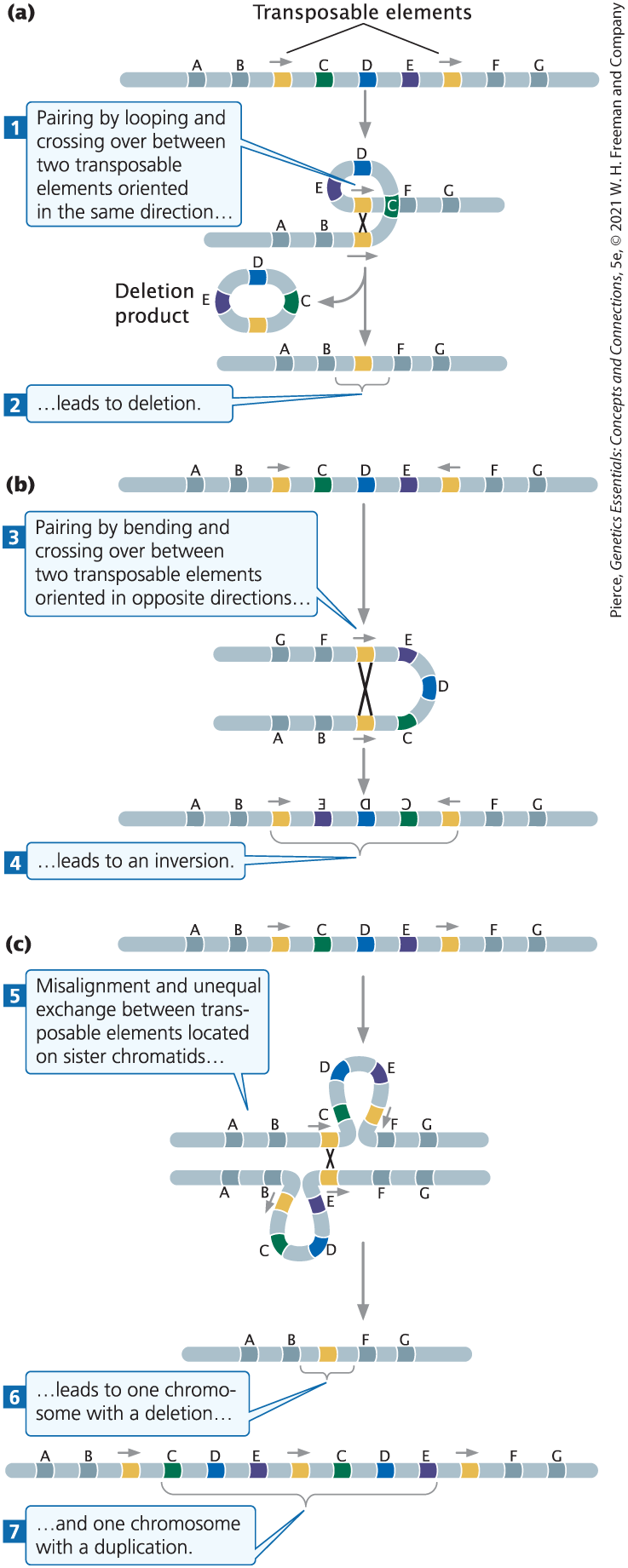
Because transposition entails the exchange of DNA sequences and recombination, it often leads to DNA rearrangements. Homologous recombination between multiple copies of transposons can lead to duplications, deletions, and inversions,
Transposable Elements in Humans
About 45% (perhaps even more) of the human genome comprises sequences that are related to transposable elements, mostly retrotransposons.
One of the most common transposable elements in the human genome is Alu
Alu. Every human cell contains more than 1 million related but not identical copies of Alu in its chromosomes.
Alu sequences create short flanking direct repeats when they insert into DNA and have characteristics that suggest that they have transposed through an RNA intermediate.
Evolutionary Significance of Transposable Elements
Much of the tremendous variation in genome size found among eukaryotic organisms is due to differences in the number of copies of transposable elements.
Homologous recombination between copies of transposable elements has been an important force in producing gene duplications and other chromosome rearrangements.
some transposable elements may carry extra DNA with them when they transpose to a new site, providing the potential to move DNA sequences that regulate genes to new sites, where they may alter the expression of genes.
A Number of Pathways Repair DNA
There are a number of complex pathways for repairing DNA, but several general statements can be made about DNA repair
most DNA-repair mechanisms require two nucleotide strands of DNA because most replace whole nucleotides, and a template strand is needed to specify the base sequence.
redundancy, meaning that many types of DNA damage can be corrected by more than one repair system.
This redundancy illustrates the extreme importance of DNA repair to the survival of the cell: if a mistake escapes one repair system, it’s likely to be repaired by another system, ensuring that almost all mistakes are corrected.
Types of DNA repair
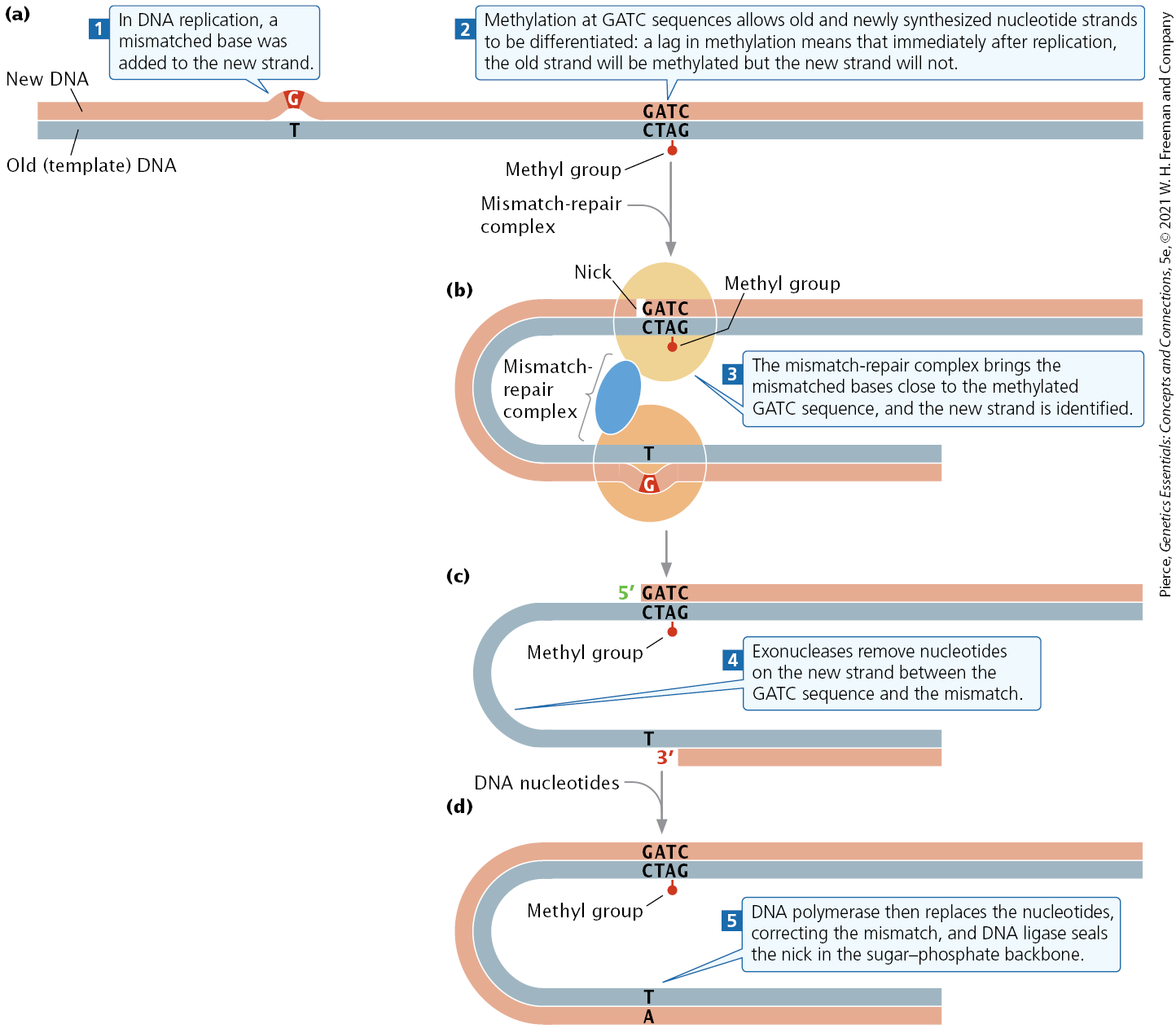
Mismatch Repair: Process that corrects mismatched nucleotides in DNA after replication has been completed. Enzymes excise incorrectly paired nucleotides from the newly synthesized strand and use the original nucleotide strand as a template for replacing them.
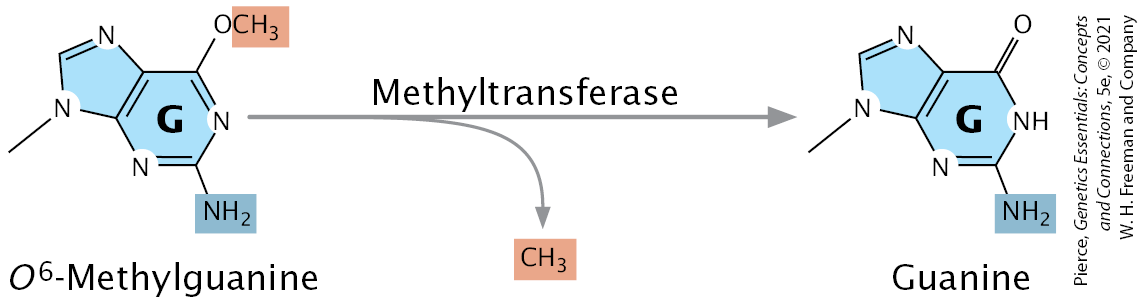
direct repair: DNA repair in which modified bases are changed back into their original structures.
base-excision repair: DNA repair that first excises modified bases and then replaces the entire nucleotide.
The excision of modified bases is catalyzed by a set of enzymes called DNA glycosylases, each of which recognizes and removes a specific type of modified base.
nucleotide-excision repair: DNA repair that removes bulky DNA lesions and other types of DNA damage.