Bryophytes
Green Algae & Plants are similar based on…
Molecular Evidence
Similar Chlorophylls and Pigments
Starch Storage
Cellulose in Cell Walls
Gametangia and Sporangia Overview (Gametophyte Dominant)
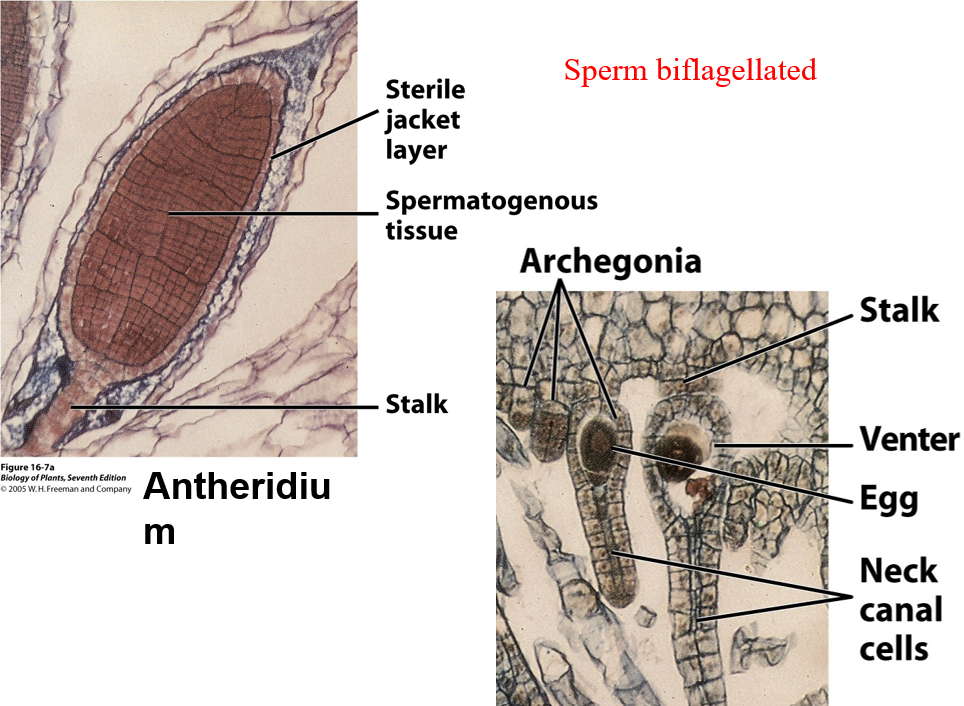
ALL Bryophytes have Biflagellate sperm that need water for fertilization
Gametangia Vocab:
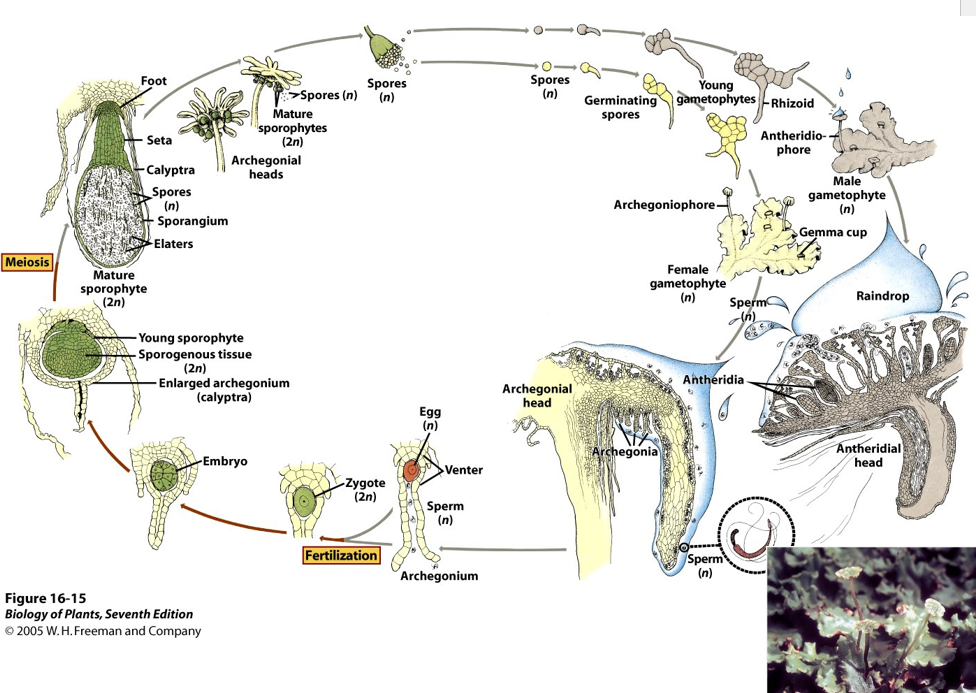
Antheridium = Male
Archegonia = Female
Captrya: Thick layer in venter for embryo protection
Sporangium Vocab
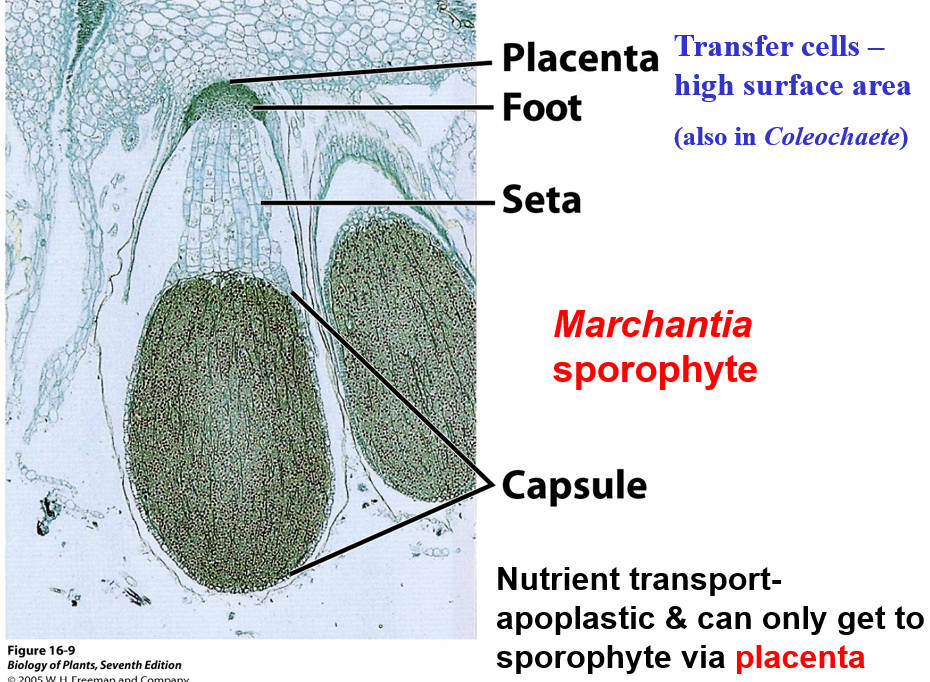
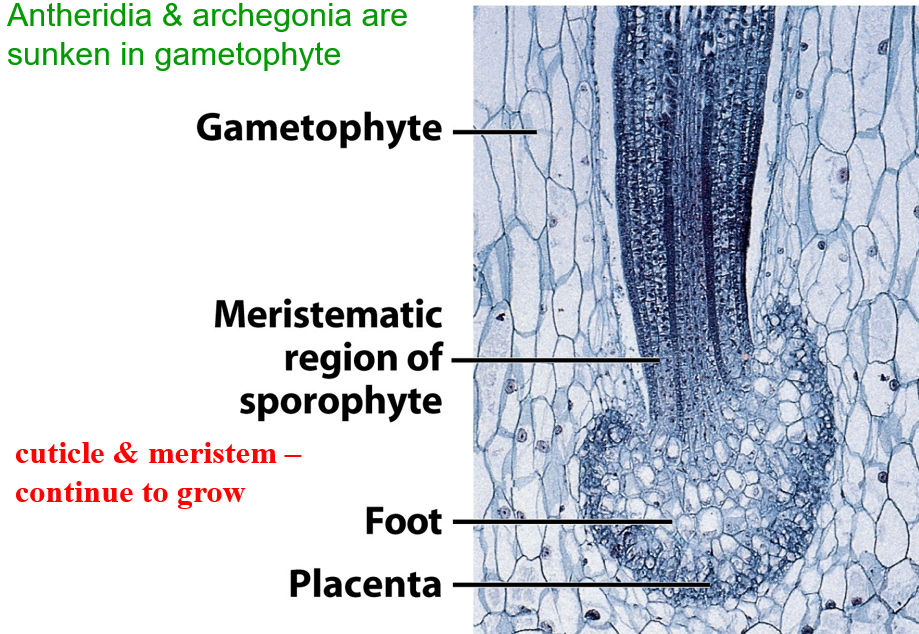
Foot: basal part in the Archegonium.
Seta (stalk): elevates the capsule.
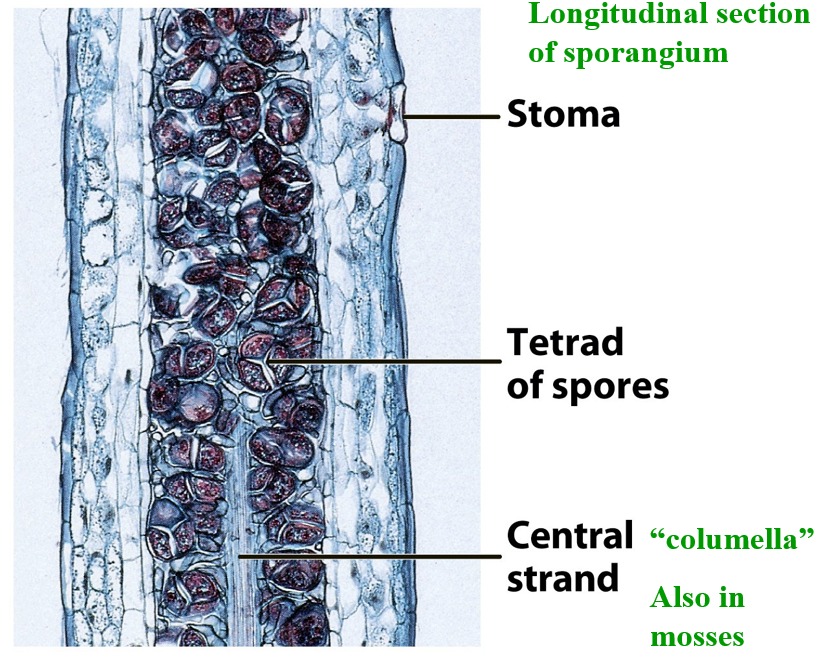
Capsule (sporangium): houses spores
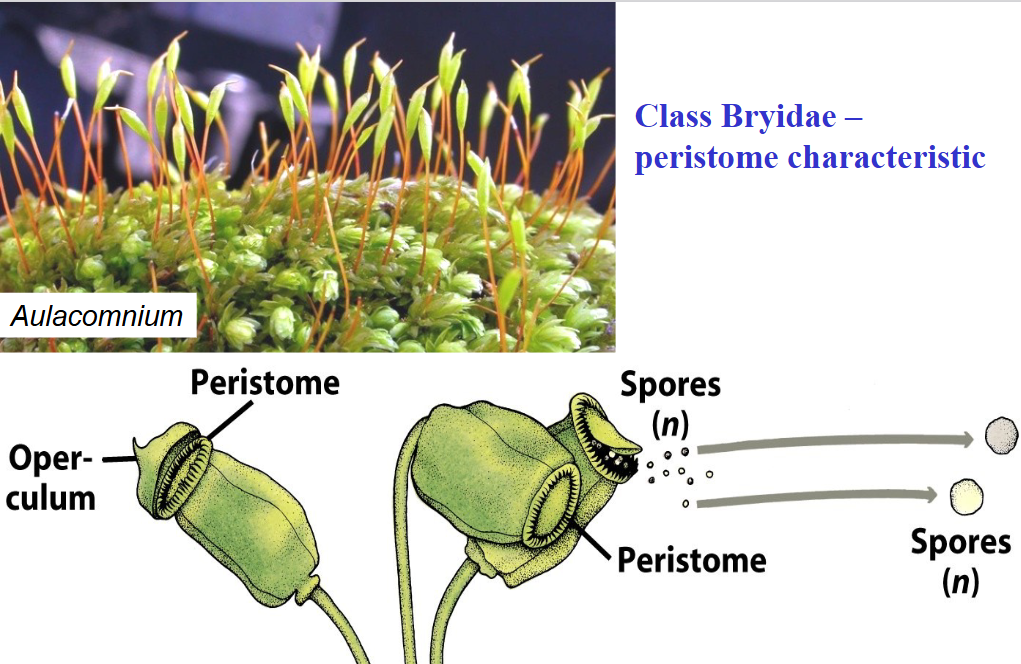
Peristome: teeth-like structures around the opening, regulates spore release when dry.
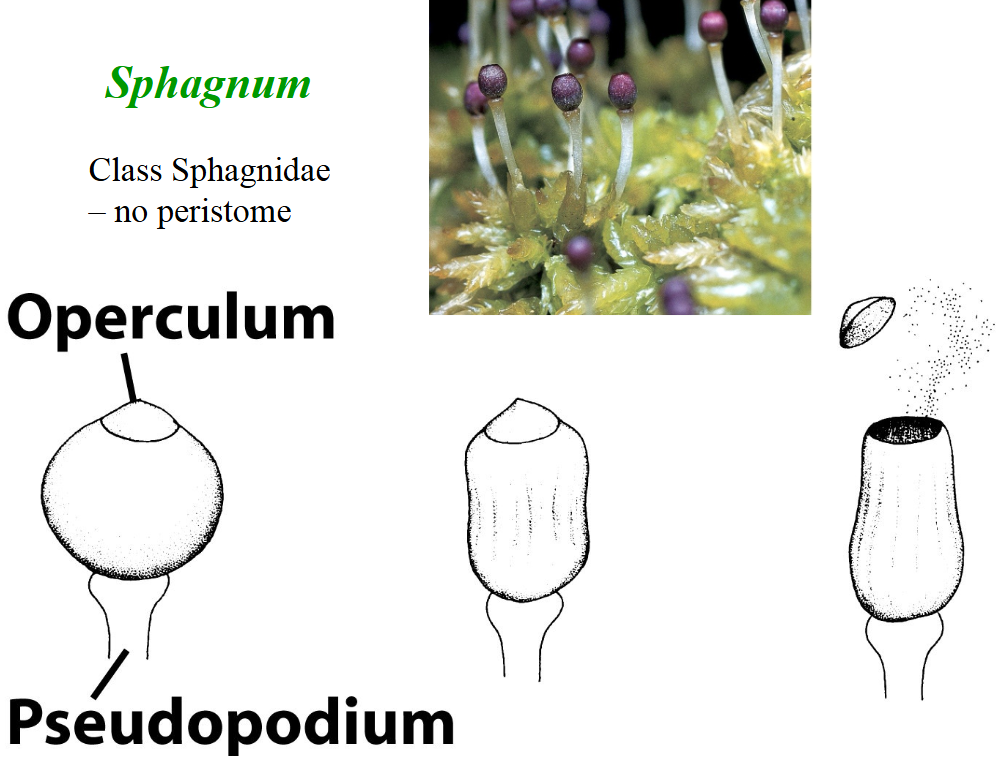
Operculum: Lid on the capsule that can detach to expose the peristome
Liverworts
*Basic level adaptations (5 traits)
Types of Liverworts
Thallus - have pores analogous to stomata
Leafy (not actually leaves)
Unicellular Rhizoid, Pores analogous to stomata and Scales to anchor
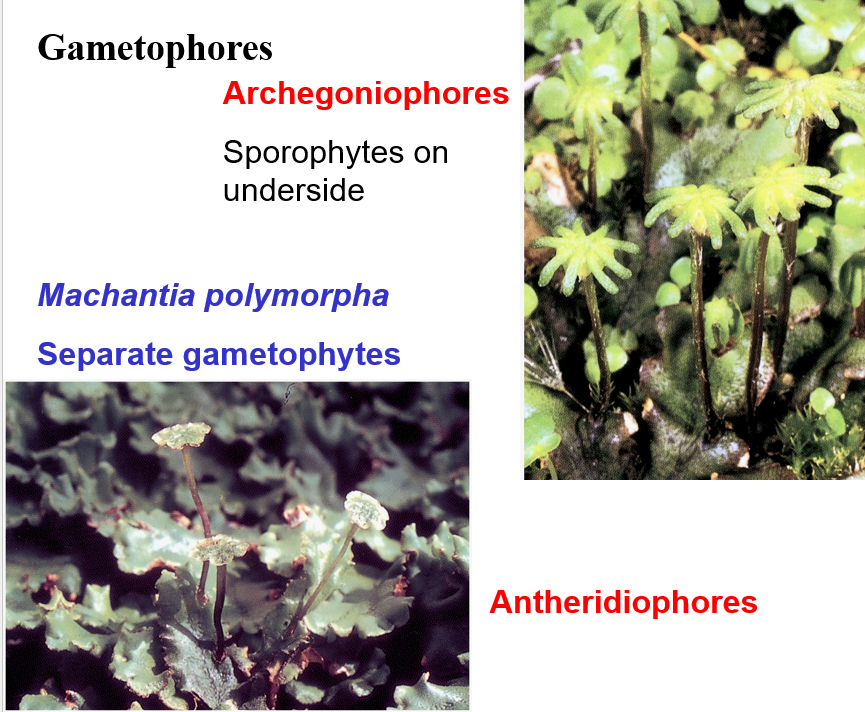
Gametophores - elevated structures that bear gametangia for easier fertilization by water
Archegoniophores
Antheridiophores
Porella - Leafy ex.
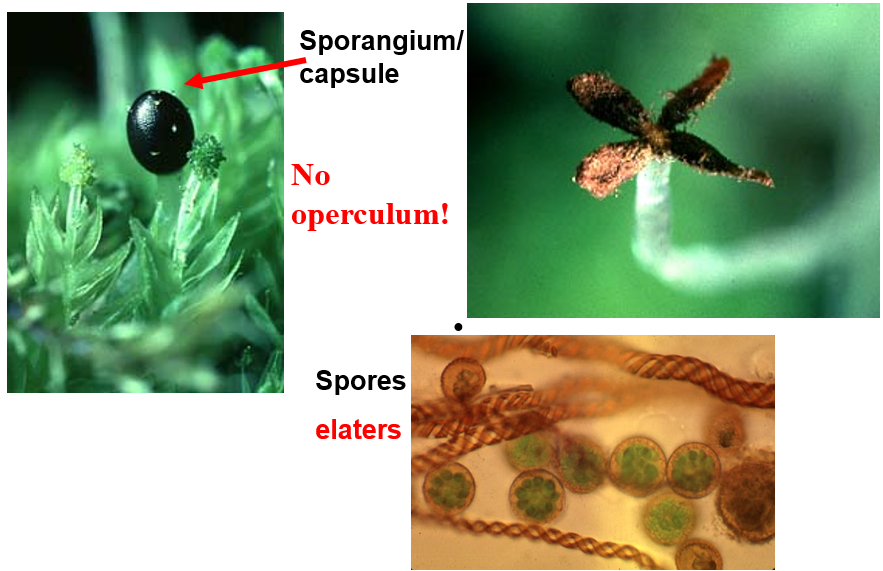
NO Gametophores and Operculum
Spore Dispersal: Sporangium breaks apart, uses elaters to spread spores
Asexual Reproduction
Gemmae Cup dispersal with rain
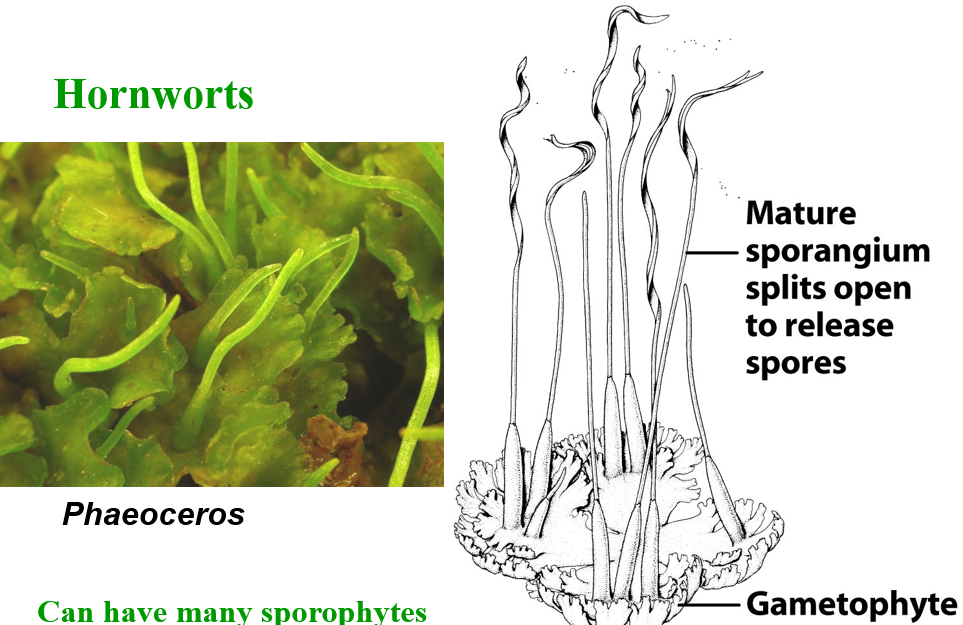
Hornworts - horn-like sporophytes
*Basic level adaptations (5 traits), Stomata & Cuticle
Nostoc + Hornworts: Mutual; Fixes N2 for shelter
Only land plants that contain pyrenoids
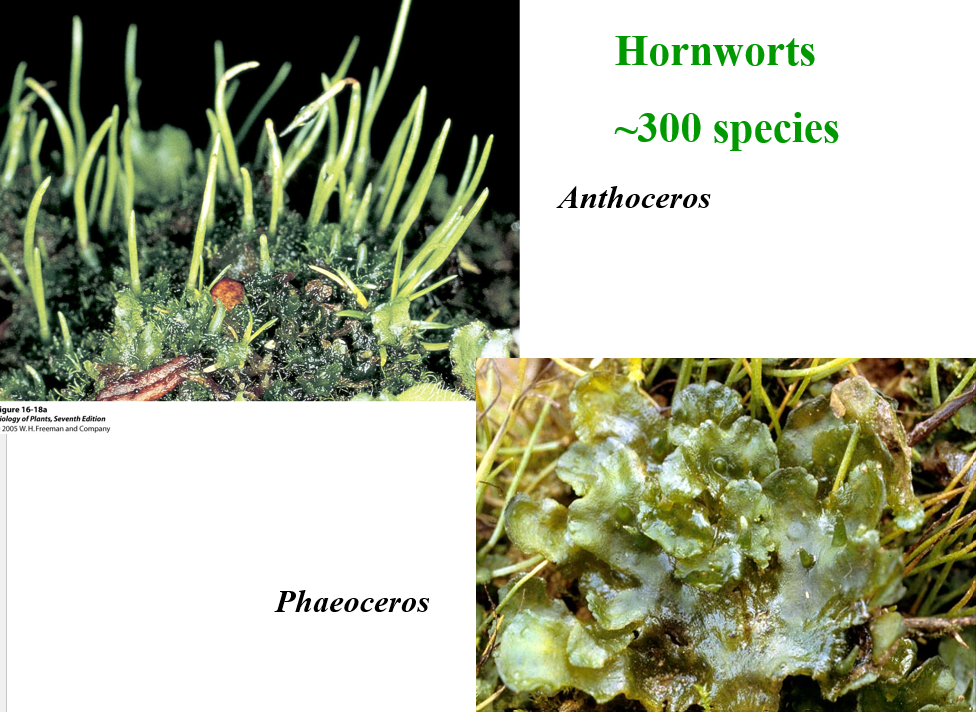
Multiple Sporophytes in Bisexual Gametangia
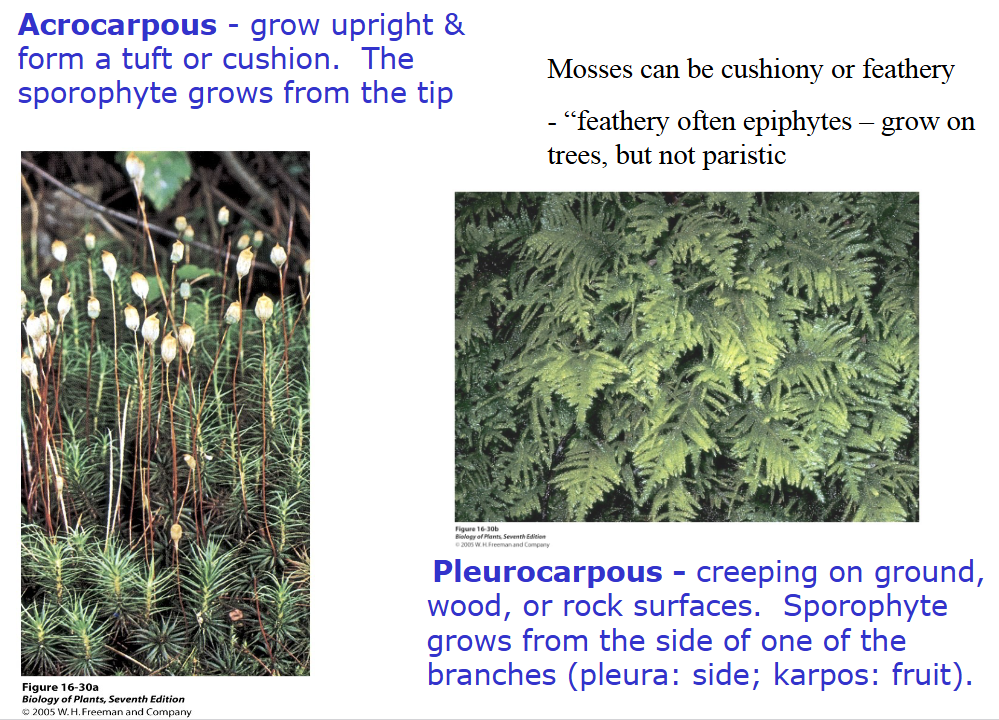
Mosses
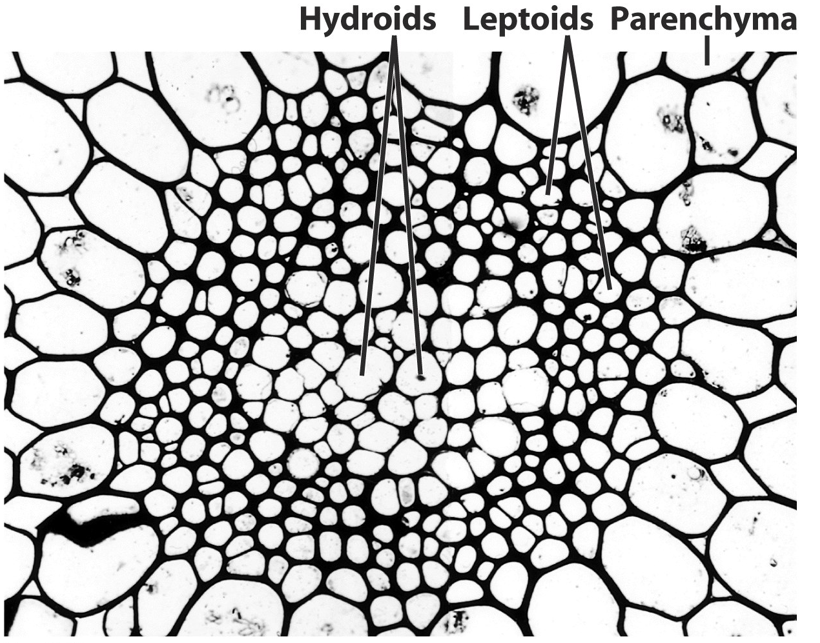
*Basic level adaptations (5 traits), Stomata & Cuticle, Hydroids & Leptoids, Axial Gametophytes
Have incomplete guard cells on stomata; Primitive “vasucular” tissue
Class Bryidae (true mosses)
Class Sphagnidae (peat mosses)
Sphagnidae (Peat moss)
Contribute to carbon sink, Have Hydriods and Leptiods in seta