Lecture 26 - Primary Productivity
Primary Productivity Basics
Photosynthesis:
CO2 + H20 → C6H12O6 + 02
Low energy CO2 becomes fixed into a high energy sugar
Photosynthesis can be considered as a rate:
the amount of C6H12O6 produced /unit area /unit time
Gross primary productivity = GPP = the rate of carbon fixation by autotrophs in some system
Net primary productivity = NPP = GPP – respiration of autotrophs = rate of accumulation of biomass
Transpiration = (water loss through open stomata) increases with increasing photosynthesis
Evapotranspiration = ET = (evaporation + transpiration) = a measure of water availability and photosynthesis
Influences on productivity
Seasonality
Precipitation
Soil (or water) nutrients
Consumers indirectly regulating producers
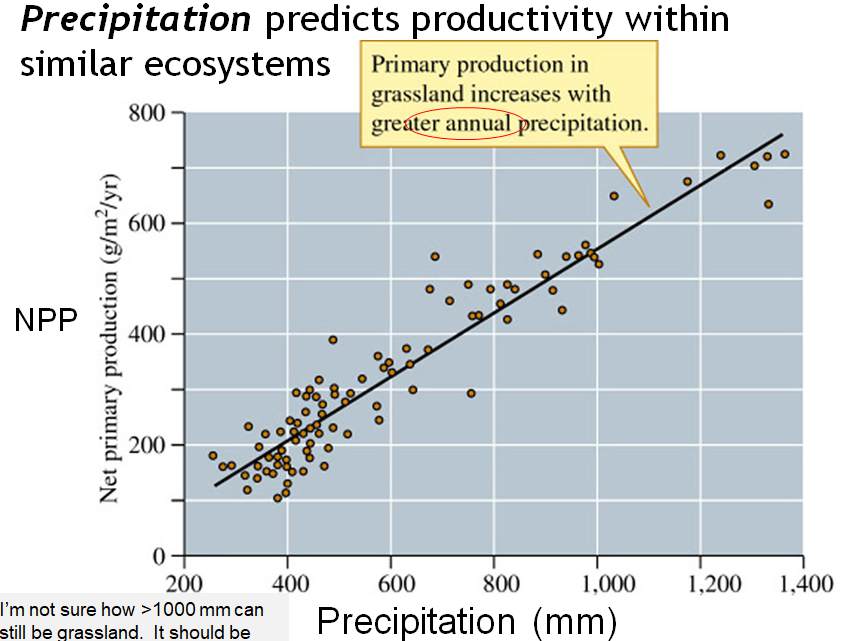
Precipitation predicts productivity within similar ecosystems
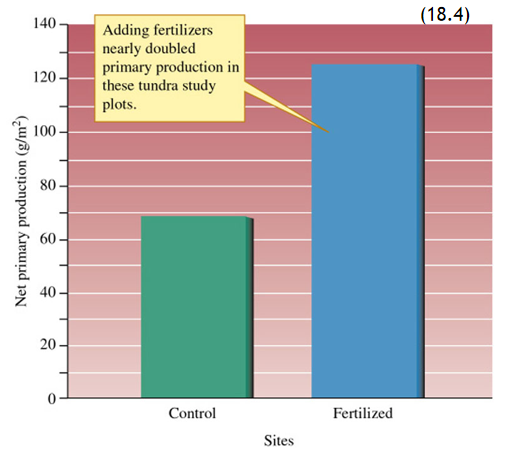
Soil nutrients limit productivity in many terrestrial systems. Addition of N, P, and K to Arctic tundra BUT- Don’t confuse productivity with diversity (lecture 23)
Productivity increased with N and P addition and with moisture in Colorado meadows
Notice productivity is measured here as biomass (also called standing crop)– this is typical for studies of herbaceous vegetation, but doesn’t equal productivity in trees.
Ocean productivity is highest in coastal areas.
Consumers
Top down effects - do consumers regulate productivity through a trophic cascade?
the top consumer/predator controls the primary consumer population. In turn, the primary producer population thrives. The removal of the top predator can alter the food web dynamics.
Compare this to regulation of diversity by a keystone predator. A keystone predator is another kind of top-down effect.
Lecture questions
Why isn’t gross primary productivity typically measured by ecologists?
= It is difficult, It isn’t very relevant- respiration must accompany photosynthesis, NPP is more important for understanding energy flow in communities
For estimating NPP, how does precipitation differ from ET?
= ET also includes temperature, ET also includes seasonality of precipitation