6.2.1(a) - natural plant clones
spec points
(i) natural clones in plants and the production of natural clones for use in horticulture (ii) how to take plant cuttings as an example of a simple cloning technique To include examples of natural cloning and the methods used to produce clones (various forms of vegetative propagation). Dissection of a selection of plant material to produce cuttings. PAG2 HSW4
what is cloning
Cloning is the production of identical copies of organisms, cells or DNA.
Clone is a genetically identical organism.
Cloning occurs in nature as part of growth and reproduction. This natural process can be manipulated to produce clones of organisms artificially.
identical twins
Identical twins are natural clones as they are produced when a zygote splits in two. Each group of cells develops independently into two individuals that are genetically identical to each other but not the parents.
asexual reproduction
new individuals are genetically identical to each other and to the original ‘parent’ cell
bacteria (prokaryotes) can reproduce asexually by dividing into two in a process called binary fission
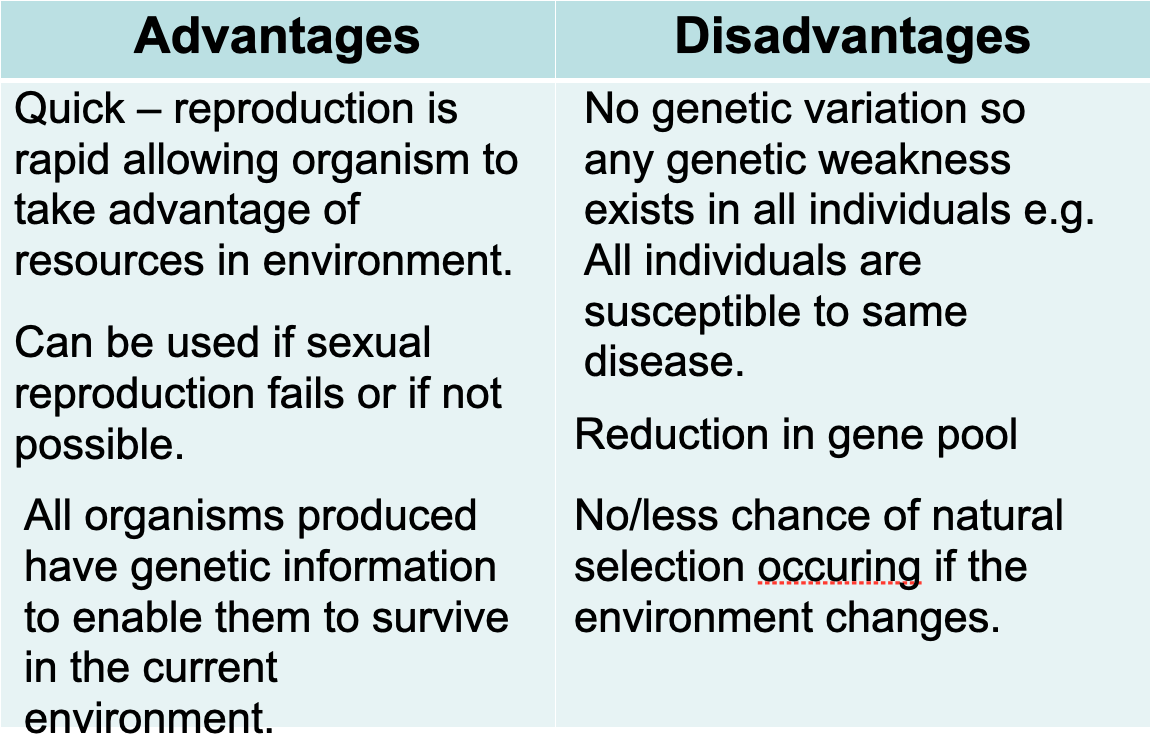
advantages and disadvantages
Plant cloning – Natural and Artificial
Vegetative propagation
Cuttings
Tissue culture and Micro-propagation
Cloning in plants can be achieved because adult plants have meristematic tissue that is totipotent and, therefore, able to grow into complete new organism.
Natural Cloning - Vegetative propagation
Vegetative propagation, or natural cloning, occurs in many species of flowering plants. It is a form of asexual reproduction in which a structure forms which develops into a fully differentiated new plant which is genetically identical to the parent plant.
The new plant can be propagated (separated/planted) from the parent plant becoming a new individual plant.
Vegetative propagation involves perennating organs, allowing plants to survive in adverse or hostile conditions. Perennating organs contain food stores from photosynthesis and can remain dormant in the soil.
Perennating Organs from leaves and stems include:-
RHIZOMES - - underground stems – e.g. Marram grass.
RUNNERS/stolens – lateral above ground stems – e.g. strawberry/spider plants.
TUBERS – stem (tip of stem underground) swells – e.g. potato.
BULBS – leaves - e.g. daffodils/onions.
Vegetative propagation in elms
Main tree damaged (usually by Dutch elm disease).
Within 2 months the tree produces root suckers from the meristem tissue in the trunk close to the ground where least damage is likely to have occurred.
These root suckers turn into fully grown trees when the main tree dies
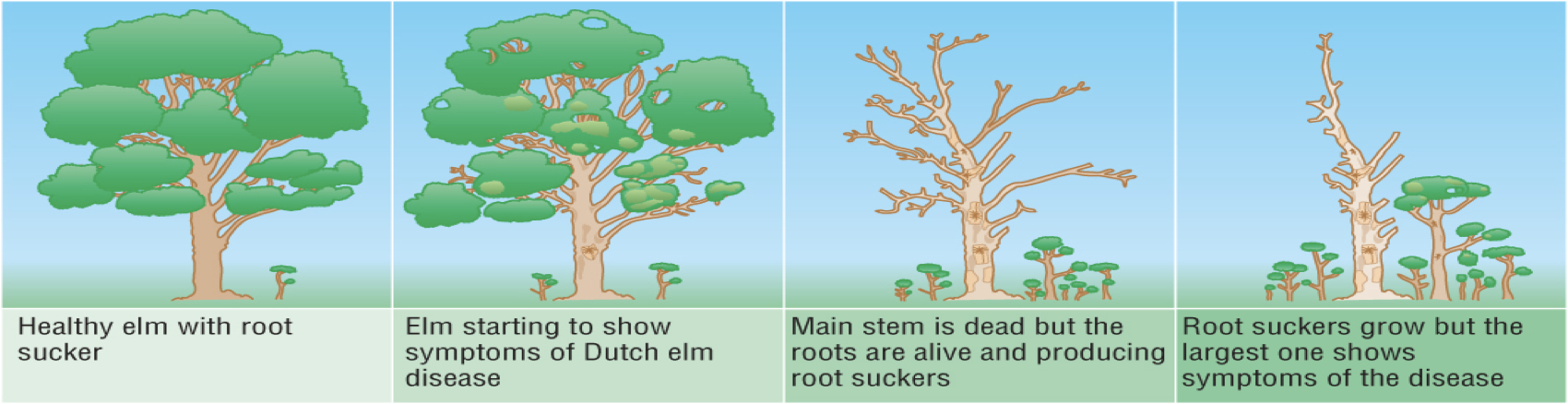
Reproduction of elm forests is much faster due to root suckers
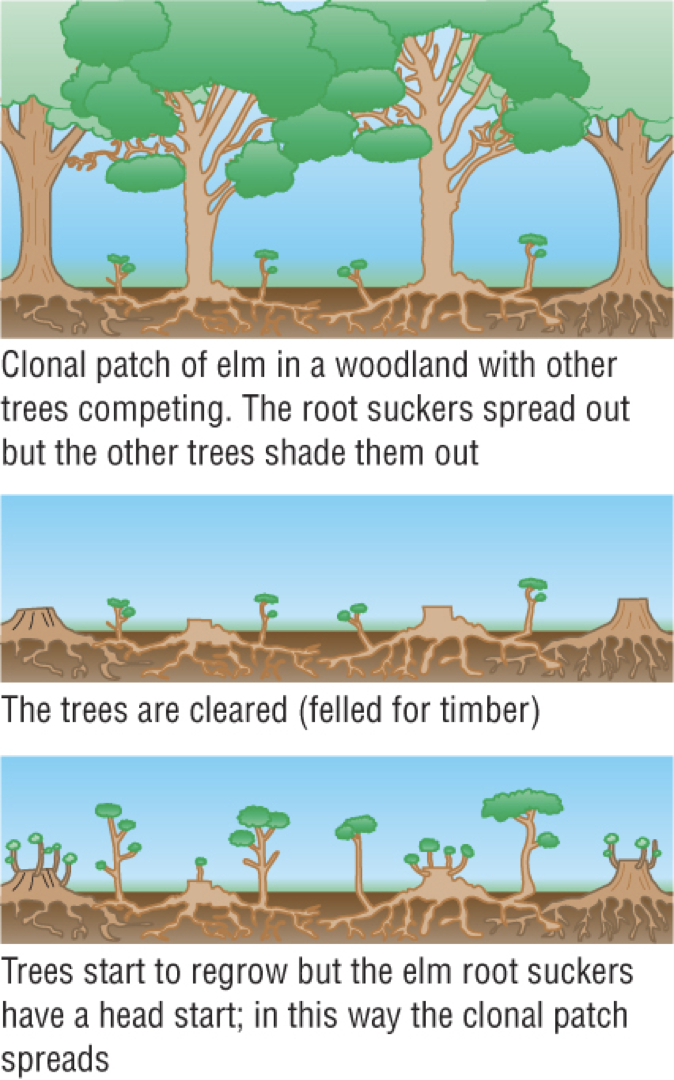
Vegetative propagation of elms by root suckers helps them survive damage and spread
Rapid repopulation of woodland by elm suckers after felling
Using Natural Clones in horticulture and agriculture
Plant natural cloning is used by farmers/gardeners to produce new plants, for examples:-
Splitting bulbs
Removing young plants from runners
Cutting up rhizomes
Allows them to increase plant numbers with identical desired features, quickly and cheaply.
Artificial Vegetative Propagation - 1
Farmers and growers have been able to artificially propagate valuable plants. One method is using CUTTINGS.
Cuttings.
Part of a plant stem (internodes) is cut off and simply replanted in wet soil.
Each cutting produces roots and grows into a complete new plant, so the original plant can be cloned many times.
Rooting is helped if the cuttings are dipped in rooting hormone (auxin).
cuttings vs seeds
cuttings pros | cuttings cons |
|
|
crops grown by vegetative propagation
Important worlds crops grown by vegetative propagation:-
Banana
Sugar Cane
Sweet Potato
Cassava
Coffee
Tea
Most use stem cuttings/rhizomes.