Nucleophilic Substitutions
Electrophiles, Nucleophiles, and Leaving Groups
SN2 Mechanism
General Information
SN2: bimolecular dependent substitution reaction with nucleophile
Reaction rate=k[nucleophile][electrophile] OR Reaction rate=k[substrate][nucleophile]
Rate depends on the concentration of substrate (or electrophile) AND the nucleophile
example:
What will happen to the rxn rate if [nucleophile] increases by 2 and [electrophile] increases by 3?
rxn rate=[nucleophile]²[electrophile]³
multiply 2×3
rate of rxn increases by 6
SN2 is more prone to occur with the following conditions
Solvents: polar and aprotic (non-hydrogen bonding) solvents are favored for SN2 rxns
avoid protic solvents like alcohol and water since they are protic and hinder back-side attack
use aprotic solvents like DMF (dimethylformamide), acetone, or DMSO (dimethylsulfoxide)
Reactivity of substrate:
SN2 is more likely to occur if substrate contains smaller carbon groups due to backside attacks needing room to occur
More steric hindrance/strain negatively impacts SN2
Methyl (CH3) >1°>2°> > 3°
Favoring conditions: strong, non-bulky nucleophiles will favor SN2 reactions
Occurs in a singular step, aka no carbocation intermediate
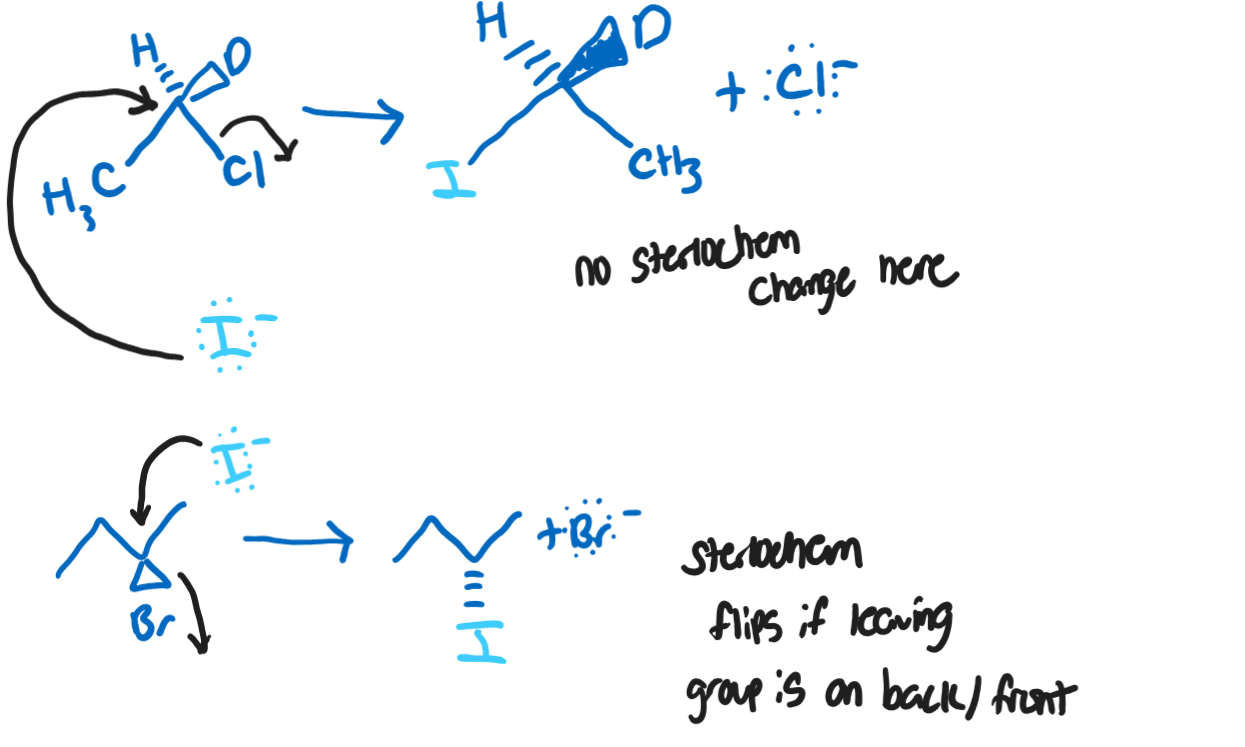
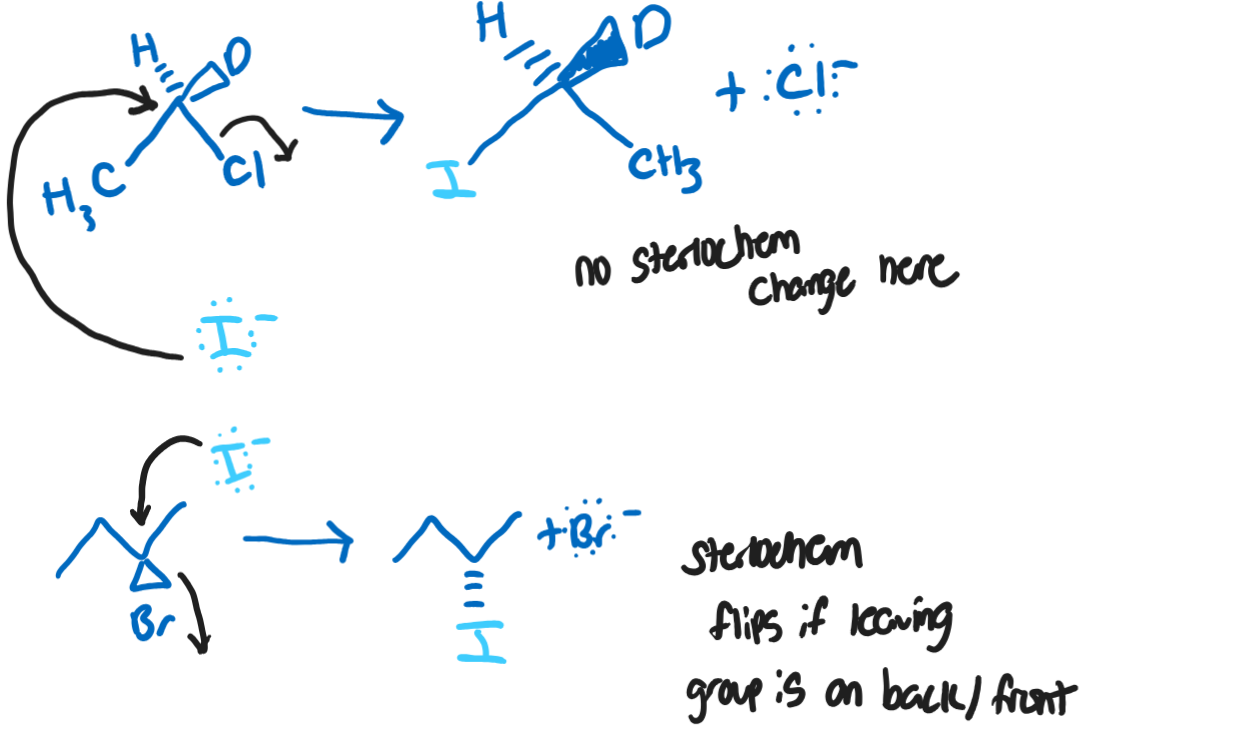
The Reaction Mechanism
SN1 Mechanism
General Information
SN1: unimolecular dependent substitution reaction with nucleophile
Reaction rate=k[electrophile] OR Reaction rate=k[substrate]
due to the carbocation formation being the rate determining step (slower step than the substitution itself)
SN1 is more prone to occur with the following solvents and substrate reactivities:
Solvents: favored by protic (hydrogen bonding) solvents due to the solvent stabilizing the carbocation
Substrate reactivity:
3°>2° > > 1° (due to carbocation stability)
Favoring conditions: non-basic, weaker nucleophiles favor unimolecular substitutions
Occurs in 2 steps: carbocation intermediate formation and final product formation
If leaving group is located on a dash or a wedge (stereochemistry involvement) and involves only one chiral center
Product will be racemic… but not a fully 50/50 racemic mixture (more like 70/30 or 60/40)
The major product will typically be the molecule with the opposite configuration as the reactant (due to backside attack being easier to achieve)
More than one chiral center being present on the molecule will yield diastereomers for the product
NOTICE: Positive ion goes on the most stabilized carbon
Solvolysis Reactions
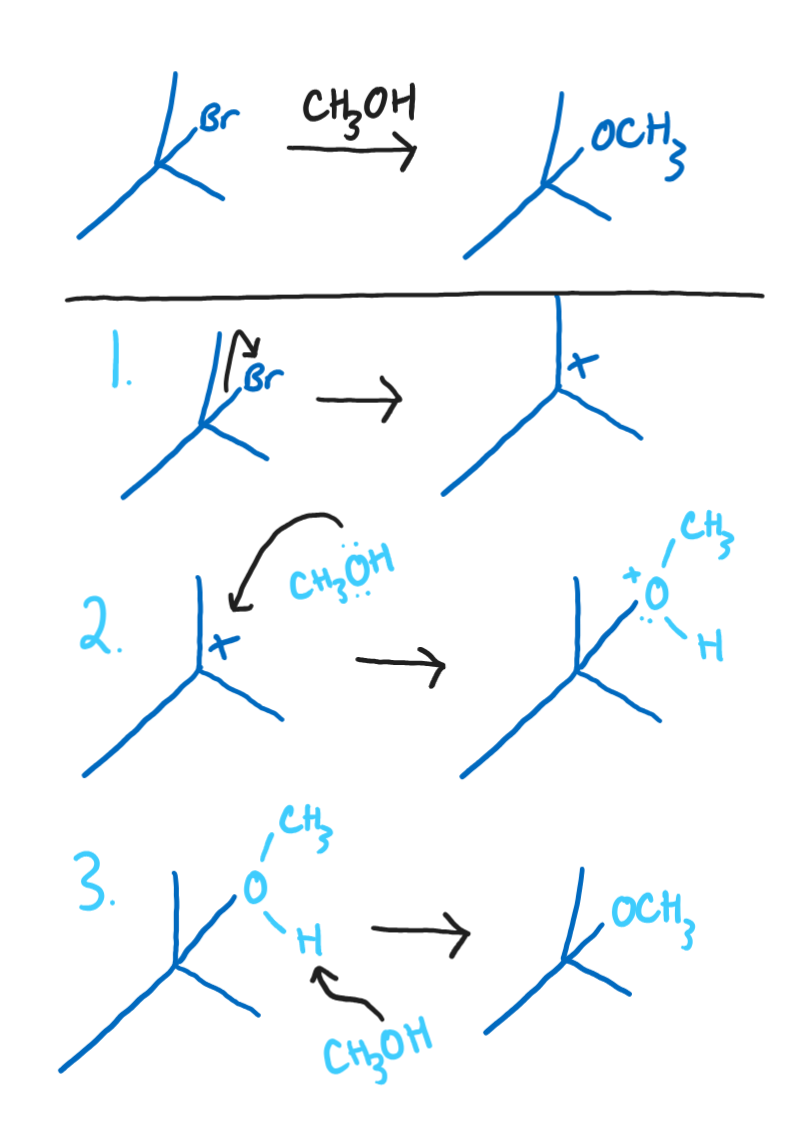
Occurs when the solvent is used as the nucleophile, such as water, alcohol, or ammonia
Polar protic solvents/nucleophiles speed up the rate of reactions because it helps stabilize the transition state (intermediate carbocation)
Reaction occurs then in 3 steps:
Leaving group leaves, creating a carbocation
Solvent behaves as a nucleophile and interacts with carbocation, creating an intermediate
The oxygen that attaches to the carbocation obtains a plus charge, causing hydrogen atoms attached to the oxygen to become very acidic
The very acidic hydrogen then leaves the intermediate to attach itself to the solvent and the end product is formed
The Reaction Mechanisms