Dev. Psych - E2 Study Guide
Here is E2 study guide. These are the items/info that you need to know. TAs will discuss this SG on 10/31/24 in lab. I will discuss it in class on 11/1/24. There will be 50 questions (TF - 7, multiple choice - 21, FIB - 22) . Test #2 is set for Monday 11/4/24 in the lecture hall and covers Chapters 7-12. Test time is 12:20-1:10pm.
Ch. 7
* gender diffs in muscle and fat - who has more/less of each?
Women tend to more fat
* physical changes in middle and late childhood (height/weight), slower growth
Middle and Late Childhood is a period of slow and consistent growth
Grow an average of 2-3 inches per year
Gain average of 5 to 7 pounds a year
Muscle Mas and strength increases as “baby fat” decreases
* skills needed for middle/late childhood as a function of gender - physical, mental, fine motor (G > B), gross motor skills (B > G)
Motor Skills become smoother and more coordinated
Girls outperform boys in fine motor skills
Boys outperform girls in gross motor skills
* information processing model - know each of the 3 stages (sensory-short-term/working memory - long term memory)
Information Processing Model
1. Sensory- tored for a few seconds at most. They come from the five senses: hearing, vision, touch, smell, and taste.
2. Short term-working memory - related cognitive systems that temporarily store and manipulate information
3. Long term memory
Don’t store stuff in long term memory until 3 years old
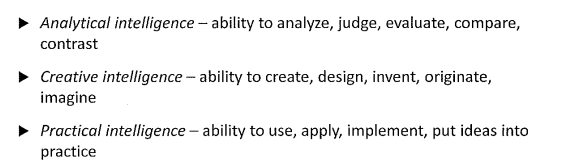
* Sternberg (Triarchic Theory)
*Gardner (8 Frames of Mind) theories of IQ, more than just a number
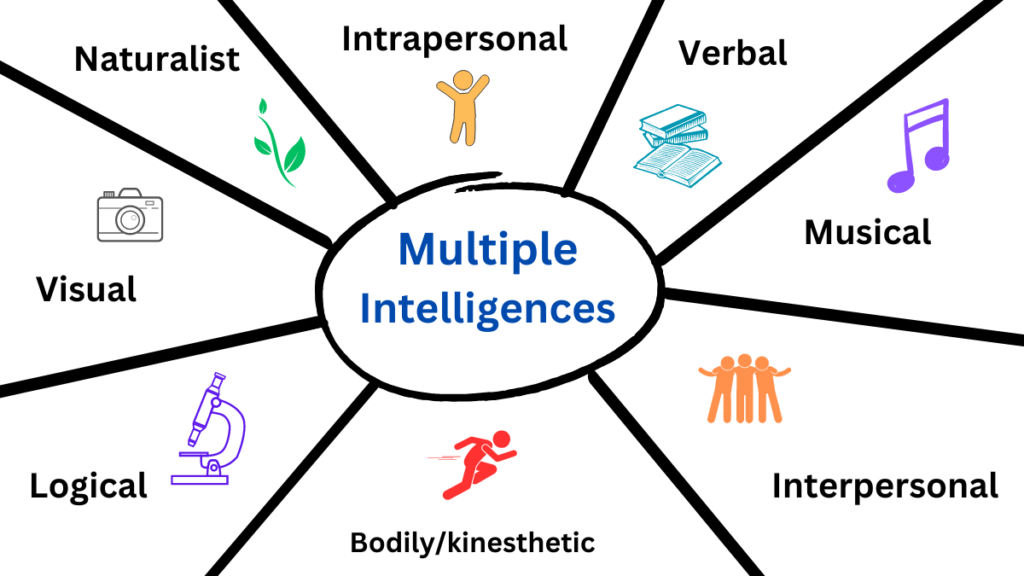
musical-rhythmic, visual-spatial, verbal-linguistic, logical-mathematical, bodily-kinesthetic, interpersonal, intrapersonal and naturalistic
Other types of intellegens like emotional IQ
* components of attention - control & adaptability
Adapt your attention bad at math and good at spelling and you focus on math
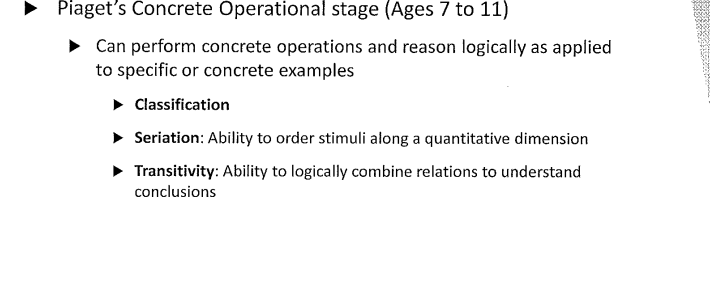
* Developmental Tasks -what are they (hint: they are like critical periods) and why so important - Havighurst relevant here
According to Havighurst, an individual must successfully achieve the following eight developmental tasks during the adolescent period: accept one's body, adopt a masculine or feminine social role, achieve emotional independence from parents, develop close relationships with peers of the same and opposite gender, prepare for an occupation, prepare for marriage and family life, establish a personal value or ethical system and achieve socially responsible behaviour.
Person responcoble for Development Task Havighurst - what you should be doing and their as guide post
Ch. 8
* Coregulation (helicopter parents!), parent-child conflict (autonomy versus control)
Coregulation is a transitionary period and can last months and even years and help you develop you independence can go haywire if your parents are helicopter parents

Parent - Child Conflict you want autonomy and parents what control
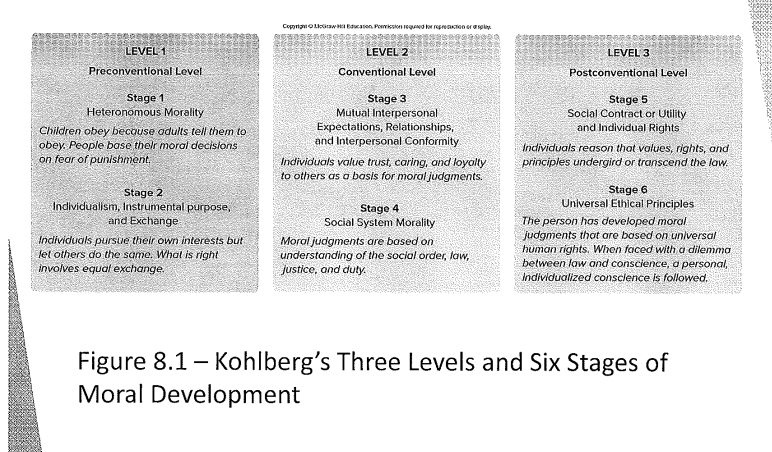
* impact of parental/societal/peer modeling on moral development (hint: Kohlberg)
A theorist good vs bad right vs wrong impact of parents socieyt and peer modeling on development
* gender and friendships - why are girls so much better than boys (brain diffs, better decision-making)
Guys are more impacted of physical agression thye often start it and often victims of it
* physical aggression victims and why - why does this impact boys more than girls
* self-esteem during adol. (up and downs for both males/females), more damaging for Gs due to societal expectations, WHO AM I???
Ups and Downs for self essetem for males and females
More problamic issuse of self esestem for women than men
* birth order and IQ (1st borns have higher IQ typically), fluid/crystalized IQ
Your crystalized IQ - person's general knowledge, vocabulary, and reasoning based on acquired information ( better as you get older)
Your fluid intellegene - such as math at middle age it peak and declines at it get older
First born tend to have higher iq advantage get more attention as a first born
Ch. 9
* role of frontal lobe (last part of brain to develooment, by mid 30s)
Frontal Lobe is still developing and won’t stop until your early 30s
This might be one reason that adolence take more risks such as unprotected sex
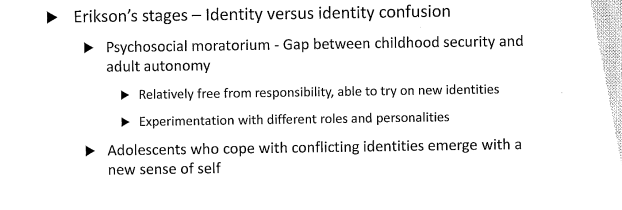
* why do you fight with your parents? - Erikson's 8 stage model relevant here (identity versus identify confusion), brain structure relevant re: conflict/anger (hint: Amygdala)
Parents want to control your life and children want to independent
Amygdala is a part of the brain that is primarily responsible for processing emotions and almost completely developed by early adolescence
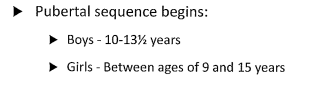
* pubertal growth spurt (height/weight/body image) and problems with it, girls earlier than boys
Height and Weight
Body Image
Problems associated with it
* definition of puberty vs. adolescense (psychological, physiological/biological) and why this is a tough time developmentally (mixed messages, parental conflicts)
Adolescence is the psychological aspects of puberty
Mixed Messages - Barbie can get from peers such as eating disorders seeing a figure that is bigger than what you are

* college and health-promoting behaviors - why so difficult (think they are immortal, many distractions, figuring out who they are)
Engage is risky behavoir “nothing is going to happen to me “
Still figure out who they are
* impact of transitions (intense questioning/periods of relative calm) during pre-adolescence and adolescence - think critical periods again
Questioning - How
* schemes and scripts (organize & guide behavior, what's acceptable, what's not)
They organize and guide your behavior
Tell what acceptable or not
Lost of information and boiled down into meaningful information
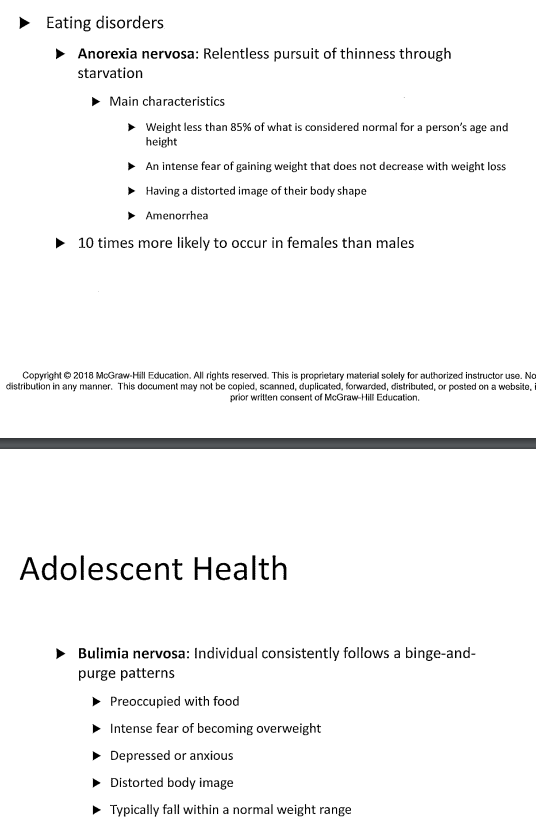
* anorexia nervosa (relentless pursuit of thinness)/bulimia nervosa (binge-purge) - know what each is, body image issues, self-esteem, affects W more than M, social media
Occur ten times as more frequently in women than men
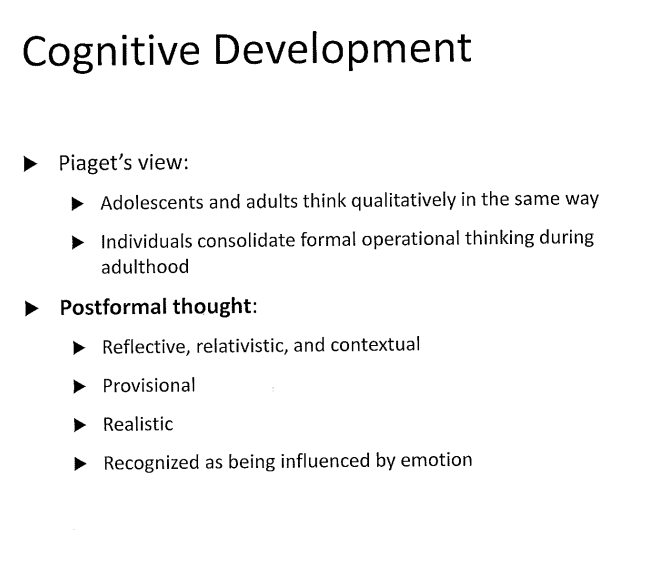
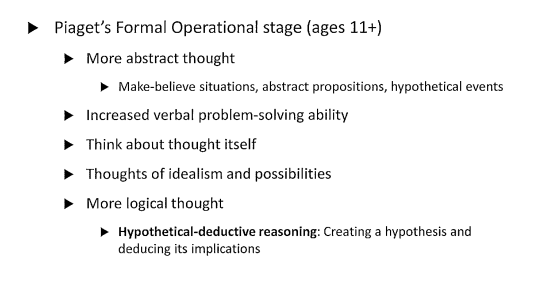
* Piaget's Formal Operations stage (last stage of his 4-stage model)
Goes from 11 to death
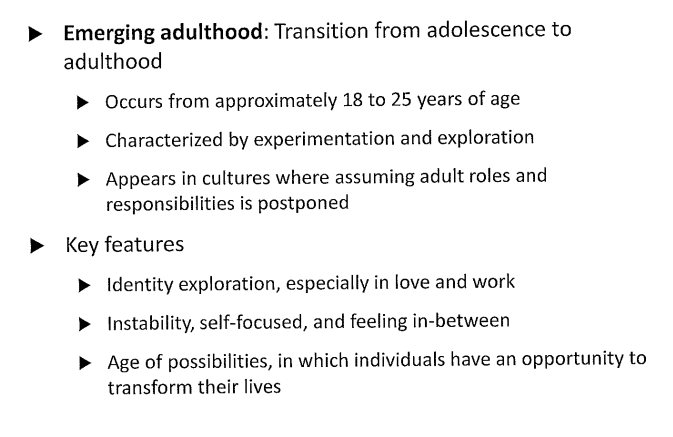
* emerging adulthood (our 20s typically)
start at age twenty
Ch. 10
* suicide and adol - highest rates here for boys/men across lifespan- why?
Across the lifespan
the stigma of male mental health care and don’t ask for health
* causes of death during Adol. (suicide, unintentional injury, homicide)
3 leading causes of death are suicide, unintentional injury homicide

* 3 stage model of adolescent development (lecture); 10-17, 18-23/24, 24-30yrs
Ask
* self-disclosure w/friends (when older) versus parents (when younger), cliques (how many in a typical clique is 2-12 people usually, peers, friends
When you are little kid you discloded more to you parents then friends
as you get older your tend to have less friends
Ch. 11
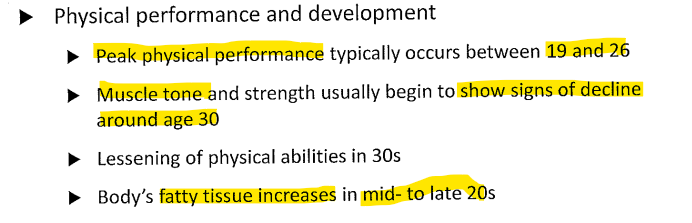
* perk performance (when we do our best) re: physical skills, usually 30s-40s across wide range of acadmeic/physical activities
Most people the peak is 30 to 40 in what your profession is and correspond to middle age
* emerging adulthood transitions
In middle age

* binge drinking % in college students (approx. 40%)
After college age the binge drinking declines
the peak of binge drinking is 10-25
after the mid 20 the drugs and alcohol use is reduced

Ch. 12
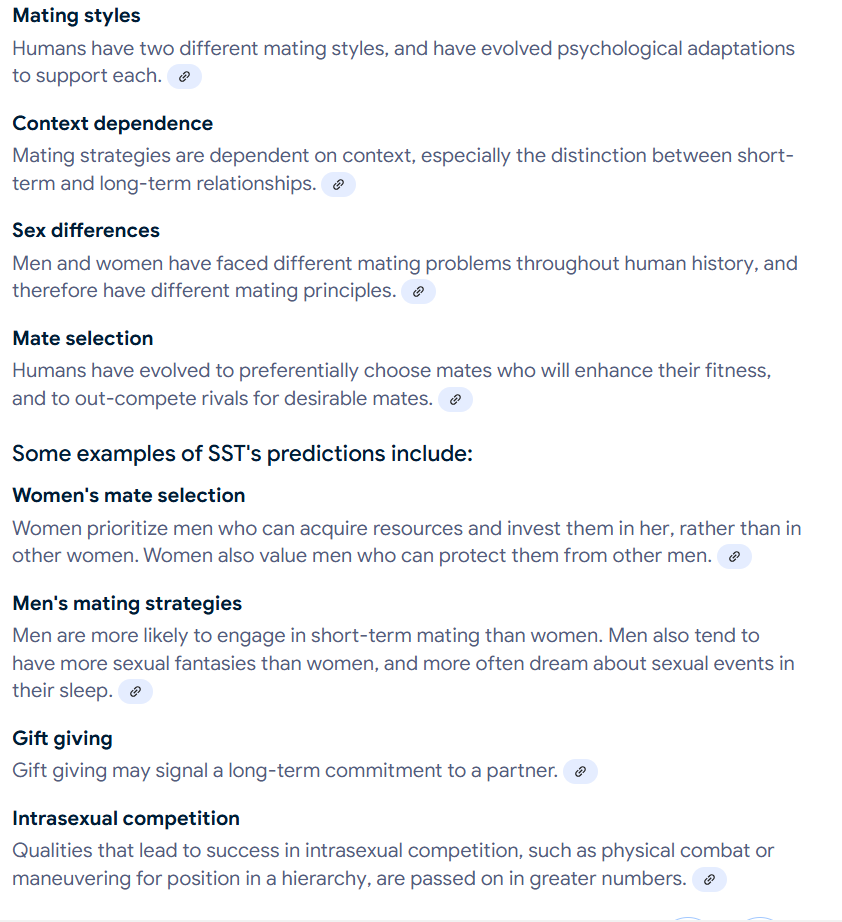
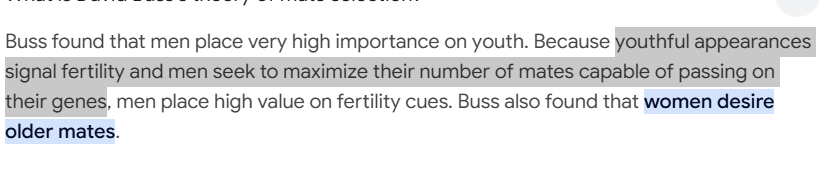
* David Buss' work on sexual strategy/short-term & long-term mating/dating (Sexual Strategy Theory), know gender diffs - In PowerPoints
Know strategy in short-term(hook up ) and long term mating (marriage )
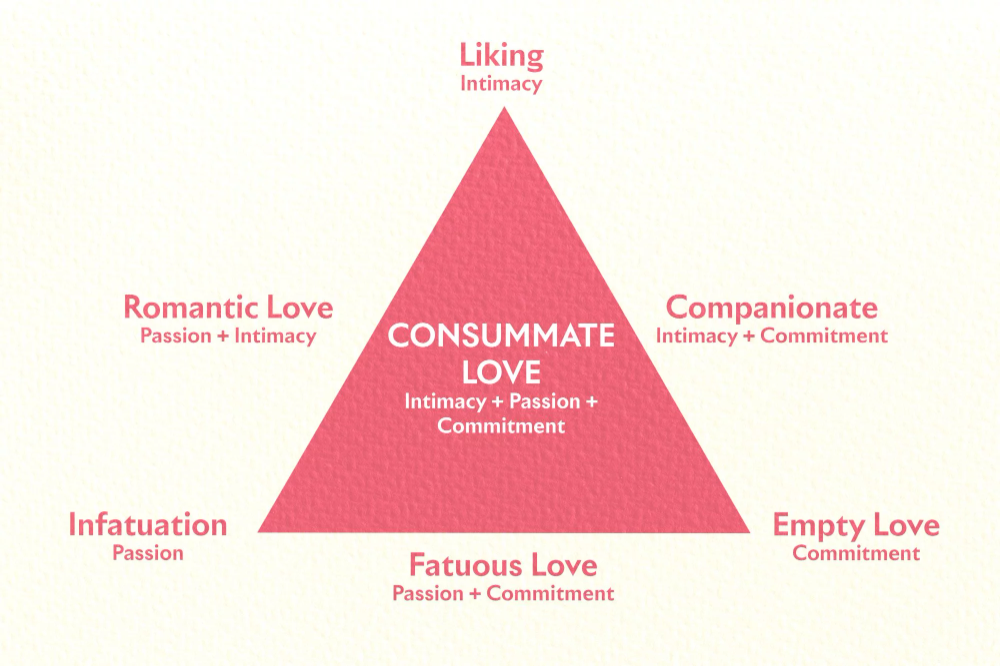
* 8 types of Love according to Sternberg (yes, the same guy as IQ!), which is the best type (passion, intimacy, commitment)
Best and Worst Type
Non-love: Absence of all three components (intimacy, passion, and commitment).
Liking (friendship): Presence of intimacy only, without passion or commitment.
Infatuation: Presence of passion only, without intimacy or commitment.
Empty love: Presence of commitment only, without intimacy or passion.
Romantic love: Presence of intimacy and passion, without commitment.
Companionate love: Presence of intimacy and commitment, without passion.
Fatuous love: Presence of passion and commitment, without intimacy.
Consummate love: Presence of all three components: intimacy, passion, and commitment.
* cohabitation influences, on the rise, delay marriage
Increase in cohabitation before marriage correlates with high divorce rate
some people cohabitate so that can delay marriage
cohabition is on the rise
* divorce rate as a function of years married, especially years 5-10 of a marriage most critical
After ten year of marriage the likely hood of divorce decrease