6.1.2(g) - Role of Isolating Mechanisms
selection pressures
density dependant
competition
predation
parasitism
communicable disease
food availability
density independant
climate change/climate
natural disasters
seasonal changes
human activities (deforestation/habitat destruction/pollution)
gene pool: all genes and their different alleles present in an interbreeding population (i.e. a species)
some populations of same species may be geographically isolated from each other so for the same speces there can be different gene pools
genome: whole of genetic information of organism i.e. all the genes/alleles that an organism has in its cells
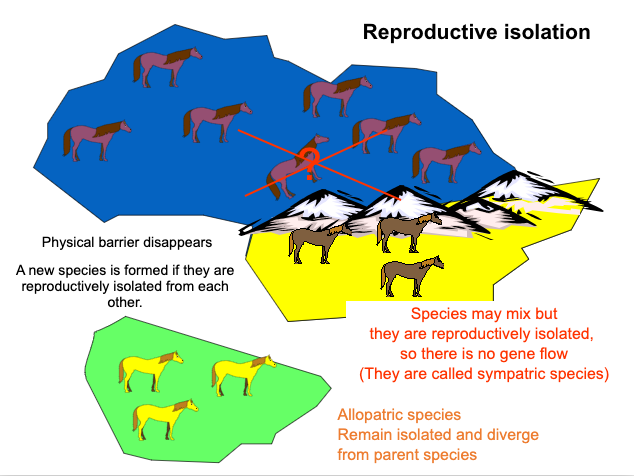
reproductive isolation
for new species to form individuals must be reproductively isolated from one another (i.e. unable to interbreed + produce fertile offspring)
prezygotic isolation
geographical isolation (large scale or microhabitat)
e.g. cichlid fish found in east african lakes, isolated most of time except for in rainy season
temporal isolation
organisms reproduce and produce gametes at different times e.g. rainbow trout (spring) + brown trout (autumn)
behavioural isolation
differing courtship rituals even between individuals that are v close to eachother (sympatric) e.g. birds of paradise
morphological isolation
e.g. shape of genitalia
post-zygotic isolation
mating may occur but fertile/viable offspring are unable to be formed
hybrid stability
e.g. ligers/tigons, mules, zedonk, zorse
chromosome numbers may not match/chromosomes not homologous so gametes cannot be formed by meiosis
hybrid inviability
zygote unable to develop (too many mismatched genes/genetically too different)
hybrid breakdown
F1 generation fertile, 2nd generation not
sympatric speciation by polyploidy
speciation can occur when individuals not geographically isolated (sympatric)
much more common in plants than animals
(post zygotic mechanisms affect animal development)
diff species of plant hybridise often, due to pollen released into wind/on insects
hybrids often infertile but reproduce asexually initially
reproductively isolated as cannot interbreed with parental species
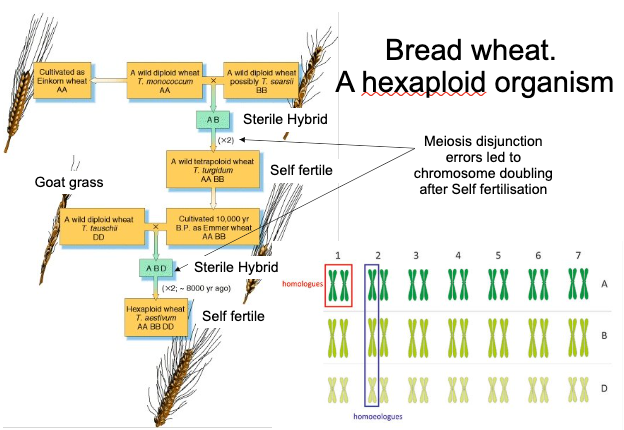
chromosome doubling events due to failure of sister chromatids to separate during meiosis (nondisjunction)…due to spindle formation failure results in diploid gametes then polyploidy
offspring produces now reproductively isolated from orig. species as chromosomes number now diff.
if chromosome no. is odd they will be sterile hybrid but second doubling event could occur to give even no. of chromosomes again.
many plants polyploids (possibly 50-70%)
polyploidy in plants
Genus Allium incl. onions, garlic + leeks, chives are NAMED EXAMPLE
many species polyploids + oft. reproduce asexually
polyploidy gives allelic diversity + hybrid vigour.
(better growth) and so may give selective advantage
Allium canadense is wild onion from N.America, 2n=14 but variants e.g. 2n=28 and other Alliums e.g. Lithuania: one is 2n=16 and one is tetraplod w/ 32 chromosomes
Cultivated potato Solanum tuberosum 2n=48 is polyploid of smaller Solanum brevidens (2n=24)
bread wheat is hexaploid
animal polyploids?
red viscacha (Tympanoctomys barrerae) that has chromosome no. 102. sperm cells are 2x normal size
thought to be tetraploid hybrid of Octomys mimax (2n=52)
rodent is from S.America and on red list (extinction risk)