PARCIAL 1
contenido
economic logic ch. 10-11
modern principles ch 26,28
impuestos (ayau)
economic logic ch 20 (gobierno)
temas
mercado de trabajo
desempleo
rigidez laboral
capital y produccion
mercado de trabajo: wages, employment and unemployment
Rise in wages came after the industrial revolution (19th century, 1900’s)
worker benefits: medical insurance, paid vacations and pensions made total compensation rise, therefore there was a bigger incentive to work.
labor
workers→capital→inputs→outputs
entrepeneur owners→decision making
employers and employees serve different functions but both are labor
demand for land, labor and capital is determined by the final revenue and profitability of the products the firm sells
marginal productivity of labor: additional output generated by the extra worker
se deja de contratar labor cuando marginal benefit=price
increase in demand and profitability→rise in wages
increase in supply of new workers→fall in wages
factors that determine wage
años de educacion
años de experiencia laboral
numero de interrupciones laborales
higher profits→higher wages
benefits in increasing profits
higher wages and compensation
more funds available
stock prices rise
better products
advantages for giving higher compensation
less employee turnover
stable corporate culture
focus on enhanced training
both total and marginal productivity increase wages
effects of minimum wages on unskilled workers
income increase for workers, which will support the increase
may put people out of work
potential workers will enter the labor force
minimum wage goal→pay the working poor a decent wage. result→more unemployment for the working poor
labor unions: monopolistic cartels that raise wages above competitive levels
natural rate of unemployment: % of temporarily unemployed workers looking for a job. (structural + frictional unemployemnt)
recession: unemployment rate>natural rate
government intervention
excessive unemployment because of:
unemployment insurance
social security
minimum wages
trade union
others
keynesian economics underemployment:
a situation with a persistent shortfall relative to full employment and potential output so that unemployment is higher than at the NAIRU or the "natural" rate of unemployment.
creative destruction: jobs created and jobs destroyed
unemployment and labor force participation
backward bending: La curva "backward bending" de la oferta de trabajo es una ilustración gráfica de este comportamiento, donde inicialmente la curva es positiva (más salario = más horas trabajadas), pero después de un punto crítico, la curva se dobla hacia atrás (más salario = menos horas trabajadas).
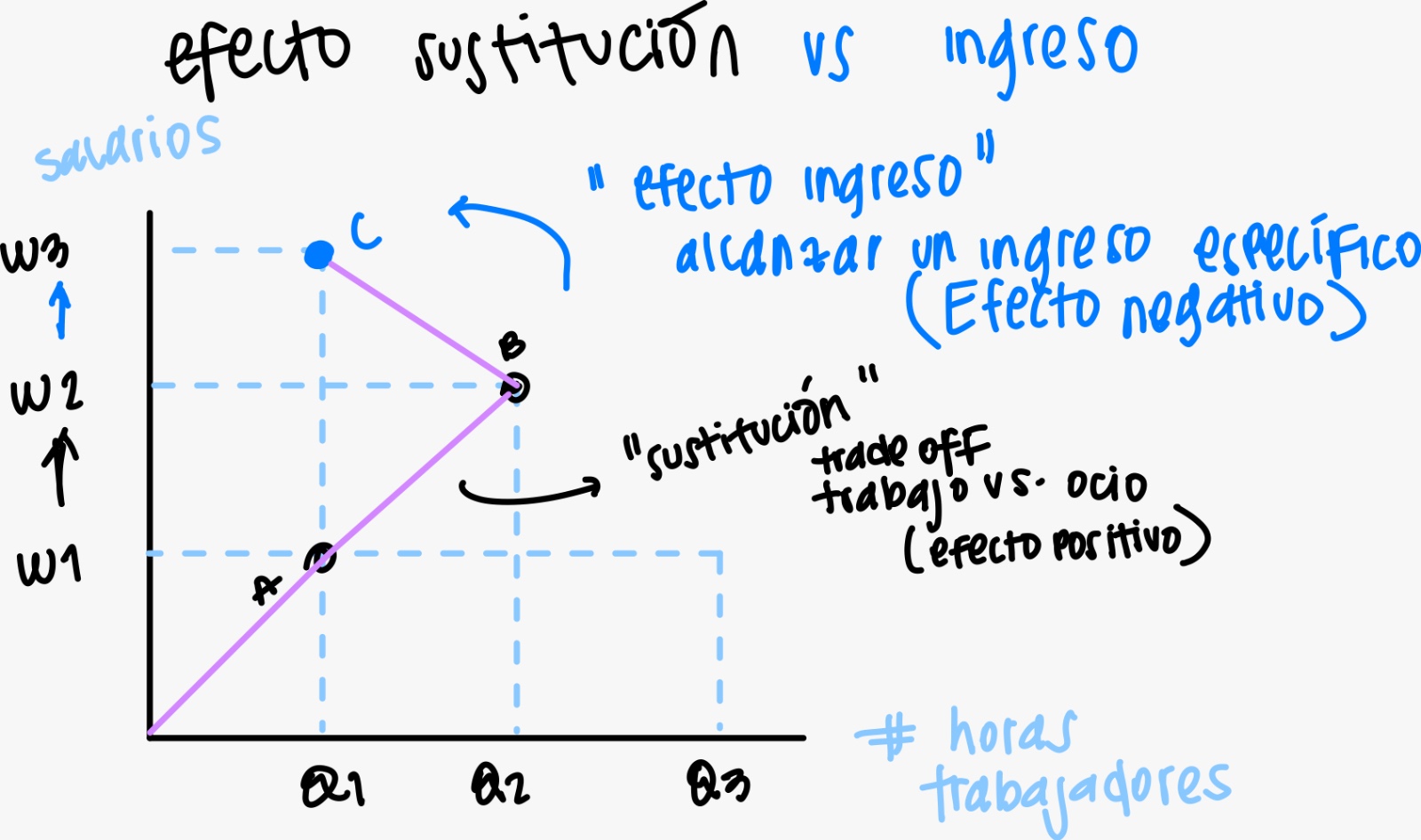
efecto sustitución: Dado que trabajar es más rentable, el trabajador tiende a sustituir tiempo libre por más trabajo, es decir, ofrece más horas de trabajo.
efecto ingreso: En lugar de trabajar más, el trabajador puede reducir las horas de trabajo porque ya tiene un nivel de ingreso satisfactorio.
unemployed: workers are adults who do not have a job but are looking for work
labor force: all workers, employed and unemployed
unemployment rate: % of the labor force without a job

(incomplete indicator) it doesnt measure the discouraged workers nor the quality of jobs people take
labor force participation rate: % of adults in the labor force

causas:
lifecycle and demographics
incentives
discouraged workers: workers who have given up looking for a job but would still like one
underemplyment rate: part time workers who would rather have a full time job+discouraged workers

tipos de desempleo
frictional: short-term unemployment caused by the ordinary difficulties of matching employee to employer
causa: scarcity of information
structural: long term unemployment caused by long lasting shocks of an economy
causa: large, economy-wide shocks that occur relatively quickly
labor regulations: reduce the incentive for workers to search and take new jobs
minimum wage
cyclical: unemployment correlated with the business cycle
causa: mismatch between wages and prices
employment at will doctrine: an employee may quit and an employer may fire at any time or reason
rigidez laboral: se refiere a las restricciones y limitaciones en el mercado laboral que dificultan la capacidad de las empresas para contratar, despedir, o ajustar las condiciones de empleo en respuesta a cambios económicos. Estas rigideces pueden provenir de una variedad de fuentes, incluyendo leyes laborales, regulaciones gubernamentales, contratos sindicales, y prácticas laborales establecidas.
mas rigido→mas desempleo
capital e interes
“a country becomes more properous in proportion to the rise in the invested capital per unit of its popoulation”
ludwig von mises
algunos paises son mas ricos que otros no por su seleccion de recursos naturales ni cantidad de poblacion, pero por la disponibilidad de capital fisico Y humano.
ejemplo: Hong Kong y Suiza
tipos de capital
capital goods
research and development
human
goods-in-progress
investment
roundaboutness
implica que en lugar de producir bienes directamente, se invierte tiempo y recursos en la producción de bienes de capital (como maquinaria, herramientas, y tecnología) que a su vez mejoran la eficiencia y productividad en la producción de bienes de consumo finales. Este proceso más "redondeado" o indirecto puede llevar a una producción más eficiente y a un mayor output en el largo plazo, aunque a corto plazo puede requerir más tiempo y recursos. (capital deepening)
roundaboutness 4 stage model
natural resources
manufacturing
wholesale trade
final retail goods and services
capital methods increase production time
capital deepening: time it takes for goods to be transformed from raw commodities to final consumable products
la tecnologia requiere de capital investment
la tecnologia no causa desempleo permanente
sources of investment capital:
domestic savings
stock market
government funds
foreign investment
interest rates
a small change in interest rates can make a difference between profit and loss in the long run
volatilidad de la tasa de interes
indicación de la incertidumbre o el riesgo asociado con los cambios en las tasas de interés en los mercados financieros. se puede expresar con:
annual production
profitability
employment and unemployment
inventories
costos de produccion
prices of capital goods
stock prices
solow model
production function:
Y= F(A,K,eL)
y= PIB
F= funcion
A= ideas
K= capital fisico
eL= human capital (education*labor)
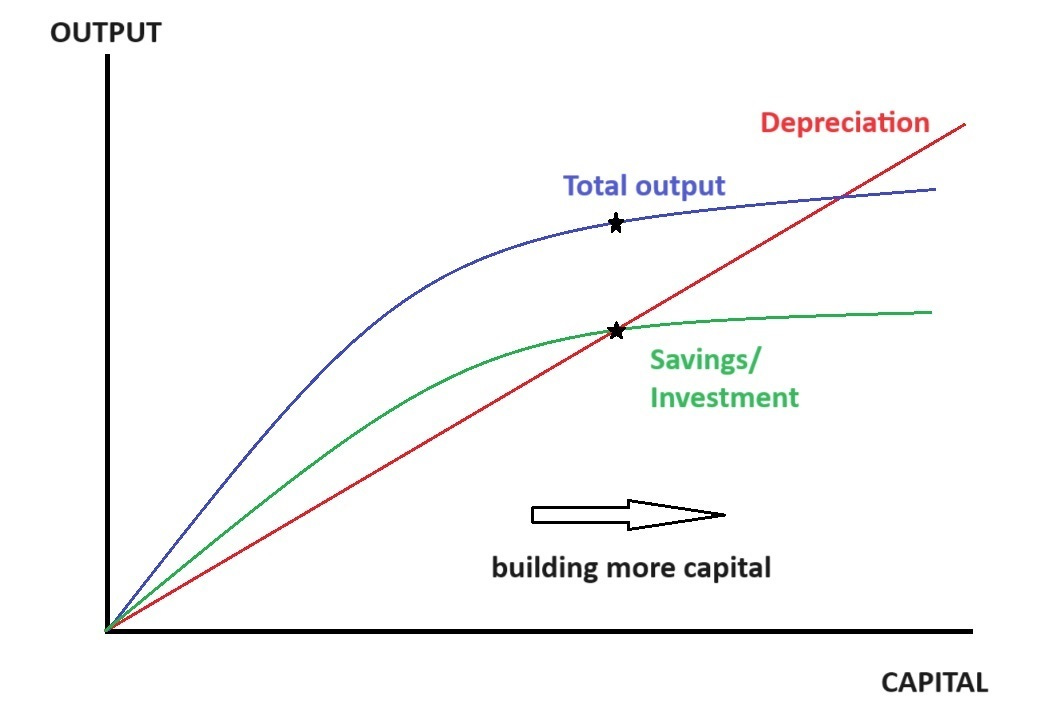
marginal product of capital
the marginal product of capital diminishes as more and more capital is added
the greater the capital stock, the greater the depreciation
steady state level of capital:
investmen=depreciation
capital growth
better ideas
capital acummulation
catching up vs. cutting edge (vanguardia)
Catching Up: Se enfoca en alcanzar el nivel de los países más avanzados, aprovechando las oportunidades de crecimiento rápido a través de la adopción de tecnologías y conocimientos existentes.
Ejemplo: China y algunos países del sudeste asiático en las últimas décadas, que han experimentado un rápido crecimiento al adoptar y adaptar tecnologías y prácticas de países más avanzados.
Cutting Edge: Se enfoca en mantenerse en la cima mediante la innovación continua, lo que les permite establecer nuevas tendencias y fronteras tecnológicas y económicas.
Ejemplo: Estados Unidos, Alemania y Japón son ejemplos de países "cutting edge" que lideran en innovación tecnológica y desarrollo económico.
gobierno
rol de gobierno:
allocation
distribution
stabilization
fuentes de financiamiento de gobierno
impuestos
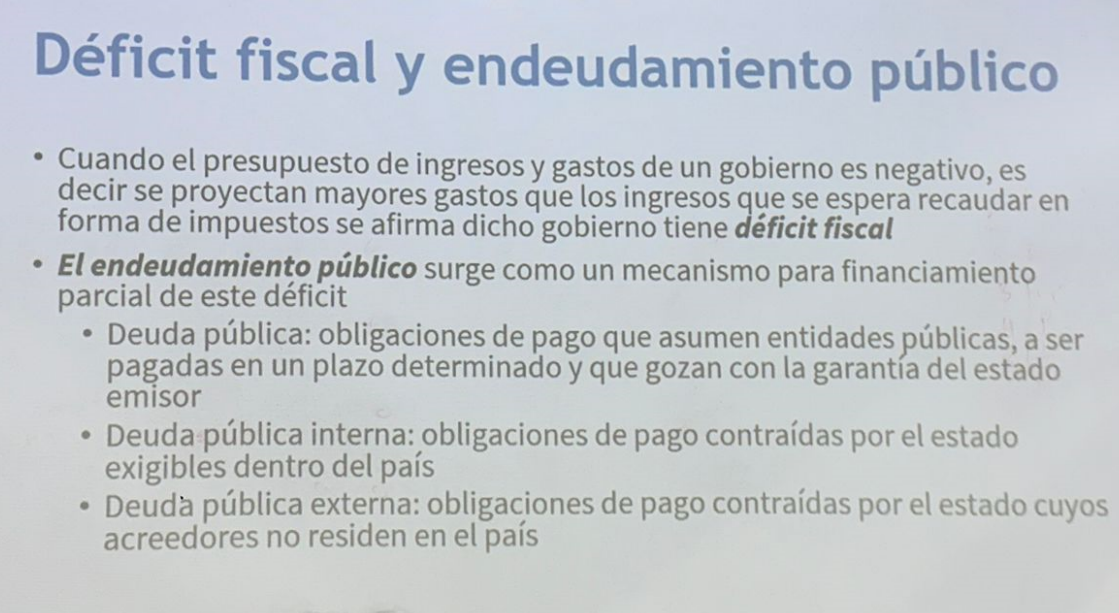
deuda publica (mala a largo plazo)
donaciones
prestamos
organismos internacionales
inflacion
economic foundation
business
nonprofit
government
things government can do better than the private sector:
national defense
justice system and rules of the game
public works
monetary system
social welfare system
coase theorem:
in the absence of government, the private sector will step in to provide alternative services
major areas of government:
size of government
legal structure
sound money (inflacion)
trade
regulation
The Rahn Curve
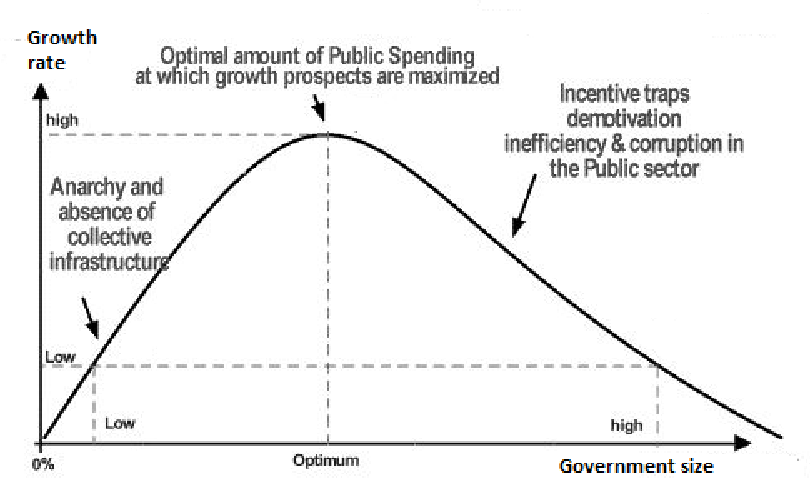
measures of government activity (determine degree of economic freedom)
tamaño de gobierno
estructura legal y property rights
inflacion
international trade
regulation of credit, labor, and business
market principles for legislators (principles to make government better and cheaper)
constitutional rules of managment
profit motive and incentive
welfare: a civil society should help those who need help and not those who dont, putting a limit on “entitlement” programs
impuestos
costo de tener gobierno dependerá de las funciones que se le son asignadas.
se establecen impuestos para
sostener al gobierno
finalidad economica → disuadir a personas de ciertas cosas
finalidad social → redistribución de ingresos
solo las personas pagan impuestos, no instituciones ni empresas
incidencia: efecto de los impuestos→ en quien recae
impuesto directo: los impuestos se relacionan directamente a ingresos
impuesto indirecto: no tienen relacion con el ingreso (IVA)
neutralidad impositiva: efecto en la estructura de precios relativos y en la asignacion de recursos. entre menor distorsión en la estructura de precios, mas neutro
tasa: monto de impuestoss
tarifa o arancel: lista de tasas
subsidios: impuestos “negativos” su objetivo es hacer rentable alguna actividad
*Es imposible tener impuestos neutrales desde el momento que existe el gobierno, pues “el precio de tener gobierno” implica que siempre habran impuestos y afectaran de alguna forma.
tipos de impuestos
IVA
ISR
COMERCIO EXTERIOR
VENTAS
PROPIEDAD O TIERRA
tasa fiscalmente optima
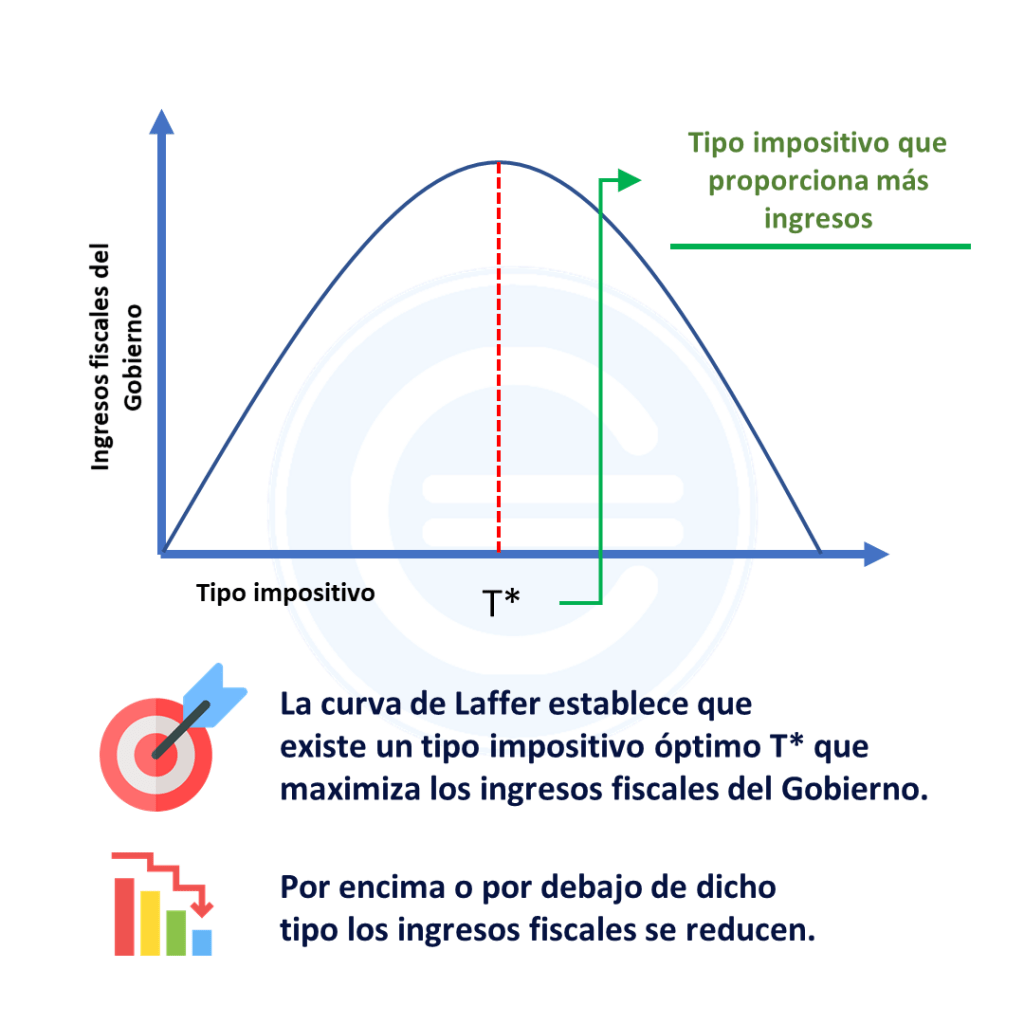
no se deberia de buscar maximizar el punto T ya que la poblacion no esta dispuesta a pagar mas impuestos que no son bien usados
lo que se optimiza no es la eficiencia en la economia, si no la recaudacion fiscal