L6- Carboniferous Terrestrial Ecosystems
LOs:
the carboniferous world
carboniferous plants and the beginnings of phytogeographical differentiation
fish recover from the Devonian mass extinctions
arthropods take to the air
more amphibians and the first reptiles
animals attack the plants (the beginnings of herbivory)
late Carboniferous global climate change
The Carboniferous World:
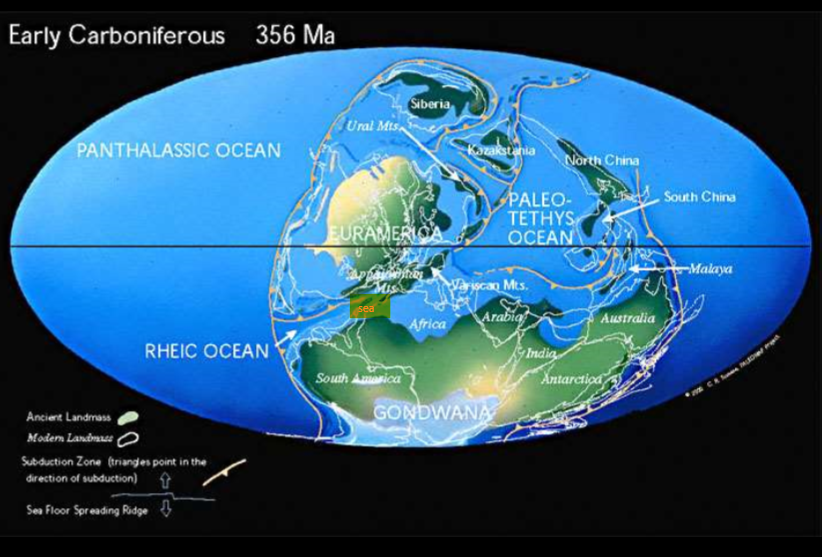
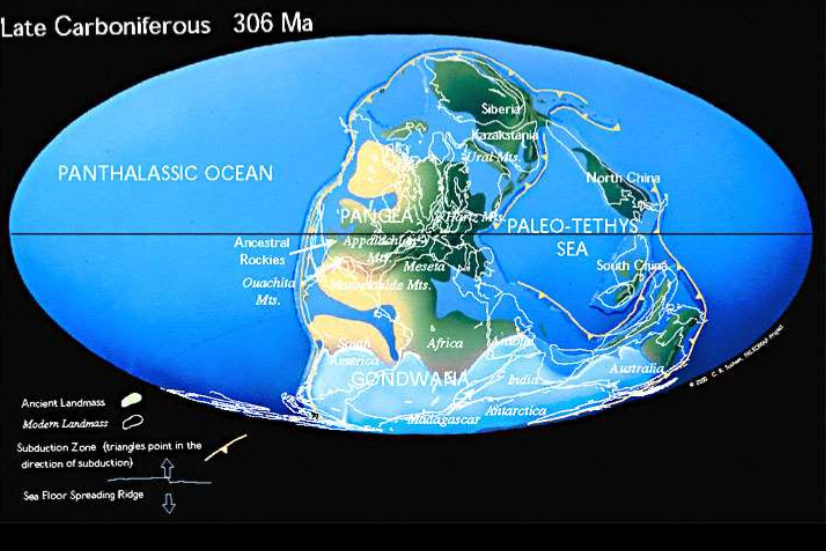
gondwana smashed into euramerica, pushed everything northwards, all the sediment in the ocean builds up into a mountain range, there is a massive ocean (panthalassic ocean) around the back of the world- can walk from top to bottom of the world
early C→ a little sea between euramerica and gondwana, massive ice sheet starts to develop on the south pole
late C→ sea closes up, mountain range forms
shifting from a greenhouse world in the silurian and devonian to an icehouse world in the carboniferous
caused by lowest CO2 levels and highest O2 levels
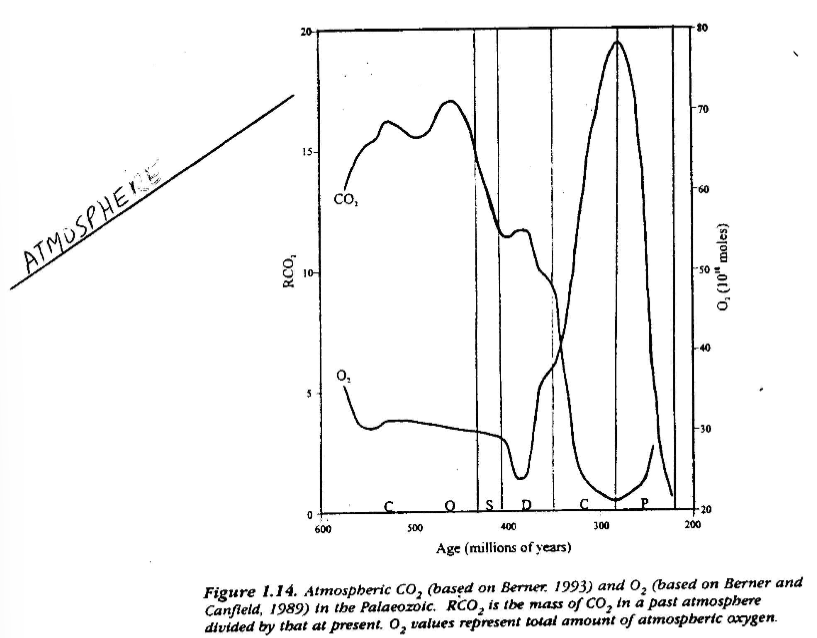
high O2 causes lots of forest fires and insect gigantism
icehouse world lasts for 80million years (Carboniferous-Permian)
Plants:
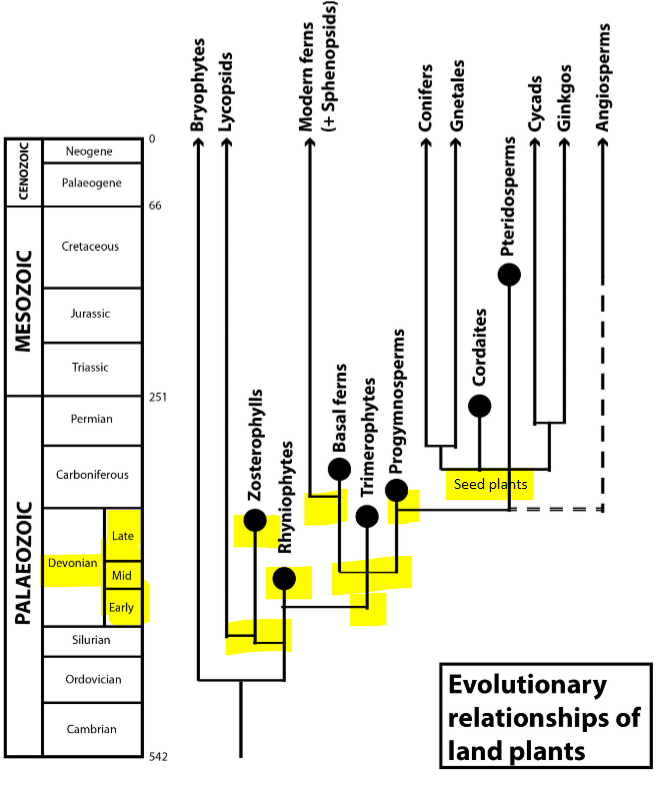
all plants evolved in the Devonian (except Angiosperms)
Bryophytes
lived in permanently damp areas, on rocks, as epiphytes on trees
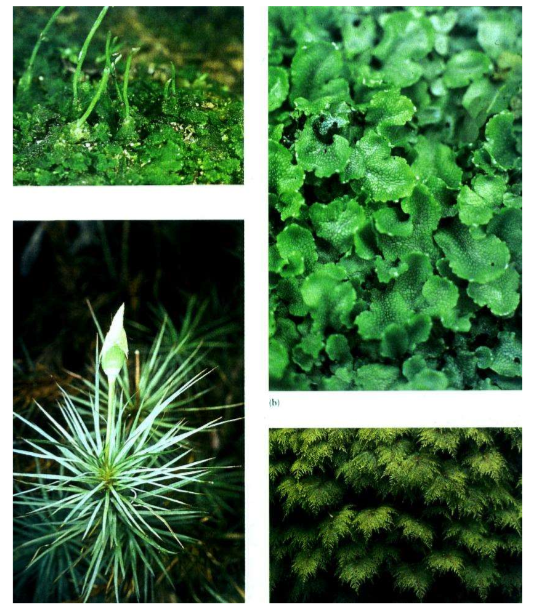
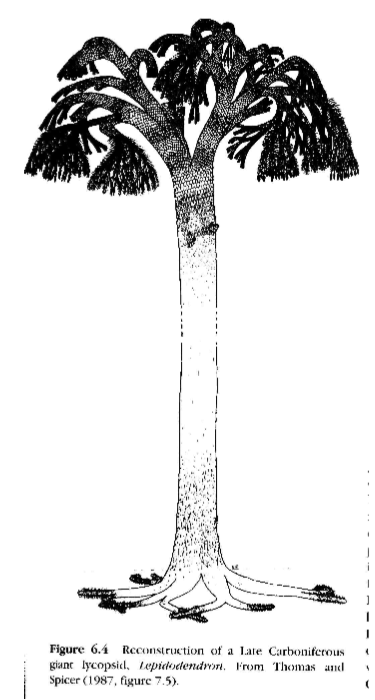
Lycopsids
formed huge trees, dominated forests
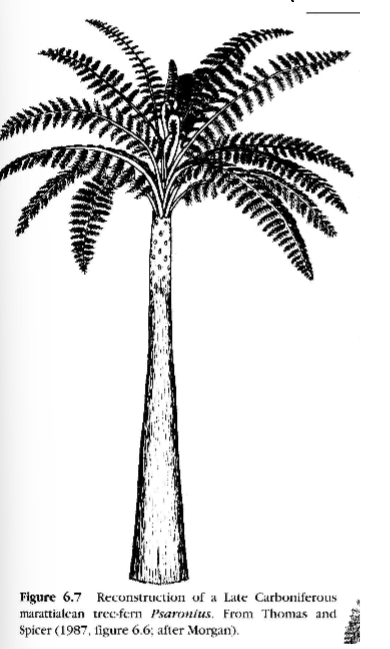
Ferns
had herbaceous forms and tree forms
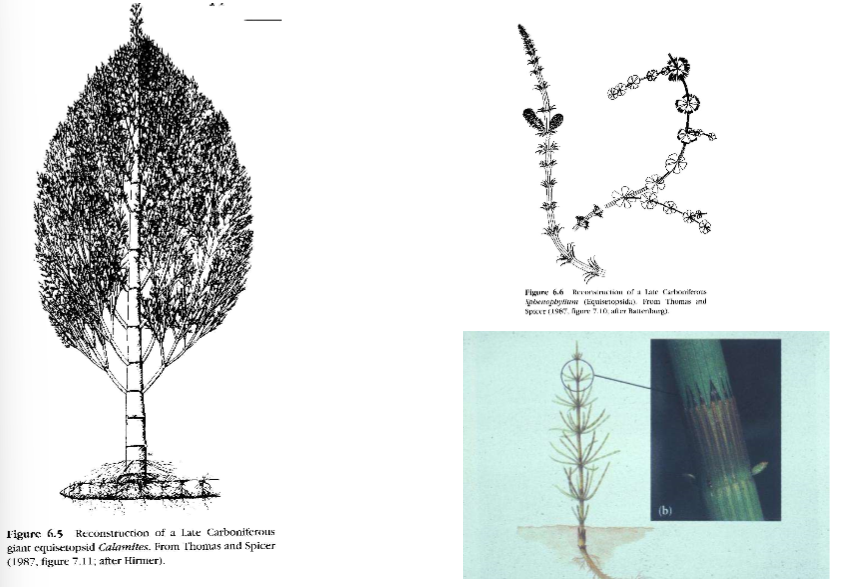
Sphenopsids
get different forms e.g. tree-like, lianas
is the same as equisetum (horsetail plants) but an order of magnitude bigger
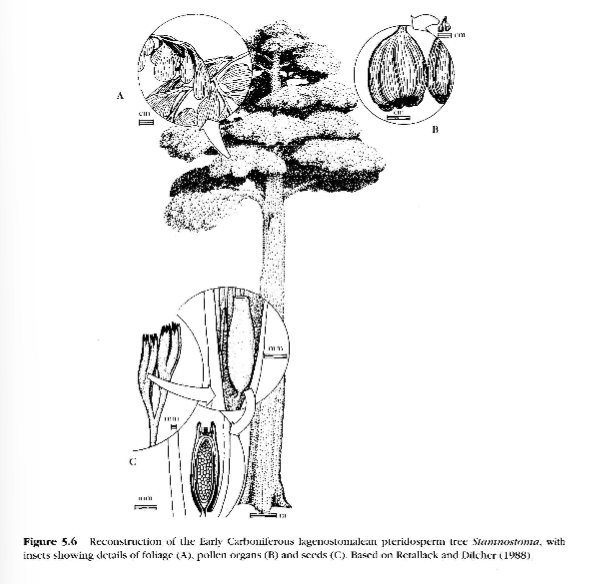
Pteridosperms
first seed plants, appeared at the end of the Devonian, diversified in the Carboniferous
different forms, all produce primitive seeds→ live in dry environments
Cordaites/Primitive Conifers
new group in the late Carboniferous
are trees, seed plants strap-like long leaves
are primitive conifers
Early C→ map of different biomes:
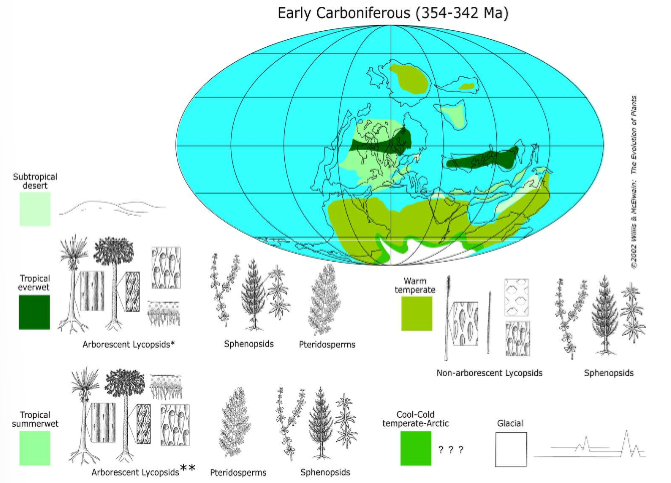
there is a latitudinal gradient that forms different biomes of plants
ice sheet compresses the temperature gradient
get tropical rainforests across equator
there are the same plants in different biomes, but just different species
→ phytogeographical differentiation
Late C→ map of different biomes:
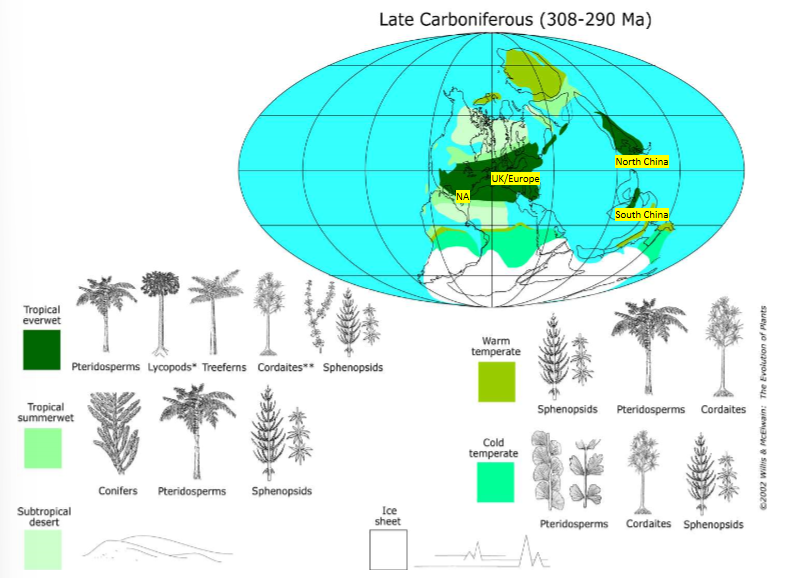
huge ice sheet
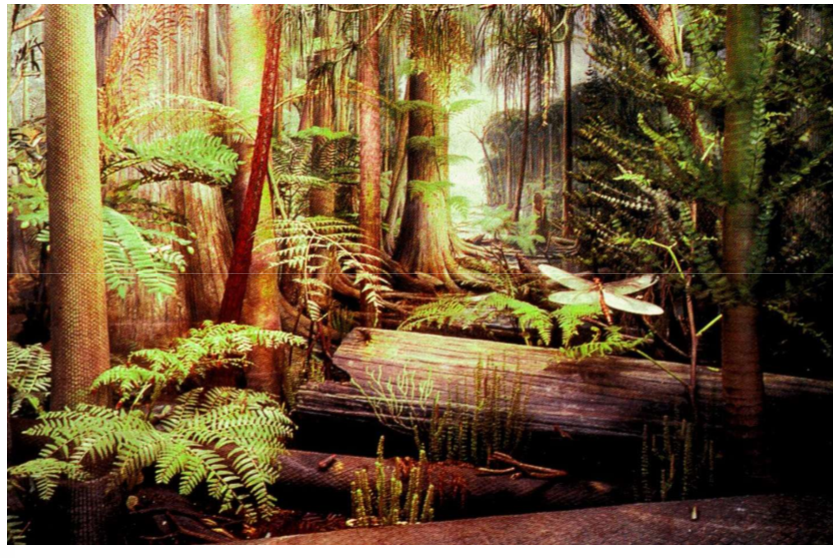
tropical everwet→ get coal measure rainforests at the equator, take out all the carbon in the atmosphere, have the most biomass ever, are dominated by lycopsids
plants across the carboniferous:
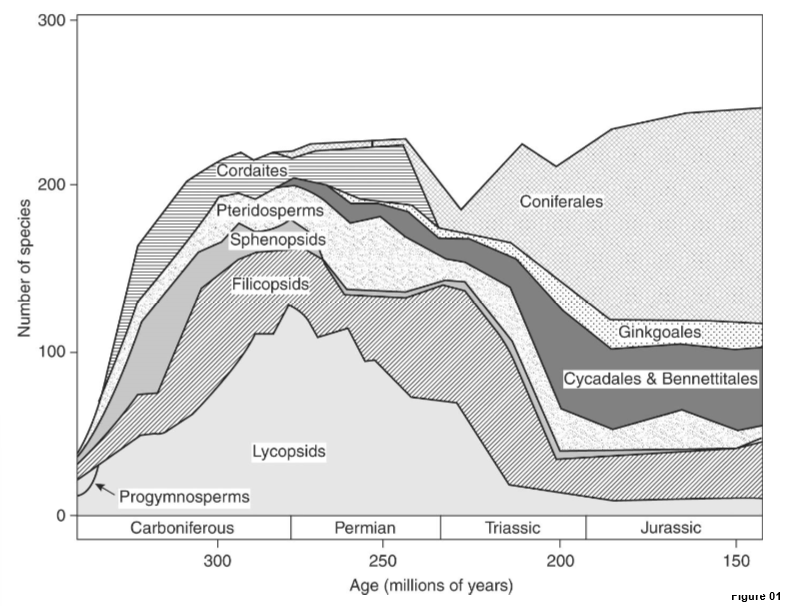
reconstruction of a coal measures forest at the equator:
trees, giant insects (due to high O2)
Invertebrates:
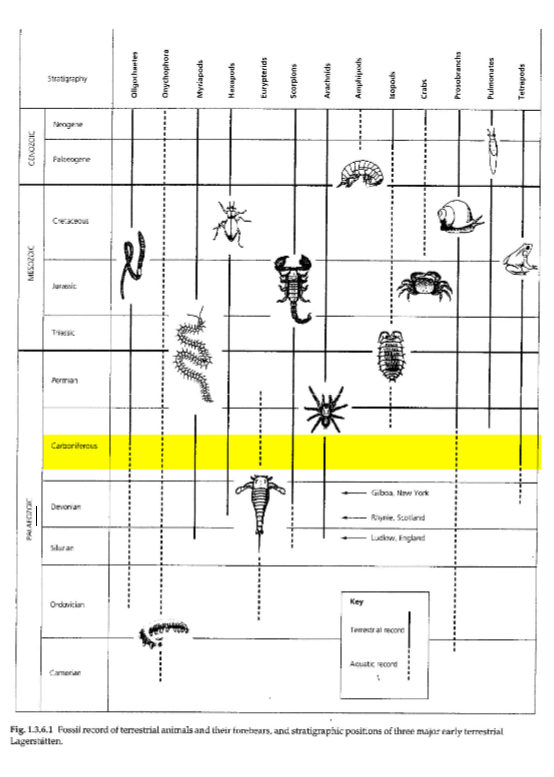
worms, scorpions, snails become terrestrial
first woodlouse relative appears
hexapods develop wings for the first time (main type of arthropod)
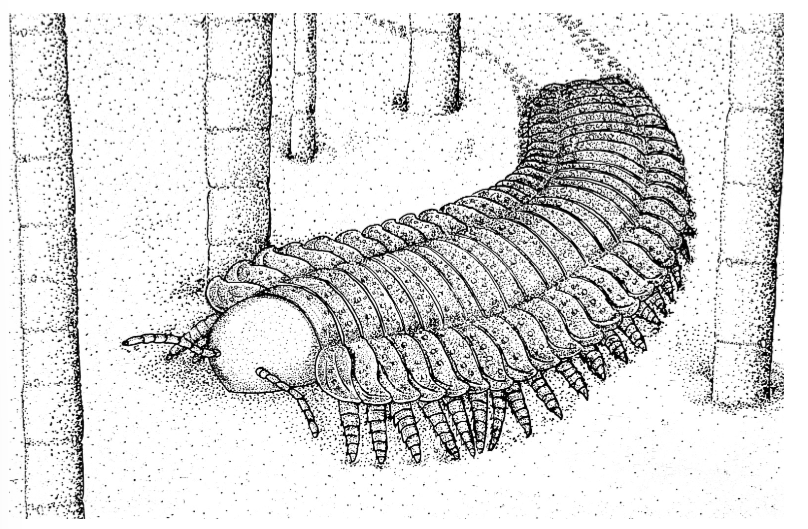
get insect gigantism e.g. Arthropleura arthropod (due to high O2 levels)
Fish:
end Devonian mass extinction wiped out most of the agnathans and all the placoderms
chondrichthyes and acanthodians start to diversify (relatives of sharks)
ray-finned fish are dominant today and lobe-finned fish are rare but in the Carboniferous this was the opposite
tetrapods evolve from the lobe-finned fish (sarcopterygii)
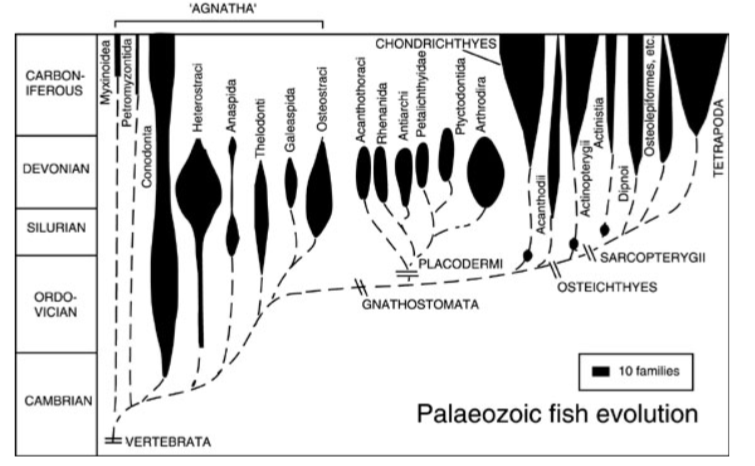
→ fish recover from the mass extinction but there is a change in the nature of fish biotas
Tetrapods:
End Devonian→ icthyostega is found in Greenland (mostly aquatic), get Romer’s gap that is being filled up
Carboniferous→ get diversification of different types of basal tetrapods, big branching points
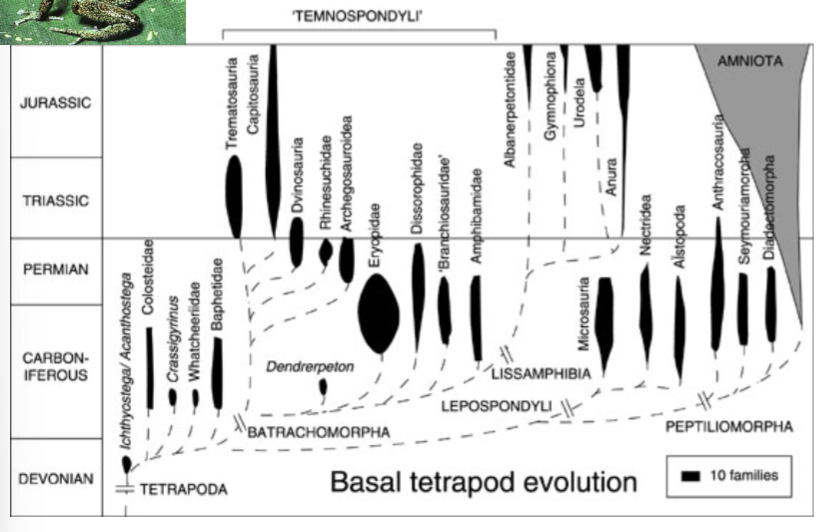
→ there was a phylogenetically broad diversification where most basal tetrapod groups appeared quickly, all in the Carboniferous
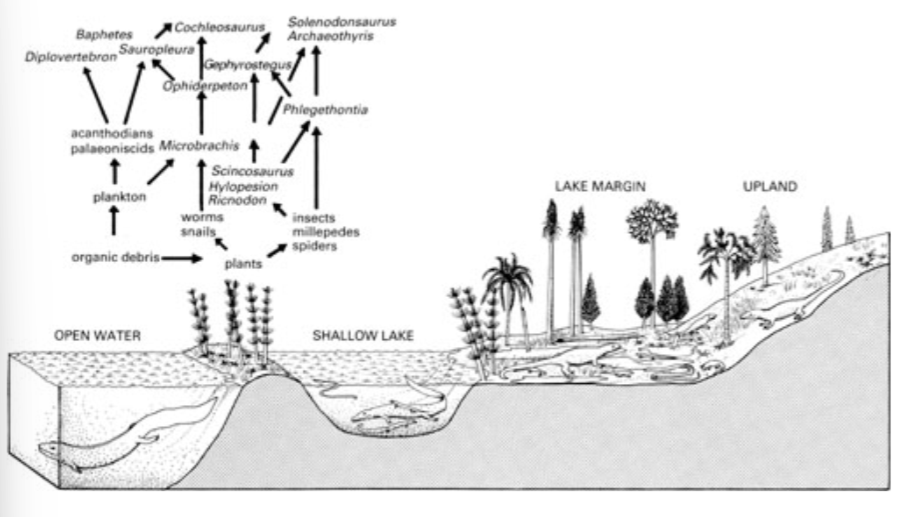
transect of a deposit in Czech Republic:
get different basal tetrapods in these different environments
there are secondary aquatic organisms→ go back into sea
worked out food chain
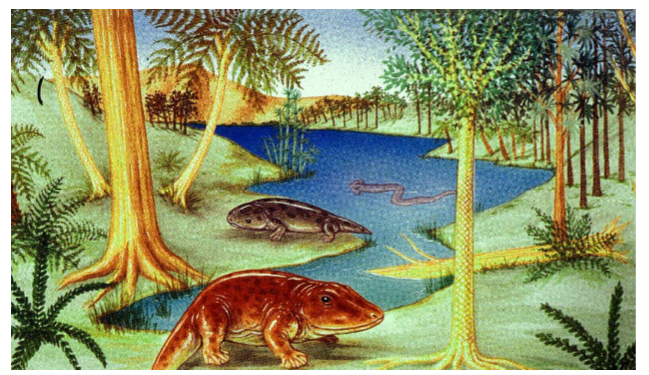
reconstruction→ some tetrapods go back into the water, some are very big
Reptiles:
macroevolutionary event
most primitive reptiles evolved in the Carboniferous
produced eggs, have scales, eat insects→ are truly terrestrial
first describes when found in old tree stumps in Nova Scotia
Amniotes:
synapsids, anapsids and diapsids all appeared in the Carboniferous
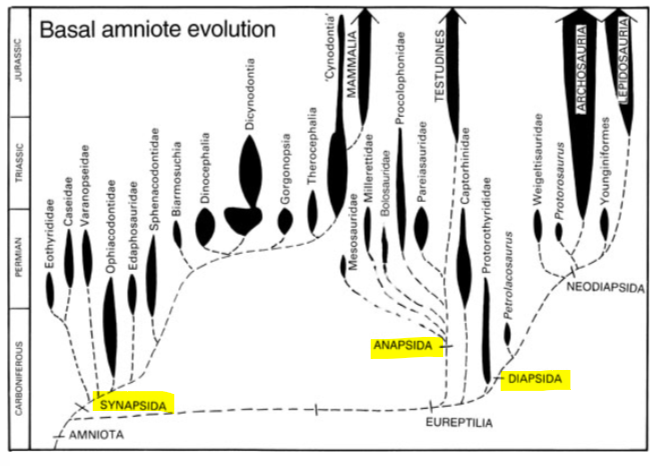
→ there is an evolutionary pattern where tetrapods have an early wide diversification
Herbivory:
at first, animals ate dead plants/litter
in the Carboniferous→ start to find evidence for gnawing on leaves, plants start to produce defences e.g. spines
→ beginning of herbivory and armsrace between animals and plants on the land
Late Carboniferous Climate:
2 continents collided, pushed up a huge mountain range, huge forest across the tropic bury most carbon, are pushed into an ice age- polar ice cap at south pole
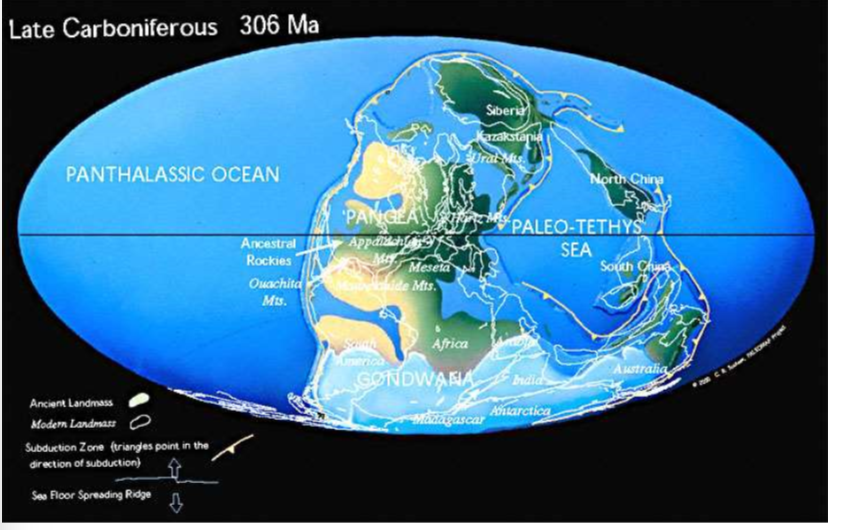
all biomass is at the equator
dominated by lycopsids
mountains make it drier and higher→ fern dominated
drier and higher→ conifer and seed plant dominated
drier and higher→ no plants can live there
→ there were huge coal swaps that got destroyed