4.1: Introduction to Evolution
%%Evolutionary timeline:%%
Evidence suggests that the Earth is at least 4.5 billion years old. Fossil evidence suggest that first cells existed at least 3.5 billon years ago. a suggestion to that is that the first forms of life on earth were prokaryotes (eukaryotes are through to have evolved from prokaryotes as they have a lot of similarities). This idea assumes that life began in the sea as a sort of primordial soup of organic molecules
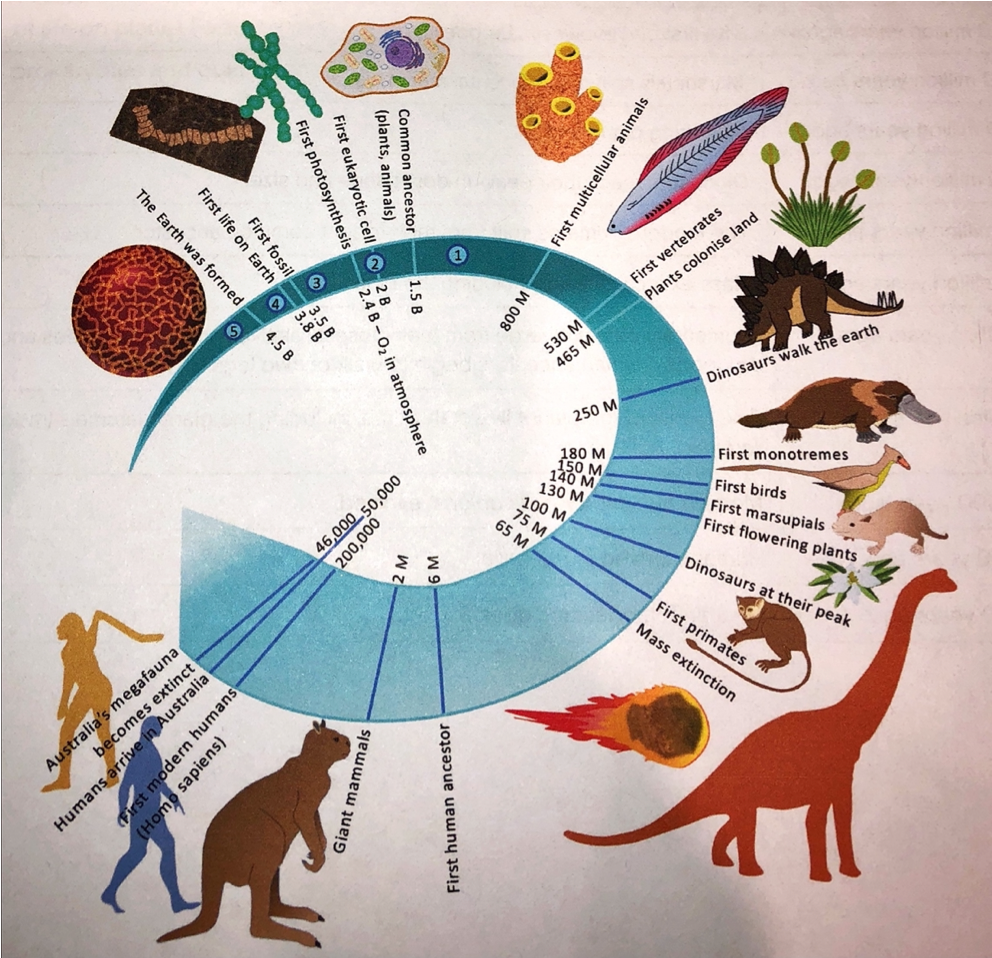
%%Existing cells are the product of evolution%%****. when compared with Eukaryotic cells, prokaryotic. ells Arte fundamentally similar in their metabolism and structure. eukaryotic cells would not have been able to survive in the hostile conditions provided by the Earth’s early atmosphere. evidence suggests that prokaryotic cells existed at least 3.5 billion years ago whereas eukaryotic cells only emerged 1.5 billion years ago.
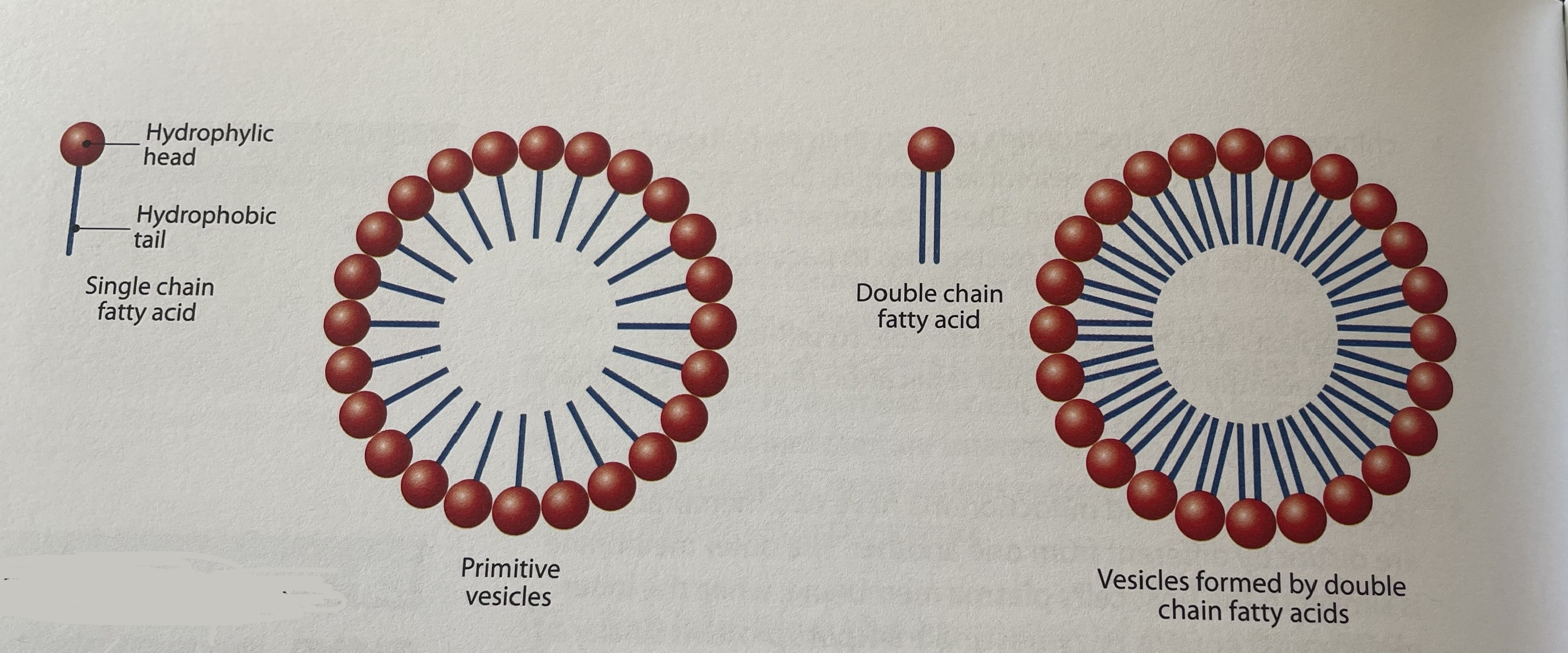
%%Membranes may have formed spontaneously and the first simple cells (prokaryotes) may have used RNA as genetic information%%****. ribozymes may have played a role in this development. it has been shown in laboratory experiments that organic molecules could have formed under the hostile conditions earth presented billions of years ago. Some of these organic molecules were amphillic, meaning trhey had both polar and non-polar groups. therefore these molecules could have been primitive fatty acid chains that spontaneously formned bilayers and primitive vesicles.
 %%RNA world hypothesis:%%
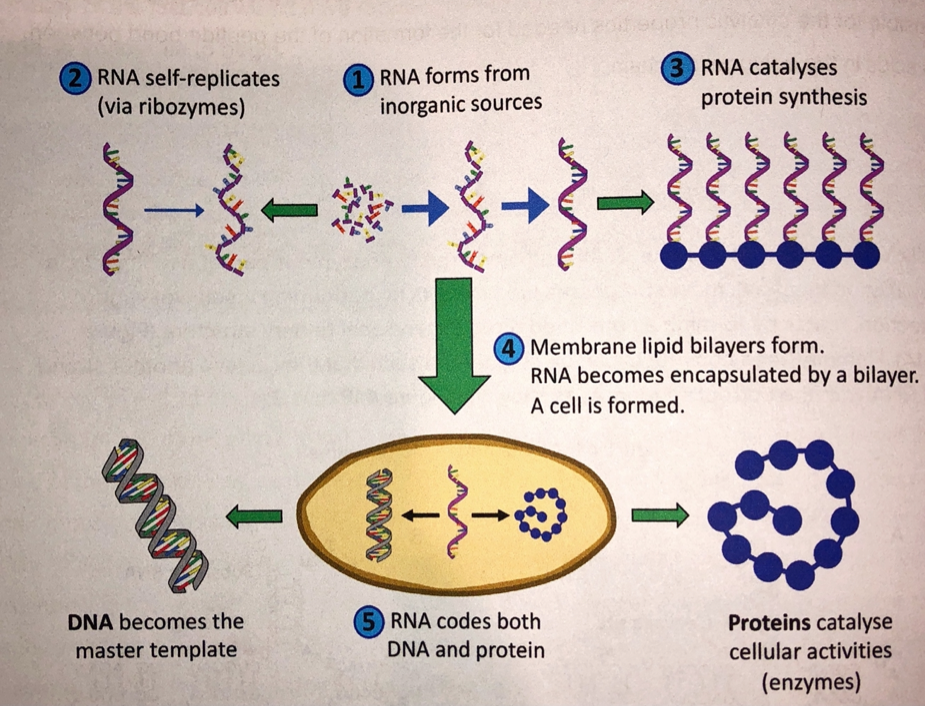
It is likely that the first simple cells used RNA to store and transmit information. RNA is a simpler molecule than DNA and was likely formed first. it enables living structures (cells) to carry out functions and reproduce.
RNA was also likely used for catalysing chemical reactions under certain circumstances as early life on earth had an absence of catalyst proteins. RNA molecules with this ability are called ribozymes, which are usually involved in cleavage or joining of RNA and DNA and peptide bond formation. they play a role in the removal of introns following transcription and also in the synthesis of other RNA molecules in the cell.
 %%Endosymbiotic theory:%%
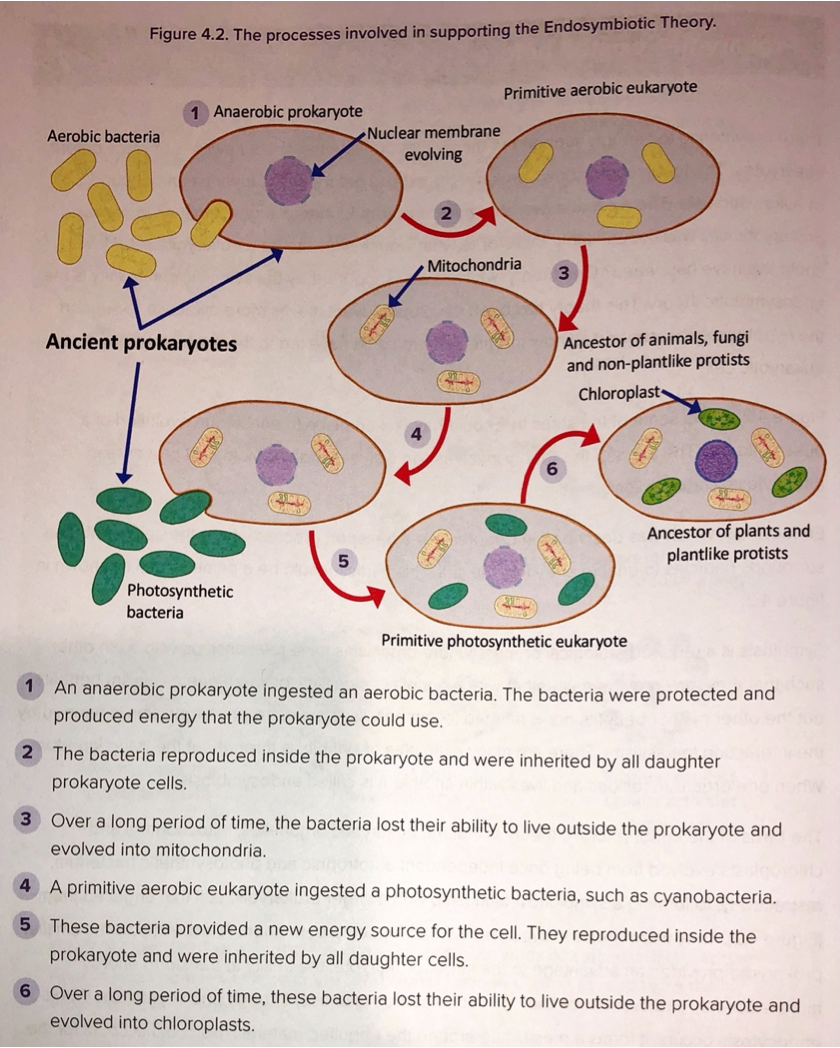
It has been proposed that when all life consisted of prokaryotic cells some of the larger cells may have engulfed some of the smaller ones in a process similar to phagocytosis. the newly formed cell was then able to respire aerobically or was able to photosynthesise and carry out more functions than either of its components cells could on their own.
==symbiosis==: the situation in which two organisms help one other and both benefit .
in the case of endosymbiosis one cell actually lives inside another and both benefit. it is thought that mitochondria and chloroplasts may be the descendants of ancient bacterial cells that were engulfed by larger prokaryotes and that eukaryotes were the product of such association.
- chloroplasts and mitochondria have their own DNA separate from the DNA in the nucleus and their DNA resembles prokaryotic DNA as it is circular, has no protein attached and has no non-coding sequences (introns)
they are able to self replicate independently of the cell and their replication is similar to binary fission in prokaryotes.
%%Symbiotic Relationships:%% a relationship between organisms of 2 different species.
There are 3 categories: ==Mutualism, Commensalism and Parasitism==
- ==Mutualism:== where both organisms benefit. lichen which is closely associated with algae and fungus. the algae provides food and oxygen through the process of photosynthesis and the fungus provides a warm environment. this means that lichens can grow in hostile environments in niches that other organisms cannot occupy.
- ==Commensalism:== only one species benefits, the other is unharmed. i.e. barnacles on the sides of a whales body. the barnacles have. place to live, free transport and a food source.
- ==Parasitism:== where the organism is hurt but the other organism. i.e. lice, ticks, fleas, fungi and nematodes.