Applied Economics 2Q
Industry and Environmental Analysis
Profit maximization
Market Concentration
Number of sellers and buyers
Market Entry
Legal barriers and production barriers of an industry
Product Differentiation
To be unique or different from all its competitors in the industry
Information
How easy it is to acquire certain information about your products or the products of your competitors
Market Power
The ability for an enterprise to increase their price anytime within the industry
Market Structure
How a business distinguishes itself from others in its industry
Monopoly
A single firm has exclusive control over the production and distribution of a product or service
Business Opportunities Identification W3
Localization
Concentration of certain industry in a particular area, specialization of areas/regions
Causes of Localization
Nearness to markets
Nearness to sources of power
Nearness to raw materials
Climate or soil conditions
Political patronage
Momentum of an early start
Availability of finance
Adequate and trained labor (supply of labor)
PROS
Improved user experience
Improved customer satisfication
Adapting to local regulation and laws
Increased sales and revenue potential
CONS
High initial costs
Risk of cultural insensitivity or misinterpretation
Risk of inconsistency in brand messaging and voice
Possible errors or inaccuracies in translation
SWOT analysis
Strength (INTERNAL/HELPFUL)
Distinguishes you from other businesses
What your business does well
Weaknesses (INTERNAL/HARMFUL)
What can your business improve on?
Opportunities (EXTERNAL/HELPFUL)
Chances for something positive to happen
Threats (EXTERNAL/HARMFUL)
Anything that can negatively affect your business from the outside
Week #4
Socioeconomic Impact Analysis
A systematic analysis to assess the potential socio-economic and cultural impact of a proposed development or business on individuals, families, and communities.
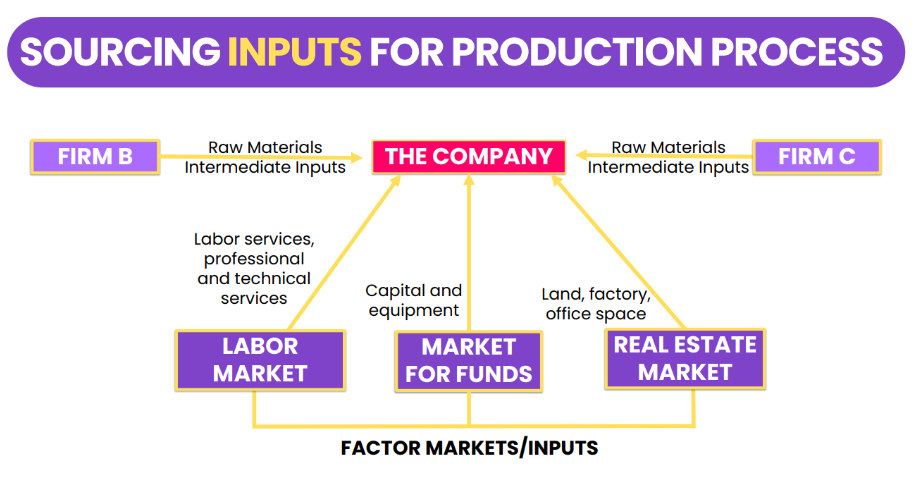
Sources of raw materials
Internal: getting supplies within the community or country
External: getting supplies outside the community or country
Types of suppliers
Independent suppliers: sourcing materials from smaller or less known companies
Subsidiary of conglomerates: sourcing materials from multinational companies
Stage of product transformation
Raw vs. semi-processed
Market power
Sole buyer or major purchases vs. small company
Week #5
Business Viability
Ability of a business to sustain its operations and generate profits over the long term
Financial Stability
Ability of the financial system to facilitate and enhance economic processes, manage risks, and absorb shocks
Factors when assessing financial stability
Liquidity
basic financial health
amount of cash and easily-convertible-to-cash assets to manage its short-term debt obligations
Profitability
Profit maximization
Porter’s five forces analysis
Sustainability
A company’s strategy and actions to reduce harmful environmental and social impacts resulting from business operations in a particular market
Factors when assessing sustainability
Operation efficiencies
SWOT analysis and localization
Efficiencies for inputs and outputs
Corporate Social Responsibility (CSR)
Self-regulating business model that helps a company be socially accountable
TYPES OF CSR
Environmental Responsibility
Regulating energy consumption
Ethical Responsibility
Ensures to operate in fair and ethical manner. Aims to practice ethical behavior through fair treatment of all stakeholders
Philanthropic Responsibility
Aim to make the world/society a better place.
EX: a business dedicating a portion of their earnings to charity
Economic Responsibility
To ensure that business operations positively impact the environment, people, and society