Multilingualism
Types of Multilingualism
Sequential vs Simultaneous:
Sequential Multilingualism: Learning languages one after the other rather than at the same time.
Simultaneous Multilingualism: Learning multiple languages at the same time from birth or during early childhood.
Elective vs Circumstantial:
Elective Multilingualism: Individuals choose to learn additional languages for personal reasons.
Circumstantial Multilingualism: Individuals learn languages due to their environment or necessity (e.g., relocating to another country).
Formal vs Informal:
Formal Multilingualism: Structured learning via formal education systems.
Informal Multilingualism: Learning languages through exposure and interaction rather than formal instruction.
Balanced vs Dominant:
Balanced Multilingualism: Similar proficiency levels across all languages.
Dominant Multilingualism: A person has stronger proficiency in one language over others.
Grammatical Competence vs Communicative Competence:
Grammatical Competence: Ability to generate correct grammatical forms.
Communicative Competence: Ability to convey meaning effectively in a social context.
Aspects of Multilingual Assessments
Key Observations in Speech and Language
Code switching- need to know if they are multilingual to know if the errors are typical
Silent phase- happens when they are ‘sequentially’ bilingual when they are switching from one language to another.
Different proficiency in each language- can they so something in one language than another. All languages are important. May be a delay that shows up in one language.
Varying definitions of words- different social constructs.
Variations in pronunciations- inconsistency. What are they doing in one language and the other? E.g spider (Welsh pronounced) and spiderweb.
Different grammatical constructions- rules and sentence structures can lead to misunderstandings or misinterpretations when translating concepts between languages.
Pressures of what language to use. Changes the balance of how they’re speaking.
Theories of Multilingual Language Development
Theoretical Assumptions:
How languages interact affects language acquisition processes.
Factors Influencing Multilingualism:
Cognition- thinking skills of what it takes to learn new languages and to switch from one to another. Takes a lot of effort and to translate- may then affect attention.
Social factors
Biographical factors
Key Theorists: Jim Cummins
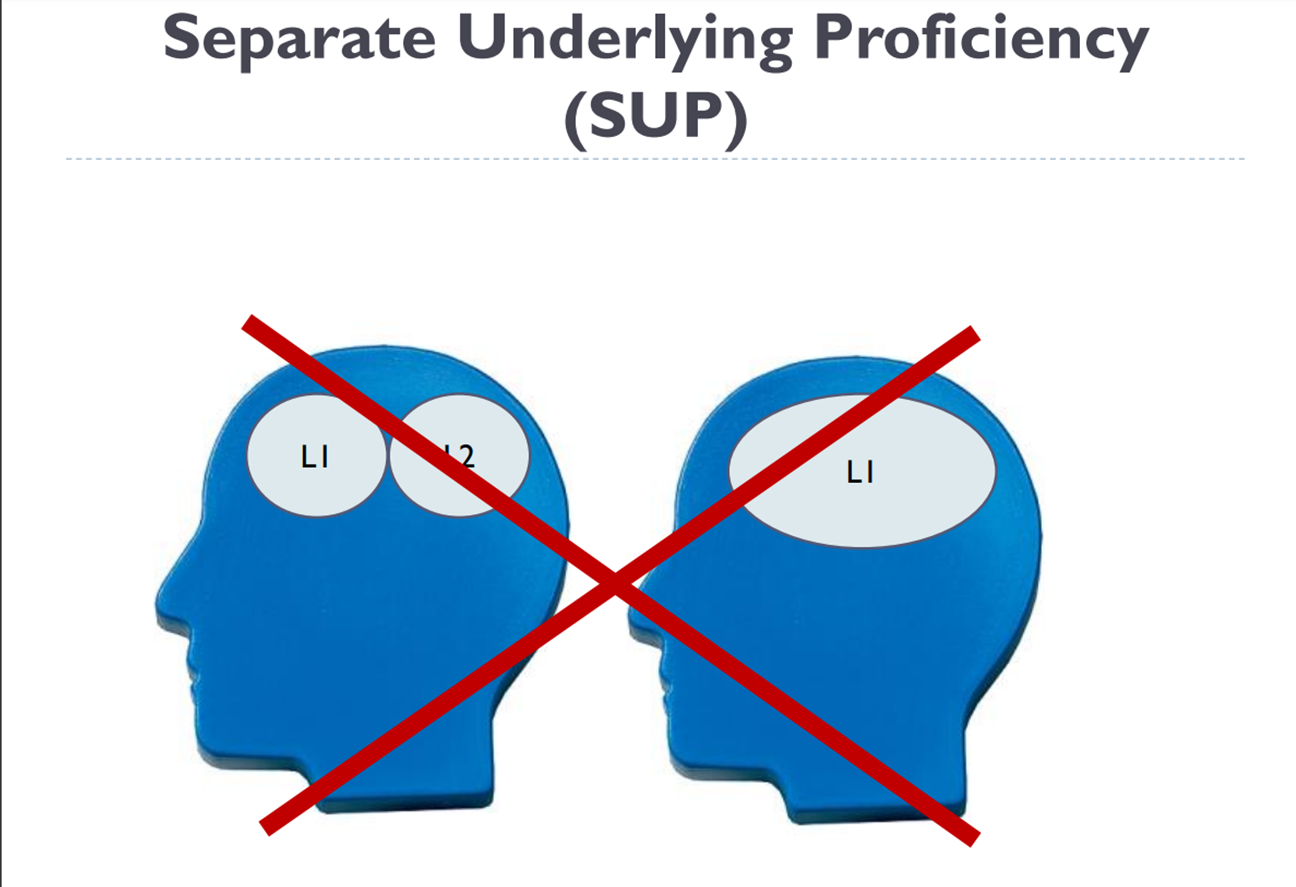
Separate Underlying Proficiency (SUP):
Skills in one language that you’ve picked up that do not transfer to another. Need to learn that separate language separately. Learning them differently, different grammatical structures.
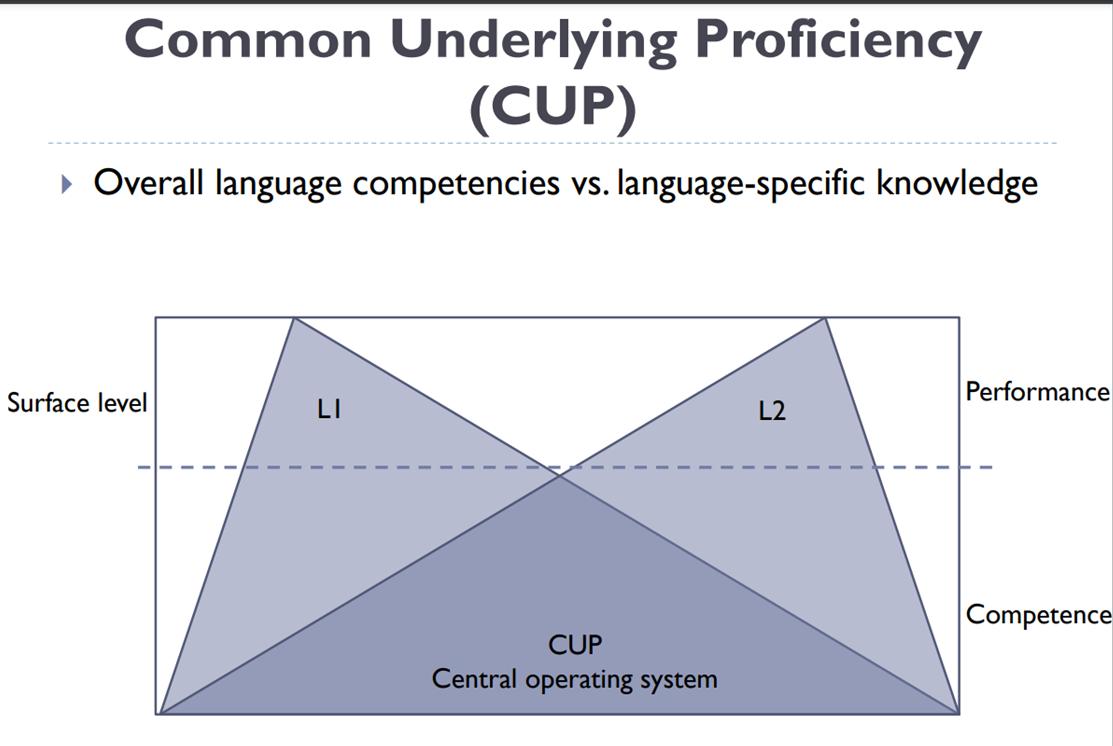
Common Underlying Proficiency (CUP):
(CUP) is the cognitive academic proficiency that underlies academic performance in both languages. Skills from one language transfer to learning another, then CUP skills will help. Common ideas/concepts in different languages and you can access them in L1 and L2. Semiotic triangle- accessing the central concept and how you can put them in different language.
Psycholinguistics in assessment where the breakdown can be in meaning for example.
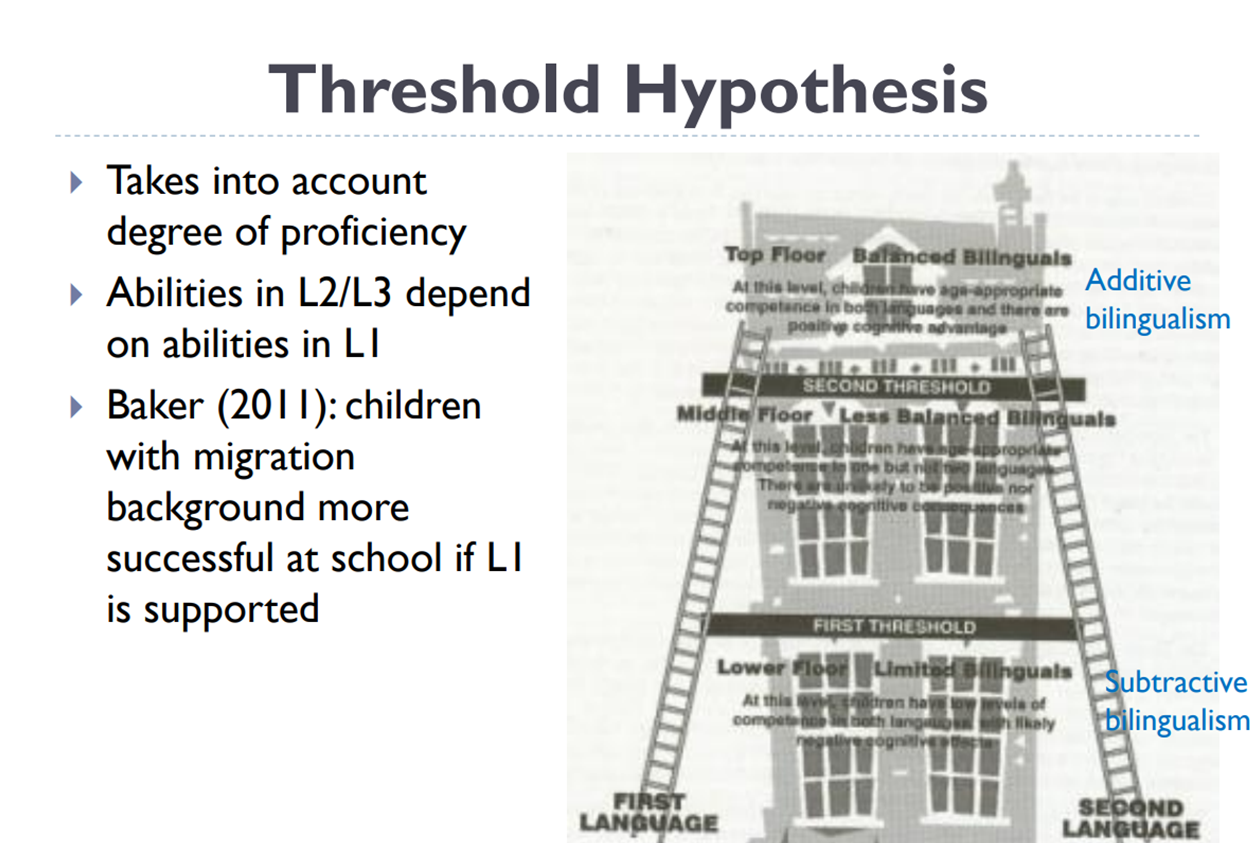
Threshold Hypothesis:
Minimum proficiency required to avoid deficits and benefit from bilingualism. Need to have a certain competency in one language before you can start adding things on top of it with another language e.g. if a child is babbling in one language, you can’t add single words from another language on top of it. If you have poor language skills in one- can’t develop onto others. Sequential (one after the other). Always continue the first language to develop the foundation to be able to add others onto it.
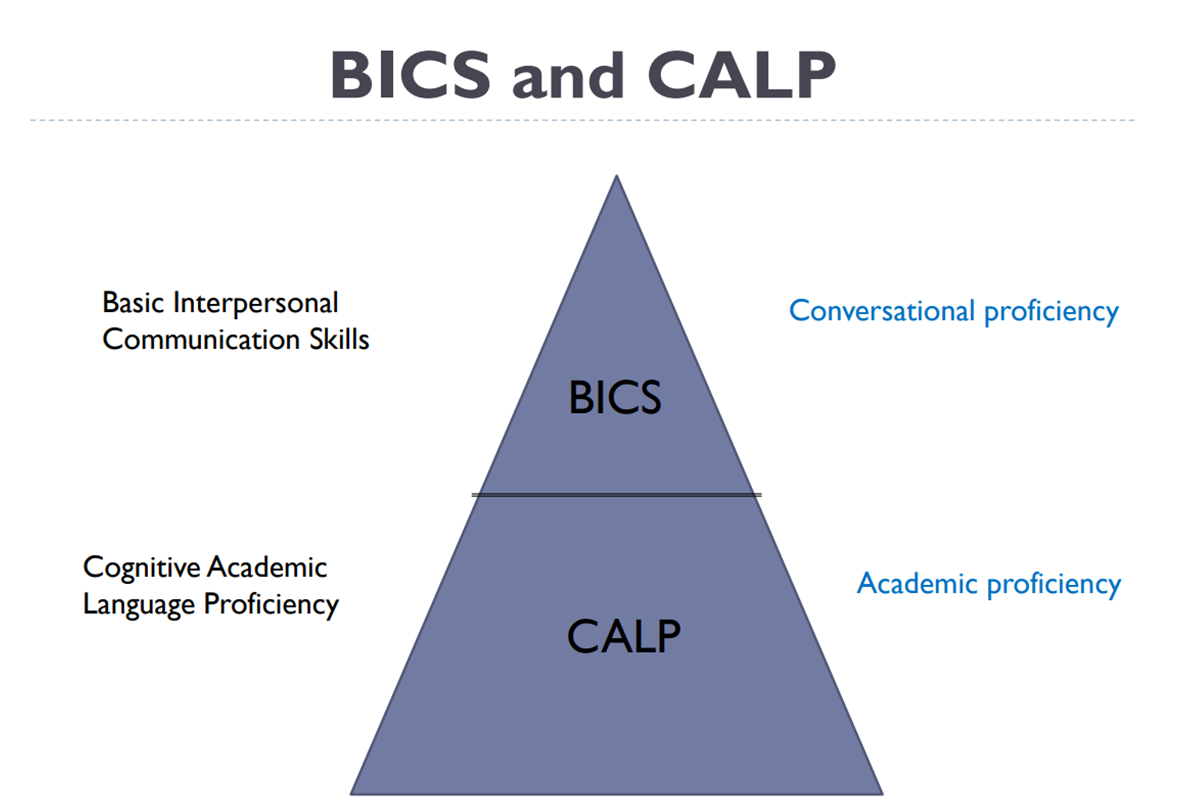
BICS vs CALP:
BICS (Basic Interpersonal Communication Skills):
Use of language: everyday language in social contexts (playground interactions, telephone conversations).
Play socially appropriately, turn take, eye contact.
Things to vary in different cultures e.g. eye contact.
Basic communication skills- common conversational skills. More informal.
CALP (Cognitive Academic Language Proficiency):
Academic language used in classroom settings, abstract and specialized; takes at least 5-7 years to develop. Higher level language.
Learn in a classroom. Learn to manipulate different parts in sentences e.g. grammar. They know a rule but unable to tell you why.
Read something out of contact and know what it means.
High level blank tasks.
Put on top of the BICS. They can engage in conversations on various topics despite lacking the specific vocabulary, illustrating the difference between conversational fluency and deeper academic language proficiency.
Other professions understanding the theories: rationale so they are providing the correct intervention, encourage them to implement these in formal and informal settings and what they are doing well in L2 language, simply explaining these things (differentiating), newly qualified vs staff that have been there for some time. O.T’s: can use more medical language. Being aware of the language you use and how you say the information. Justifying the priorities e.g. focusing social skills in L1 before moving more into complex language in L2. Tell the parents what you’re doing and why you’re doing it- simple explanations.
Case Study
Discussion Points
Impact of recommendations on family communication- affecting access to their community.
Justification for feelings of criticism from the father- yes.
Support strategies informed by theory for the family- gentle approach an re-direction to the key worker as they may think they are doing right. Explain the theories. Threshold theory. Basic training for staff but could be an individual conversation with the key worker.
Multilingual Language Development Principles
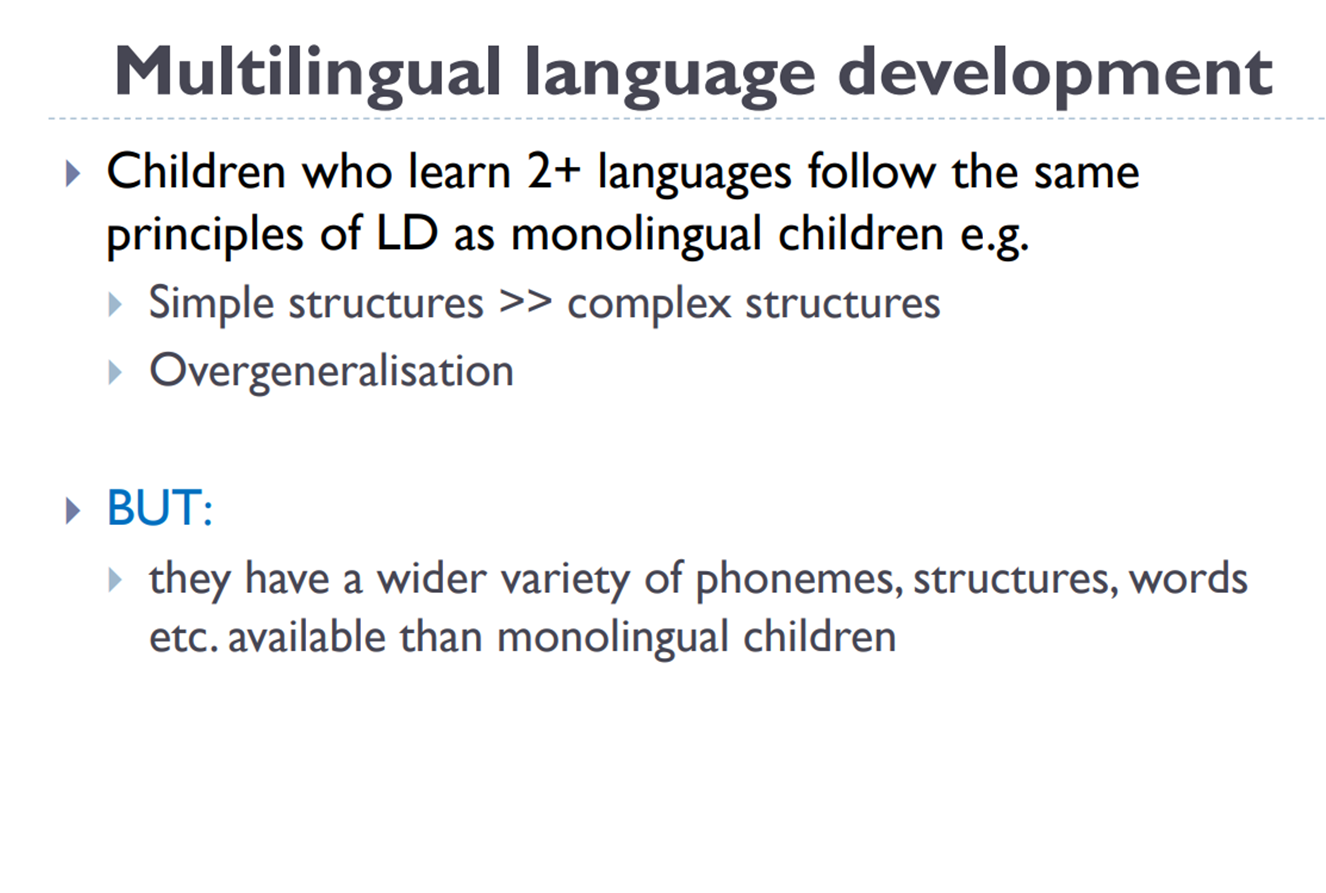
Children learning multiple languages follow similar development stages as monolinguals:
Simple to complex structures
Overgeneralization phonological and grammatical rules e.g. I runned. Code switching.
But the have a wider range of phonemes and language structures available. Big advantage.
Levels of Language Acquisition
Stages Defined (Mostly the same in most languages, but maybe some different rules).
Preproduction: Simple pointing to objects in response to teacher prompts.
Early Production: Ability to respond with yes/no questions and basic phrases.
Speech Emergence: Can answer questions with short sentences and explanations; responds to prompts. Blank levels.
Intermediate Fluency: Longer answers and explanations; more complex thoughts expressed. Further up blank levels.
Advanced Fluency: Ability to retell stories, focusing on major plots without minor details.
Perception and Phonetics/Phonology
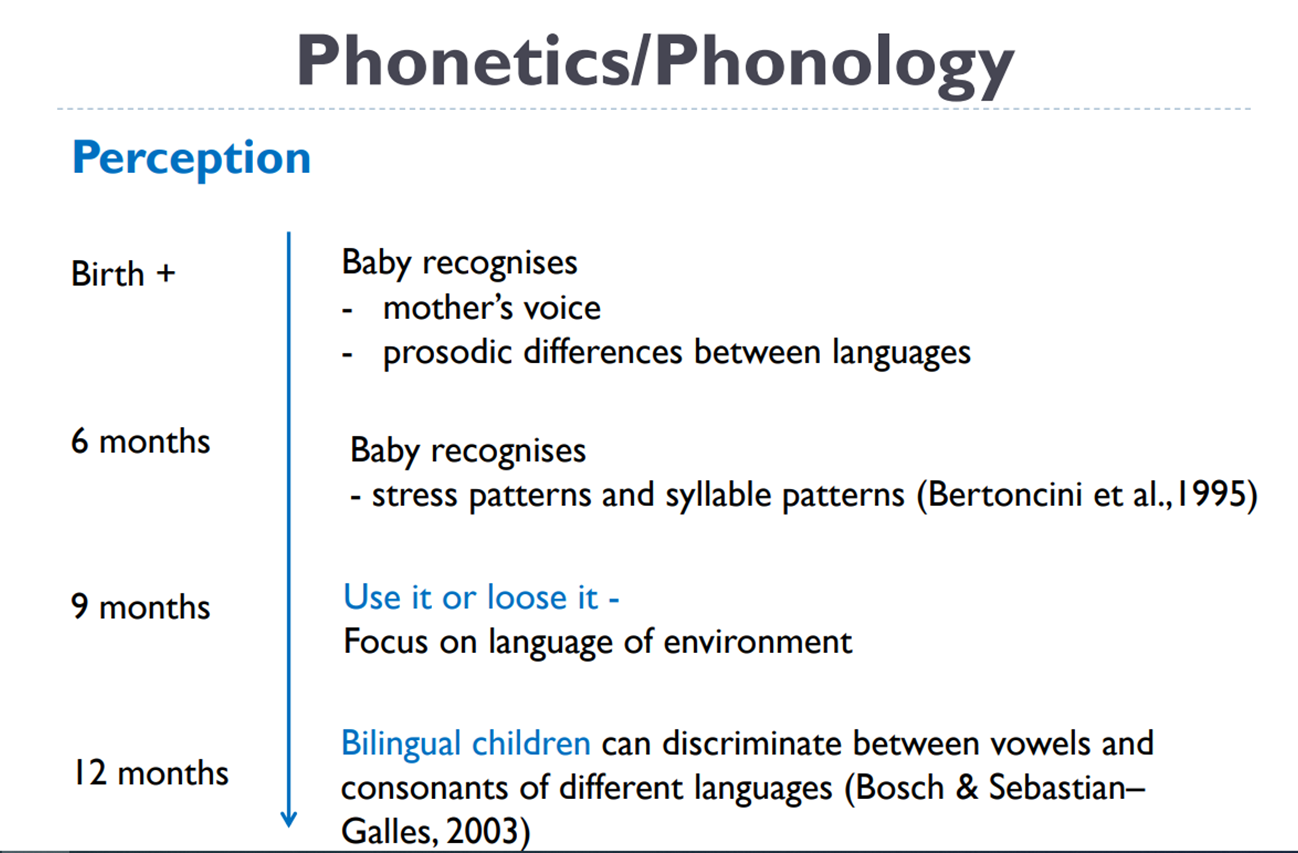
Perception. Developmental Recognition:
Birth: Recognition of mother’s voice and language differences.
6 months: Discrimination of stress and syllable patterns.
9 months: Advanced phoneme recognition; bilingual children excel at vowel/consonant discrimination. Focusing on the syllable structues
Language Production:
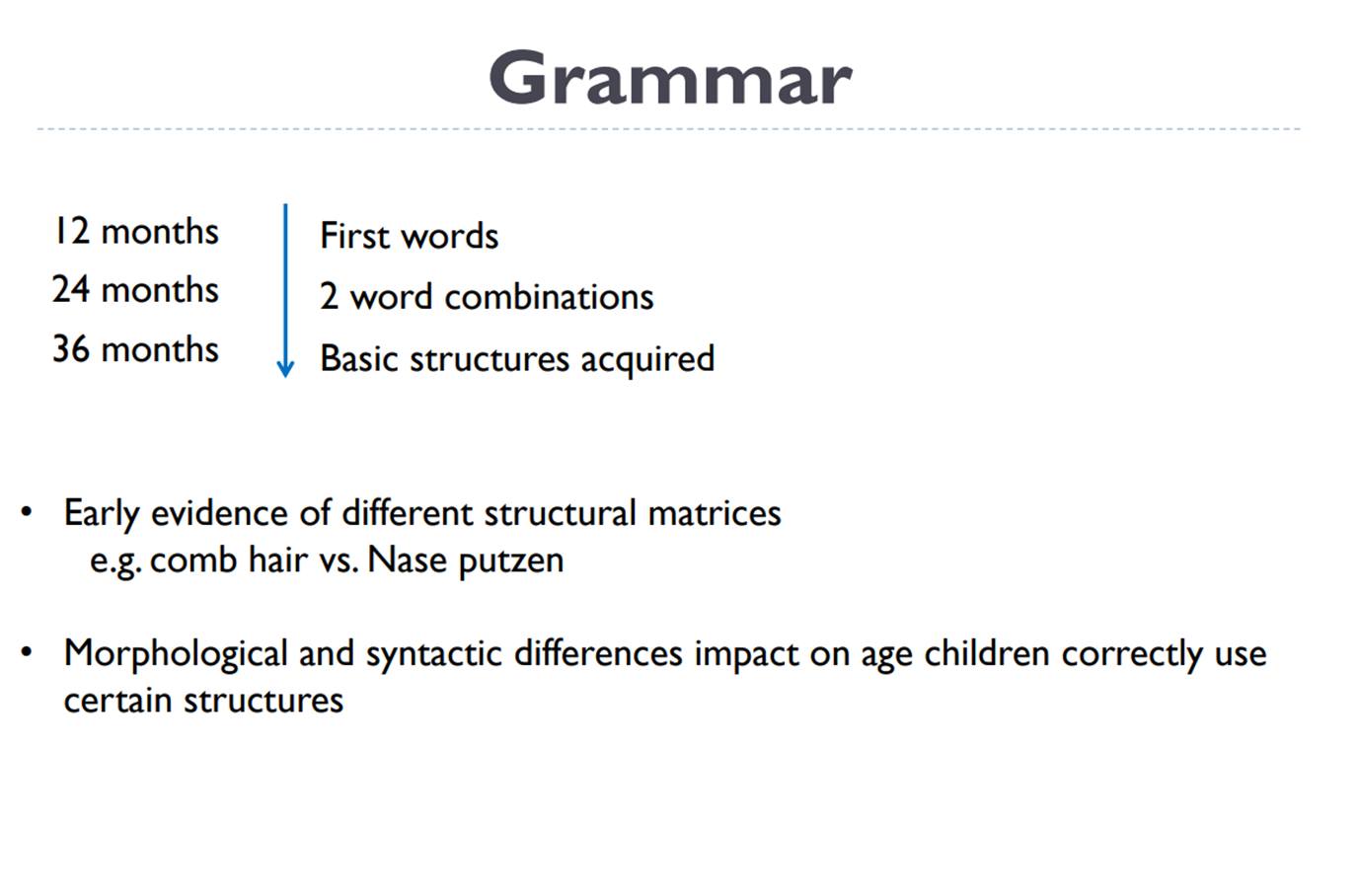
12 months: First words form, leading to babbling that exhibits language-specific phonological traits.
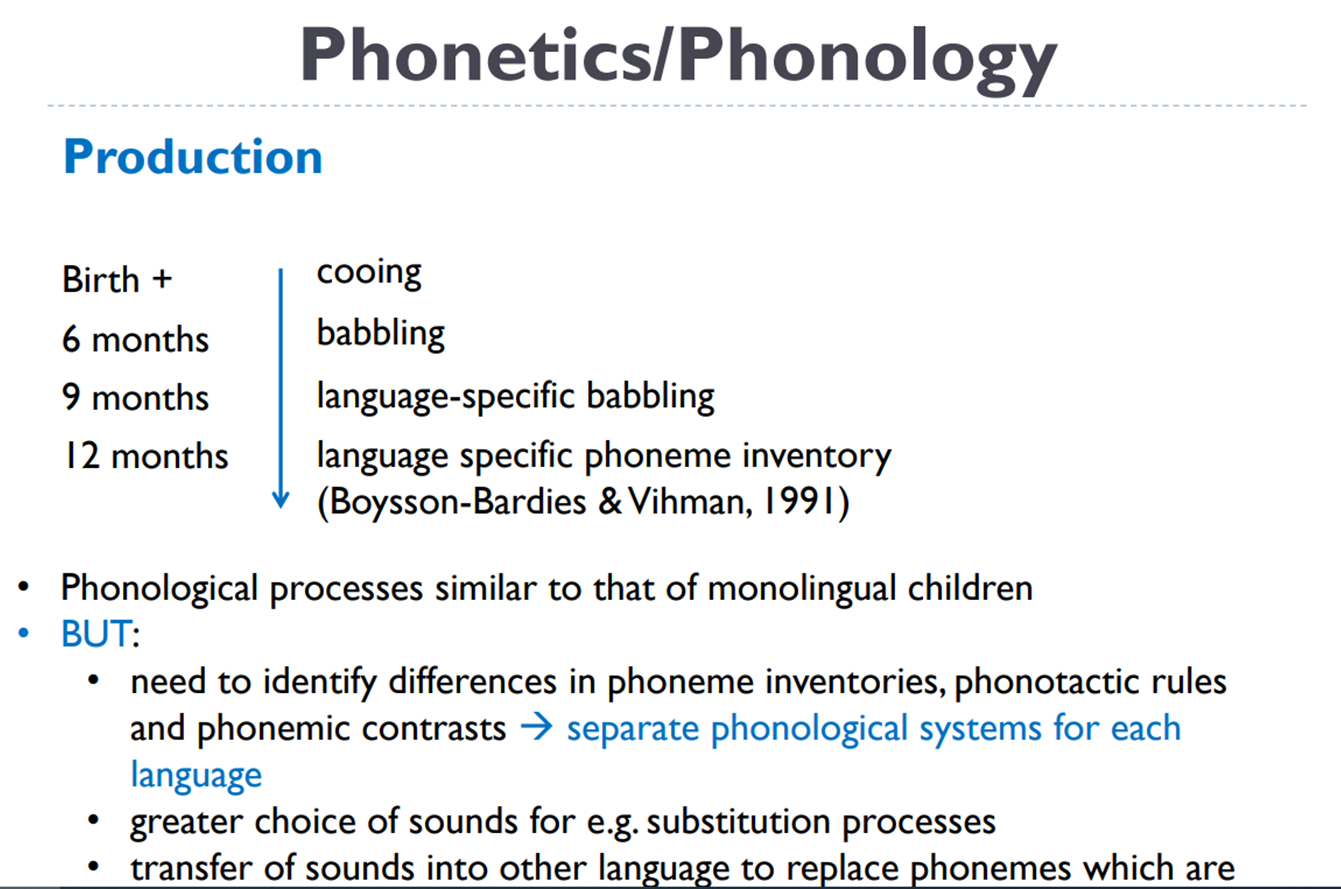
Rules can get mixed between the two languages- phonemes to use in different languages. Which rules apply to what.
Semantics/Lexicon
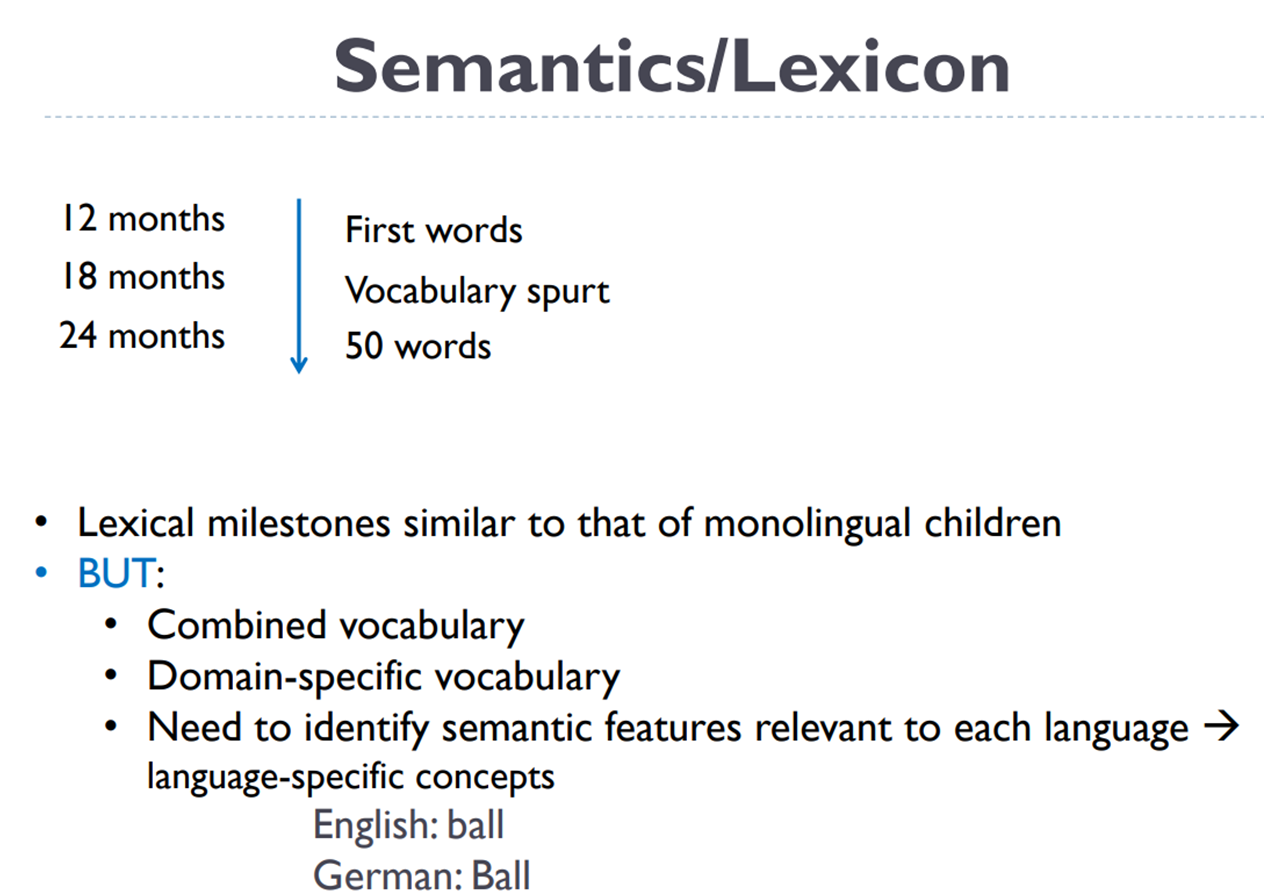
Lexical milestones align with those of monolingual children, but multilingual children have combined vocabularies and language-specific concepts.
Different languages- can have different meanings/ words of the same thing e.g. ball in German. Language specific variation- conceptualized variations of things.
Structural and Morphological Development
Children acquire basic structures and begin forming two-word combinations by 24 months, showing early signs of differential structural awareness.
Simultaneous vs Sequential Language Development
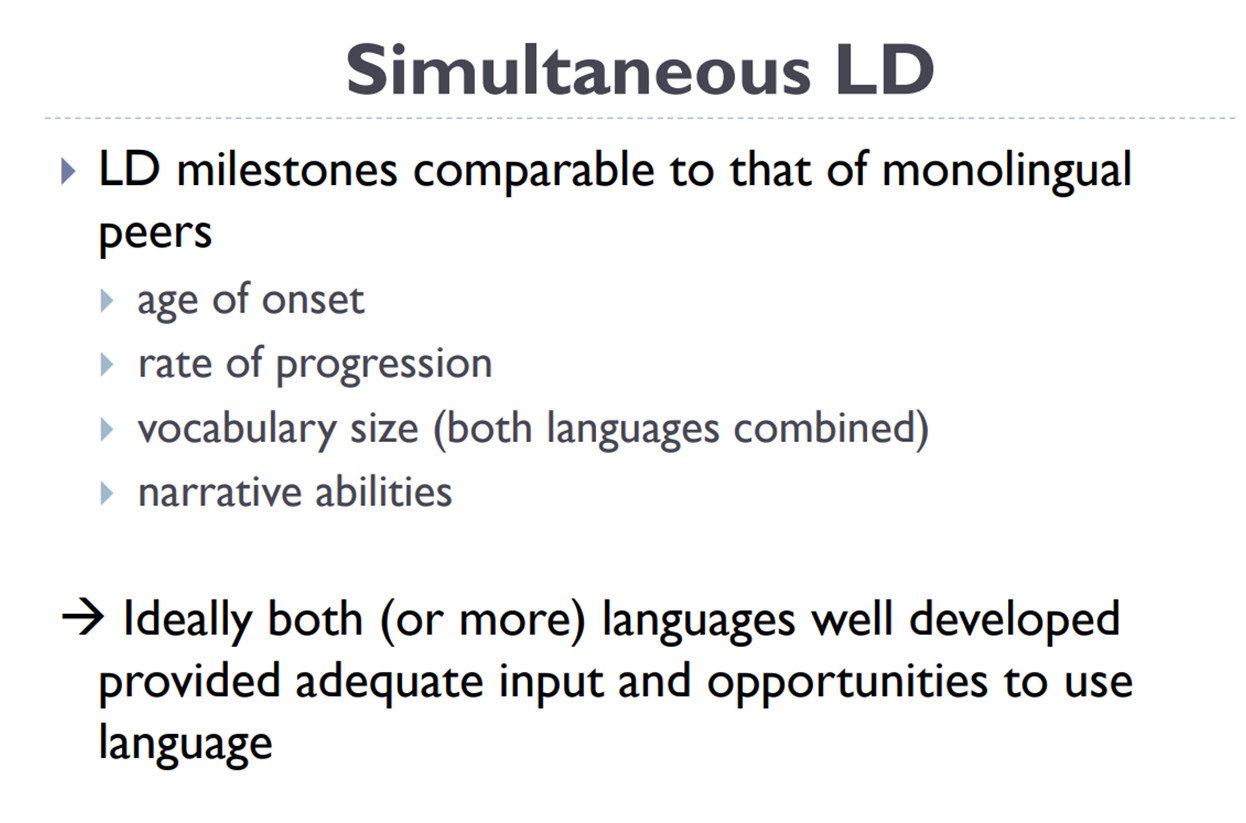
Simultaneous Language Development Milestones: Comparable to monolinguals regarding rate and vocabulary size, provided adequate input is available. Seem to hit the same milestones. Think of both languages combined.
Dependent in exposure- use it or lose it.
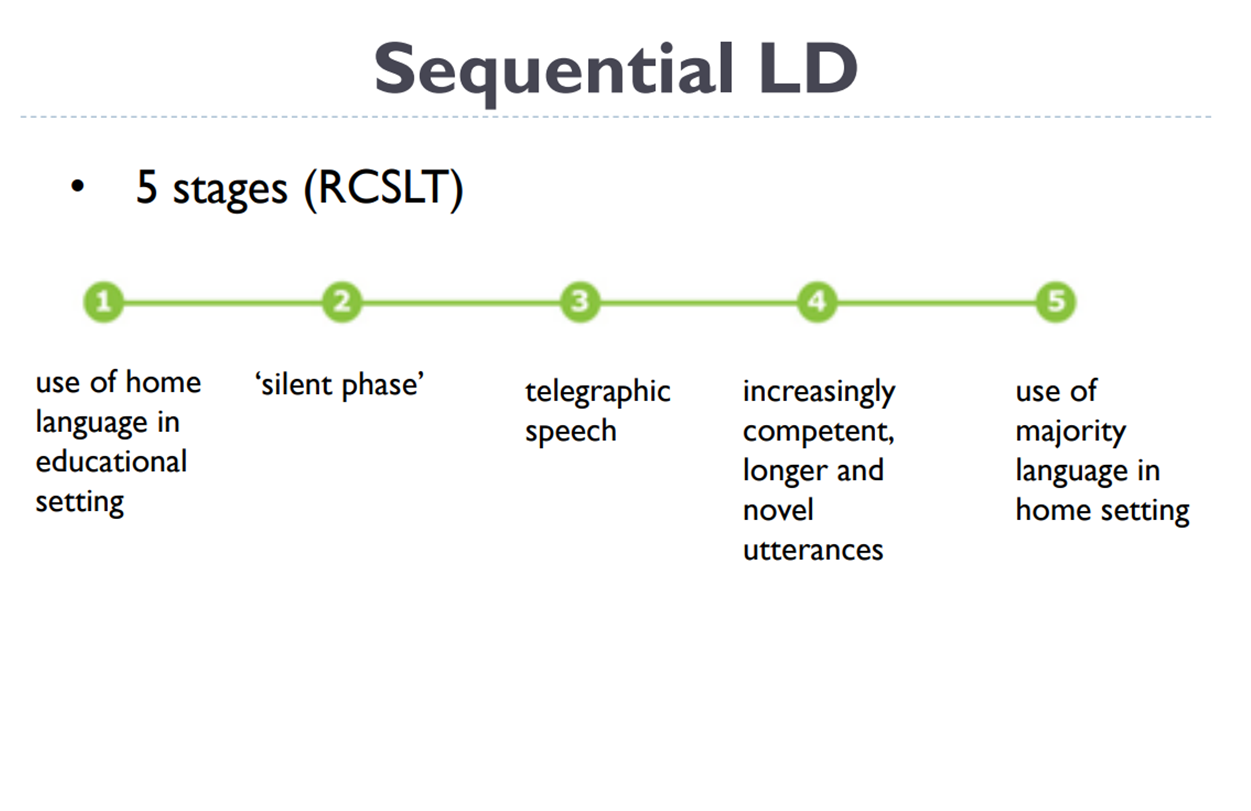
Sequential Language Development Stages (RCSLT):
Home language usage in educational settings.
Silent phase.
Telegraphic speech.
Increased competence with longer, more novel utterances.
Majority language usage at home.
L1 at home, L2 in educational setting.
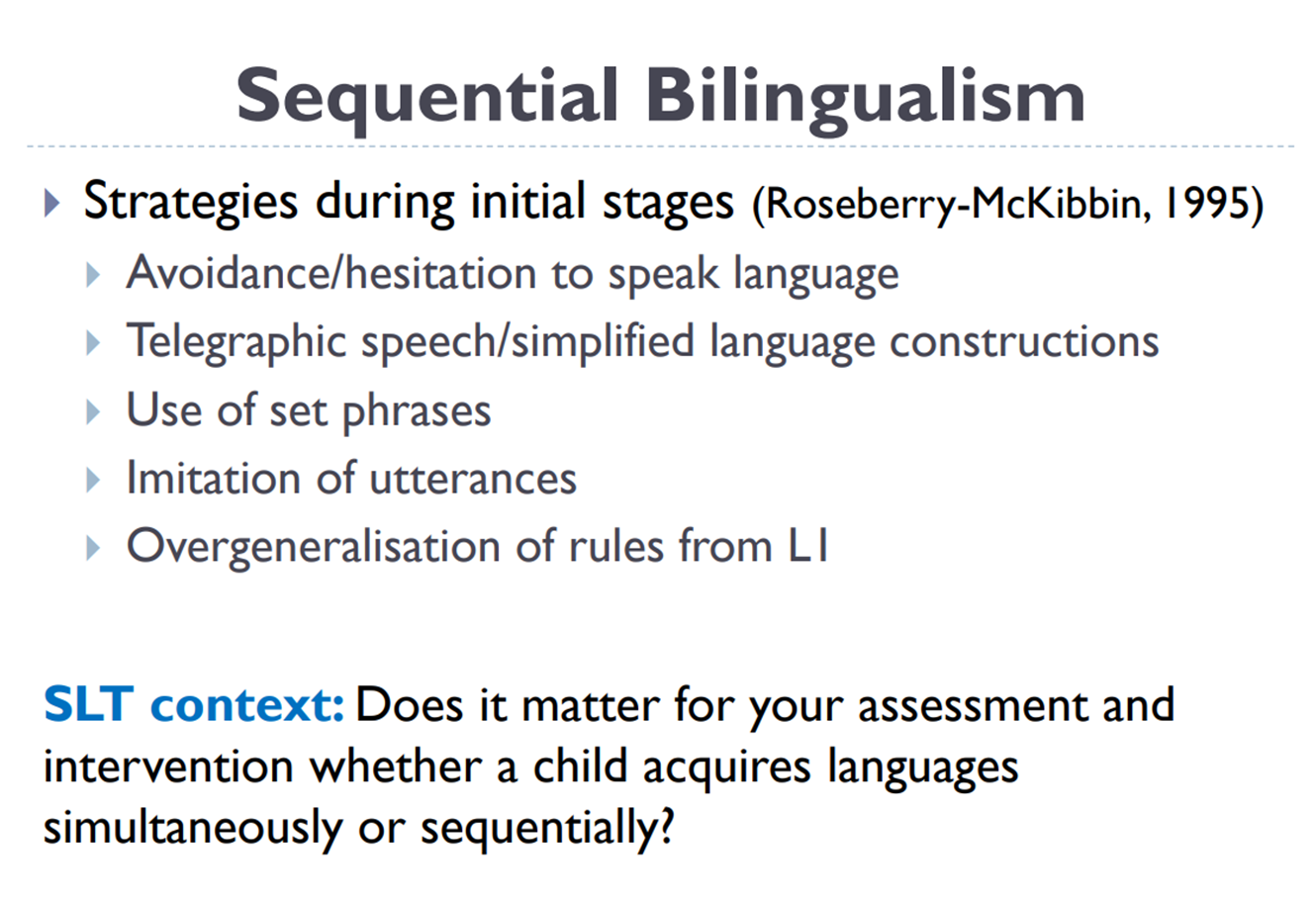
Set phrases- TV or games- not to mistake for echolalia.
Important for SLT to know if they are sequential and simultaneously. Expectations of the CALP.
Assessment Techniques
Key Tasks in Assessing Multilingual Children:
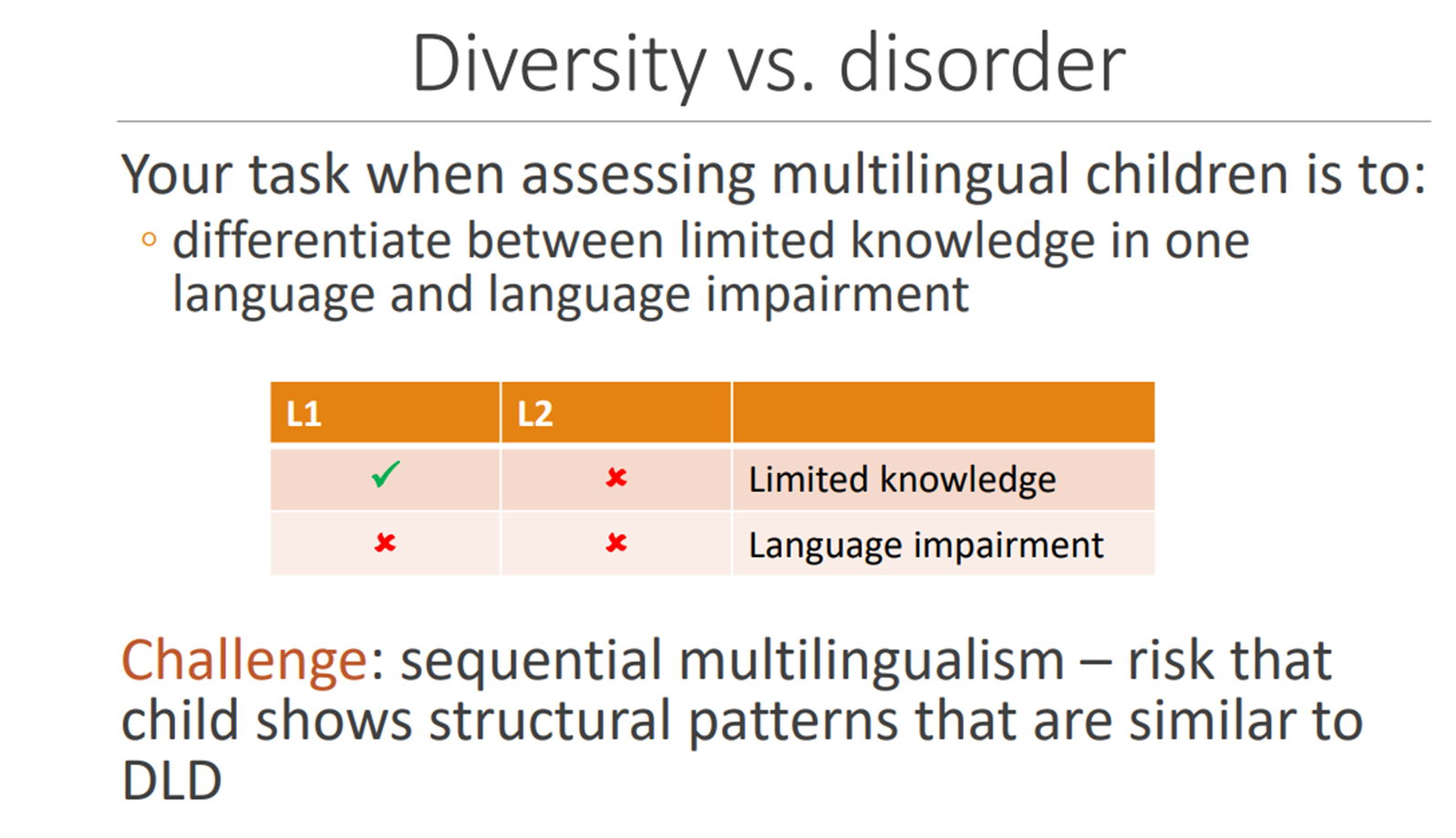
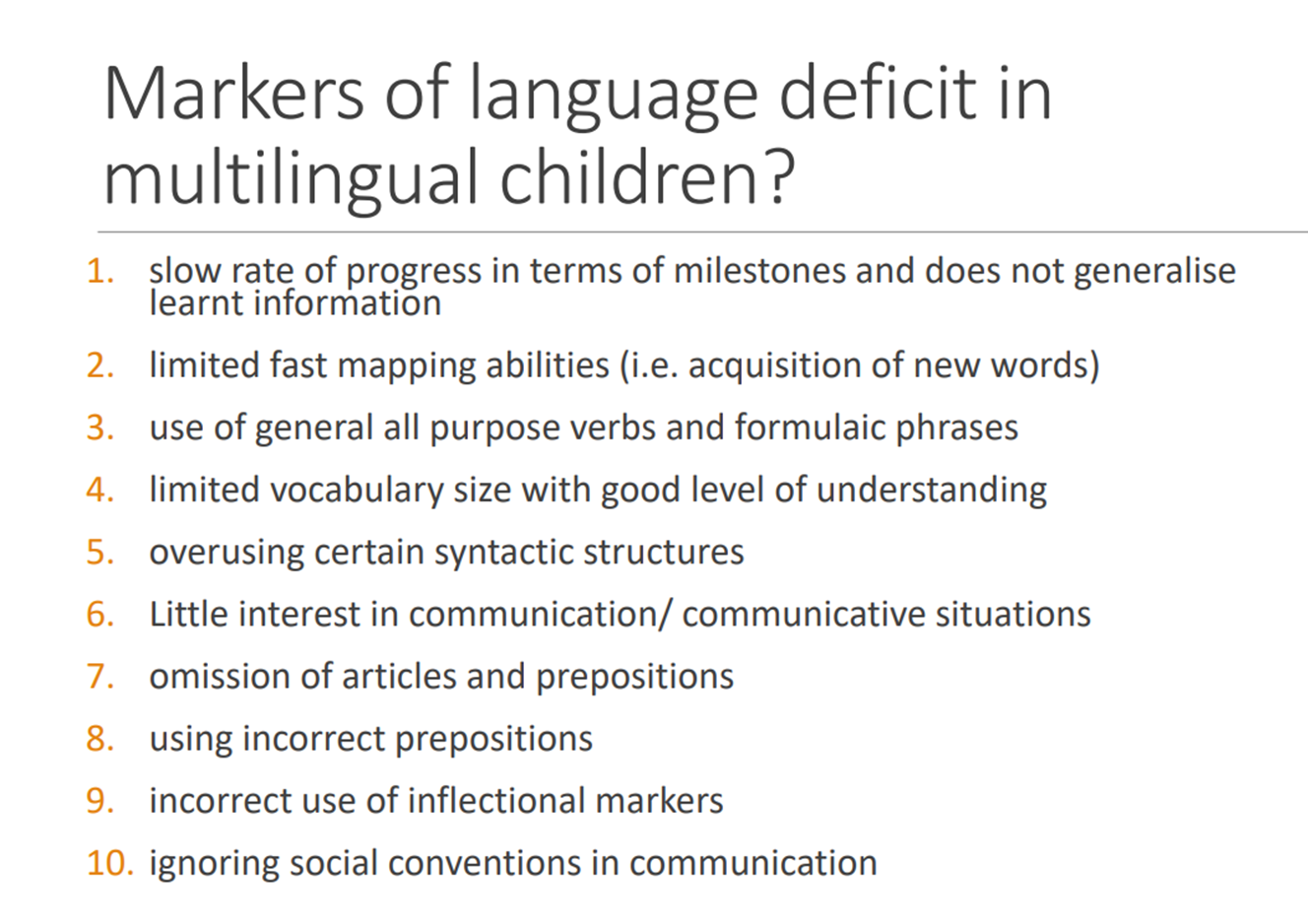
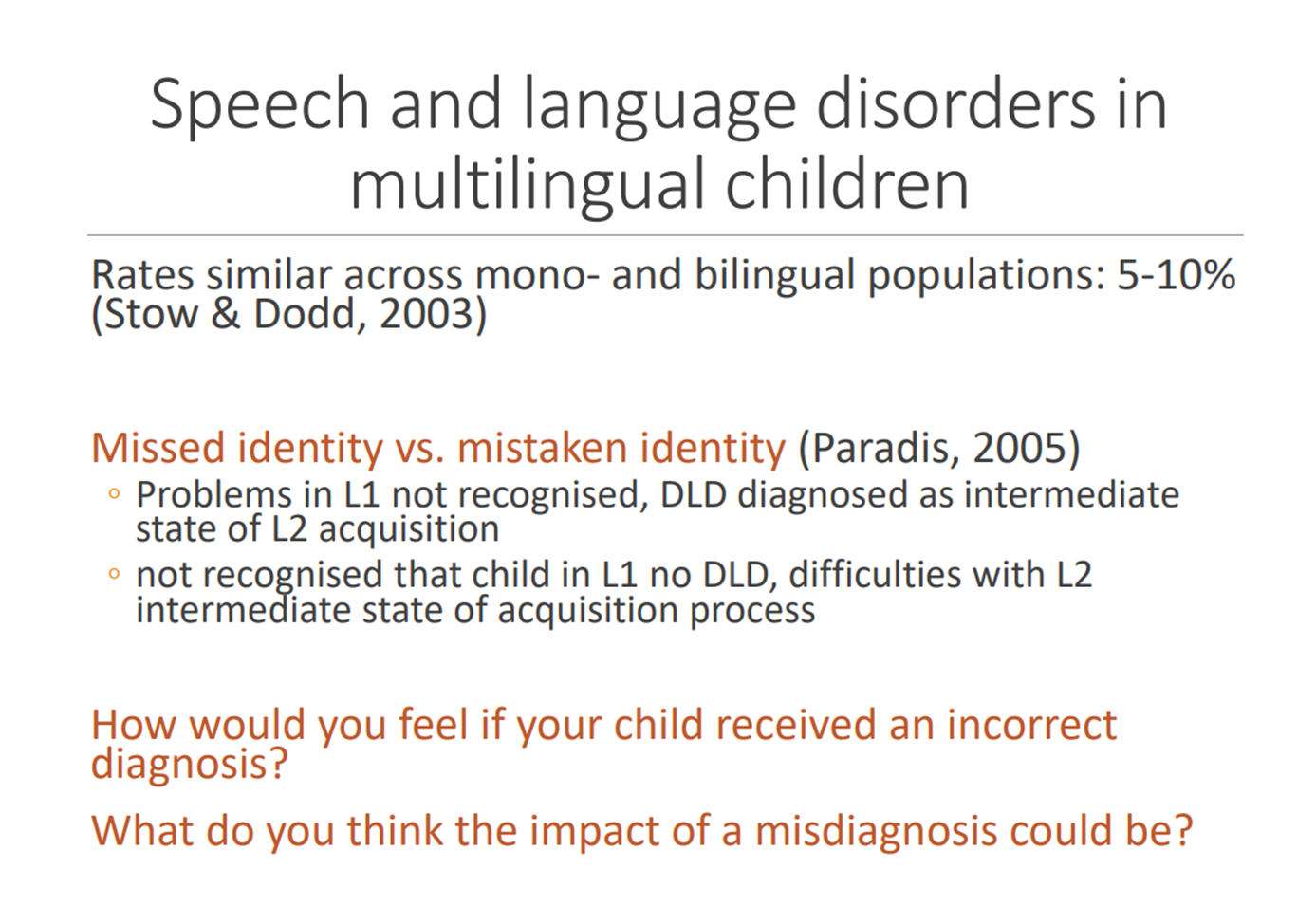
Differentiate between language diversity (code switching, in the process of switching from one language to another) versus disorder.
Same as with dialect and accent variation?
Impact of the other languages?
Delay in one language or both?
Is that something that is a quirk in one language or a disorder?
Assessment Strategies
Diversity vs Disorder Framework:
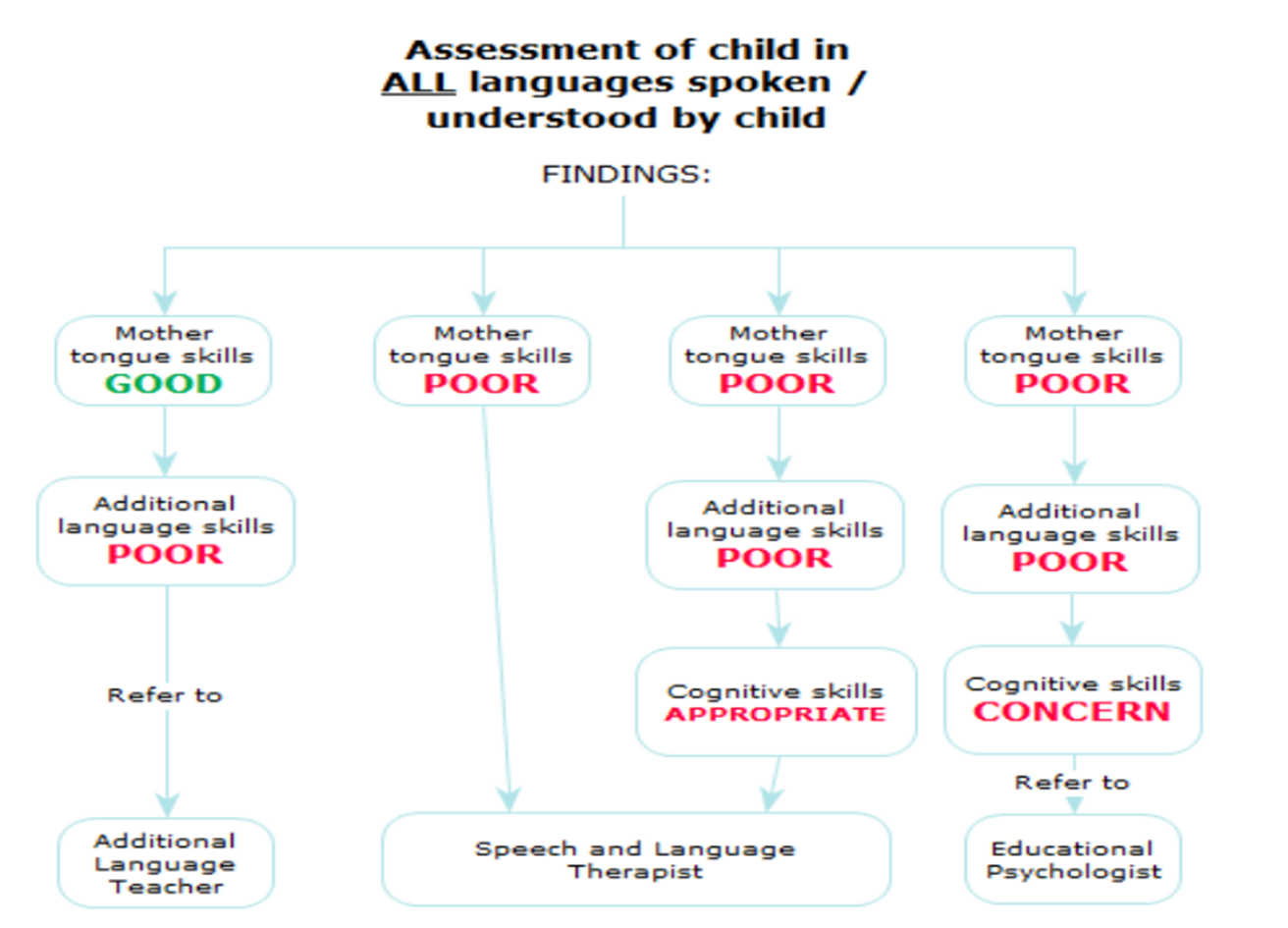
Must assess all languages spoken/understood by the child to differentiate language knowledge limitations from impairments.
Assess L1 first.
Address challenges in sequential multilingualism and their impact on language assessment and intervention.
Comprehensive Assessment Techniques
Breaking them down into L1 and L2.
Sources of Information
Case history, language samples, formal and informal assessments.
Utilize the R.I.O.T approach for gathering comprehensive data:
R: Review
I: Interview
O: Observe
T: Test
Framework for Children Aged 2-5
Key areas to assess include attention, social communication, play skills, receptive and expressive language, phonology, and non-verbal skills.
Issues with Formal Assessments
Concerns about culturally appropriateness, translation effects altering linguistic structures, and normative data applications for bilingual populations.
Modification of assessments is often necessary to account for bilingual experiences.
Not all structures apply to all languages.
Can do these informally.
Tests Suitable for Bilingual Children
Examples include the British Picture Vocabulary Scale and adapted sentence comprehension tests.
Dynamic Assessment
Evaluates language learning potential and impact of interventions, using a test-teach-retest model focusing on comprehension and production.
Test- teach-retest (see how they are keeping this up- important).
Therapy Approaches for Multilingual Children
Types of Approaches:
Bilingual Approach: Work on both L1 and L2, focusing on common cognitive processes. Switch from one to another. Seperate competency model.
Cross-Linguistic Approach: Address each language separately at different times focusing on language-specific features.
Inductive Approach: Focus on universal cognitive processes while addressing language learning. Carry on from one L2 to L1.
Professional Interventions
Provide tailored advice for multilingual families grappling with language decisions.
Coordinate with relevant professionals for assessments and treatment plans for multilingual children based on their unique linguistic profiles.