Unit 6 Fire

CERT Unit 6: Fire Safety and Utility Controls - Complete Study Guide
UNIT OVERVIEW & CERT PRIORITIES
CERT Role in Fire Safety
Primary Goal: Support fire safety by extinguishing small fires before they become major fires
Key Rule: If you cannot put out a fire in 5 seconds, it's too big to handle - evacuate immediately
Four Main Actions:
Extinguish small fires before they become major
Prevent additional fires by removing fuel sources
Shut off utilities when necessary and safe
Assist with evacuations when needed
CERT Priorities (Always Remember)
Rescuer safety is ALWAYS #1 priority
Always use buddy system - never fight fires alone
Required safety equipment: gloves, helmet, goggles, N95 mask, sturdy shoes/boots
Goal: Do the greatest good for the greatest number
FIRE CHEMISTRY - THE FUNDAMENTALS
The Fire Triangle (3 Elements Required)
HEAT - Elevates material temperature to ignition point
FUEL - Can be solid, liquid, or gas (determines extinguishment method)
OXYGEN - Most fires need at least 20% oxygen atmosphere
Chemical Process: These three elements create an exothermic reaction = FIRE
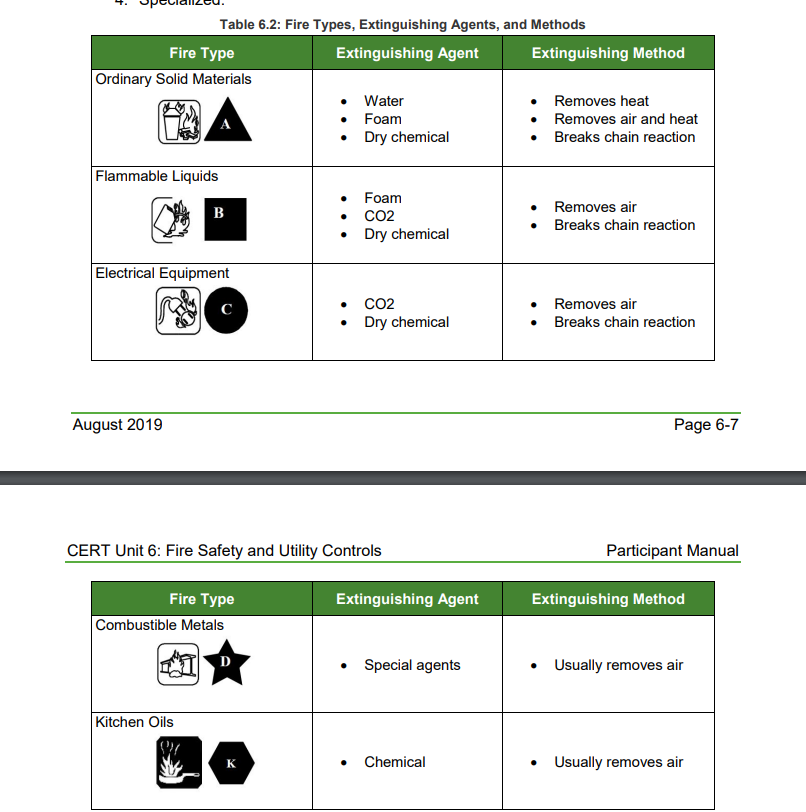
Classes of Fire (Know Each Class & Examples)
CLASS A FIRES: Ordinary combustibles
Examples: paper, cloth, wood, rubber, many plastics
Extinguishing agents: Water, foam, dry chemical
Method: Removes heat, removes air and heat, breaks chain reaction
CLASS B FIRES: Flammable liquids
Examples: oils, gasoline, charcoal lighter fluid, kerosene
Key point: Only the VAPOR burns when ignited
Extinguishing agents: Foam, CO2, dry chemical
Method: Removes air, breaks chain reaction
CLASS C FIRES: Energized electrical equipment
Examples: wires, motors, electrical equipment
Important: When electricity is turned off, becomes Class A fire
Extinguishing agents: CO2, dry chemical (NEVER water)
Method: Removes air, breaks chain reaction
CLASS D FIRES: Combustible metals
Examples: aluminum, magnesium, titanium
Extinguishing agents: Special agents
Method: Usually removes air
CLASS K FIRES: Cooking oils
Examples: vegetable oils, animal oils, fats
Location: Commercial kitchens and cafeterias
Extinguishing agents: Chemical agents
Method: Creates soapy foam to hold vapors and extinguish
FIRE SIZE-UP - 9-STEP PROCESS
Step 1: Gather Facts
Time Considerations:
Does time of day/week affect suppression efforts?
Weather Factors:
Weather conditions affecting safety
Weather impact on situation
Construction Type:
What structures are involved?
What construction materials?
Occupancy:
Are structures occupied? How many people?
Special considerations: children, elderly, pets, people with disabilities
Hazards:
Hazardous materials present?
Other hazard types?
Step 2: Assess and Communicate Damage
Survey ALL sides of scene
Determine if danger exceeds CERT capability
Communicate facts and damage assessment
Step 3: Consider Possibilities
Life Hazards: Potentially life-threatening situations Path of Fire: Areas that may be jeopardized Additional Damage: High potential for more disaster activity
Step 4: Assess Your Situation
What equipment is available?
What other resources available?
Can CERT volunteers safely attempt suppression?
Step 5: Establish Priorities
Any more pressing needs?
Step 6: Make Decisions
Where will resources do most good with adequate safety margin?
Step 7: Develop Plan of Action
Determine personnel and resource usage
Step 8: Take Action
Put plan into effect
Step 9: Evaluate Progress
Continuous process - may require returning to Step 1
Identify changes in scope, safety risks, resource availability
Adjust strategies as required
FIREFIGHTING RESOURCES
Common Resources
Local fire departments
Fire alarm systems
Sprinkler systems
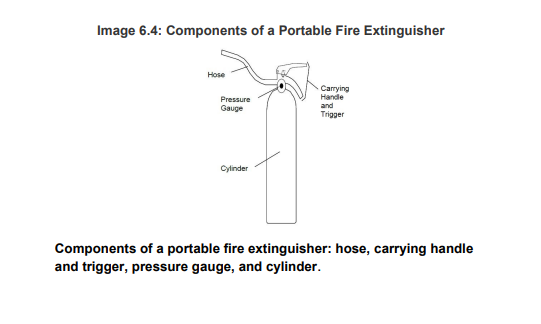
Portable fire extinguishers
Interior wet standpipes (NOT for CERT use)
Fire Extinguisher Types
Mo
1. WATER EXTINGUISHERS
Capacity: 2.5 gallons standard
Range: 30-40 feet
Pressure: 110 psi
Caution: Don't scatter lightweight materials and spread fire
2. DRY CHEMICAL EXTINGUISHERS
Regular dry chemical: Sodium bicarbonate base (Class B & C)
Multipurpose dry chemical: Monoammonium phosphate base (Class A, B & C)
Capacity: 10-20 seconds discharge time
Range: 8-12 feet
Pressure: 175-250 psi
Most common extinguisher
3. CARBON DIOXIDE (CO2)
Becoming less common but still used
4. SPECIALIZED EXTINGUISHERS
For specific applications
Extinguisher Rating System
Class A: Rated 1A to 40A (higher number = more extinguishing agent)
Class B: Rated 1B to 640B
Class C, D, K: No number rating
Class C: "C" indicates safe for electrical fires
Class D: Labeled for specific metals
Class K: Alkaline mixture creates soapy foam
DECIDING TO USE FIRE EXTINGUISHER - 5 CRITICAL QUESTIONS
Ask yourself these questions:
Are there TWO ways to exit quickly and safely?
Do I have the RIGHT TYPE of extinguisher?
Is the extinguisher LARGE ENOUGH for the fire?
Is the area FREE from other dangers (hazmat, falling debris)?
Am I EXPERIENCED/TRAINED in extinguisher use?
If ANY answer is "NO":
Leave building immediately
Activate fire alarm if safe
Shut all doors while leaving (slows fire spread)
Contact fire department
If ALL answers are "YES":
May attempt to extinguish
Remember: 5-second rule still applies
If you feel unable, leave immediately
After Extinguishing
OVERHAUL PROCESS: Search for hidden fire/sparks to prevent rekindling
Remember: "Cool, Soak, and Separate"
Contact fire department even for small fires
Insurance/management may want incident report
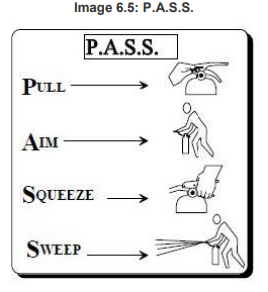
P.A.S.S. TECHNIQUE
P - PULL pin (Test extinguisher after pulling) A - AIM at base of fire (extinguish fuel, not flames) S - SQUEEZE handle S - SWEEP back and forth
Important:
Test extinguisher before approaching fire
Aim at BASE of fire, not flames
Depleted extinguishers should be laid on side until recharged
FIRE SUPPRESSION SAFETY RULES
DO's
Use safety equipment always: helmet, goggles, dust mask, leather gloves, sturdy shoes
Work with buddy always - never fight fire alone
Have backup team when possible
Always have TWO exit routes
Check doors:
Don't open if air sucked under or smoke seeping out top
Feel doors with back of hand from bottom up
If hot, don't enter (fire behind door)
Confine fire by closing doors
Stay low (smoke inhalation = leading cause of fire deaths)
Maintain safe distance (know extinguisher range)
Never turn back on fire when backing out
Overhaul to ensure complete extinguishment
DON'Ts
Don't get too close (if you feel heat, too close)
Don't fight fire alone
Don't try to suppress large fires
Don't enter smoke-filled areas
PROPER FIRE SUPPRESSION PROCEDURES (6 STEPS)
Team Roles
Team Member 1: Operates extinguisher
Team Member 2: Watches for hazards, ensures safety
6-Step Process
Assume ready position: Pin pulled, aimed, upright, 20-25 feet from fire
Ready communication: TM1 says "Ready," TM2 repeats "Ready"
Going in communication: TM1 says "Going in," TM2 repeats and places hand on TM1's shoulder
Approach together: TM1 watches fire, TM2 stays close with hand on shoulder
Backing out communication: TM1 says "Backing out," TM2 repeats
Exit together: TM2 guides TM1 out while TM1 faces fire, watching for hazards
UTILITY HAZARDS
ELECTRICAL HAZARDS
Common Problems:
"Electrical octopus" (tangled cords)
Overloaded outlets
Power strips plugged into power strips
Cords under carpets
Broken/frayed cords
Malfunctioning appliances
Emergency Response:
Know circuit breaker/fuse locations
Post shutoff instructions by breaker box
Shutoff procedure: Individual breakers/fuses first, THEN main switch
Turn-on procedure: Main switch first, THEN individual breakers/fuses one at a time
NEVER enter flooded basement or standing water to shut off electricity
Contact licensed electrician/utility company for emergencies
NATURAL GAS HAZARDS
Two Types of Hazards:
Asphyxiant: Displaces oxygen in body
Flammable: Can readily ignite
Key Properties:
Lighter than air
Often can't feel gas during leak
Need gas detectors on every level (like smoke alarms)
Detector locations: Near furnace, hot water tank, gas appliances
Test monthly
CARBON MONOXIDE (CO)
Deadly, colorless, odorless, poisonous
Lighter than air
Produced by incomplete burning of fuels
Sources: Malfunctioning fuel-burning appliances, portable generators, fireplaces, charcoal in enclosed areas
Prevention:
Install CO detectors near all sleeping areas
Additional detectors on every level and in every bedroom
Don't place within 15 feet of heating/cooking appliances
Avoid humid areas like bathrooms
Test monthly
GAS SHUTOFF PROCEDURES
General Rules:
Locate and label all gas shutoff valves
Know proper shutoff procedures
Have non-sparking tools
If unsure, DON'T attempt - call gas company
Gas Meter Inside Home:
Only shut off when instructed by authorities
If you smell gas or see dials showing flow with appliances off: EVACUATE and call 911
Don't attempt shutoff if gas may be in air
Gas Meter Outside Home:
Turn off if you smell gas or see unexplained flow
Turn off if there's unextinguishable fire (call 911 first, turn off only if safe)
Never enter basement of burning structure
Use flashlight, not candlelight
Important:
Only trained technician can restore gas service
Some meters have automatic earthquake shutoffs
Improper restoration can cause indoor gas leaks
FLAMMABLE LIQUID HAZARDS
L.I.E.S. Storage Method:
Limit quantities
Isolate from ignition sources
Eliminate vapors
Separate incompatible materials
Fire suppression: Use only Class B rated extinguishers
HAZARDOUS MATERIALS
Definition
Materials are hazardous if they:
Corrode other materials
Explode or easily ignite
React strongly with water
Are unstable when exposed to heat/shock
Are toxic through absorption, inhalation, injection, or ingestion
Types Include
Explosives
Flammable gases and liquids
Poisons and poisonous gases
Corrosives
Nonflammable gases
Oxidizers
Radioactive materials
Identification Methods
Location and Occupancy:
Industrial: warehouses, rail yards, shipyards
Household: under sinks, workshops, garages, basements
Commercial: dry cleaners, funeral homes, supply stores, big box stores
Transportation: delivery vans
Warning Systems: Placards act as "STOP SIGNS" for CERT volunteers
NFPA 704 DIAMOND SYSTEM
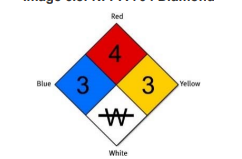
Four Colored Quadrants (0-4 scale, higher = more dangerous)
RED: Flammability hazard
BLUE: Health hazard
YELLOW: Reactivity hazard
WHITE: Special precautions
Special Symbols
W: Water reactive (never mix with water)
OX: Oxidizing properties (increases fire/explosion potential)
ACID: Acidic material
ALK: Basic/alkaline material
COR: Corrosive material
☢: Radioactive material
CERT Action
ONLY action: Evacuate people downwind to uphill/upwind location DO NOT: Enter building to evacuate people inside
GLOBAL HARMONIZED SYSTEM (GHS)
Three Standard Elements
Symbols: Pictograms showing physical, health, environmental hazards
Signal Words:
"DANGER" = severe hazards
"WARNING" = less severe hazards
No word = lower level hazards
Hazard Statements: Standardized phrases describing each hazard
Additional Elements
Precautionary statements and pictograms
Product identifiers
Supplier identification
Supplemental information
TRANSPORTATION PLACARDS
Three Systems
DOT (Department of Transportation)
UN (United Nations)
NA (North American)
Critical Points
Placards are "STOP SIGNS" for CERT volunteers
No placard doesn't mean no hazmat (under 1,000 lbs may not require placard)
Some materials have different placards for domestic vs international transport
Drivers sometimes forget to change placards with cargo changes
Use extreme caution approaching any accident vehicle
Emergency Response Guidebook (ERG)
Used by first responders for transportation hazmat emergencies
Provides identification, protection, and evacuation information
Includes recommended evacuation distances
HAZMAT RECOGNITION - SIGHTS, SOUNDS, SMELLS
Remember:
Hazmat may be present without placards/warnings
May not be able to recognize toxic substances
Stay away from unidentifiable substances
Alert authorities immediately
KEY SAFETY REMINDERS
Critical Rules
5-second rule: If fire not out in 5 seconds, evacuate
Two exit routes always
Buddy system always
Safety equipment always
Rescuer safety is #1 priority
When in Doubt
Evacuate
Call for professional help
Don't take unnecessary risks
Error on side of safety
Equipment Limitations
Interior wet standpipes: CERT volunteers should NEVER operate (too difficult to manage)
Smoke-filled areas: Don't enter (lack proper equipment)
Large fires: Don't attempt (beyond CERT capability)
STUDY TIPS FOR COMPETITION
Must Know Cold
Fire triangle elements
Five classes of fire with examples
P.A.S.S. technique
9-step size-up process
5 questions before using extinguisher
Safety rules and procedures
NFPA 704 diamond meanings
Gas shutoff procedures
When to evacuate vs. when to fight
Common Test Areas
Fire classification scenarios
Extinguisher selection for fire types
Safety procedure sequences
Hazmat identification
Emergency response priorities
Size-up decision making
Remember: This is about saving lives safely - when in doubt, prioritize safety and call professionals!