Topic 6 Coordination and response
The Nervous system and responding to Stimuli
Animals increase their chances of survival by responding to changes in their external environment
They also respond to changes in their internal environment to make sure that the conditions are alwasy right for metabolism
Plants also increase their chances of survival by responding to changes in their environment
Any change in the internal or external environment is called a stimulus.
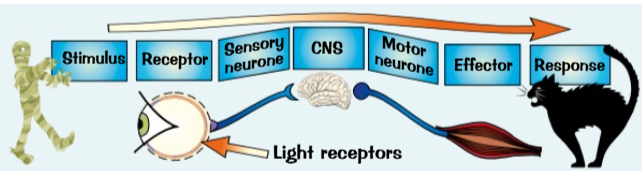
Receptors detect stimuli and effectors produce a response
Receptors: Receptors are specialized cells located in sensory organs (like the eyes, ears, nose, tongue, and skin) that detect stimuli from the environment, such as light, sound, and pressure.
Effectors: Effectors are cells or organs that produce a response to the detected stimuli. They include muscles and glands, which can contract or secrete hormones, respectively, to enact a response.
Communication: Receptors send signals to effectors, and this communication can occur through direct pathways or via the hormonal system, where hormones act as messengers.
Central Nervous System (CNS): The CNS consists of the brain and spinal cord. It processes information received from sensory neurons and coordinates appropriate responses.
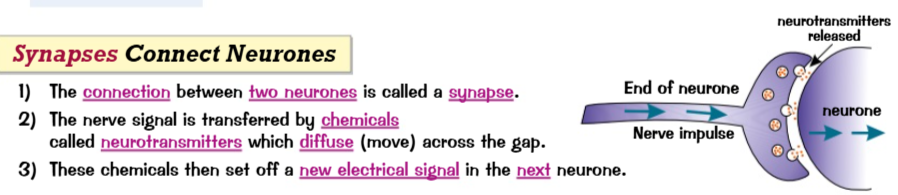
Neurons: Neurons are the basic units of the nervous system. There are three main types:
Sensory Neurons: Transmit information from receptors to the CNS.
Interneurons: Connect sensory neurons to motor neurons within the CNS.
Motor Neurons: Carry signals from the CNS to effectors, enabling them to respond.
Rapid Responses: The CNS can quickly process stimuli and trigger responses, allowing for quick adaptations to changes in the environment. This rapid communication is essential for survival and functioning.
Reflexes
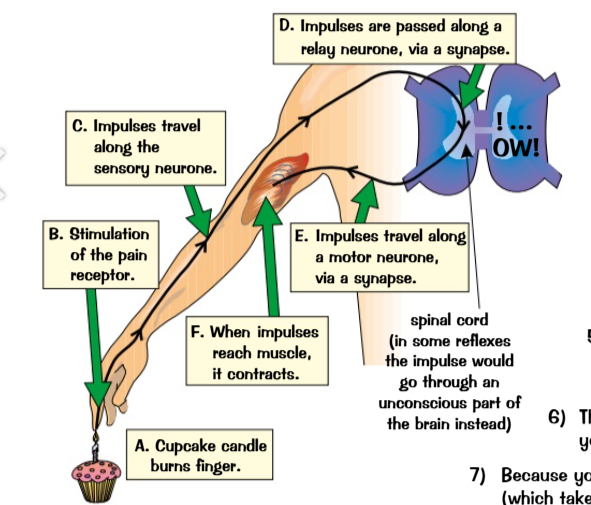
Reflexes: Reflexes are automatic responses that help prevent injury by reacting quickly to certain stimuli, such as a bright light or a sudden pain. They reduce the chances of further harm by enabling fast responses.
Reflex Arc: The reflex arc is the pathway that these reflexes follow through the central nervous system. It involves several key components:
Stimulus: When a stimulus is detected, sensory receptors send signals to the brain.
Sensory Neurons: These neurons carry the impulse from the receptors to the spinal cord.
Interneurons: They process the information and relay it to motor neurons.
Motor Neurons: These neurons transmit signals from the spinal cord to the effectors (muscles or glands), resulting in a response.
Response Timing: The reflex arc allows for quicker responses compared to normal processing, as it bypasses the brain initially, leading to faster reactions to stimuli.
Block Diagram Representation: The reflex arc can be visually represented in a block diagram format, illustrating the flow from stimulus detection to the resulting response.
The eye
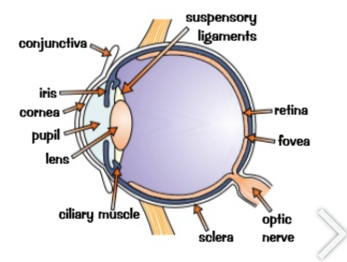
Eye Structure:
The conjunctiva covers and protects the eye's surface.
The sclera is the tough outer layer that maintains the eye's shape.
The cornea is the transparent front part that refracts light.
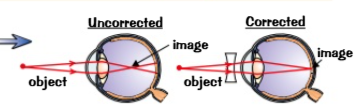
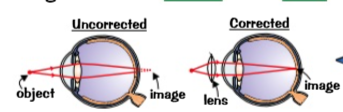
The lens focuses light onto the retina, where light-sensitive cells convert it into signals for the brain.
Iris Reflex:
The iris adjusts the size of the pupil in response to light levels, constricting in bright light and dilating in dim light to regulate the amount of light entering the eye.
Focusing Mechanism:
The eye can focus on objects at varying distances through a process called accommodation:
For nearby objects, the ciliary muscles contract, allowing the lens to become thicker and bend light more sharply.
For distant objects, the muscles relax, flattening the lens to focus light effectively.
Retina and Fovea: The retina contains cells that detect light, with the fovea being the area of highest sensitivity for sharp vision.
Hormones
Hormones are chemicals released into the blood, they are produced in the glandes
Adrenaline: Produced by the adrenal glands, it prepares the body for a "fight or flight" response by increasing heart rate and blood flow to muscles.
Insulin: Secreted by the pancreas, it regulates blood sugar levels by promoting the conversion of glucose into glycogen for storage.
Testosterone: Made in the testes, it is the primary male sex hormone, influencing male sexual characteristics.
Progesterone: Produced by the ovaries, it plays a key role in regulating the menstrual cycle and maintaining the lining of the uterus during pregnancy.
ADH (Antidiuretic Hormone): Controls water retention in the kidneys, helping to regulate the body's water balance.
FSH (Follicle-Stimulating Hormone): Stimulates the maturation of eggs in females and promotes sperm production in males.
LH (Luteinizing Hormone): Triggers ovulation in females and stimulates the production of testosterone in males.
Hormones and nerves do similar jobs but have differences
Speed: Nerves transmit messages very quickly, while hormones act more slowly.
Duration: Nerves have short-term effects, whereas hormones have long-lasting effects.
Precision: Nerves provide precise signals; hormones act more generally.
Response Type: Quick responses indicate a nervous reaction, while slower responses suggest hormonal influence.
Homeostasis
Homeostasis: This is the process that helps the body maintain stable internal conditions, crucial for proper cell and organ function, particularly in regulating water content.
Water Loss Mechanisms: Water is lost from the body through several means:
Sweating: Occurs during exercise or in hot weather to cool the body, resulting in significant water loss.
Breathing: Moisture is expelled during respiration, increasing with activity or in dry conditions.
Urination: The kidneys adjust urine output based on hydration levels, retaining more water when dehydrated.
Factors Influencing Water Balance: Water loss varies with activity level, environmental conditions, and overall hydration status.
Temperature Regulation: The body aims to maintain a temperature of about 37°C, supporting enzyme function and metabolism. Proper hydration is essential for effective temperature regulation.
Skin Function: The skin plays a crucial role in regulating body temperature through various mechanisms.
When Too Hot:
Sweating: The body produces sweat, which evaporates to cool the skin.
Blood Vessels: Blood flow increases to the skin's surface to dissipate heat.
When Too Cold:
Vasoconstriction: Blood vessels constrict to reduce blood flow to the skin, conserving heat.
Goosebumps: Muscle contractions cause hairs to stand up, trapping a layer of warm air.
Body Size and Heat Regulation: Smaller organisms lose heat more quickly due to a higher surface area-to-volume ratio, while larger organisms retain heat better.
Adaptations: Different species have adaptations to manage temperature effectively based on their size and environmental conditions.
Response in plants
Plant Responses: Plants respond to environmental changes, such as water availability and the presence of predators, enhancing their survival chances through adaptive mechanisms.
Survival Mechanisms: Effective responses to stimuli, like closing stomata in drought or producing toxins against herbivores, help plants thrive in various conditions.
Auxins: These plant hormones, produced mainly at the tips of roots and shoots, regulate growth and development. They are crucial for:
Phototropism: Growth toward light, where auxins accumulate on the shaded side, causing the plant to bend toward the light.
Gravitropism: Roots grow downward (positive gravitropism) and shoots grow upward (negative gravitropism) in response to gravity.
Directional Growth: The uneven distribution of auxins leads to differential growth, enabling plants to adjust their growth direction for optimal light exposure and stability in soil. Auxins play a vital role in coordinating these responses, allowing plants to adapt effectively.