The Developing Virginia Constitution
America's federalist system allocates power for both the state and local governments. In order to consider how state governments can be structured and how they fit within the American system, we will examine the Commonwealth of Virginia as an example. In this lesson, we'll see how Virginia's constitution has evolved over time as the needs of the state have changed. This can be contrasted to the permanence of the US Constitution, which has remained largely the same since its creation over two hundred years ago.
Virginia's Government
In Virginia's long, four-hundred-year history, its government has changed dramatically. Virginia's original colonial government was established by royal charter to the Virginia Company, which was later revoked when Virginia became the first English royal colony. With the American Revolution, Virginians officially established the Commonwealth of Virginia, rejecting royal authority once and for all. Since 1776, Virginia has operated under seven separate constitutions. Considering the longevity of the United States Constitution, this last fact may seem surprising, but the United States Constitution's sense of permanency is unique in the world. The document, originally drafted in 1787, has achieved almost mythical status. Its indispensability in US history has made it virtually sacred in the minds of American citizens, but other parts of the world adopt new constitutions far more frequently than the United States. This is also true of American states, most of which have operated under multiple constitutions. State constitutions tend to be more specific and detailed than the US Constitution; as such, they require updates as circumstances change over several decades.
Virginia Company
The Virginia Company received three separate charters between 1606 and 1624—one in 1606 before the colony was established, another in 1609, and a third in 1612. The three charters are usually lumped together since the only major difference between them lies in Virginia's territorial boundaries, and since none of the three disputes the Virginia Company's ability to govern the colony. The members of the company appointed a council to direct the colony and make day-to-day decisions. Later, the company decided that Virginia would be better served under a single governor. Therefore, it appointed Lord De La Warr as governor in place of the council, and he was given absolute authority over the government in Virginia.
The Virginia Company saw the need for Virginians to have input in the government because their system granted so much power to a single governor. In the Great Charter of 1618, the Virginia Company established, among other reforms, the Virginia House of Burgesses. In the beginning, this first representative body in the New World only had the power to advise the governor, but it would quickly take on more power. The most important of these powers was the right to tax Virginian citizens. This was based on the long-established English political belief that citizens should not be taxed without giving their consent through a legislative assembly.
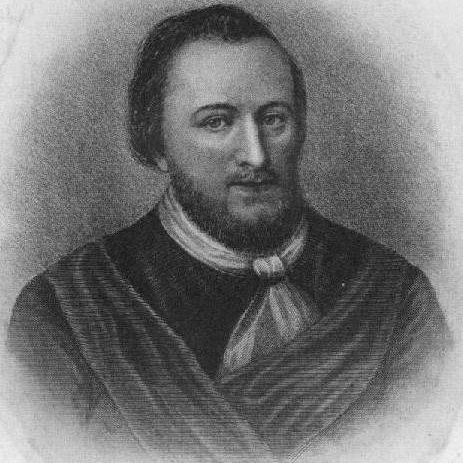
Lord De La Warr
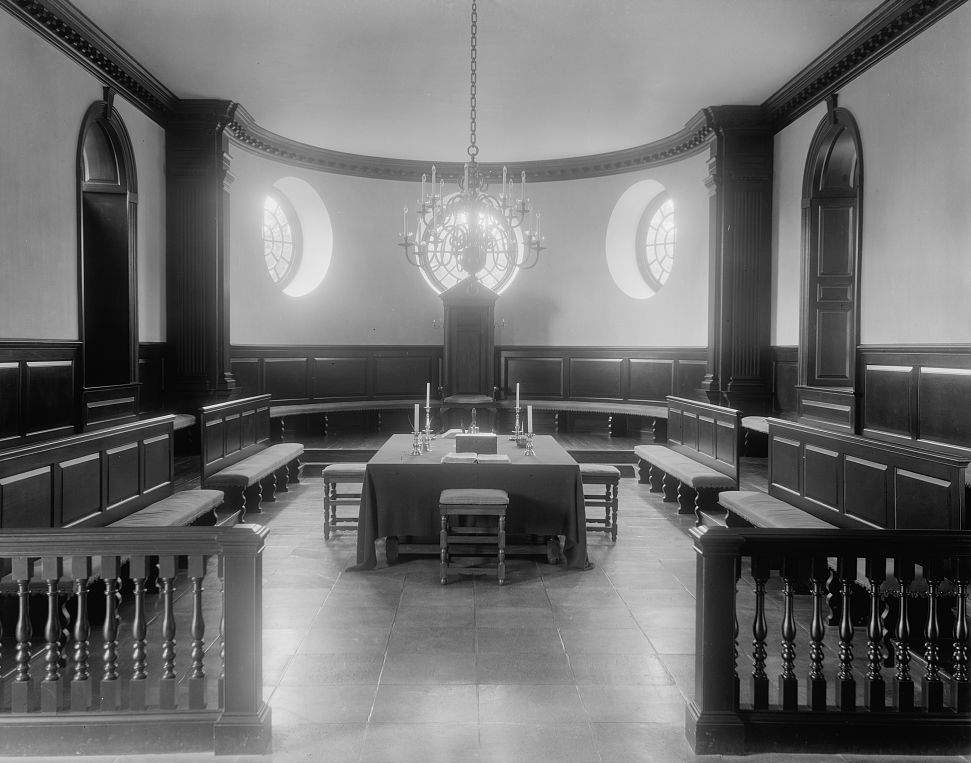
Restoration of the chamber of the House of Burgesses
Royal Colony
For most of its early history, Virginia struggled with a host of problems. Far too many Virginians were dying of disease and malnutrition, and the Virginia Company seemed incapable of keeping peace with the region's native people. Furthermore, investors were angry because, after almost eighteen years, the company had paid no dividends. In 1624, King James revoked the company's charter. After King James's death, his son King Charles I made Virginia a royal colony in 1625, the first of its kind in England's colonies. This meant that the English king had complete authority over the colony. He and his advisors appointed a royal governor, who managed the colony on the king's behalf. The House of Burgesses survived the transition. In fact, its power increased in 1639, when Charles I gave the assembly the sole power to levy taxes, regulate the church, form a military, and change existing laws. This further reinforced the tradition of representative government in Virginia.
The Commonwealth of Virginia: The Constitutions
Constitution of 1776
Virginia remained a royal colony for a century and a half, except for a brief period during the English Civil War. By early 1776, however, the royal government in Virginia had completely collapsed as the American Revolution broke out. The Virginia Convention had taken the royal governor out of power in 1774. In May 1776, the Continental Congress recommended that all of the thirteen colonies adopt new constitutions that denied the authority of the king and Parliament. Virginia declared itself a commonwealth, which is an independent republic, and rejected the authority of the king in strong language. The Constitution of 1776 established the bicameral Virginia General Assembly and a governorship as the executive. The accompanying Virginia Declaration of Rights, written predominantly by George Mason, would have a large impact on the United States Bill of Rights.
Constitution of 1830
Many of Virginia's subsequent constitutions would focus on limiting or expanding the right to vote. The history of Virginia is marked by a centuries-long struggle between a wealthy, powerful aristocracy and common Virginians. The 1830 Constitution arose from discontent over Virginia's power structure, which favored landed elites in a time when the rest of the country was becoming more and more democratic. At the time, Virginia was one of the only states that still limited voting to landowners. In 1829 and 1830, a convention finally met to address these issues. Wealthy planters and small farmers debated until the convention finally expanded the right to vote beyond landowners but still maintained some property requirements.
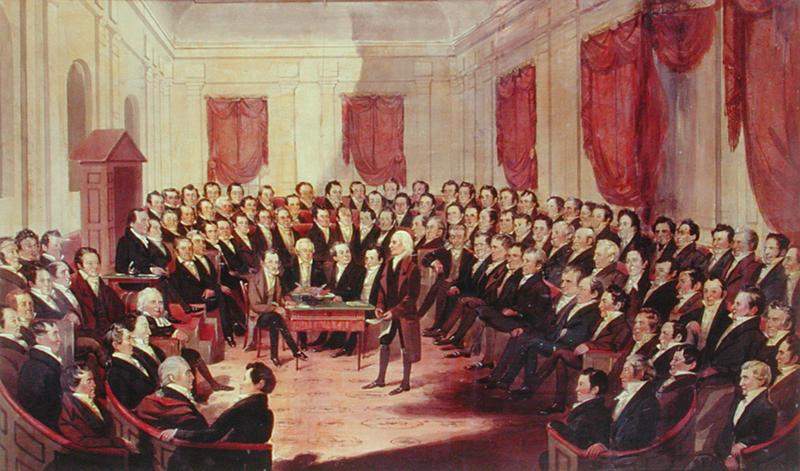
The Virginia Constitutional Convention (1830)
Constitution of 1851
The 1851 Constitution arose from dissatisfaction among Virginians living in the western part of the state, including modern-day West Virginia. The 1840 census revealed that most white Virginians lived in the west, but many felt that they were not sufficiently represented in the legislature. Most western Virginians were small farmers who did not meet the property requirement to vote. Though they tried to win election reform in the legislature, they were denied because they could not elect enough influential delegates. The issue became so heated that many Virginians in the western part of the state began discussing secession and the abolition of slavery, a major blow to Virginia and the rest of the South. (During the Civil War, this section of Virginia would indeed break away from the rest of the state, forming the state of West Virginia.) Finally, Virginia held a convention and adopted the Constitution of 1851, which completely eliminated the property requirement for voting.
Constitutions of 1864 and 1870
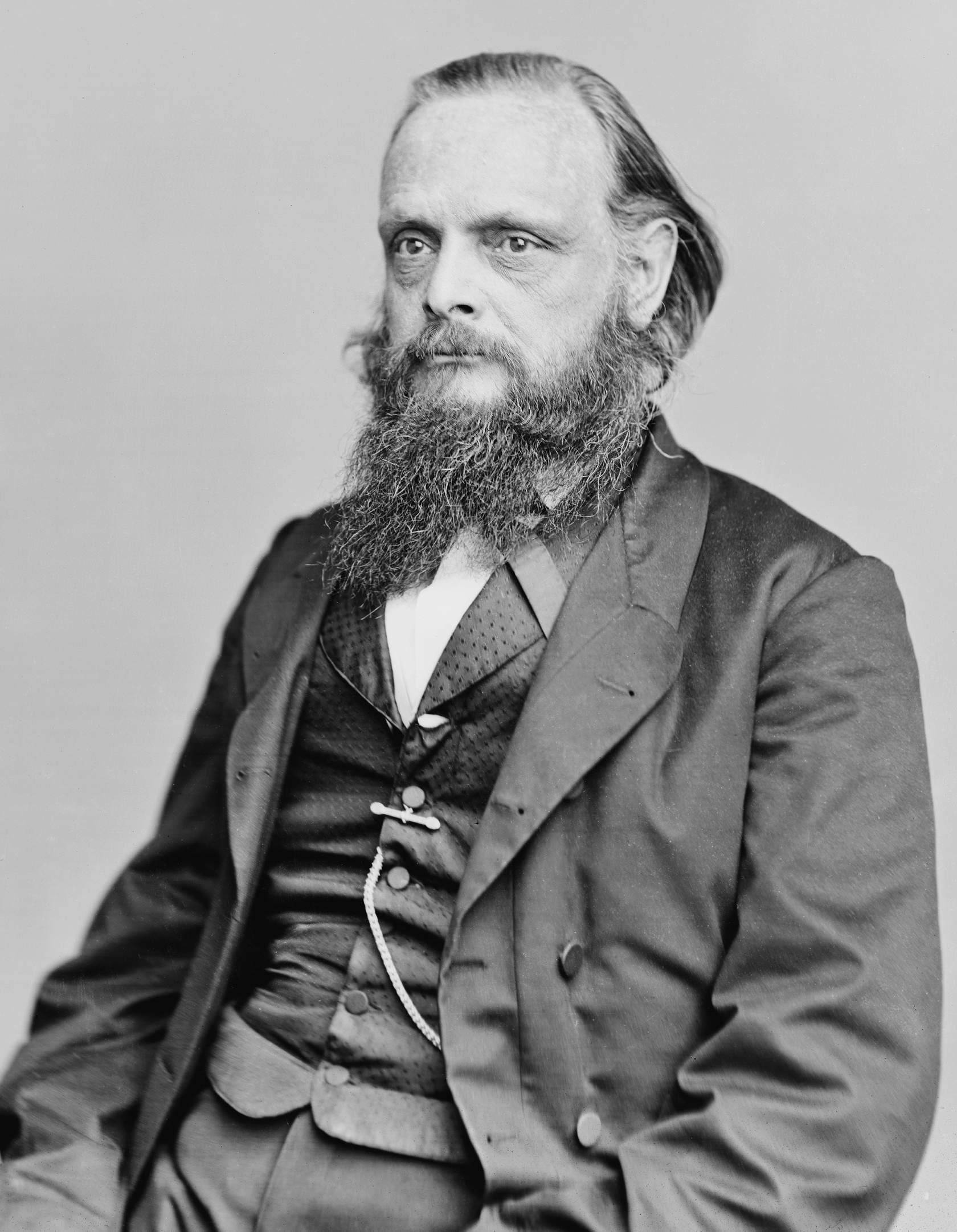
John Curtiss Underwood
During the Civil War, a "restored" government formed in areas under Union control and adopted the Constitution of 1864, which abolished slavery and disenfranchised Confederate officials. However, the circumstances of the 1864 Constitution placed its legal status in question. In 1870, Virginia, then under military rule as part of Reconstruction, formed a convention to adopt a new constitution that would allow for the state's readmission to the Union. Dominated by Republicans, the convention adopted the so-called Underwood Constitution (named for the Republican judge John Curtiss Underwood). The progressive constitution extended suffrage to all male citizens, black and white, and established Virginia's very first public school system. Its most controversial measure at the time included the disenfranchisement of many former Confederates, but this was eventually overturned.
Constitution of 1902
The Democratic Party regained power in Virginia by the mid-1890s. The party was determined to remain in power and ensured this by supporting ongoing efforts to disenfranchise African Americans. The members of the convention made it their goal to find a way to limit black voting rights without explicitly violating the Fifteenth Amendment, which guaranteed the right to vote for all male citizens regardless of their race. Though some wanted to take the vote away from poor whites as well, most of the convention also wanted to allow as many whites to vote as possible. The convention achieved its goals by instituting poll taxes, literacy tests, and "understanding" requirements, which included a test to confirm that a voter understood the terms of the constitution. Those who had served in the Civil War and their descendants, however, were exempt from these measures. These grandfather clauses allowed the Virginian government to disenfranchise black citizens while still allowing poor whites to vote. The Constitution of 1902 diminished the size of the electorate, especially among African Americans. It also officially mandated the segregation of Virginia's public schools.
Constitution of 1971
The Constitution of 1971 is still in effect today. The new constitution was adopted in response to the civil rights movement. Parts of the Constitution of 1902 had been invalidated by Supreme Court cases such as Brown v. Board of Education (1954), the Twenty-Fourth Amendment, the Civil Rights Act of 1964, and the Voting Rights Act of 1965—in particular, the restrictions against black suffrage and the segregation of public schools. The current constitution ended a struggle over suffrage that had persisted throughout Virginia's history. Because of this constitution and the federal measures enforcing it, all men and women, no matter their race or economic status, are eligible to vote.