Ornithology: respiration
\
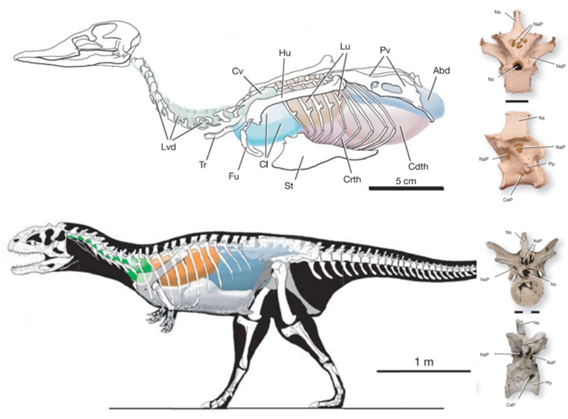
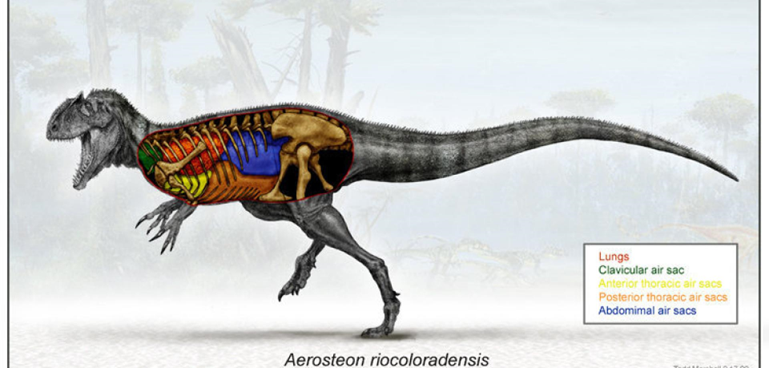
\ Hollow bones and pneumatic bones allowed the dinosaurs to grow so large
the airsacks invade the hollow space inside the bone
sair sacks also assist in respiration
\
\
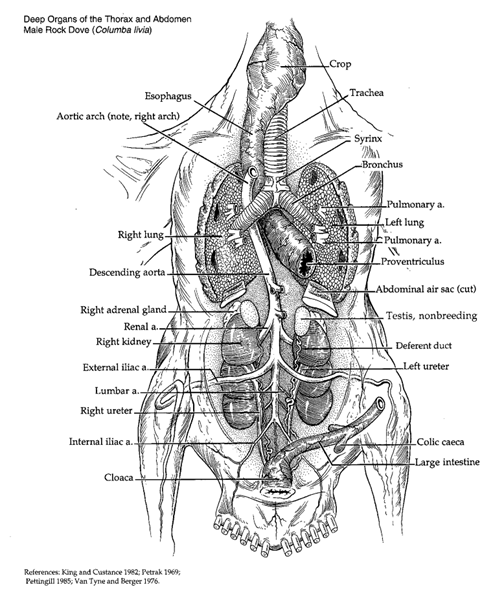
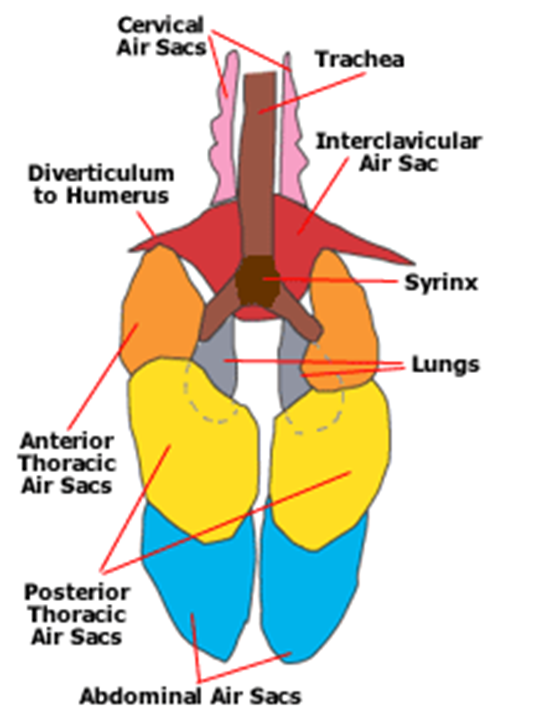
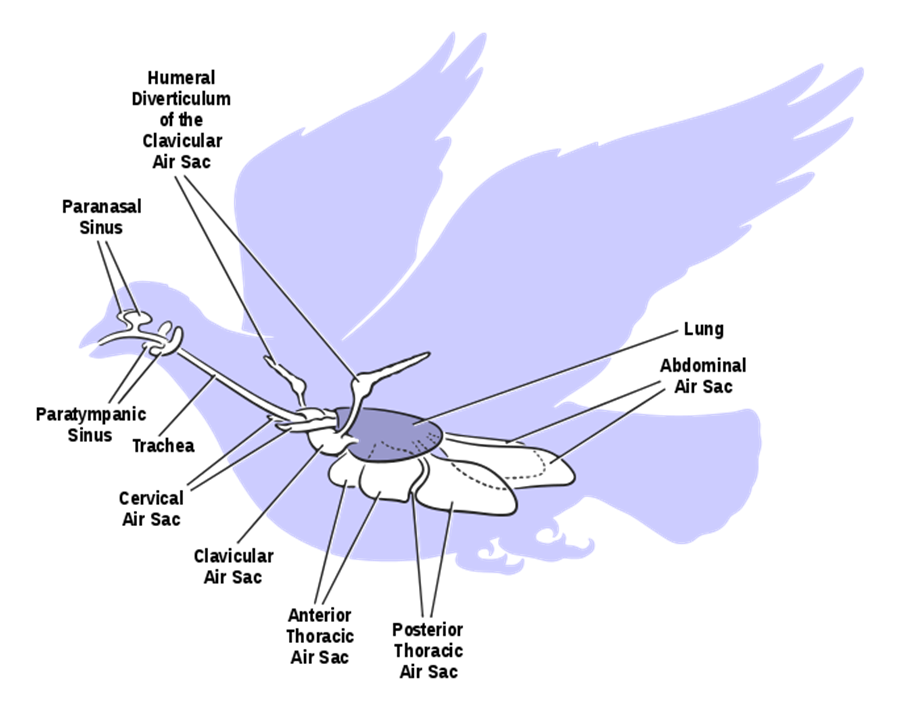
diverticula: an individual diverticulum
-extends into humerous
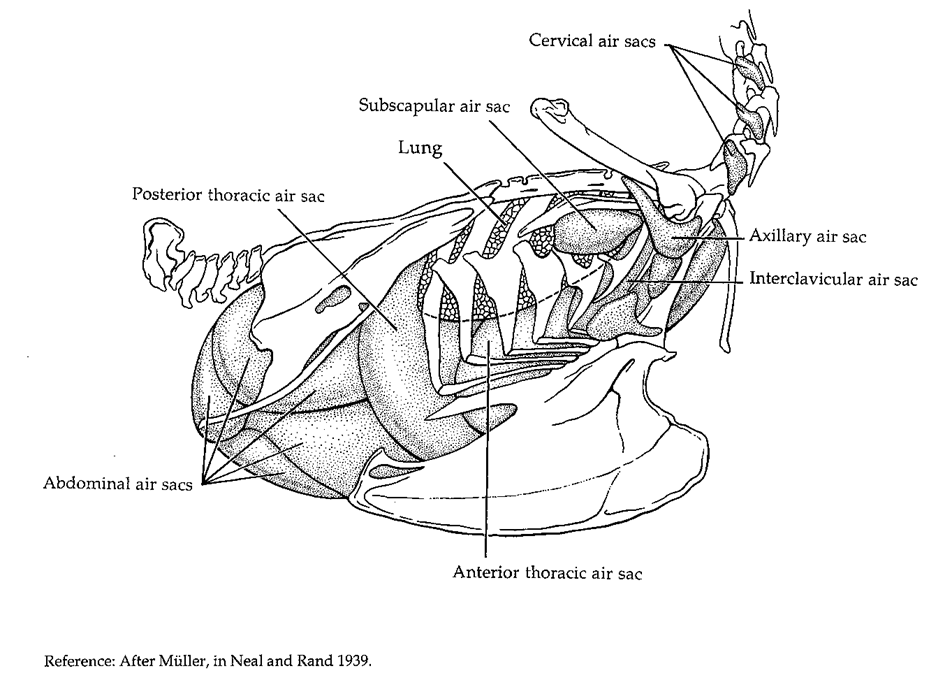
cervical air sacks fill up and through the neck vertebrae
interclavicular air sack is found just proximal of the diversion of the two bronchials
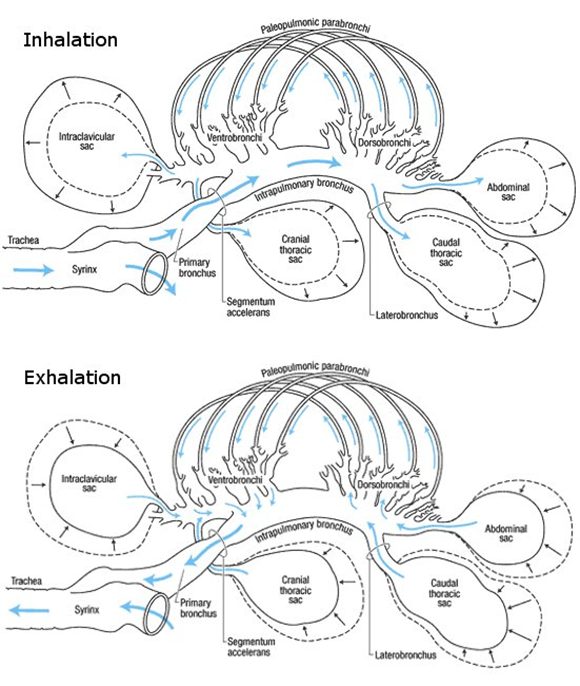
air sacks’ air only travels only one way thru the lungs
anterior air sacks only accept air coming out of the lungs
posterior air sacks only accepts air from inhalation
portion of lungs closest to the posterior air sacks always have oxygen rich air
when the bird inhales and exhales, the lungs are being supplied with oxygen rich fresh air
\
birds breath in concert with the flapping of their wings
caudal air sack is the same as posterior air sack
bernoulli’s principle: as the velocity increases, the pressure decreases
chance favors the informed mind
Coanda effect: any moving fluid that encountered a curved surface follows that curve
\ body cavity instead of abdominal cavity
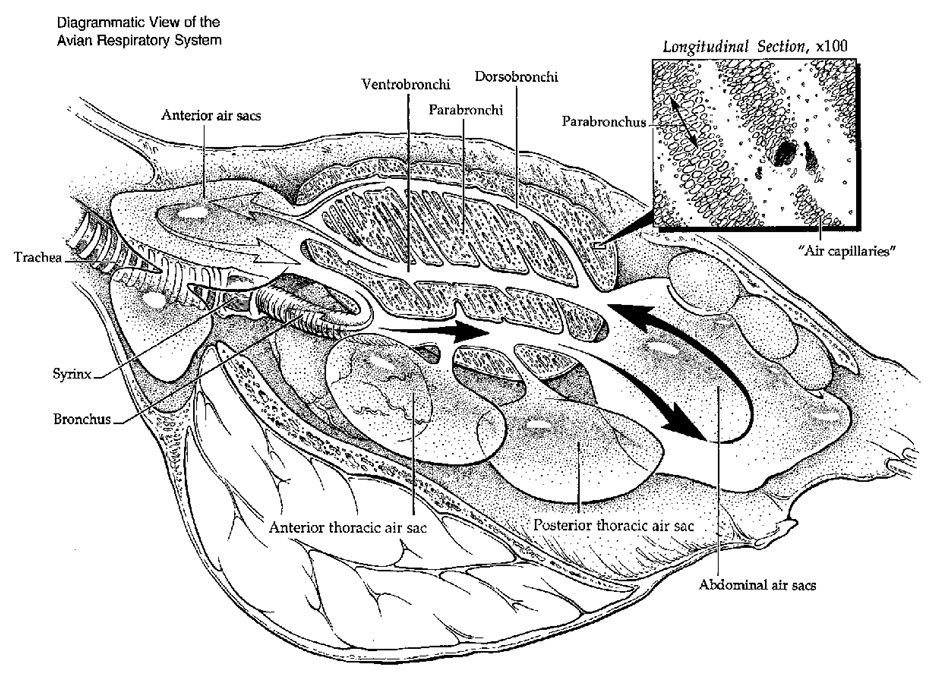
intrapulmonary bronchus goes through the lung 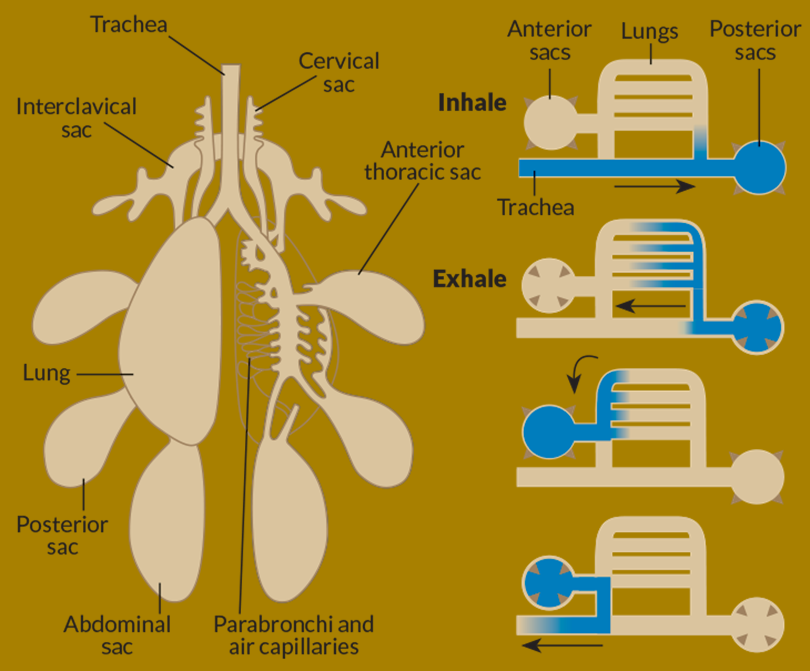
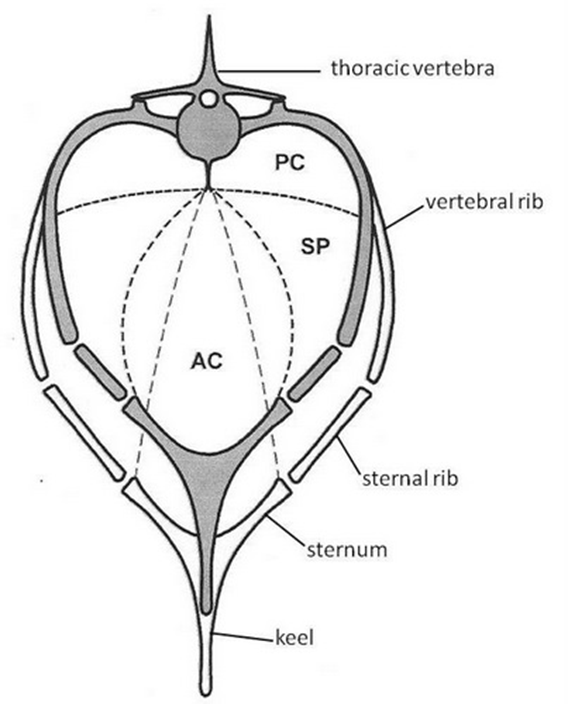 PC: pleural cavity
SP: subpulmonary cavity
AC: abdominal cavity
Air sacks: subpulmonary cavity
Oblique septum separates air sacks form abdominal cavity and digestive tract. without it cannot creat negative pressure in subpulmonary cavity to inflate air sacks
intercaustal muscles: in between the ribs
hypertrophy: if lose one of set, compensates with the other
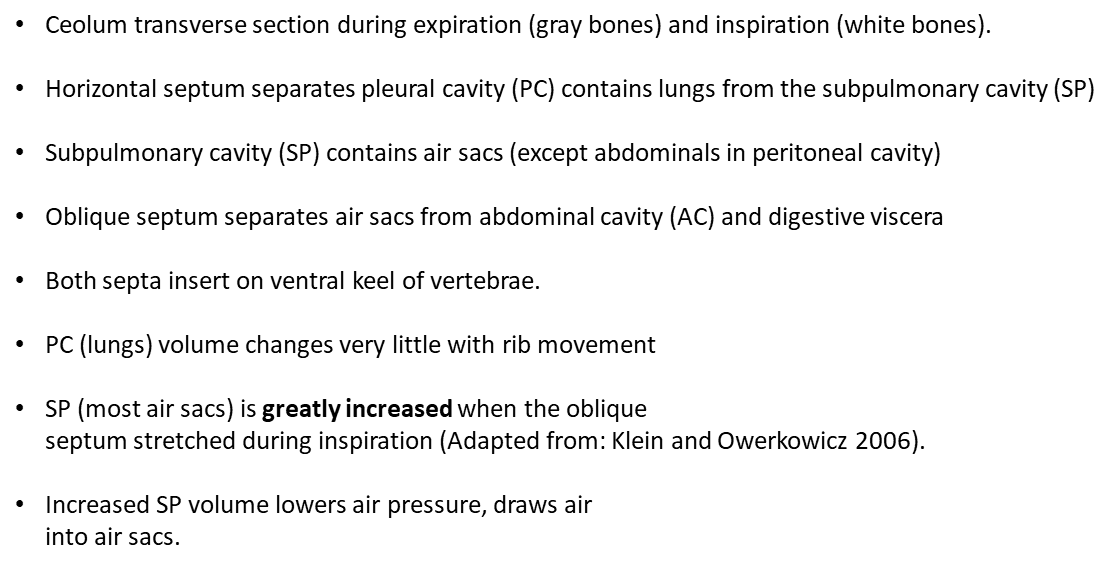
\
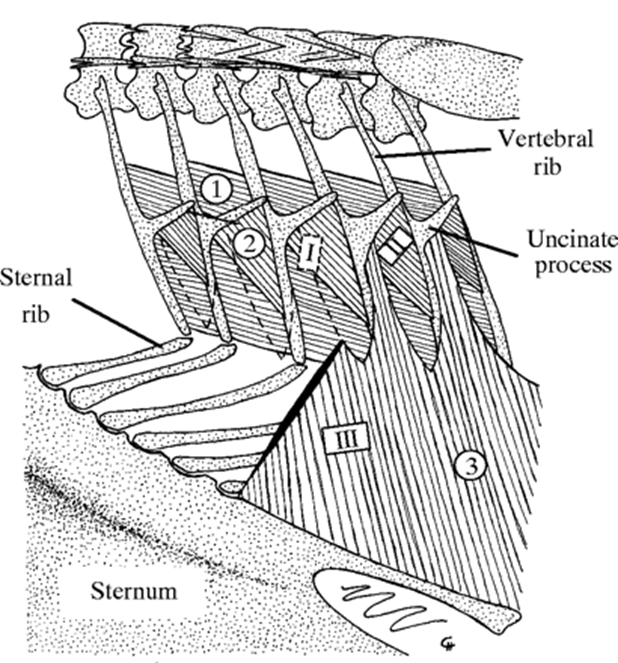
\ air comes in= pressure lowers
Air leaves= pressure increases
correlated progression
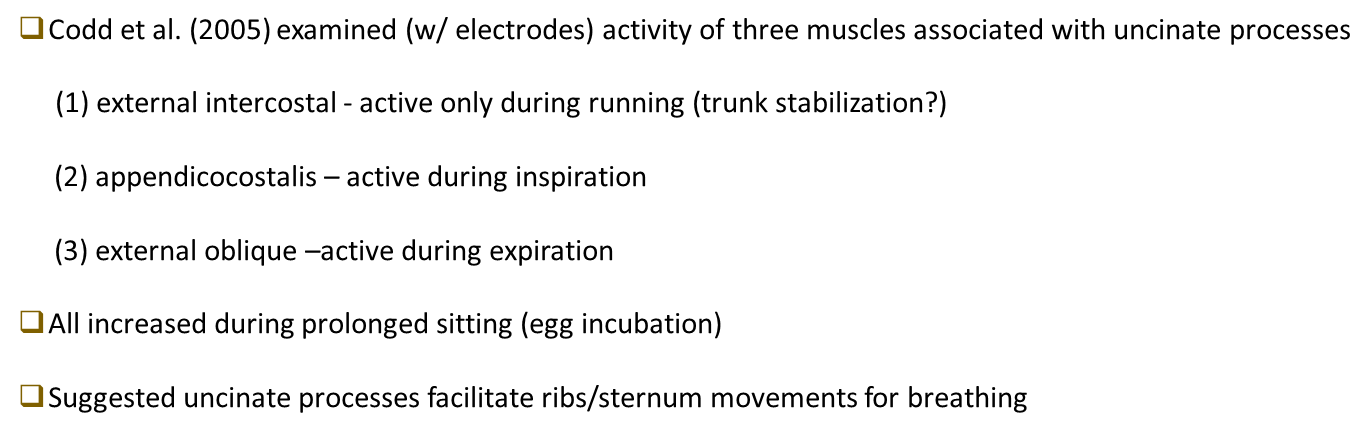
appendicocostalis: only one for moving sternum-negative pressure
external oblique: moving sternum back up after inhalation- positive pressure
\ \ \