Monocots and Dicots Comparison
Plant Tissue
Meristematic Tissue is a plant tissue made of undifferentiated/unspecialized, actively dividing cells that allow plants to grow in length and thickness throughout their lives
Dermal Tissue is the outer layers of cell that form a protective covering for the plants; includes epidermis and periderm
Vascular Tissue
Ground Tissue
plant tissue that have multiple functions and that makes up most of the inside of a plant
Xylem are vascular tissue that transport water and minerals from the roots to the leaves
Phloem are vascular tissue that transport organic nutrients (NPK → Nitrogen, Phosphorus & Potassium), often from the leaves to the roots, BUT also from roots and mature leaves to new leaves
TABLE 1.0 PLANT ORGANS | TISSUES | STRUCTURE/PARTS | FUNCTION | INTERESTING EXAMPLES |
LEAVES | Dermal tissue is its outermost protective covering, also known as the epidermis | Flat, broad blade with a large surface area; simple or compound leaf; pinnate OR palmate, venation; petiole; stomata with guard cells on the lower surface | Main site pf photosynthesis — captures light and exchange gases (Co2 in O2 out) + stores food and water | Cactus spines (modified leaves that reduce water loss); Venus flytraps, onion bulb scales, tendrils in peas |
ROOTS |
|
|
|
|
STEM |
|
|
—> Conducts water + minerals up (xylem) and sugars down or up (phloem)
—> Photosynthesis in green stems |
|
FLOWER |
|
|
|
|
Definitions
Angiosperm = Flowering plant
Meristematic Tissue — part of plant responsible for growth
Dermal Tissue — outer layer (skin)
Vascular Tissue — transport (H2O + sugar + minerals)
— xylem H2O Tubes
— phloem sugar tubes
Ground Tissue — storage + photosynthesis
Guard Cell — “gatekeepers” regulate gas exchange & water loss (Controls CO2 in O2 out)
PLANT/LEAF:
Cuticle — wax on top
Upper Epidermis — top protective layer (Skin)
Palisade Mesophyll — has Coloplast → does photosynthesis (tightly packed)
CO2 + 6H2O → C6 H12 O6 + O2
Spongy Mesophyll — loose cells that do photosynthesis
vascular bundle moves H2O
xylem + phloem (sugar)
Lower Epidermis — lower protective layer
Guard Cell / Stomata — pores that allow CO2 in and O2 out
Vascular bundle = xylem [H2O] + phloem [SUGAR] moves
VENATION (veins in leaf)
Palmate — branches
Pinnate — feather like
ROOTS
Takes in water & stores water
2 types of roots
Ex Carrot Green Onion

STEMS
Transport & structural & storage
2 types of stem
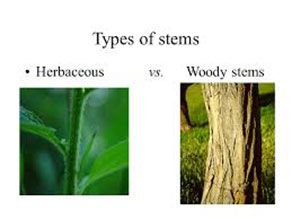
MONOCOTS + DICOTS
Angiosperms can be categorized as Monocots or Dicots

TRANSPORT — PLANT
XYLEM
tubes that transport H2O

DIFFINATION
Diffusion — movement of molecules from a high concentration to a low concentration (like farts) until they reach equilibrium (even)
HOW DOES WATER MOVE UP IN A PLANT

CO2 + H2O → C6H12O6 + O2
all cells need water but leaves need it for photosynthesis
Some leaves are very high up a plant so require help getting water to go against gravity up so high
2 mechanisms of water transport
1. Root-pressure
2. Transitional pull
ROOT PRESSURE (PUSH)
NPK (minerals) move into the root via diffusion
the higher [NPK] in the root causes the relative [H2O] in the root to be low
having a low [H2O] inside root causes the water in the soil to move in because [H2O] moves from high contrast to low contrast
the result is a lot of [H2O] moves into root this high volume of [H2O] root
the water will enter the xylem because there is a lot of [H2O] going in xylem, the pressure inside xylem high
Because the xylem is adhesive + water is cohesive, the movement up the xylem is easier
TRANSPORTATIONAL (PULL)
Strongest long distance force
when the weather is hot/dry the stomata open
the opening causes water to leave the leaf (cooling the plant = transportation/Pull)
Cohesion-tension model = when water leaves the stomata, adjacent water molecules also leave because H2O is Cohesive
NOTE — both root pressure + transpiration pull works together to move water up tall plants/trees
HOW DOES SUGAR MOVE THROUGHOUT A PLANT
Pressure Flow Model (Source to sink)
Photosynthesis occurs in leaf therefore sugar gets made in leaf
sugar enters phloem + water follows from xylem
the higher sugar + higher water in phloem increases pressure in the leaf = sources
molecules move from high pressure to low pressure
therefore sugar moves to all parts of the plant that have sugar (sink) = roots, stems, flowers)
Translocation = movement of sugar through phloem
the sugar goes to roots, stem, flower, to be used to make energy or can get stored
either way the use of sugar causes these “sink areas” have a lower [sugar] allowing sugar to move in that direction
