BIOL 310 - Ch 6 Lecture Notes
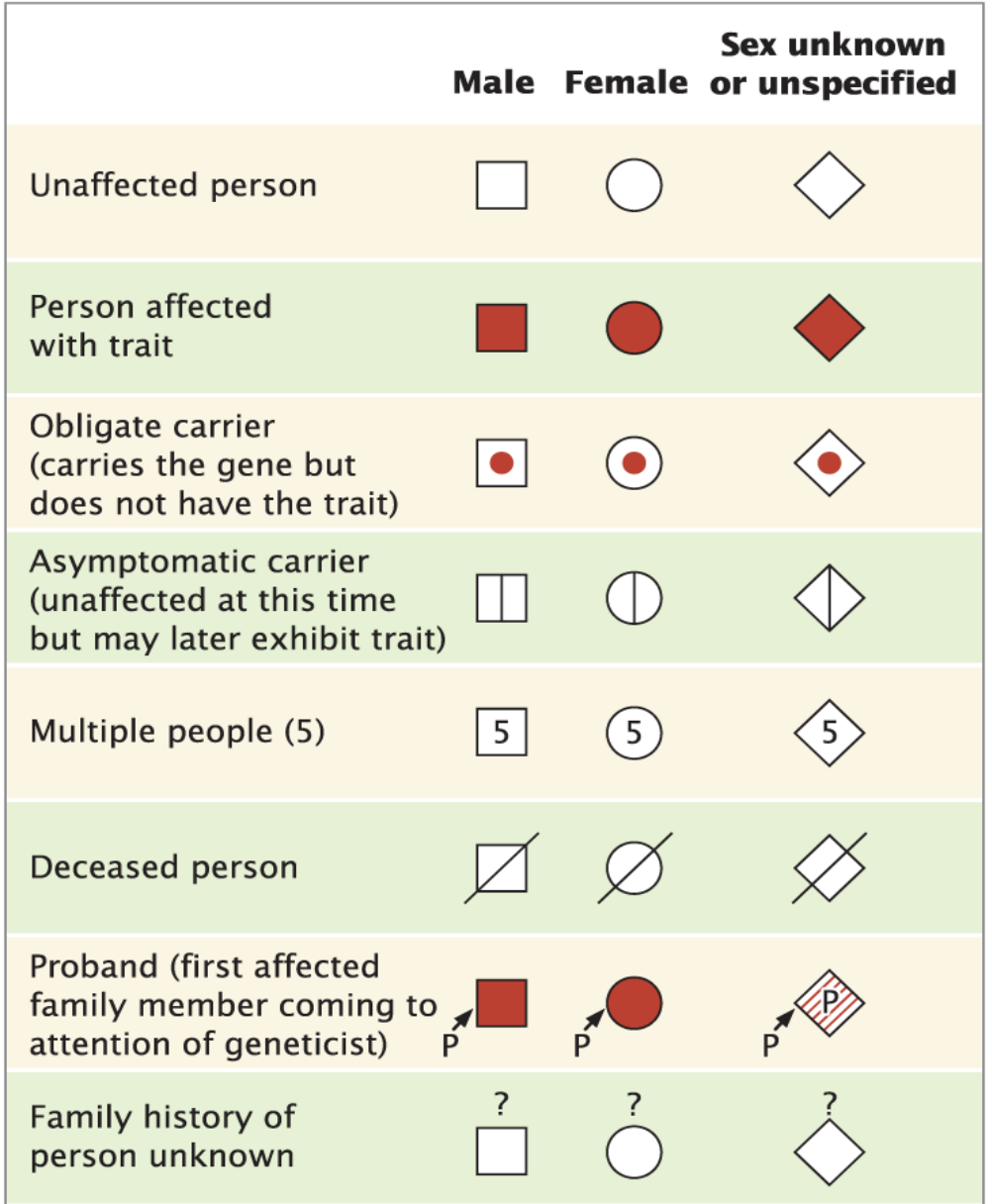
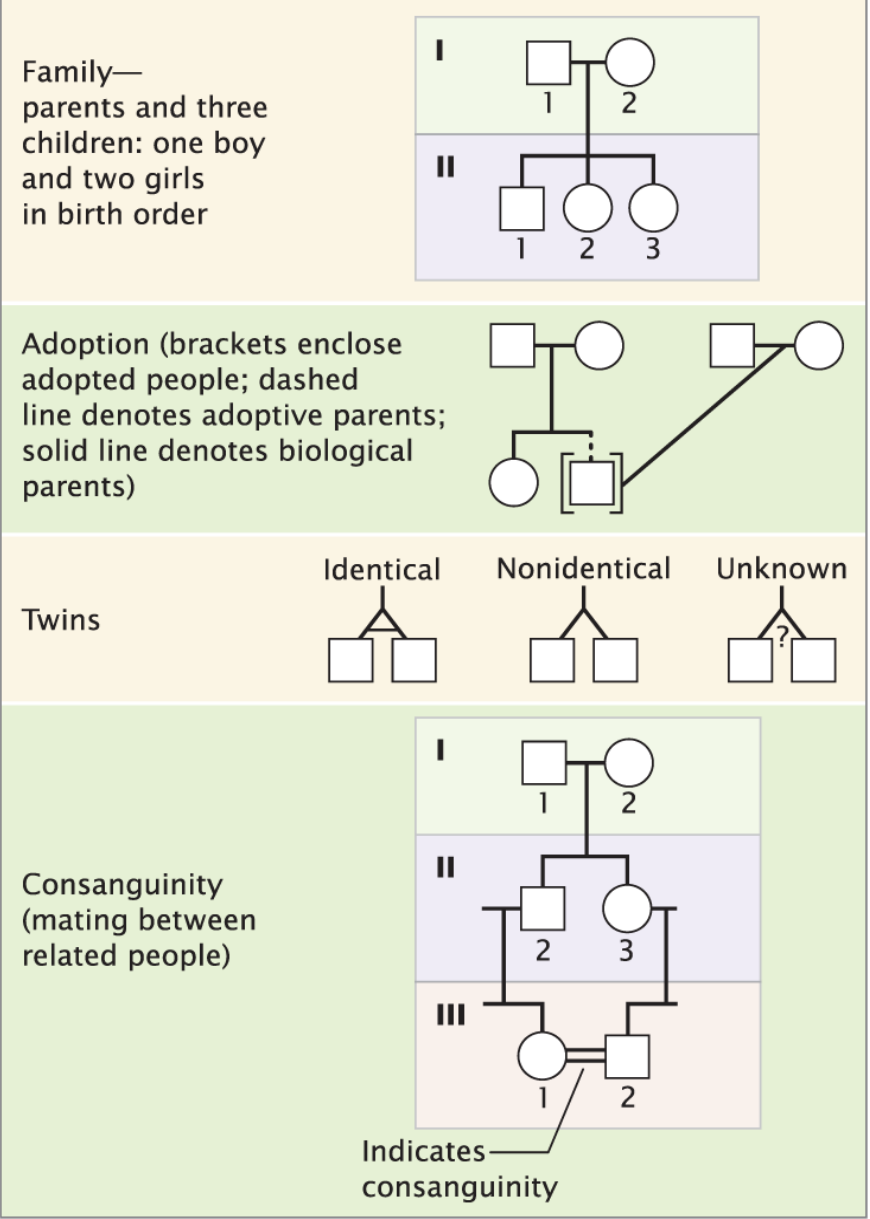
pedigree & pedigree conventions
a pictorial representation of a family history outlining the inheritance of one or more traits
autosomal recessive disorders
must have two homozygous alleles to be affected
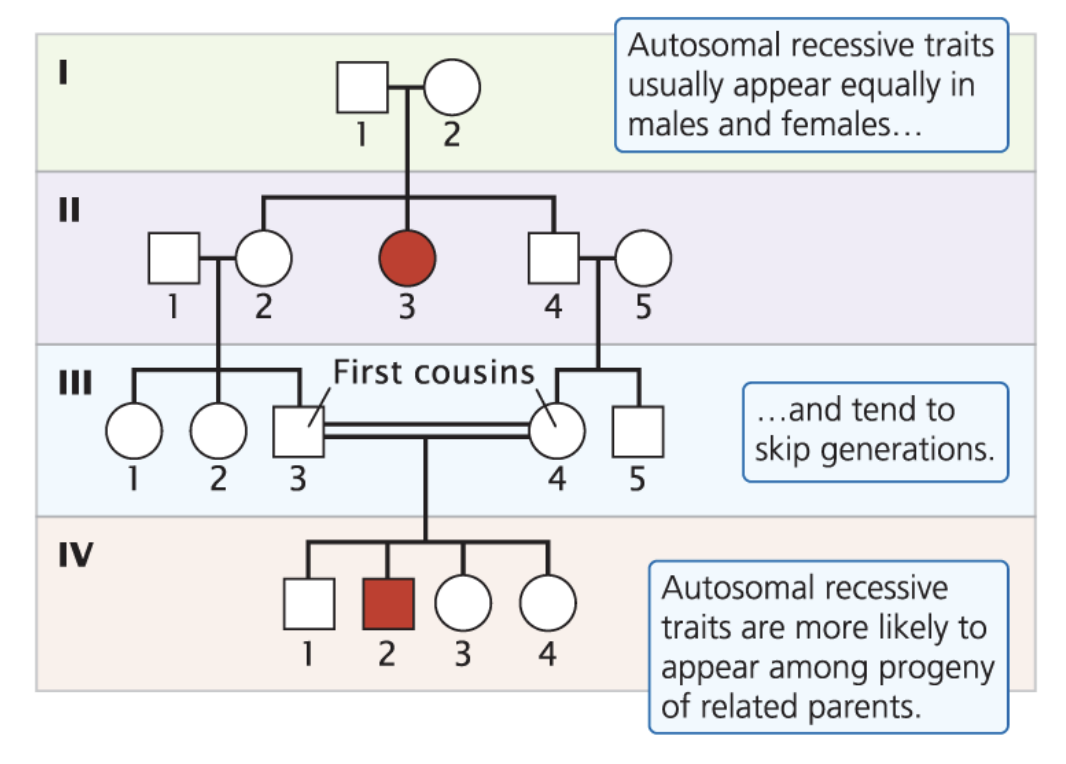
can occur equally in males and females (no sex bias)
these disorders skip generations
considered rare because the carriers of genes permit a 25% chance of having an affected offspring
few individuals are affected & offspring have parents that usually unaffected
autosomal dominant disorders
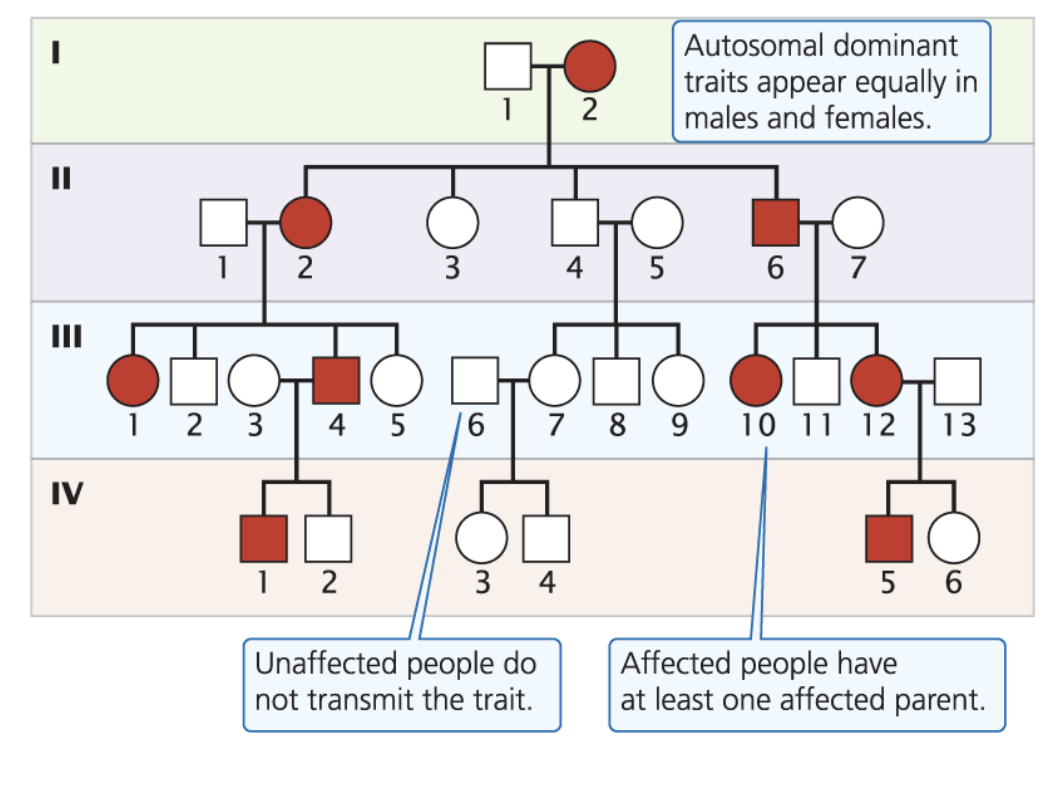
appears equally in males & females
affected people have at least one affected parent
unaffected individuals do not transmit the trait
more individuals are effected
family hypercholesterolemia
dominant disorder
variety of genotypes & phenotypes
DD leads to death at young age
Dd leads to high LDL
dd leads to normal LDL
receptor on surface of the cell that brings LDL into the cell & removes it from the bloodstream
mutated form means you cannot remove LDL as readily which can lead to plaque buildup in the blood vessels
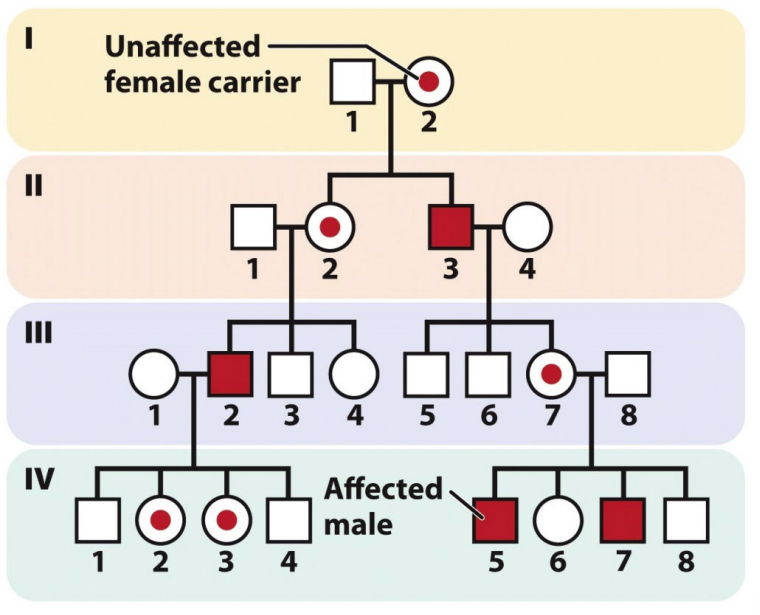
X-linked recessive
males are often affected
the trait is not passed onto sons
creates carrier daughters
females are rarely affected since it must be homozygous recessive
produces affected sons
the trait skips generations (in direct linage)
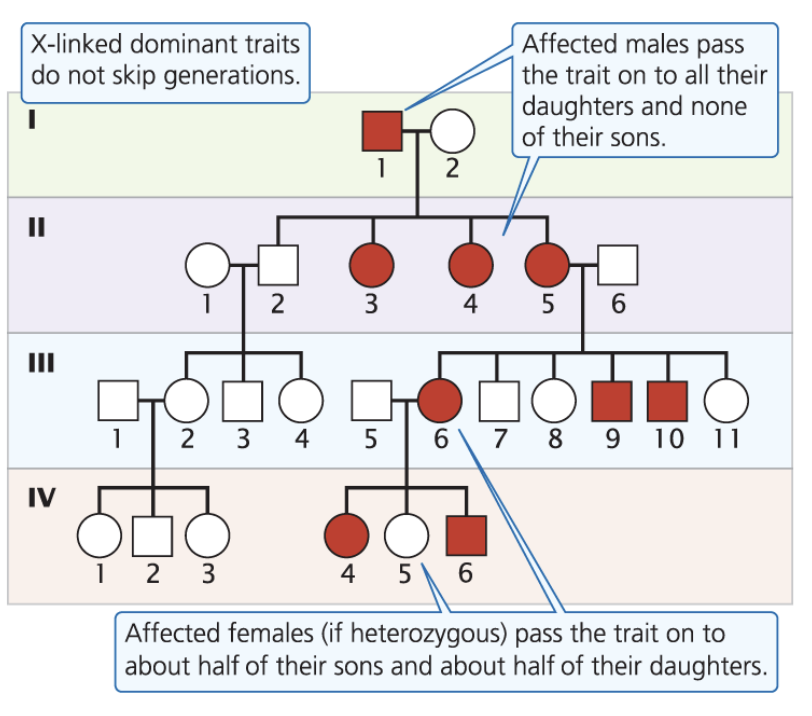
X-linked dominant trait
do not skip generations
affected males pass the trait to all of their daughters
affected females pass the trait on to nearly half of their sons and daughters
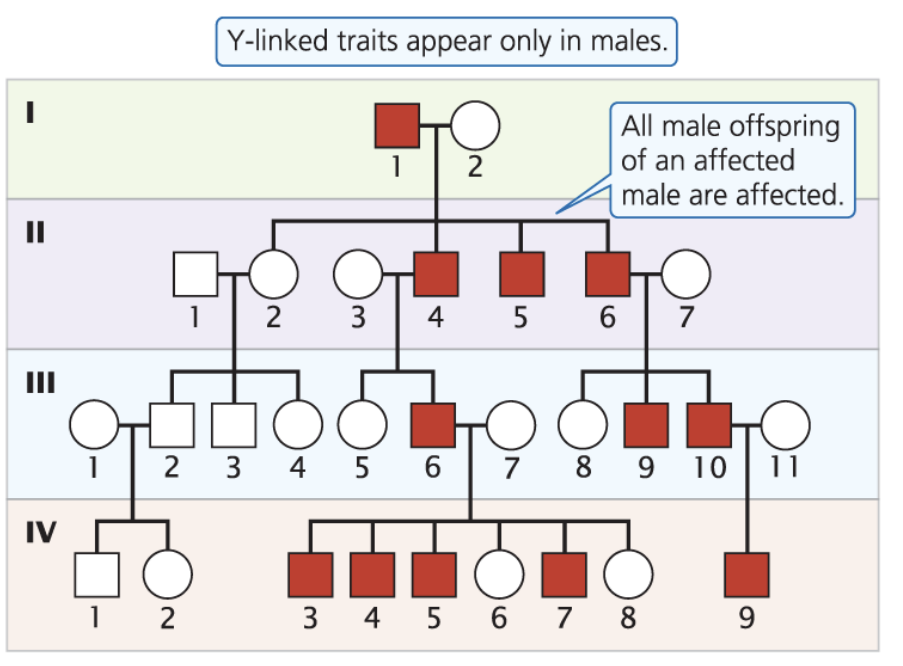
Y-linked dominant trait
appears only in males
all male offspring of an affected male are affected
issues associated with human pedigrees
long generation time
few genes in degree
few offspring
weak stats
low predictive power
solution — twin studies
monozygotic twins (identical)
dizygotic twins (fraternal)
concordance: proportion of twin pairs where both twins are in accordance with each other (either both affected or both unaffected)
indicates strong or weak heritable components
higher value in monozygotic than dizygotic means there is strong heritable components
for environmental studies, comparing difference between factor of interest for biological parents vs adoptive parents
for BMI, the more obese the biological parents, the more obese the offspring are likely to be
inverse is true for adoptive parents — as the parent becomes more obese, the kid becomes more thin
obesity has a strong genetic component instead of environmental impacts
genetic disorders
information overload exacerbated by companies like 23 & Me that market their database (or whatever) to give you reports on your personal genetics
detection of disorders causes questions
tests are readily available to close this gap of knowledge given that the reports handed back are not easy to instantly recognize what means what
genetic counselling
the process of helping people understand and adapt to the medical, psychological and familial implications of genetic contributions to disease
this involves interpretation of family and medical history to assess the chance of disease occurrence or reoccurrence
education about inheritance, testing, management, prevention resources, and research
promoting informed choices and adaptation to the risk or condition
reasons for genetic counselling
a person knows of a genetic disease in the family
a couple has given birth to a child with a genetic disease, birth defect or chromosome abnormality
the kid becomes the proband for the trait of interest
a couple has a child who is intellectually disabled or has a close relative who is intellectually disabled
an older women becomes pregnant or wants to become pregnant
risk of conceiving at an older age leading to more issues
husband & wife are close related (e.g. first cousins)
a couple experiences difficulties achieving a successful pregnancy, infertility, etc
a pregnant women is concerned about exposure to an environmental substance that causes birth defects
a couple need assistance in interpreting the results of a prenatal or other test
both prospective parents are known carriers for a recessive genetic disease or both belong to an ethic group with a high frequency of a genetic disease
more reason for genetic counselling — most “updated”
direct-to-consumer testing
pre-symptomatic testing
pharmacogenetic testing