CH 6 - Hemispheres - contralateral
Part 1:
Lateralization: Different functions are more dominant in one hemisphere than the other.
Left: Logical, calculating, linguistic
Broca's and Wernicke's areas
Right side of the body, right visual field, faces, visual motos skills
Left damage:
Pessimistic
Overly emotional
Overly noticing of even nonserious problems
Right: Emotional, holistic, intuitive
Faces, visual motor tasks
Left side of the body, left visual field
Right damage:
Optimistic
Unemotional
Oblivious to serious injury and disability (anosognosia)
Localization: Specific functions are located in specific brain regions.
Localized v Lateralization: *memorize the diseases
Selective Amnesia: Selective memory loss
Apperceptive agnosia: Vision intact, impaired recognition of shapes/forms
Basic disruption in perceiving patterns
Lose the ability to take the basic visual info and form a pattern
Able to perceive only small, local aspects of stimuli
Nonverbal, tactile, and motion cues can facilitate recognition

Associative agnosia: Vision intact; shapes/forms intact; impaired object recognition “unable to put labels“
Percept is correct, but the deeper association with the "label" is severed
No non-verbal recognition or motion facilitation
Results from damage to the ventral stream of the brain, the occipitotemporal stream
Scope of the deficit varies
Dyscalculia: Cant do simple calculations
Alexia: Cannot read
Agraphia: Cant write
Broca's aphasia: Cant produce language
Wernicke's aphasia: Cant comprehend language
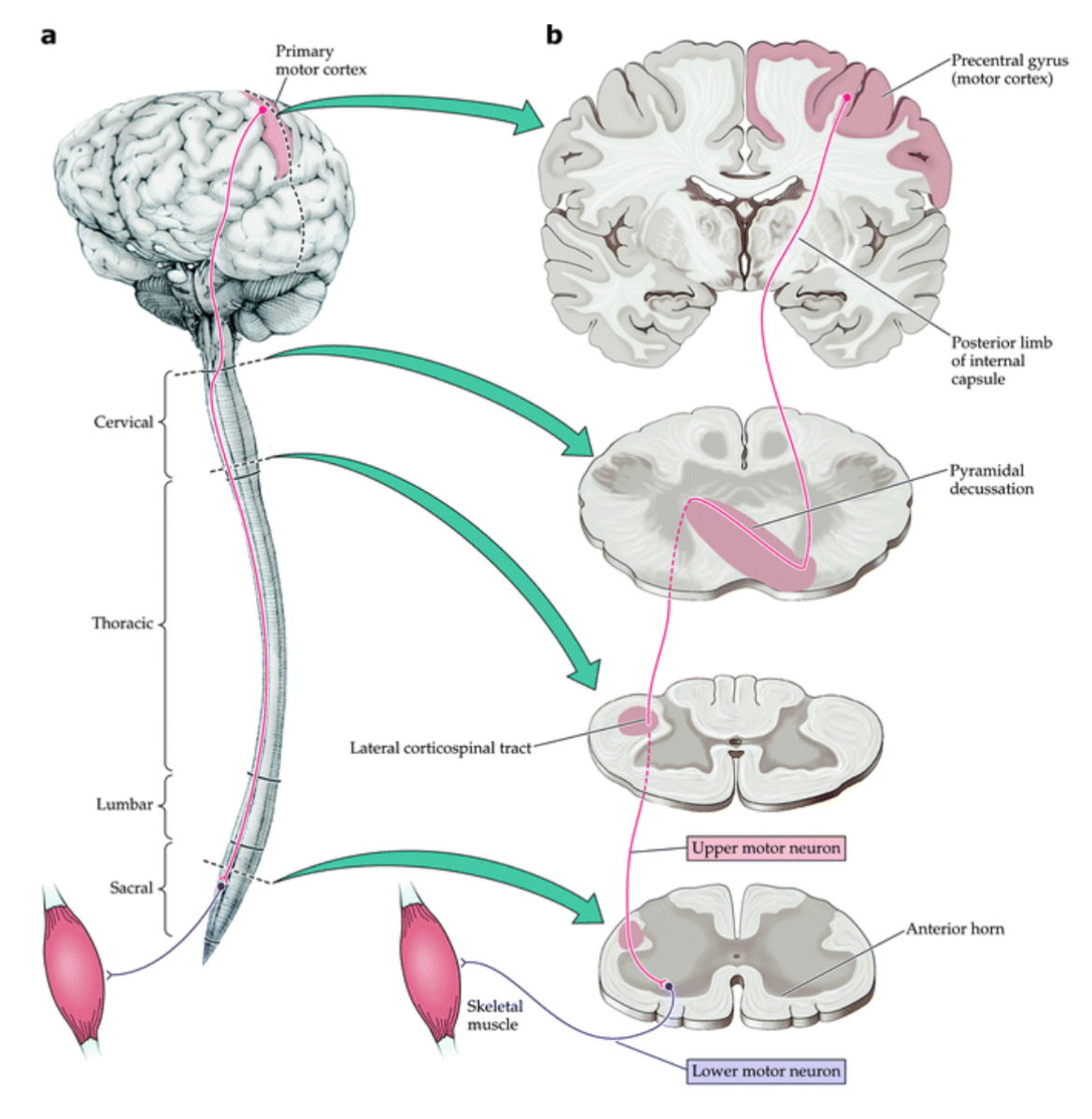
PART 2: Decussation: crossing of nerve fibers from one side of the central nervous system to the other, most prominently seen in structures like the pyramidal decussation where about 85–90% of corticospinal fibers cross in the lower medulla
Areas of Decussation
Corpus Callosum - Cerebral hemispheres (bridge between hemispheres)
Optic chiasm - vision
Superior olivary complex - audition
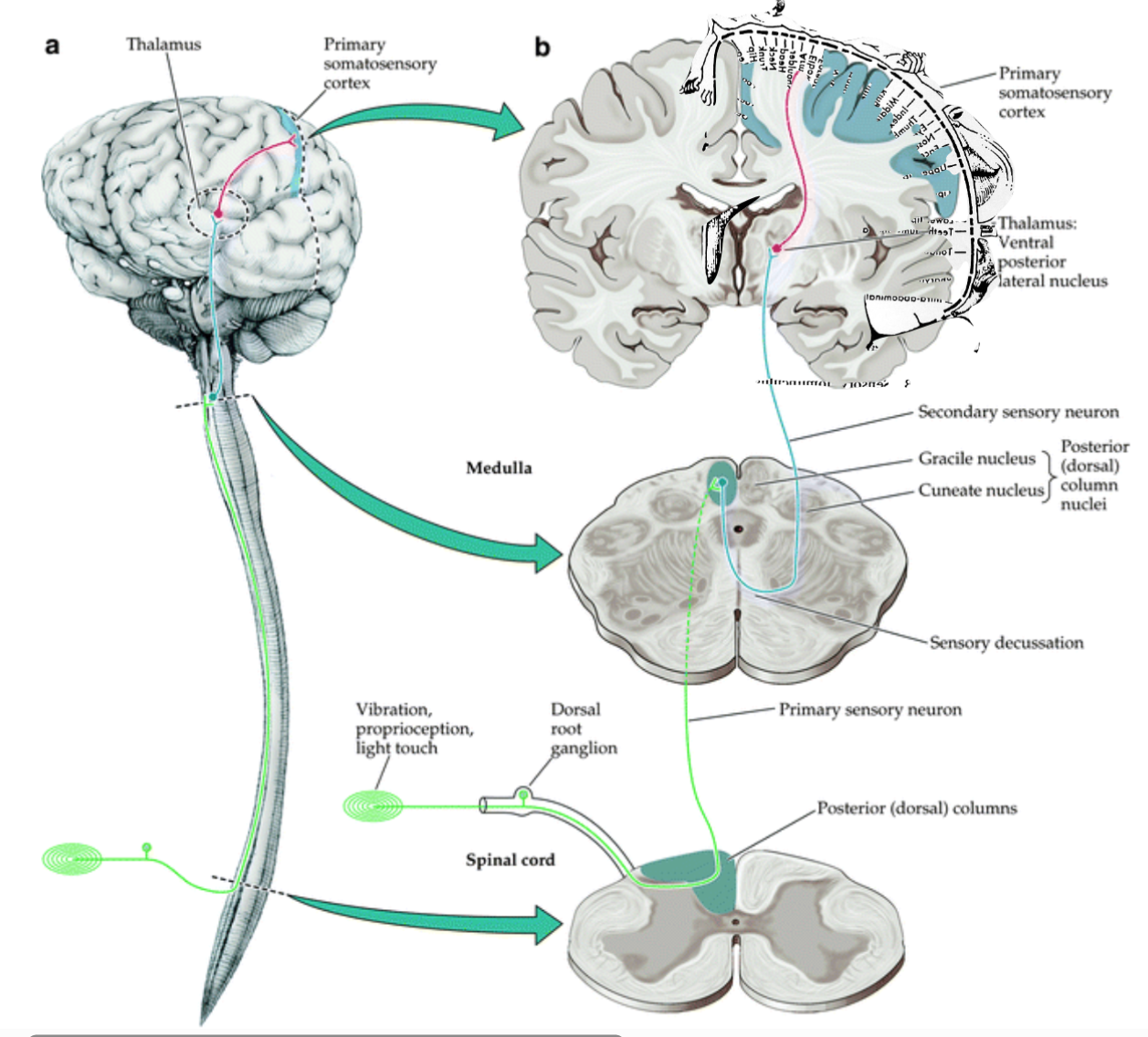
Spinal cord - sensory and motor
Inter-hemisphere communication
Bridge of 200 mil fibers
Served in split-brain patient
Optic Chiasm
Left visual field info to right visual cortex
Right visual field info to left visual cortex
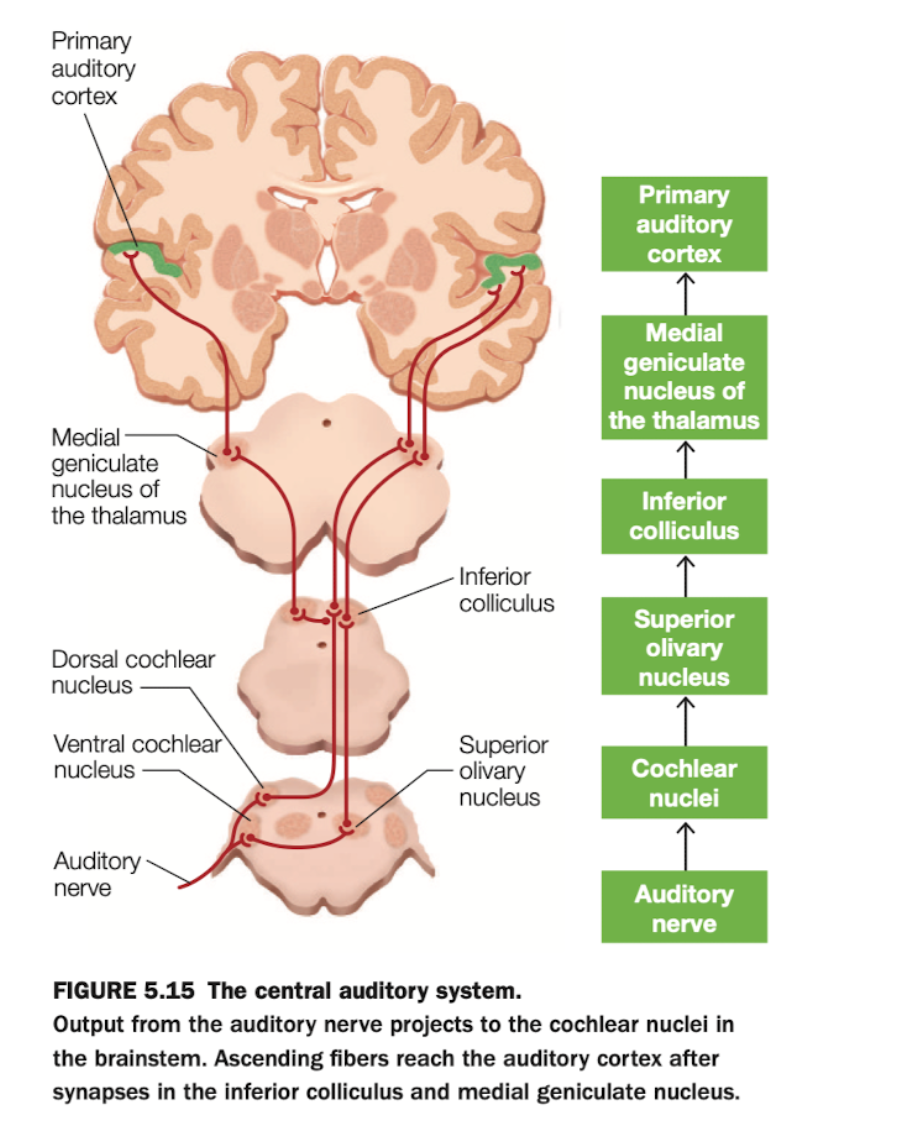
Auditory Pathways
A bunch of subcortical areas
Decussation in the superior olivary complex after cochlear nucleus (NOT complete decussation)
Spinal Cord
Pain and temperature
Touch and vibration
Motor output
Multiple points of decussation for different sensory and motor pathways
PART 3 - Split-brain patients
Severed corpus callosum

Can tell us about:
Information transfer: Visual, Verbal, Tactile

Spoon shown in left side field → patient doens’t know what they saw but are able to identify it on a group of different objects
Cup shown in the right side field → Patient is able to recognize what they saw
Present word “Devil” on the left hermisphere, patient is able to recognize is bad and able to sy the word is “devil”. But when it is onthe right hemisphere they know the word is bad but dont know what the word is
Gazzaniga’s split brain patient
Emotion:
Gazzaniga and LeDoux (1978)
Present emotionally charged word to left hemisphere
Motor coordination
Kurt Goldstein (1930’s)
Alien hand phenomenon: middle-aged woman would try to strangle herself with her left hand (right hemisphere: more emotional?)but her right hand would fight back, autopsy revealed CC lesion (as if someone else had control of her hand)