Tax Planning
Types of Tax
Taxes on purchases
Sales tax - all but five states have a general sales tax
Excise tax - imposed by federal and state gov’t on specific goods and services
Taxes on property
Real estate property tax - based on the value of land and buildings
Personal property tax - based on the value of automobiles, boats, furniture, farm equipment, and even livestock
Taxes on wealth
Estate tax - imposed on the value of property at the time of death
Inheritance tax - levied on the value of property bequeathed by a deceased person
Taxes on earnings
Federal Insurance Contributions Act taxes: 6.2% Social security: 1.45% Medicare tax, for a total of 7.65%
Income tax - levied by federal, state, and local gov’t
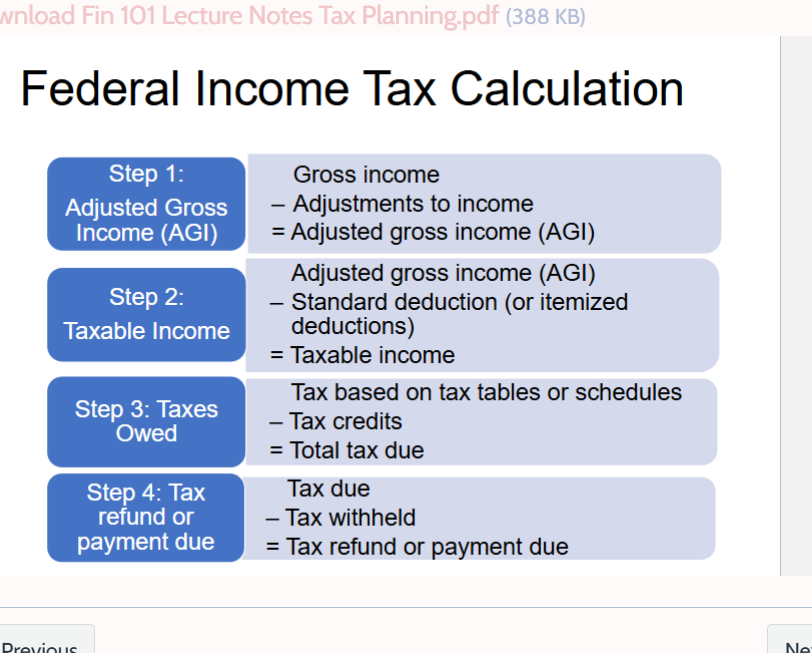
Adjusted Gross Income
Components
Earned income - wages, salary, commission, fees, tips, or bonuses
Investment (portfolio) income - money received in the form of dividends, interest, or rent from investments
Passive income - business activities in which you do not actively participate
Affected by exclusions - an amount not included
Tax-exempt income - not subject to tax
Tax-deferred income - taxed at a later date
AGI - gross income after certain reductions (adjustments to income)
Contributions to IRA
Penalties
Student loan interest
Tax shelters - investments that provide tax benefits
Taxable Income
Tax deduction - amount subtracted from adjusted gross income to arrive at taxable income
Taxable income - the basis for computing the amount of tax owed
Standard deduction - no taxes are paid
$13,850 for single
$27,700 for married
Itemized deductions - medical and dental expenses, real estate, home mortgage
Ex. Taxable Income
Consider the following tax information:
Gross salary $56,145 Adjustments to income $1,200
Interest earnings $200 Standard deduction $13,850
Dividend income $65 Itemized deductions $11,250
Calculate the amount of taxable income
• Gross income = $56,145 + $200 + $65 = $56,410
• Adjusted gross income (AGI) = $56,410 - $1,200 = $55,210
• Taxable income = $55,210 - $13,850 = $41,360
Taxes Owed
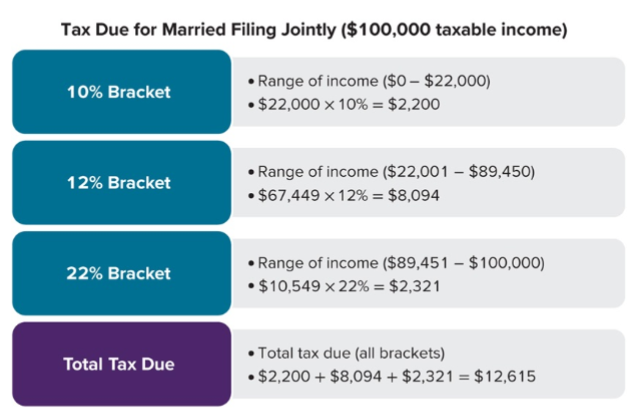
Your taxable basis is the basis for computing the amount of tax owed
Marginal tax rates - used to calculate tax on the last (and next) dollar of taxable income
Average tax rates - based on the total tax due divided by taxable income
Tax Credits
Tax credits - subtracted directly from the amount of taxes owed
Total tax due = tax liability - tax credits
Making Tax Payments
Pay federal income taxes through either payroll withholding or estimated tax payments
Withholding - an employer deducts federal income tax from your pay
Estimated payments - income received from savings, independent contracting, royalties, and pension payments
Ex. Tax payment or refund
Taxes due - federal income tax withheld
Income Tax Return
If their income is above a certain amount
Form 1040
State Income Tax
All but eight states
Range from 1 to 10 percent
Summary
• Taxable income is determined by subtracting adjustments to income and deductions from gross income
• Your total tax liability is based on the published tax tables or tax schedules, less any tax credits
• You may reduce your tax burden through careful planning and making financial decisions related to consumer purchasing and the use of debt, investments, and retirement planning