Lecture 2/chapter 2: ocean and ocean basins
where are the oceans?
most land in the northern hemisphere
most of the water in southern hemisphere
“ocean hemisphere” - when viewed from the pacific ocean section of the globe
the pacific is the largest ocean in the world
lakes cover more area teh closer you get to the poles
most lakes are small and young (post-glacial)
half of global lake volume is saline
cross section of an ocean
guyots - worn down volcanoes that are sinking into the crust
sediment thickness is relatively strong after hte shelf break
the bottom topography matters fro pelagic processes
provides barriers and … for currents
the ocean has a higher mean depth compared to teh mean elevation of land
ocean crust goes into the continental crust and below that is the mantle
the density of the ocean crust is slightly higher (made of basalt) than teh continental crust (made of granite)
the mantle density is higher than all of the above
wegener (1915)
he said that all teh continents were joined together in one piece based off of fossil evidence
he didnt have a mechanism for this and had wring calculation on the speed of this event
the mechanism: plate tectonics
use of sonar and magnetic anomalies to figure this mechanism out
they fit togehter the continents and looked at the different rock types and mineral along the edges
the magentic poles reverses every no and then, porbably once every three or four thousand years
plate tectonics is the production of new seafloor
magentic anomalies used to measure plate movement
the rock cycle
convection currents (currents that are driven by heat) in hte mantle
the rocks go through different stages in cooling
when magma cools, it turns into igneous rock, which can melt again and turn into magma, or weather and erode turning into seidmentary rock, or heat and pressure can applied and form into metamorphic rock.
the mtamorphic rock, when eroded can be converted to just sediment
it can also be melted again into magma
spreading at ocean ridges
mid atlantic ridge
spreads from pole to pole
separates the eurasian plate from the north american plates
slow growing mountain range
east pacific rise
quick grwoing mountain range
spearates multiple plates
the south east indian ridge
indo-australia plate forms a divergent boundary with the antarctic plate
mechanisms of plate movements
look at the slides
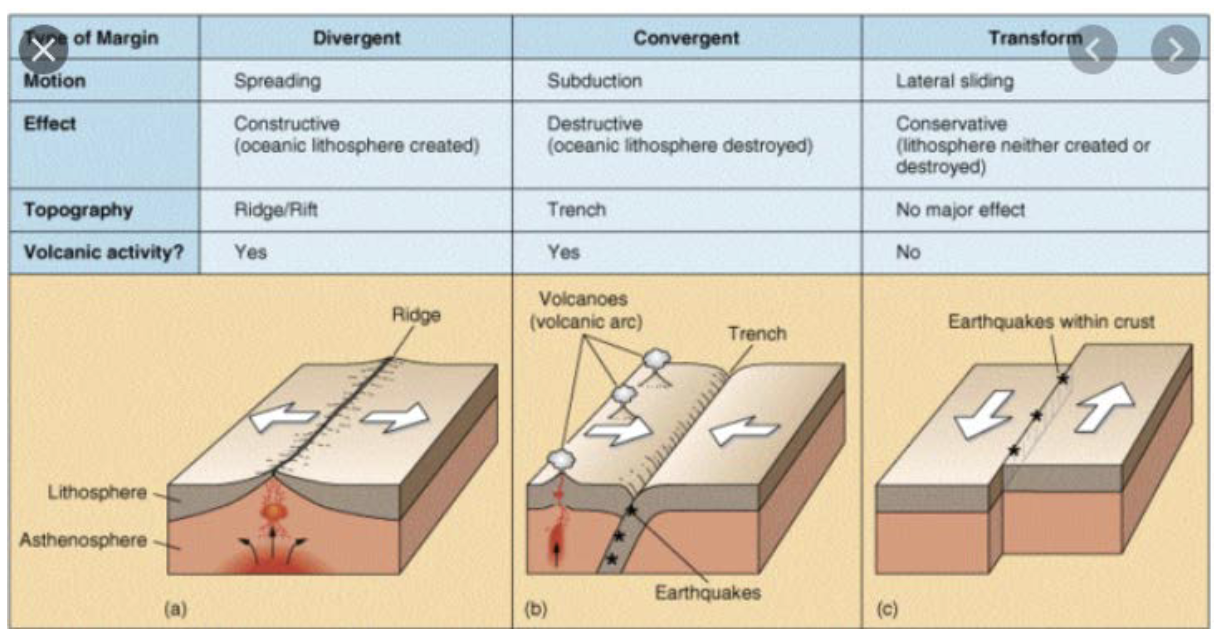
three different types of margins
divergent boundaries - new crust, plates move away
convergent - crust is destroyed
transform - plates slide past each other
summary: the oceans through geological time
earth has had oceans for at least 3.8 billion years
since it cooled down enough for water to condense
the shape of the oceans has changed continuously
current oceans are less than 150 million years old (post pangea)
plate tectonics maintain upplift and formation of continents
no uplift → water world
current seafloor is mostly 10-100 million years old
seafloor recycling prevent oceans from filling up with sediment
in contrast to lakes, which are generally short lived (with a few exceptions)