Physics
TOPIC 1
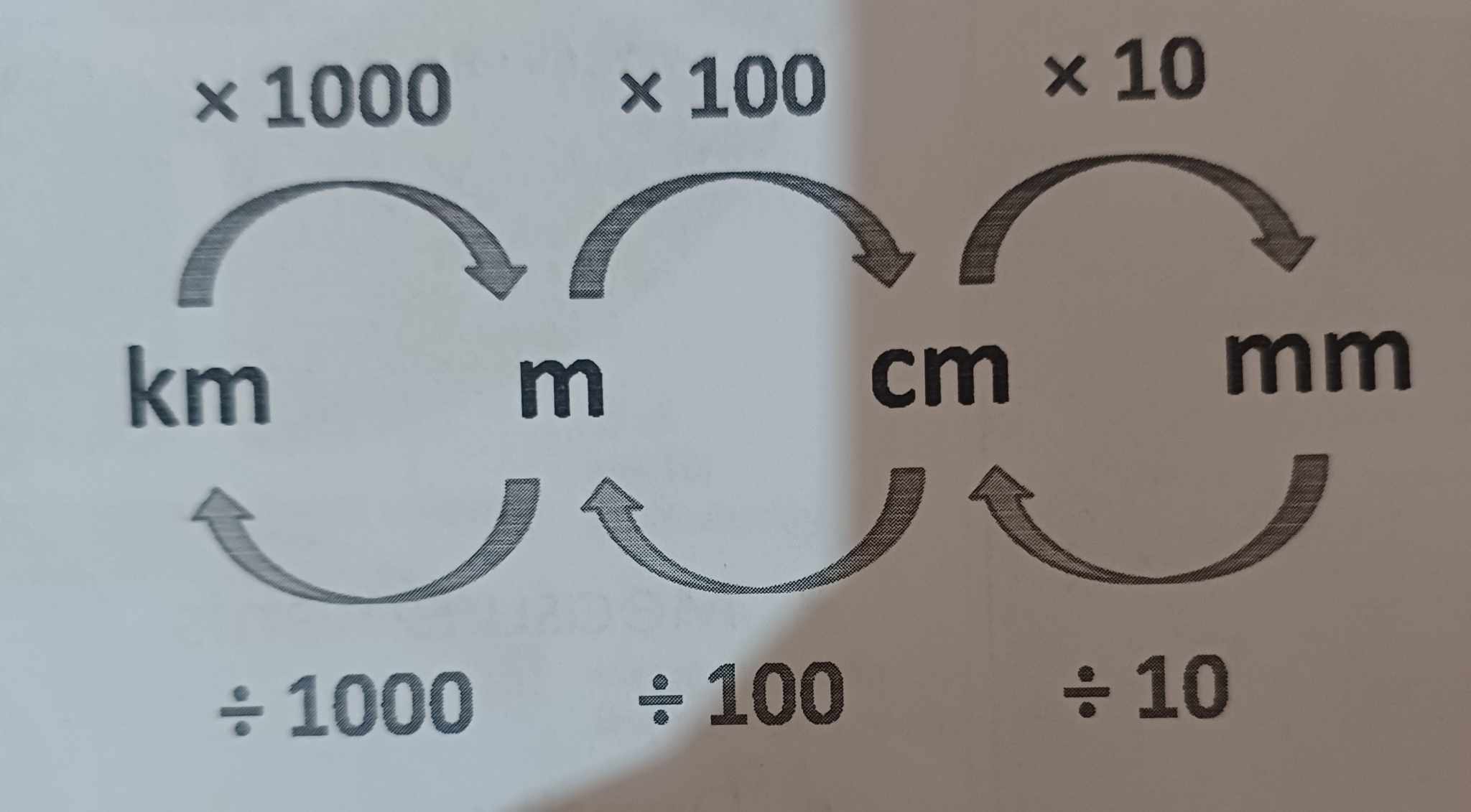
Length:
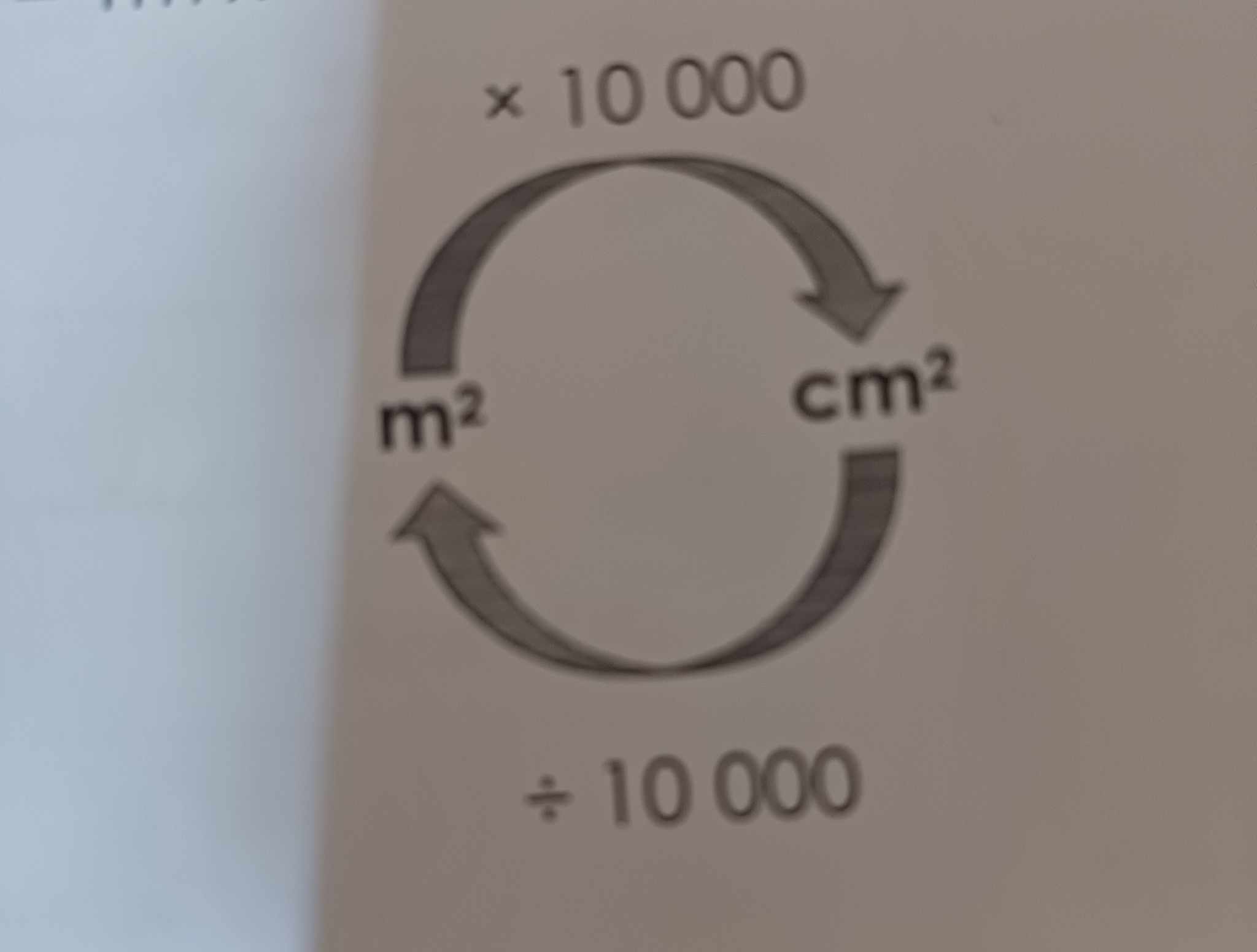
Area:
Volume (symbol V)
Cube: volume = length x breadth x height
V = l x b x h
Cylinder: volume = n x radius squared x height
V = nr²h
Mass (symbol m) is measured in kg
SATES of matter
in solid the atoms are very tightly packed together and in order. The atoms have a very strong bond between them and vibrate at a fixed position.
in liquid, the atoms are closely packed but not in order and with some space between them. the atoms have a strong bond and they vibrate but also move randomly throughout the liquid.
in gases, the atoms have large spaces between them and are loosely packed not in order. the atoms in a gas have a weak bond and move around very fast in random directions.
Density (p) is defined as the mass per unit volume
Density (p) = mass (m) ÷ volume (V)
using symbols m=pV
Example: What is the mass of 0.5m3 of copper?(density of copper is 8,930kg/m3)
m=p x V
m= 8930 ×0.5 = 4465kg
TOPIC 2
Forces
forces can:
a) change the speed of an object
b) change the direction of movement of an object
c) change the size and shape of an object
Forces are measured in units called Newtons.
Applied force (Contact)
Weight ( Non-contact)
Reaction (Non-contact)
Friction ( Non-contact)
Air resistance (Contact)
Tension (Contact)
Upthrust (Contact)
Gravitational force (Non-contact)
Electrostatic force (Non-contact)
Magnetic force (Non-contact)
Lift force (Contact)
Driving force and thrust (Contact)
Mass & Weight
The mass of an object is the measure of the amount of matter in it.
The mass of an object does not change with location; if your mass is 60kg on Earth, it is 60kg on the moon and 60kg in outer space.
The weight of an object is a measurement of how hard gravity acting on a body.
The weight of an object changes with location. E.g. the weight of an object on the moon is less than on Earth.
The weight of an object can be found by using a Newton Meter.
Weight is found using the following equation:
Weight (W) = Mass (m) x gravity (g)
Where:
a) Weight (W) is measured in Newtons (N)
b) Mass (m) is measured in kilograms (kg)
c) Gravity (g) is measured N/kg…. on Earth g=10N/kg
Vectors and Scalars
Scalars are quantities which depend only on magnitude (size) only.
Vectors are quantities which depend on magnitude and direction.
Vectors (have direction): Friction, air resistance, spring force, weight, force, upthrust, displacement.
Scalars (do not have a direction): time, temperature, volume, mass, area, lenght, distance.
Moment of a force
Moment has always a direction; it can be clockwise or anticlockiwise.
Moment = Force x perpendicular distance
M = F x s
a. Perpendicular (90°) distance(s) is measured in metres (m)
b. Force (F) is measured in Newtons (N)
c. Moment (M) is measured in Newtonmetre (Nm)
Principle of Moments-Equilibrium
In Equilibrium (when an object is balanced):
The Total Anticlockwise Moments = The Total Clockwise Moments
The Upward Forces = The Downward Forces
The equation: Anticlockwise Moment = Clockwise Moment
In short: A.C.M. = C.M.
Pressure in solids 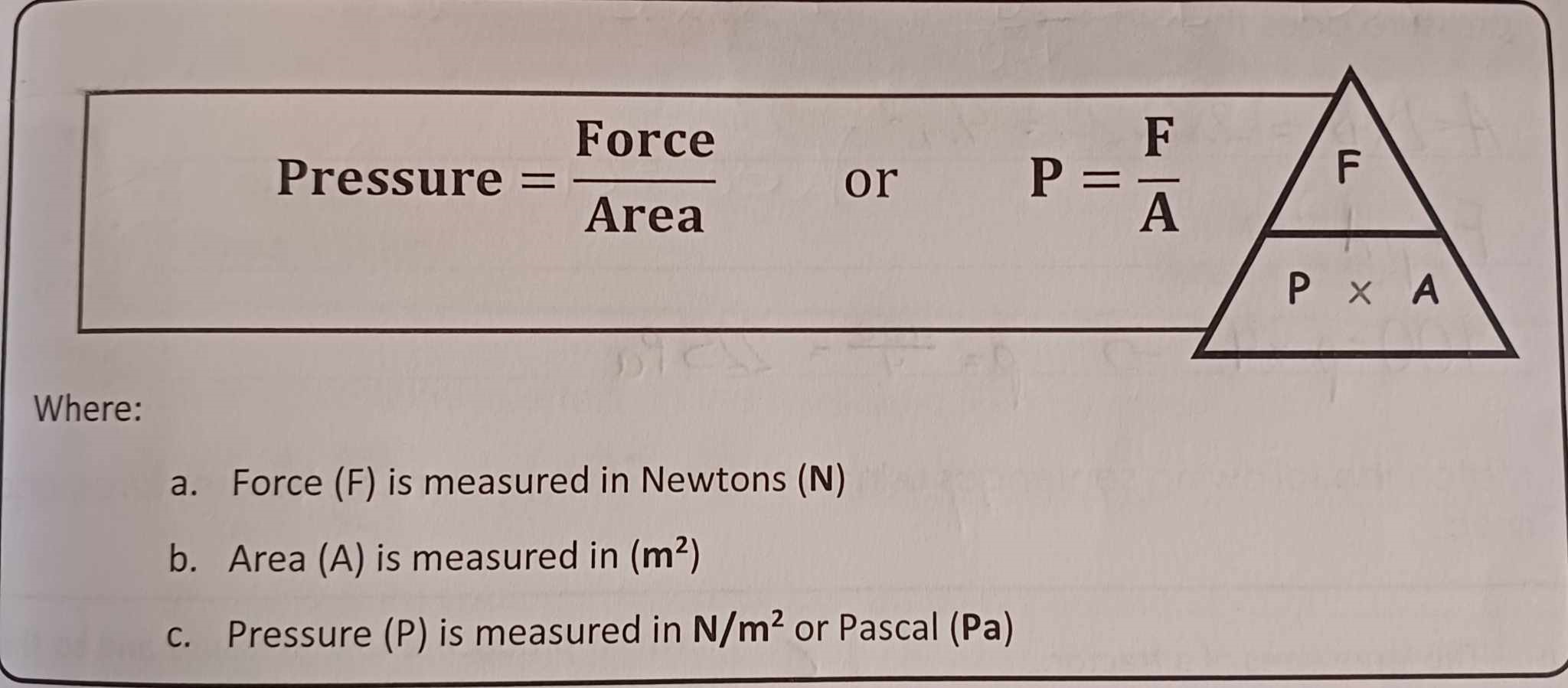 Pressure & Hydraulics
using the same equation are Pressure in solids
Pressure in Liquids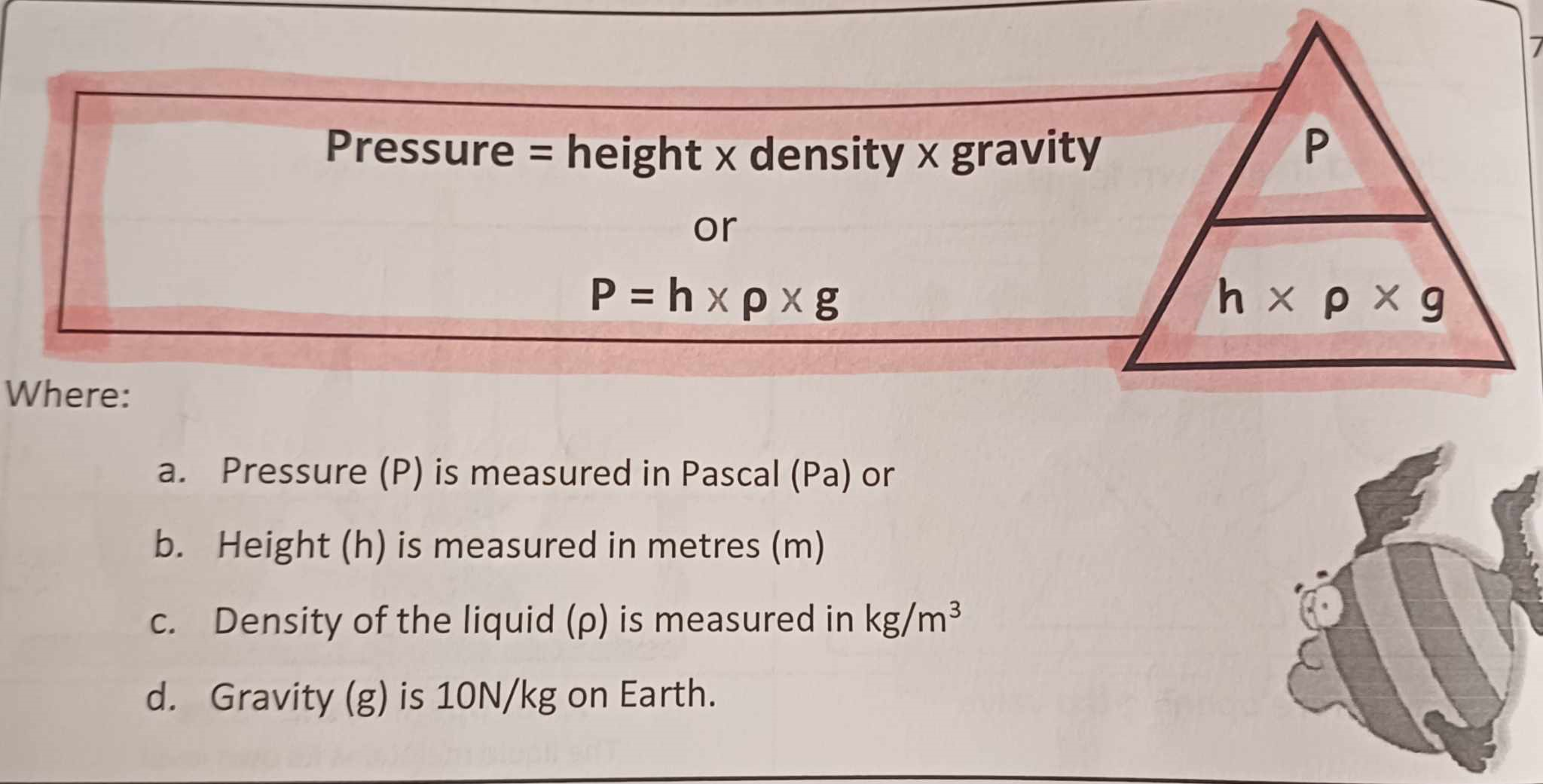 Atmospheric Pressure
air pressure is the force exerted on you by the weight of tiny particles of air. Although air moleclues are invisible, they still have weight and take up space.
Atmosphere pressure decreases with weight.
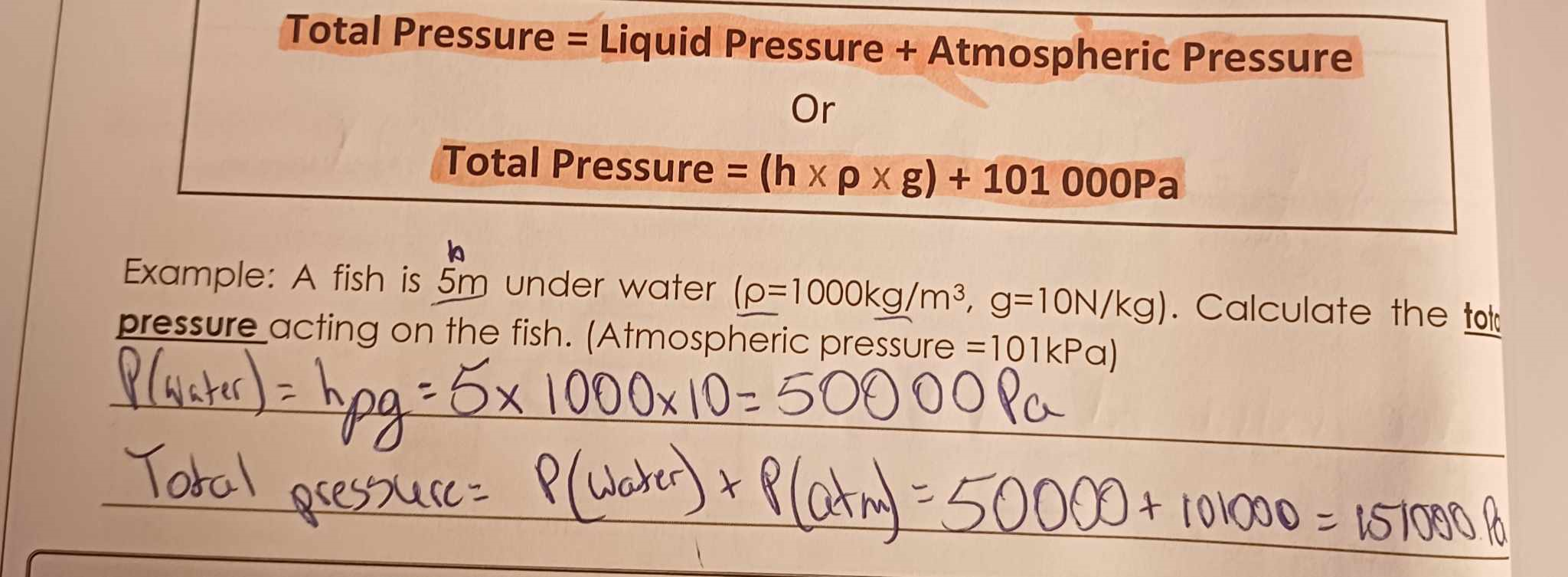
Total Pressure
 Pressure and Temperature
when the temperature increases then the pressure inceases.
Pressure and Volume
when the volume increases then the pressure descreases.
P.V.T Relationship in gases
Pressure (incease) Temperature (incease)
Pressure (incease) Volume (decease)
Area (decease) Pressure (incease)
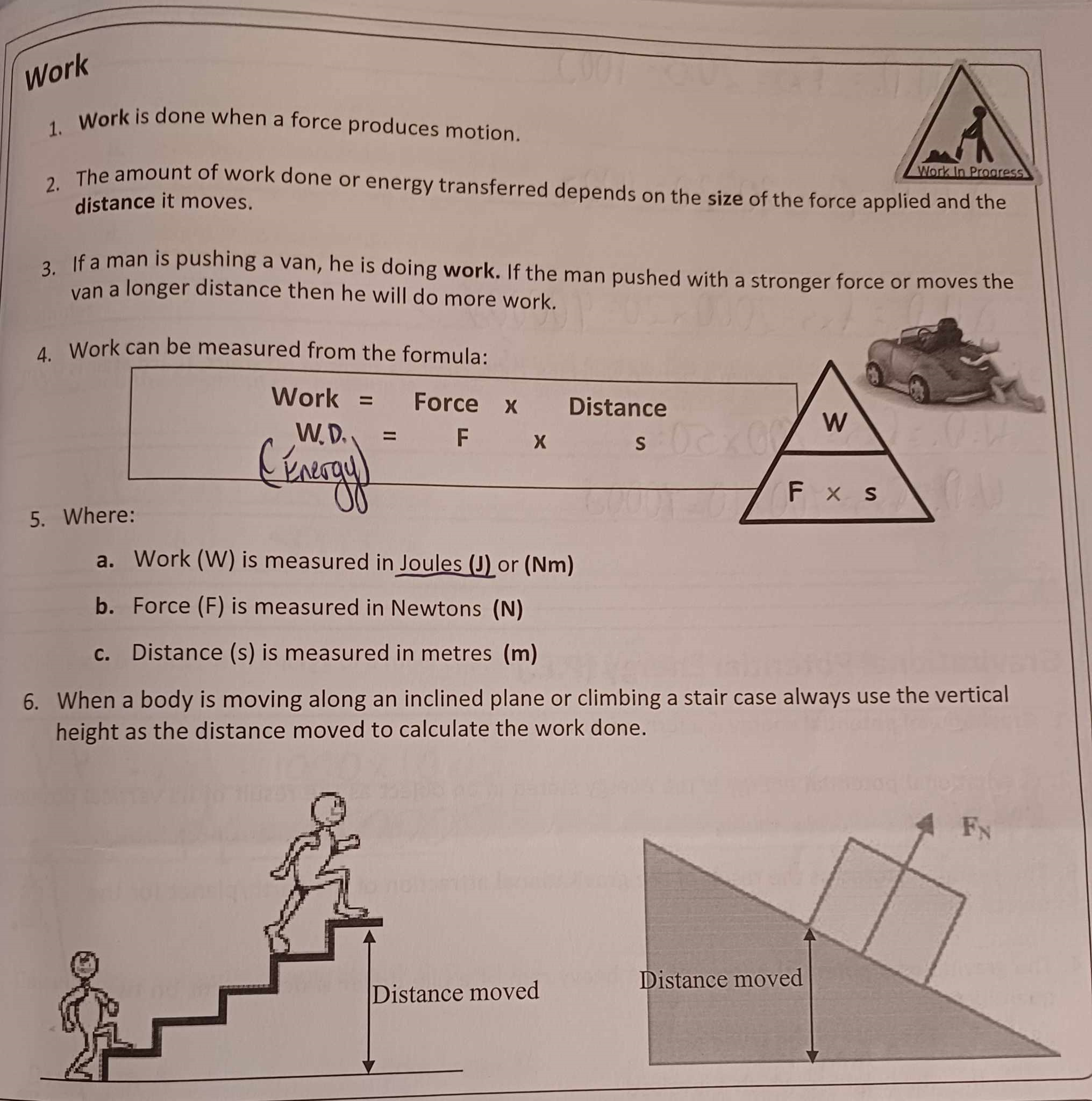
Work
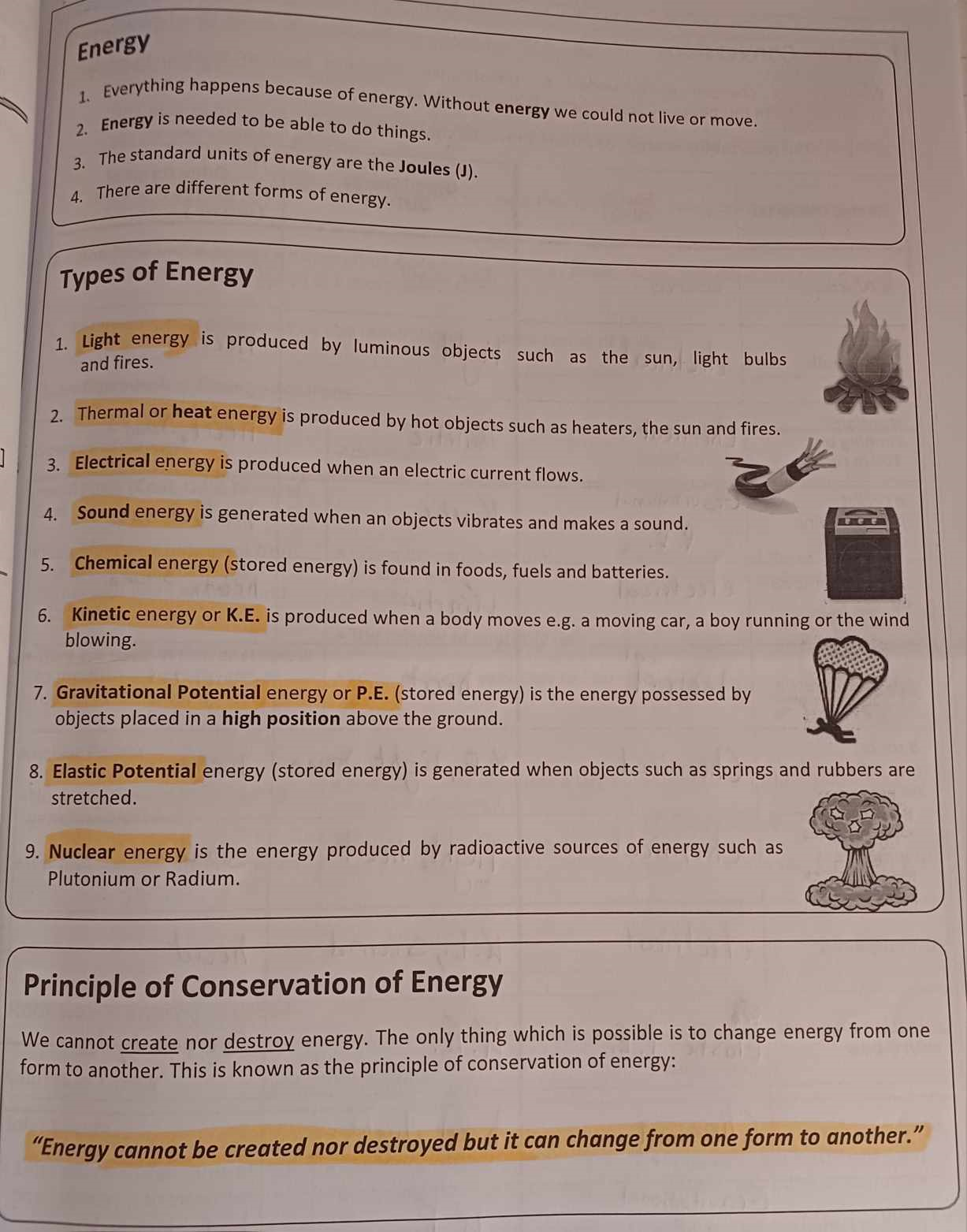
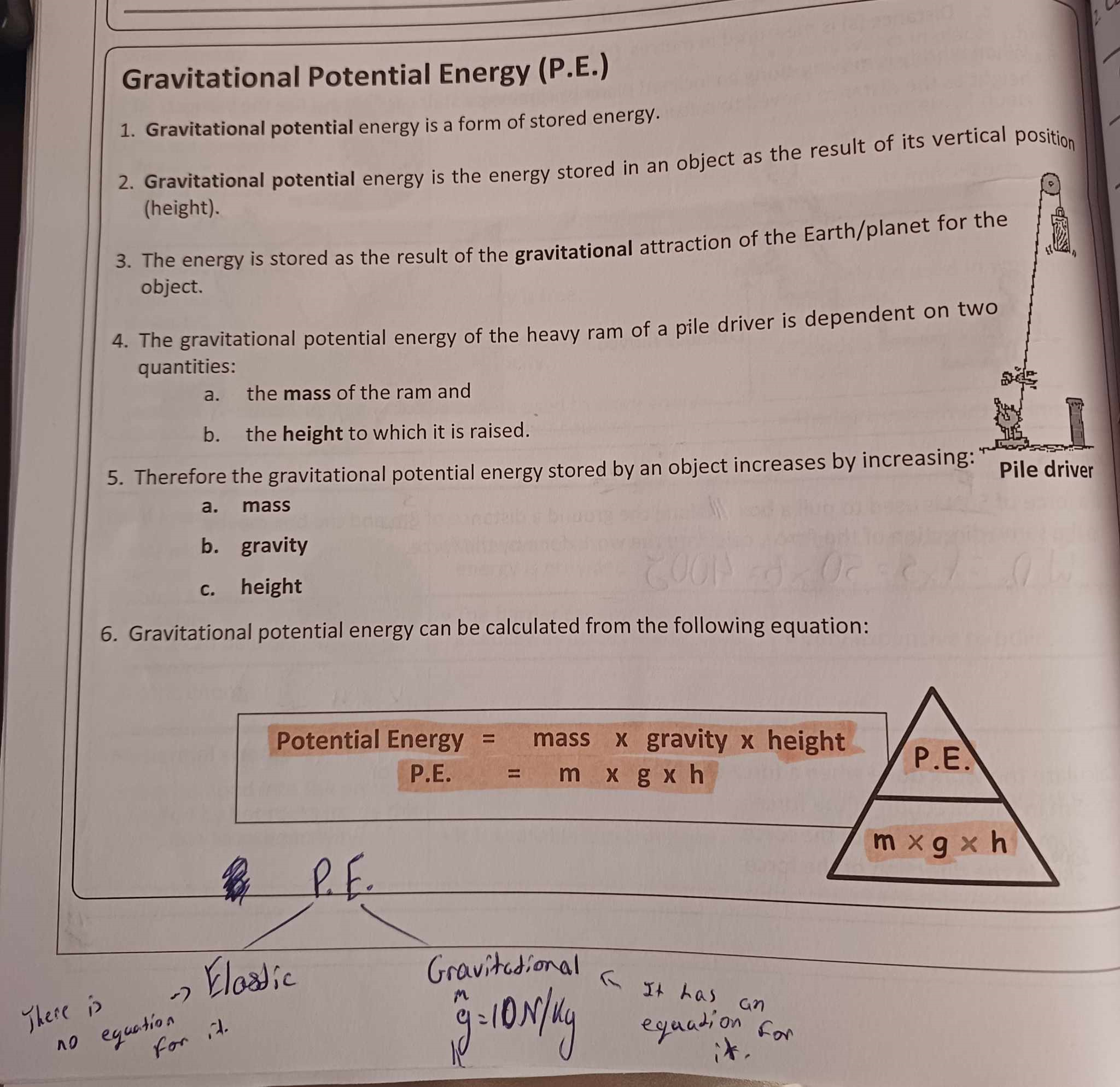
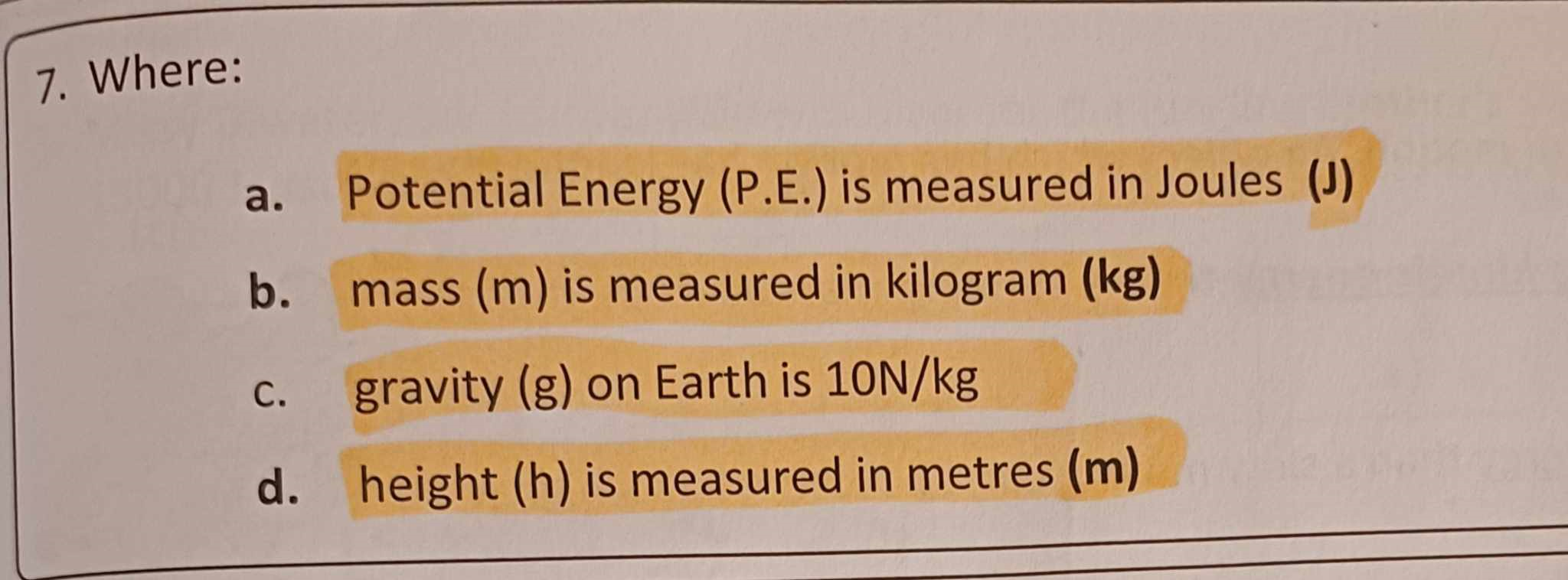
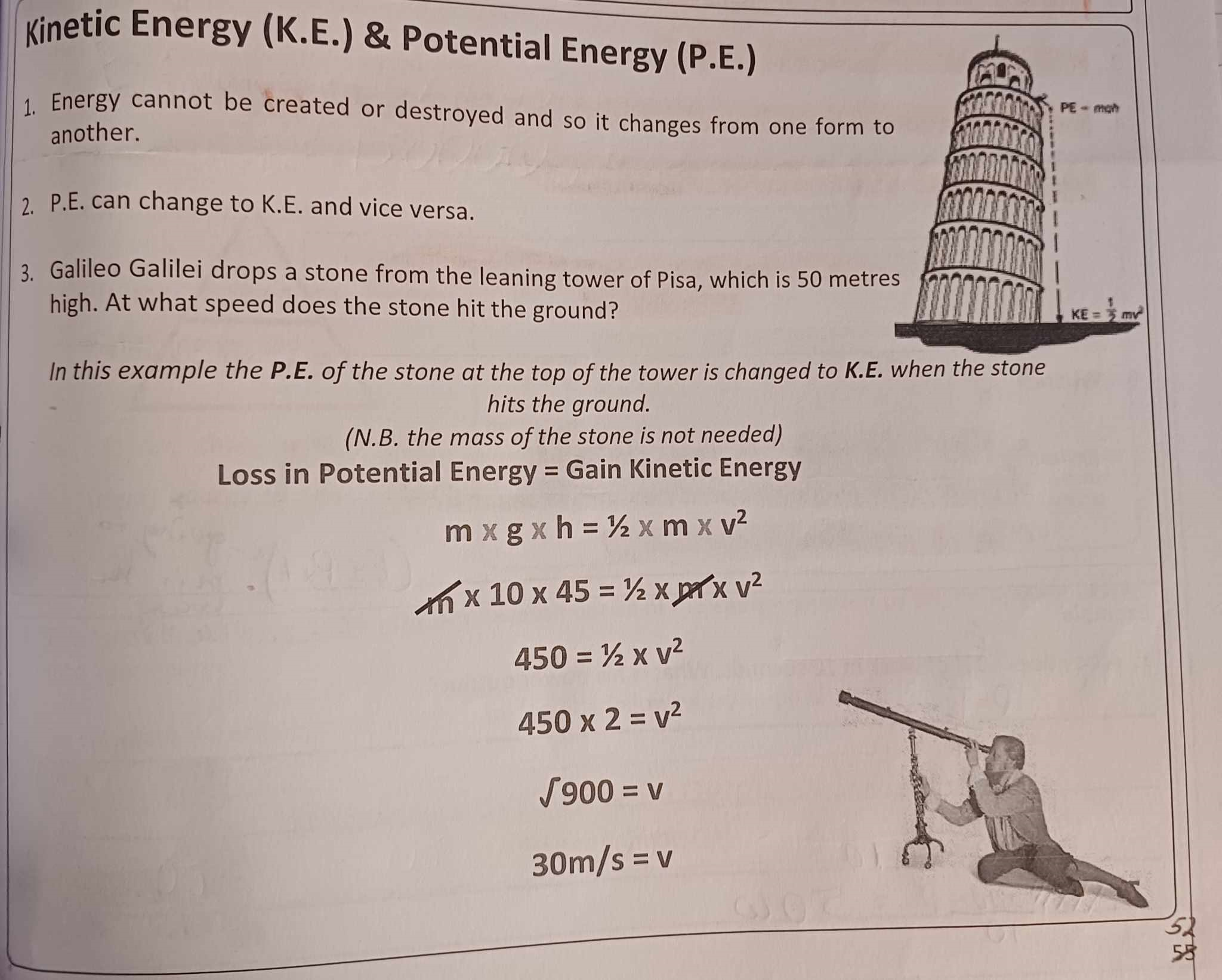
 Gravitational Potential energy (P.E)
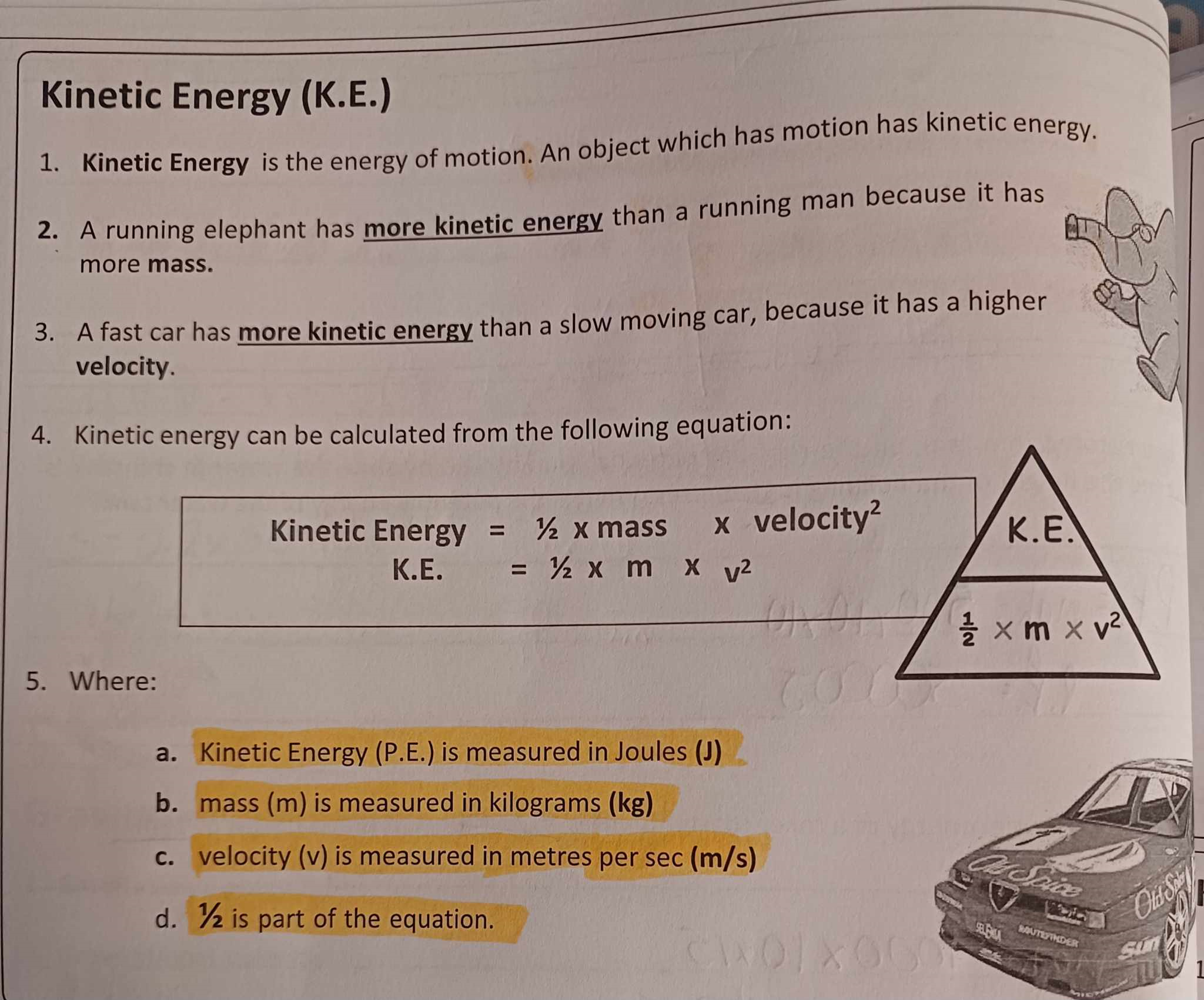
 TOPIC 3
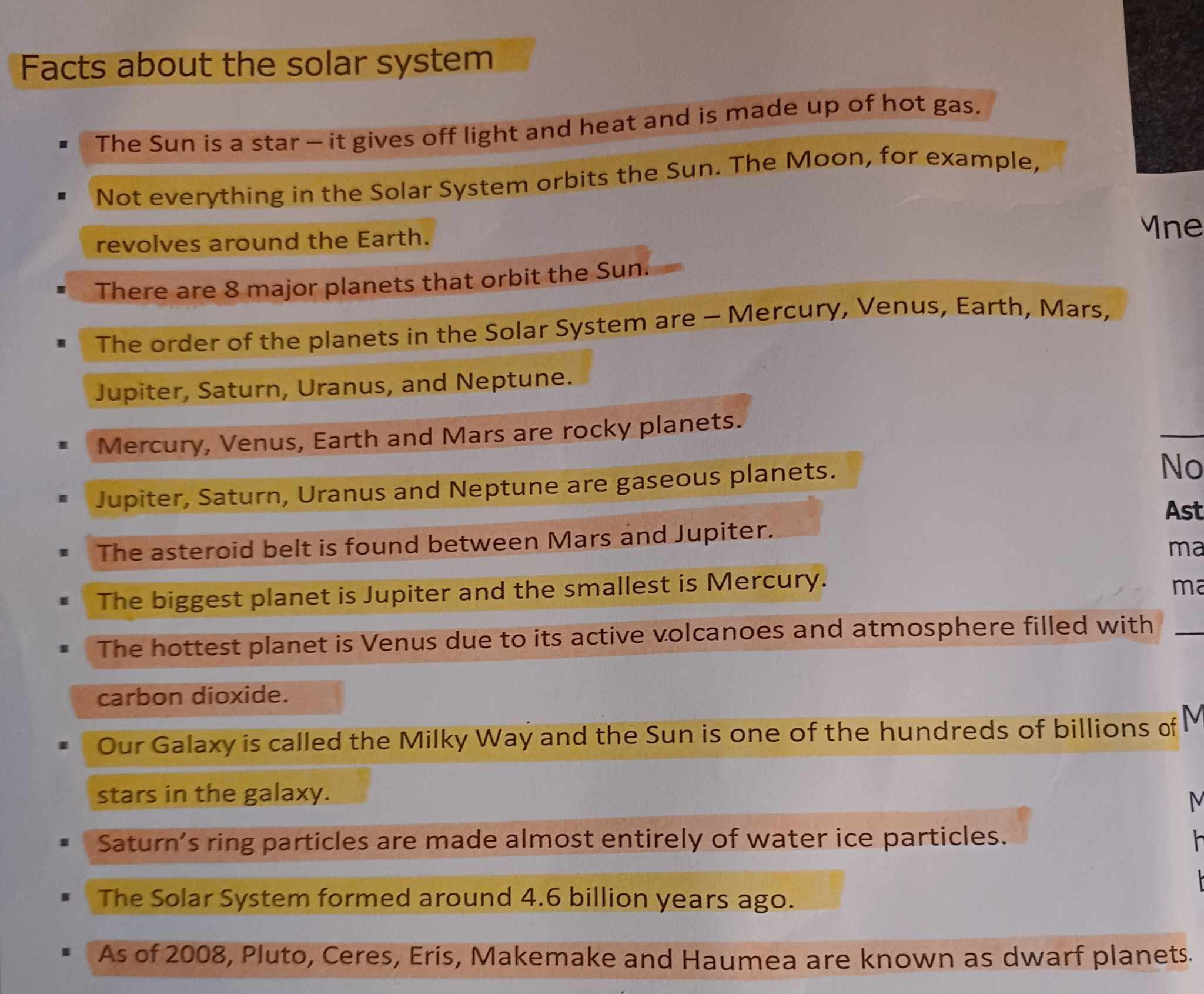
The order of the planets is Mercury Venus Earth Mars Jupiter Saturn Uranus Neptune.
the first 4 planets (Mercury Venus Earth and Mars) are rocky planets and the other 4 planets (Jupiter Saturn Uranus and Neptune) are gaseous planets.
 Planets
Definition: a planet is a celestial body that
1)is in orbit around a star.
2)has a nearly spherical shape due to its own gravity.
3)must have a clear neighborhood around its orbit.
Time on Earth
The Earth spins on its own axis and the time taken for one revolution is one day or 24 hours
the time taken for the Earth to orbit the sun is one year or 365.25 days. Thats why every 4 years we need to add one day to our calendar. We call it a leap day (in a leap year).
Dwarf planet
is a celestial object similar to a planet but much smaller. They haven’t cleared the area around their orbit.
We have 5 dwarf planets that are Pluto, Eris, Makemake, Haumea and Ceres.
Day and night on Earth
when one part of the earth is facing the sun is exposed to light, that experiences day. And the other part of the earth not having a sun facing at the earth, that is experiences night.
Gravitational pull
Objects with more mass have more gravity.
Gravity also gets weaker with distance.
Satellites
definition: Any object that orbits a planet
the earth has a natural satellite orbiting around it- THE MOON.
Artificial satellites are man-made satellites, sent in space to gather information or to send data.
A geostationary satellite
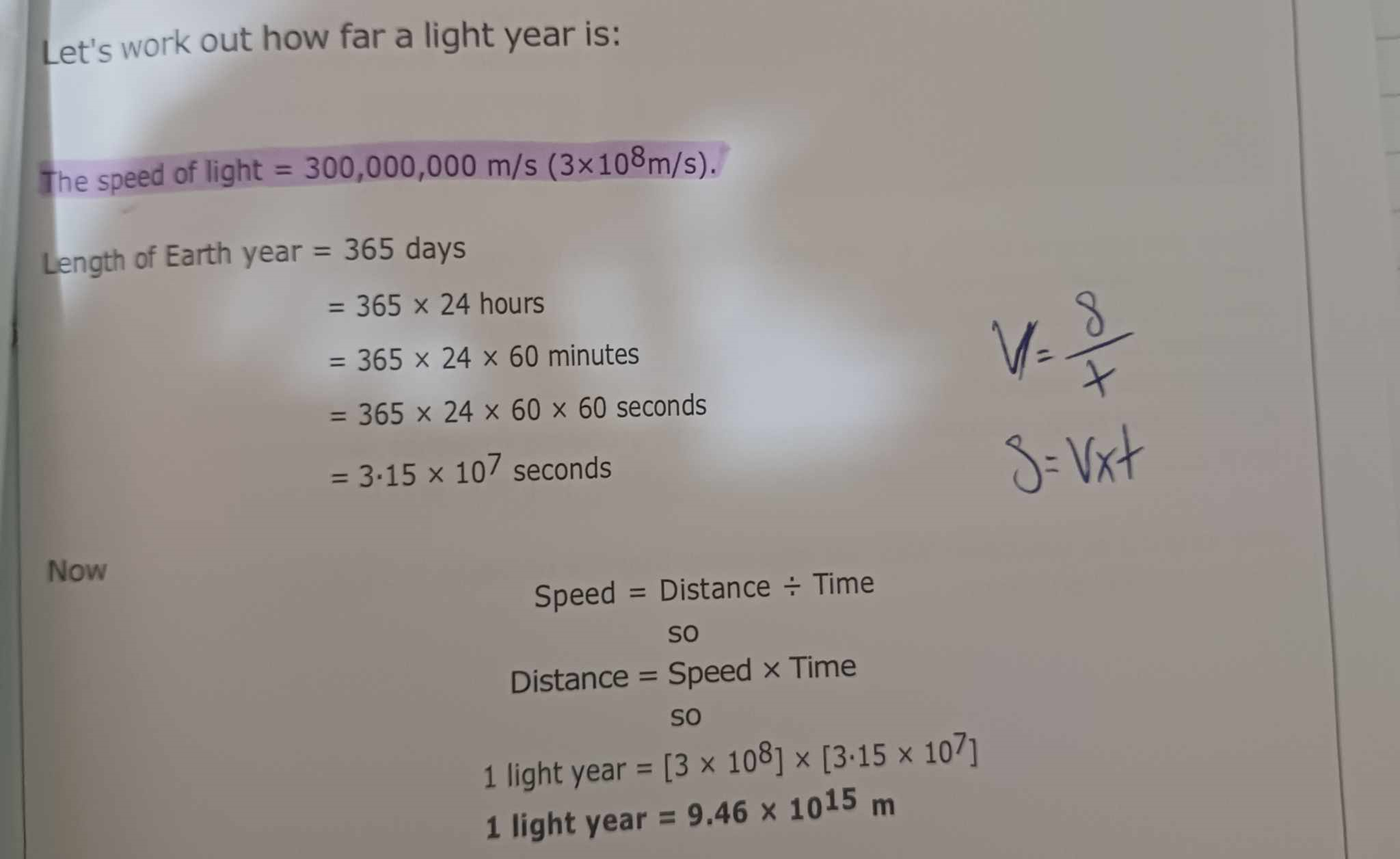
What is a light year?
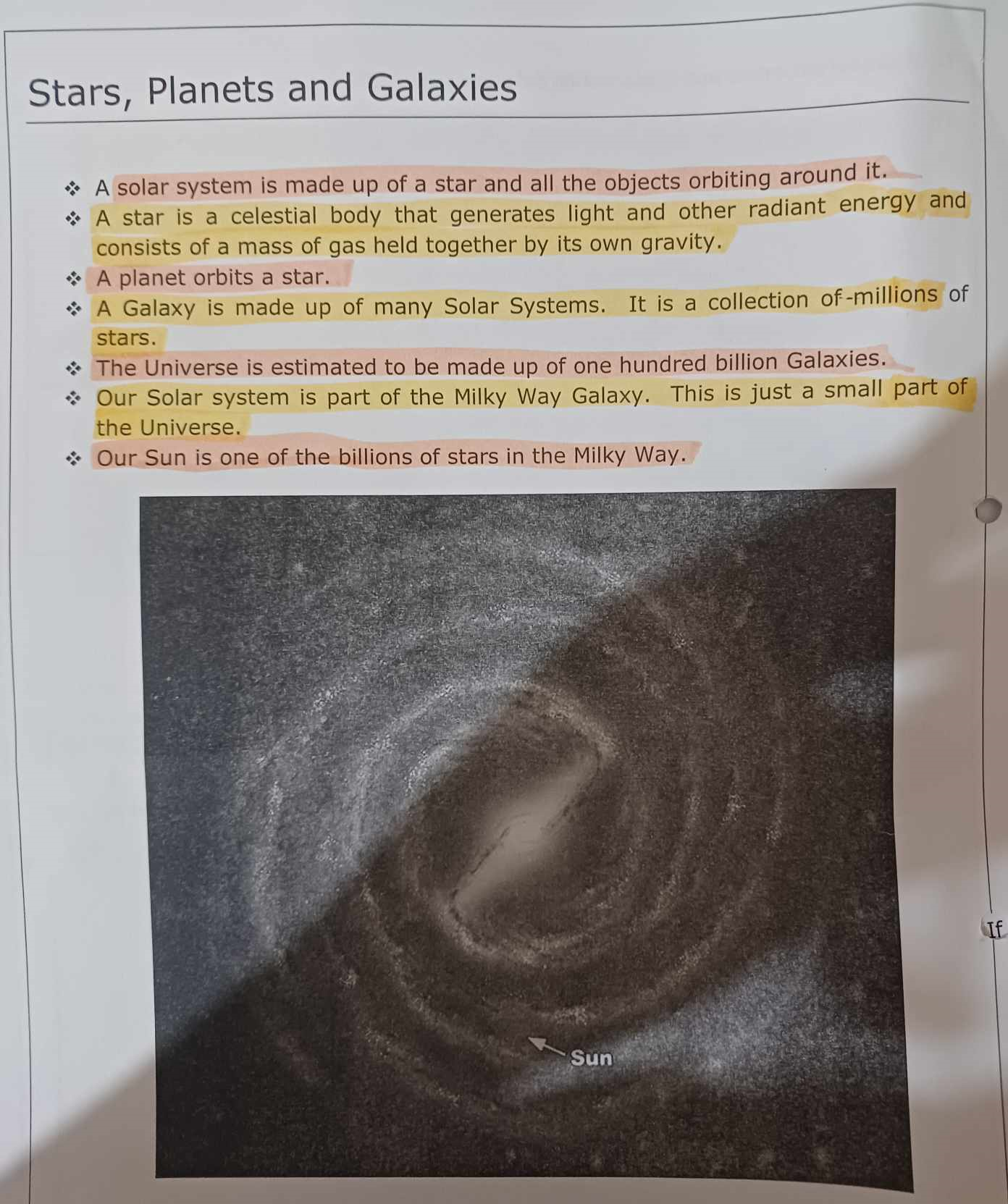
Definition: A light year is the distance travelled by light in one year.
What is the Big Bang?
The big bang is how astronomers explain the way the universe began. It is the idea that the universe began as just a single point, then expanded and stretched to grow as large as it is right now… and it is still expanding!