Seedless - vascular - plants lecture
I. Review: non vascular plants
Earliest land plants - near water edges
limited by dehydration
no lignin
gametophyte dominant
sporophyte small, attached to gametophyte for nutrients
external fertilization
all homosporous = same size spores
II. NVP’s → Protracheophytes → SVP’s
protracheophytes are an intermediary group between the NVP’s and SVP’s
Evolutionary history
NVP’s evolved from green algae in the charophytes
liverwort’s = most basal/closest to algae
hornworts = sister group to the vascular plants
evidence: molecular data
first persistent/photosynthetic sporophyte
Protracheophytes: an extinct intermediary group between the NVP and SVP’s with dichotomous branching
have hydroid cells with some lignin
lack true tracheid’s
hydroids may have formed first tracheid’s with the addition of lignin and further specialization
the apical meristem switches to the top in embryology
SVP’s were the first to have true tracheids
III. SVP (Tracheophytes)
Explosion of plants on land - barren land became green
helped stabilize O2 in the atmosphere
basis for the web of terrestrial life
these changes led to movement farther away from water (not too far away)
A. Characteristics
Derived traits
Tracheid’s (lignin)
first organ is the stem
ALL SVP’s have stem
Sporophyte dominant
Tracheid’s/ lignin evolved in the sporophyte
sporophyte becomes big (increased reproduction due to increased amount of spores)
Evolution of roots
allowed for moving away from water
Gametophyte get’s smaller
important because its moving away from water
Ancestral Traits
external fertilization
spores (not seeds)
B. Extinct SVP phyla
425 mya: tracheid’s in the fossil record (rhynie scotland)
rhyniophytes = the first SVP’s (all extinct)
ex: cooksonia
stem only
true tracheid’s (for support and conduction)
no roots or leaves
terminal sporangia (on the ends)
homosporous (all the spores look the same)
all NVP and SVP’s are homosporous (except for one)
endomycorrhizae in the stem
spore mortality was a problem
Rhyniophytes speciated into 2 major SVP clades
Lycophytes (club moss)
early leaves that evolve = microphylls with 1 vascular strand
lignin grows into the leaf creating a microphyll
early leaves are microphylls that have 1 vascular strand created by lignin growing into it
Have roots
evolved from underground stems
rhizoids possibly became the root hairs
Monilophytes (ferns)
defined by megaphylls = branching veins
leaves of today came from megaphylls (ferns of the past)
megaphylls arise from branches overlapping and fusing together
roots evolved from stems
evolved independently from roots in lycophytes
These two groups formed huge trees that dominated the landscape
they’re big because of the evolution of megaphylls
evolution of megaphylls was a huge selection pressure for plants (shading everything below them), plants got bigger and developed secondary growth to deal with it
SVP’s dominate in the carboniferous era
425 mya = climate was tropical
rapid growth of SVP’s
360 mya = carboniferous era
100’ tall SVP trees
lepidonendron (makes secondary xylem only, unifacial vascular cambium)
giant horsetail trees
SVP remains became coal
increased oxygen lead to giant winged insects, large scorpions, 6 ft millipedes, giant amphibians
300 mya = end of carboniferous era
climate cooled/arid
giant SVP’s died off (external fertilization needs water, when climate cooled the spores and gametophytes could not survive)
only small SVP’s left today
the climate cooled because…
CO2 decrease
giant trees were absorbing CO2 and storing it as wood
SVP’s croak! leading to gymnosperms rising
C. SVP’s alive today
Lycophytes
a. lycopodium
Derived traits in lycopodium over the rhyniophytes
roots
leaves (microphylls with one vascular strand)
strobilus (ancestral cone)
cone = sporangia + leaves clustered on branch tips
sporophyll = leaf with sporangium on them
Significance of the cone
huge increase in spore production
before cones, sporangia alone on the branch tips
reproductive rates of cones is much greater
for the first time in history we see…
roots, leaves, and strobilus
b. Selaginella
Derived traits in selaginella over lycopodium
heterospory = 2 different spore types
mega and microspores
Mega = female
Micro = male
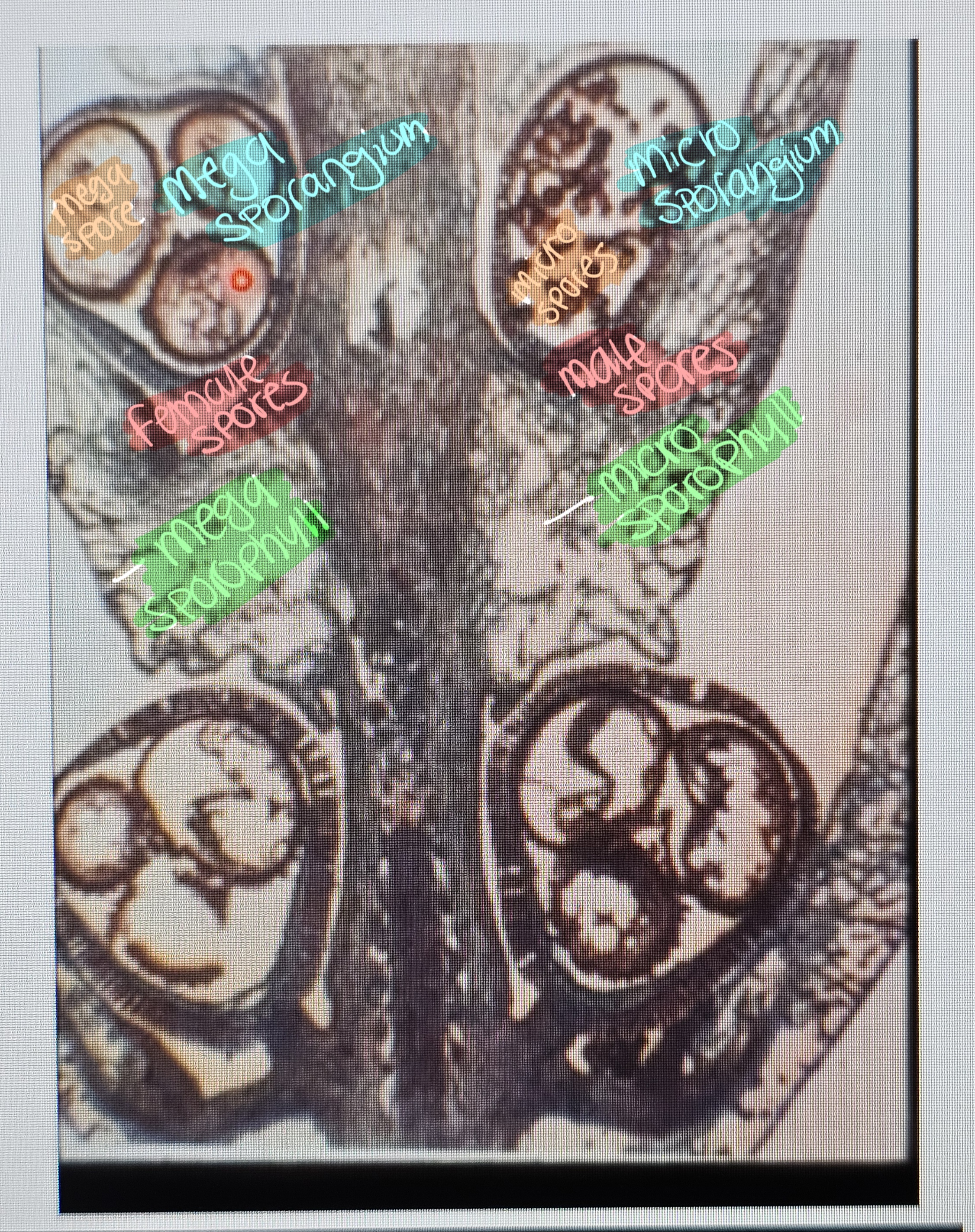
Why is heterospory important
big megaspore makes big gametophyte
increased food for the egg
small microspores make small gametophyte with billions of sperm
provides better dispersal
first step to make seed and pollen in “higher” plants (higher = internal fert)
Why are pollen and seed important?
pollen protects the sperm (pollen = male structure
seed protects the egg (seed = female structure)
this led to internal fertilization
higher plants can live anywhere
SEEDLESS VASCULAR PLANTS DO NOT MAKE SEED AND POLLEN
they make megaspores and microspores which led to evolution of pollen and seed
Changes that come with heterospory
in homospory:
sporangium w/sporocytes (2N) → meiosis → spores (1N) → mitosis → gametophytes (1N)
in heterspory:
microsporangia w/microsporocytes (2N) → meiosis → microspores (1N) → mitosis → microgametophyte (1N)
megasporangia w/megasporocytes (2N) → meiosis → megaspores (1N) → mitosis → megagametophyte (1N)
Monilophytes (ferns)
Derived traits in the monilophytes
a. megaphylls (vegetative)
large leaves with branching veins
arise coiled (fiddle heads)
protects the leaf tissue
arise from tangled rhizomes underground, coil protects them from damage
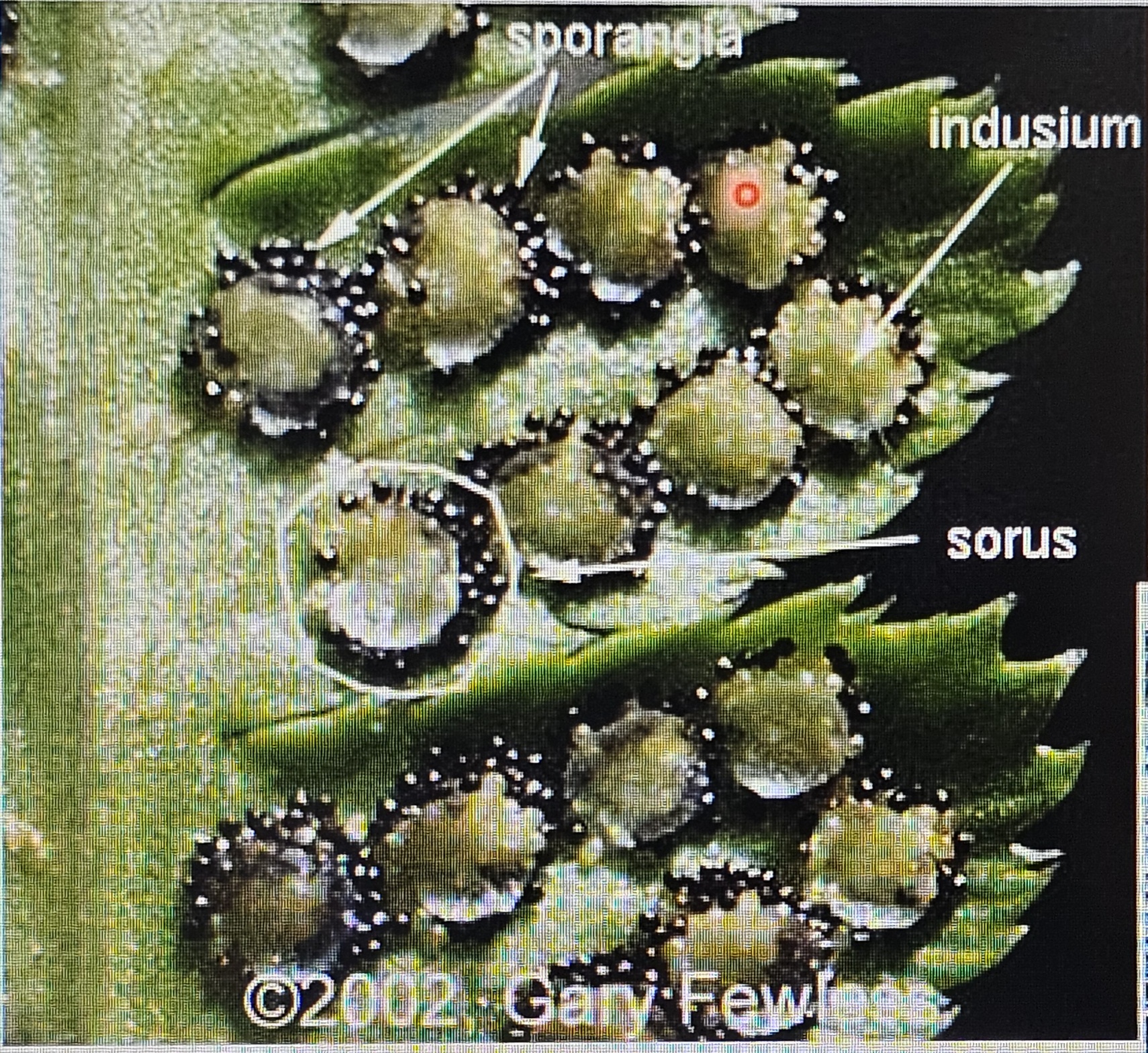
b. Sori (for reproduction)
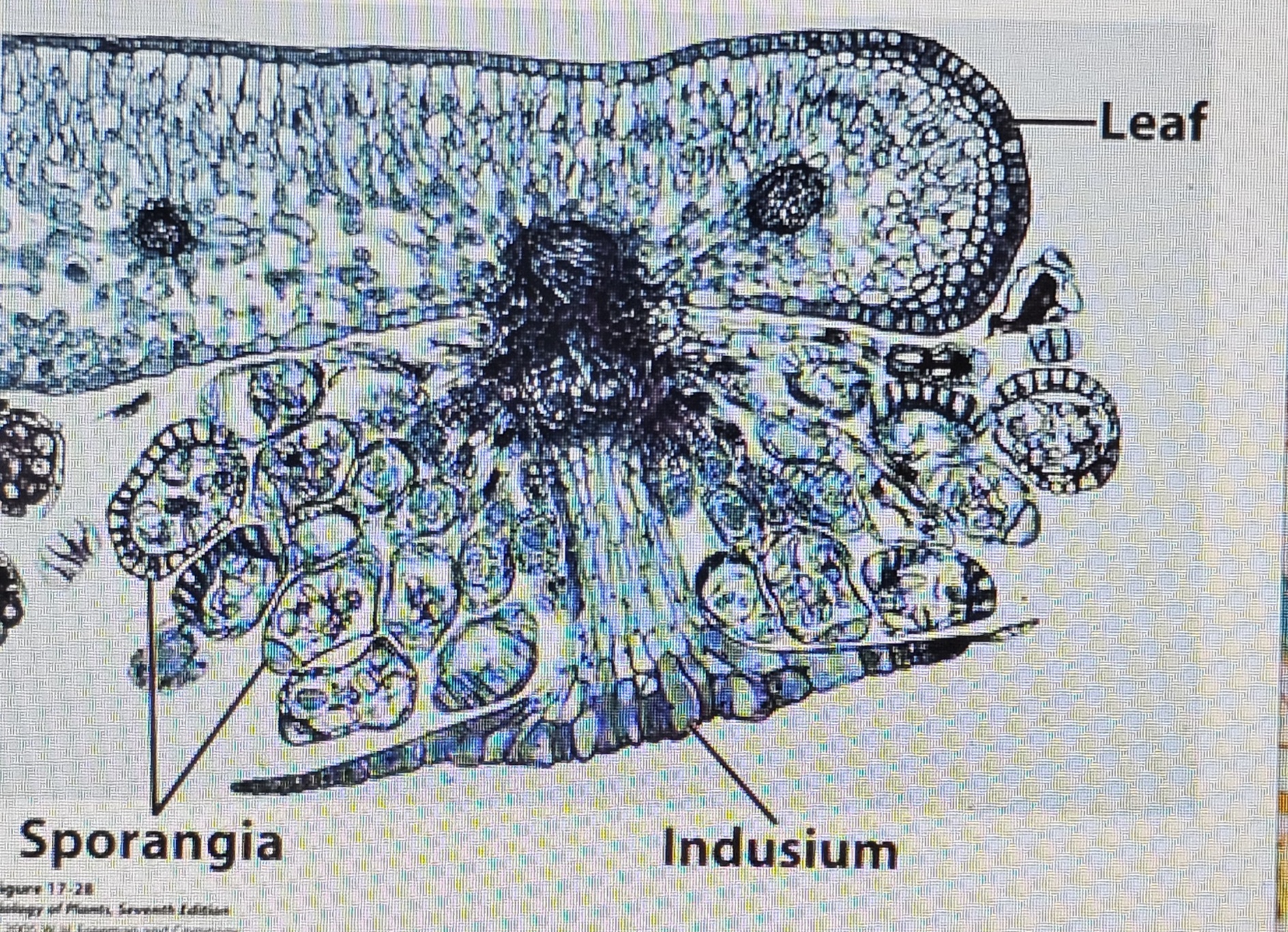
clusters of sporangia on the underside of the leaf
sori (plural), sorus (singular)
sorus = cluster of sporangia
a greek helmet thing called annulus covers each sporangium
annulus folds back and then springs forward to throw spores (active spore dispersal)
true ferns have annulus
c. Indusium
cover protecting the sori (not always present)
its like a green thing in the middle
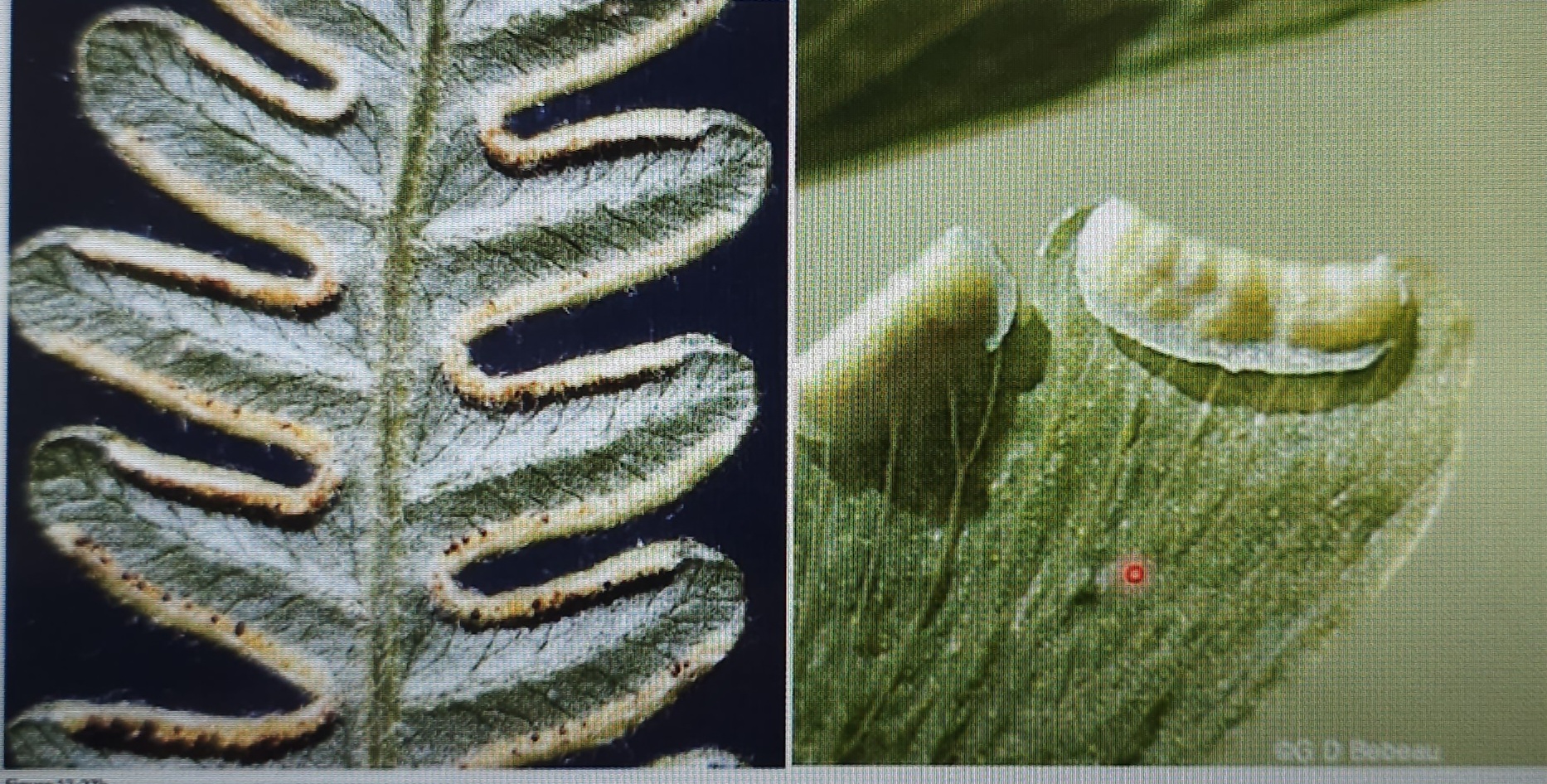
2 types of indusium
outgrowth of leaf epidermis (growing right out of the leaf tissue)
leaf margins curl over the sori
No indusium present? = naked sori
common in the tropics
Additional traits in the monilophytes
most ferns are homosporous
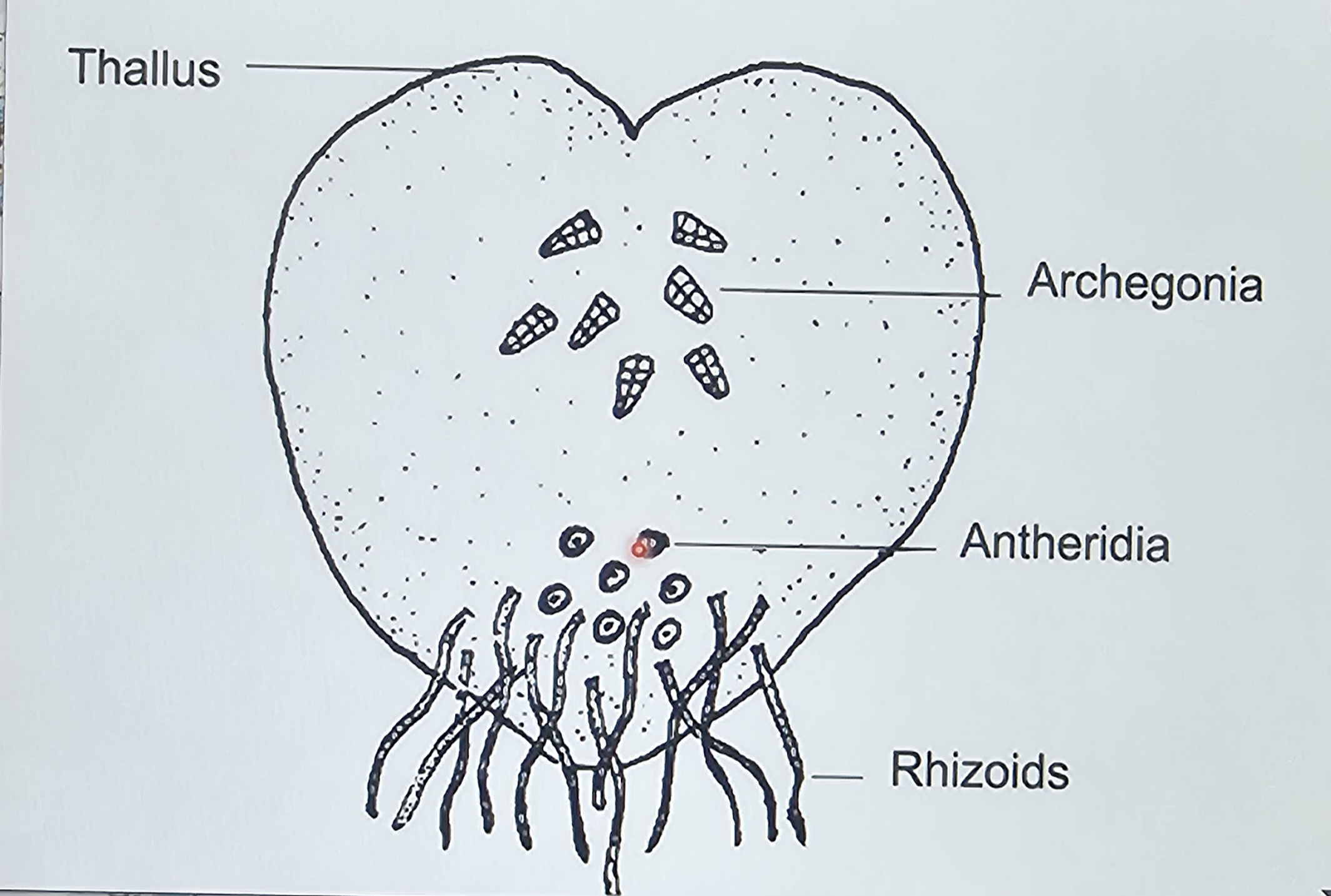
gametophyte is heart shaped, photosynthetic, and bisexual
Simple ferns
lack an annulus
DNA evidence puts psilotum and horsetails in the manilophytes
psilotum (whisk fern)
tropical epiphyte (grows on other plants)
stem only
no roots or leaves
homosporous
sporangia on enations
enations = epidermal outgrowth
enations are not leaves because they dont have lignin
this is a reversal of evolution of megaphylls and roots because it became an epiphyte
equisetum (horsetails)
jointed stem
silica walls (antipredation)
homosporous
medicinal plants (only in herb stores, not in wild bc they’re toxic)
used for sandpaper
vegetative sporophyte
whorled branches
microphylls reduced from megaphylls
rhizome that grows underground, grow out from under other plants and then pop out in the sun
reproductive sporophyte
strobilus (cone)
sporangiophore = circles on cone
Derived traits in equisetum
sporangiophores prevent dehydration
spores have elaters (arm like extensions for dispersal)