L10- Triassic Terrestrial Ecosystems
Triassic World:
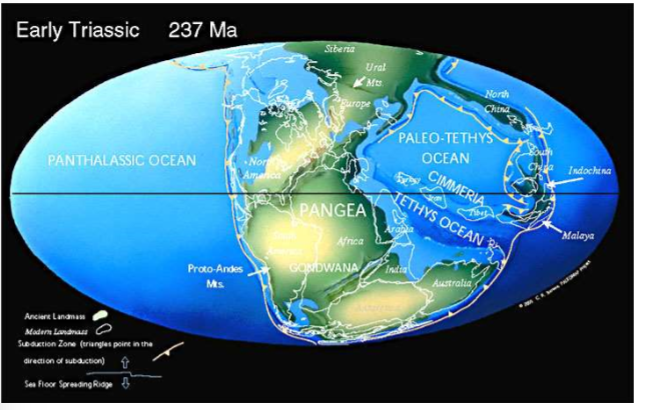
pangea, everything is together, have to cross central-pangean mountain range to get from top to bottom, two deserts (deposits here are sandstone), Tethis ocean, islands, large ocean
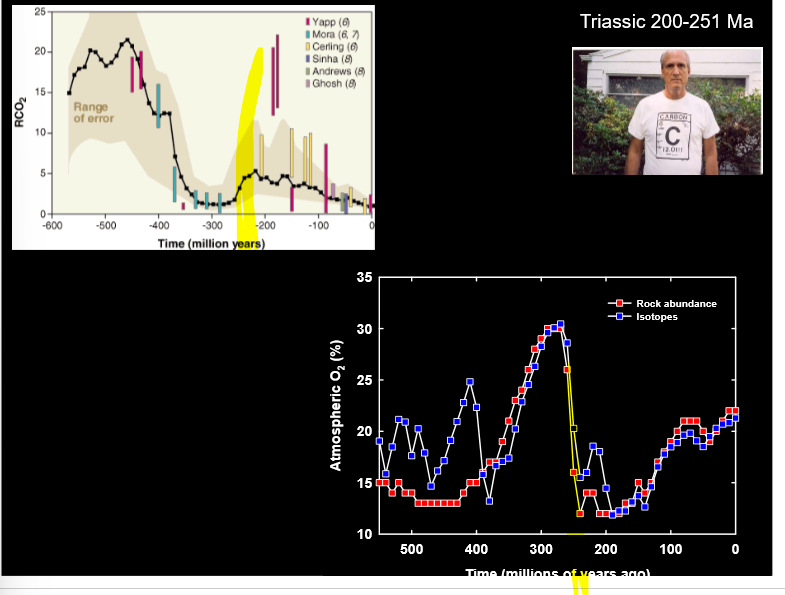
CO2 levels are higher than today, greenhouse world, no ice at the poles, O2 levels are low→ problems for terrestrial animals (lower altitude limit)
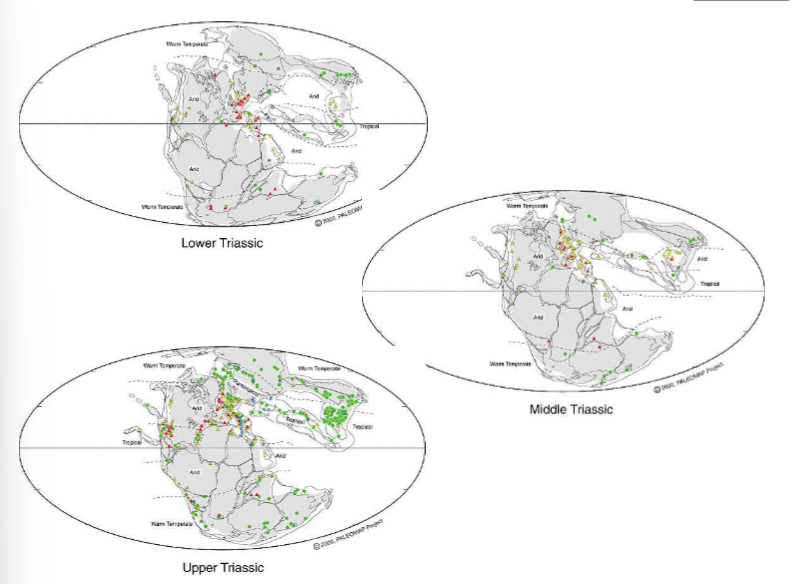
poles are warm temperate, 6 months of winter and 6 months of sunshine, get forests at the poles
Plants:
mesophytic vegetation, not much change
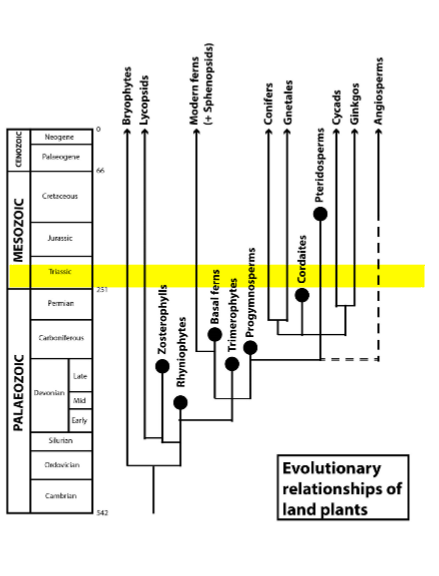
Bryophytes
Lycopsids
Ferns and Horsetails→ understories
Pteridosperms→ glossopterids
Pteridosperms→ bennettites (new group- have flower-like reroductive structures, distinctive cuticle structures)
cuticle prep→ dissolve leaf out of rock, film them, stain them, study the structure of cells and stomata
Cycads
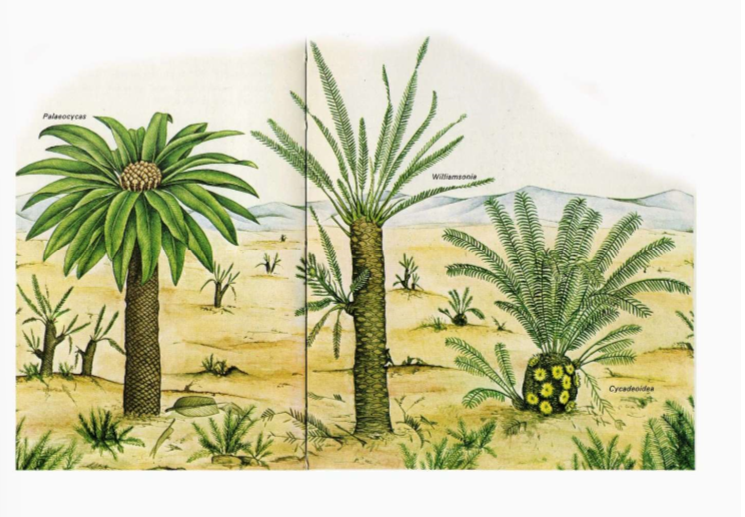
Gingkos
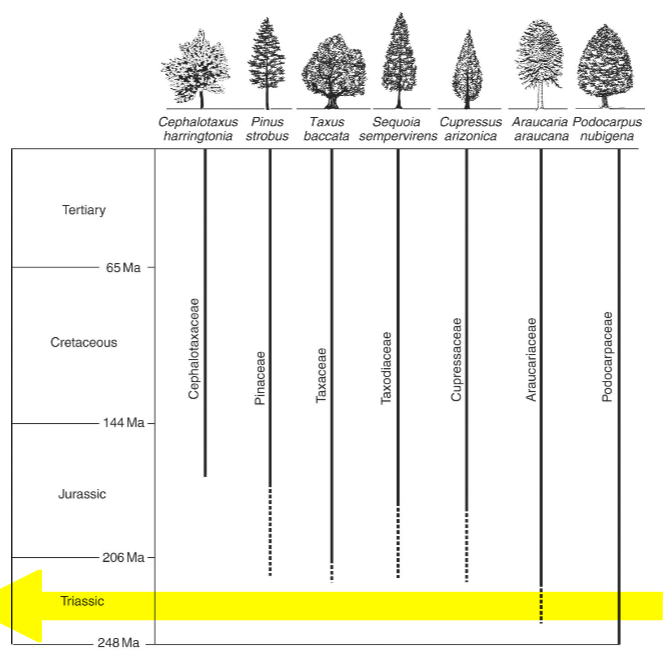
Conifers→ diversify, most modern conifer groups appear in the Triassic
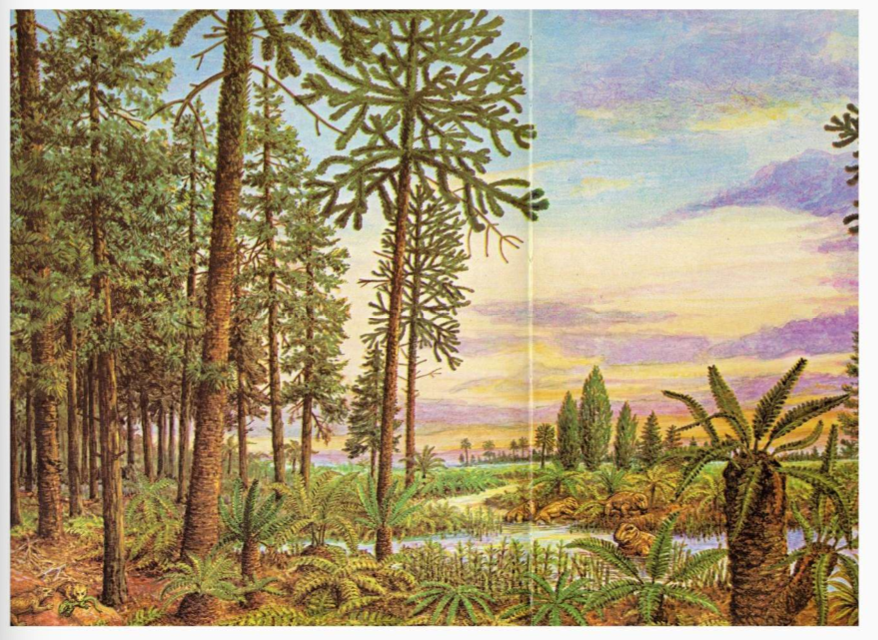
reconstruction of Triassic plants:
conifer forest, cycads, understory of ferns
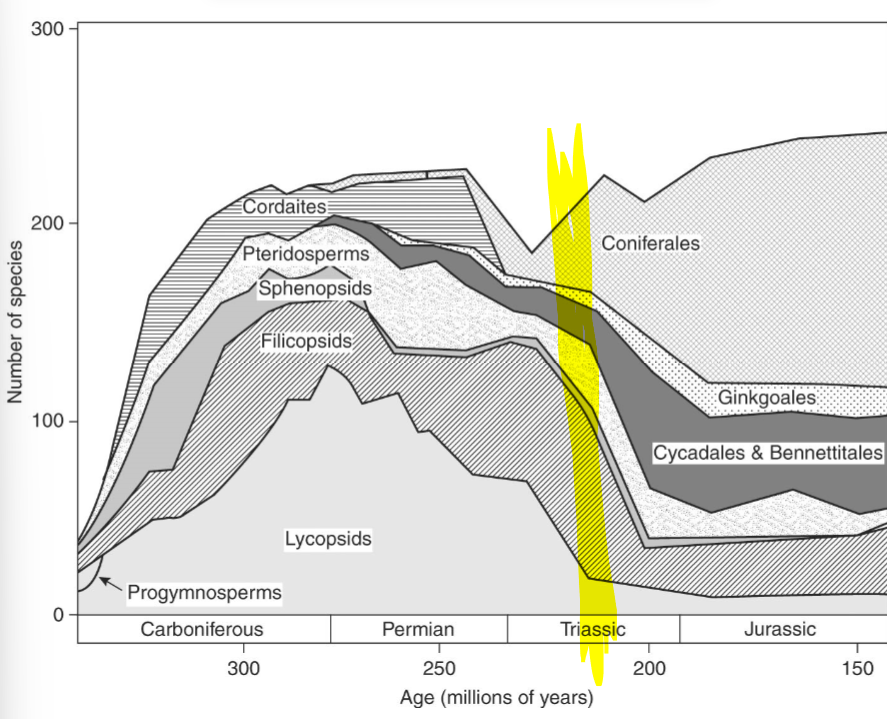
transition from palaeophytic to mesophytic from west to east
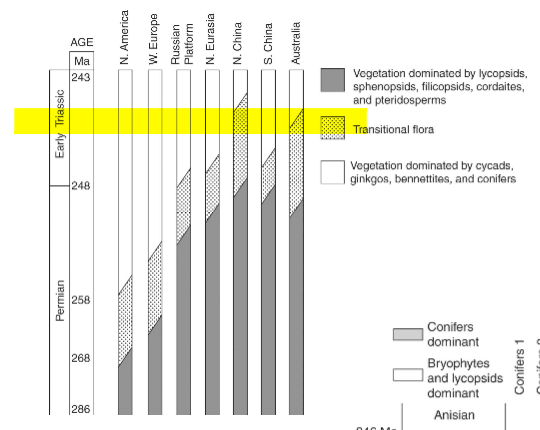
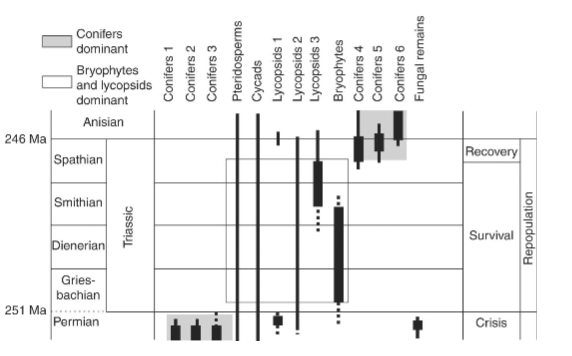
End Permian:
animals→ minimal survival, Lilliput effect- survivors are small groups, longer recovery
plants→ get wiped out but come back, ecological reorganisation of the same group of plants
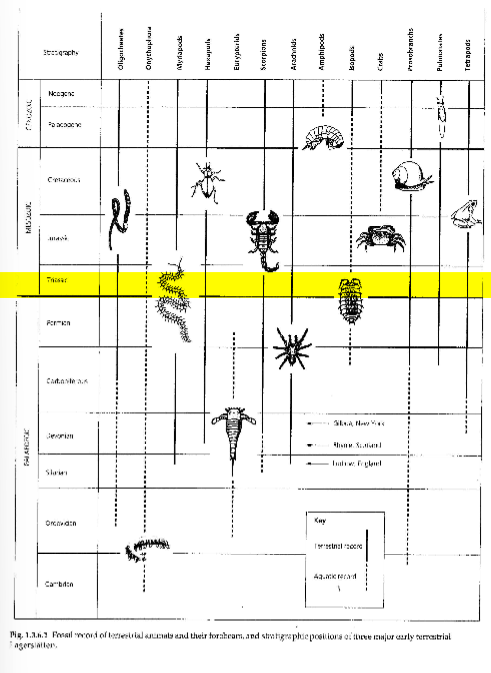
Insects:
few insect deposits:
not much change→ no major groups get wiped out, get some new modern groups e.g. flies
Fish:
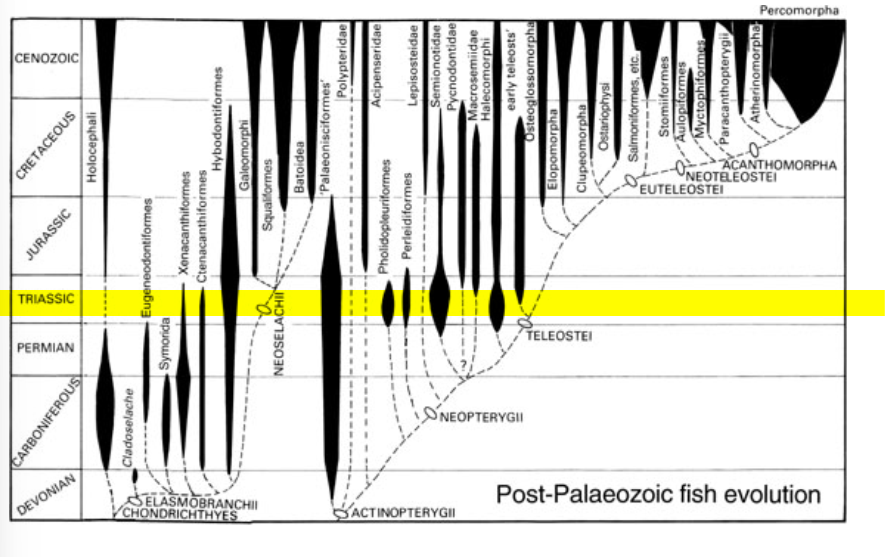
get change from lobe-finned fish dominance to ray-finned fish dominance
basal chondrichthyes get wiped out, still don’t have the modern group of sharks and rays- possibly diversify at the end
lots of groups get wiped out at end Triassic, modern groups diversify after this
Tetrapods:
severely affected by end Permian mass extinction
find lots of Lystrosaurus→ restricted fauna, survived by the nature of its ecology
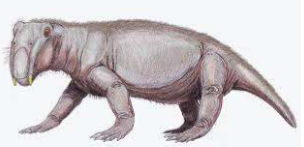
initial recovery is very slow, synapsid dominance in the Permian is replaced with Diapsid dominance in the Triassic→ mass extinction changed the course of tetrapod evolution
shift from warm/moist→ hot/dry environment with low O2
Amphibians:
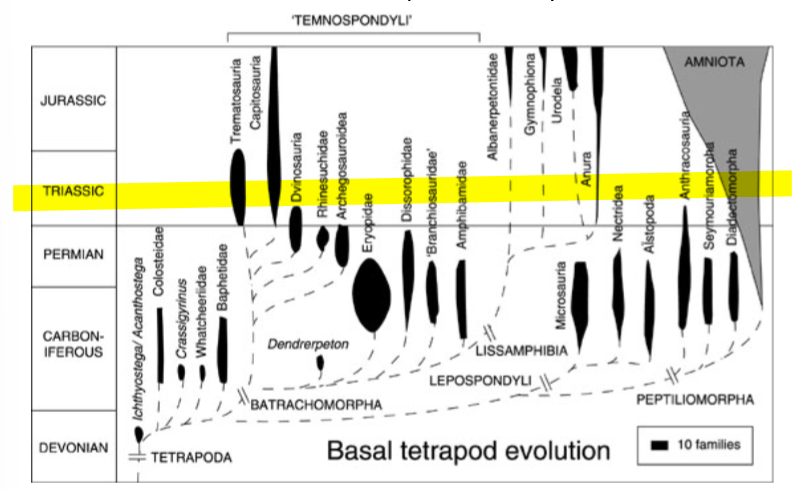
many groups go extinct at the P/T mass extinction
radiation of Lissamphibia→ modern groups make it through and start to diversify
Reptiles:
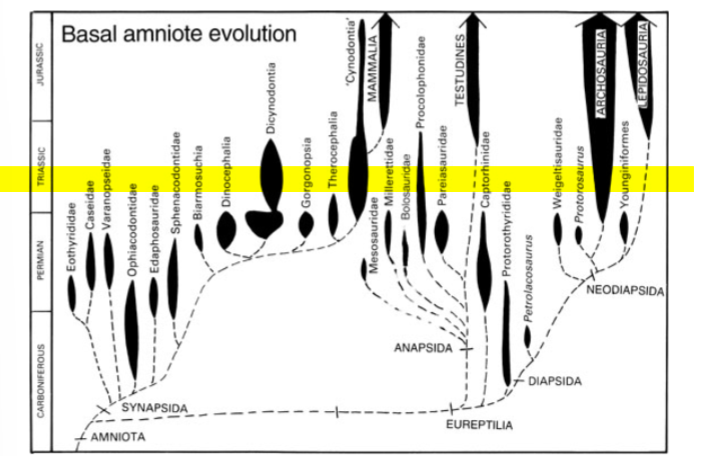
may groups wiped out, dicynodonts re-radiate but die at the next mass extinction, cynodonts make it through→ give rise to mammals, many anapsids gone, diapsids radiate after
Archosaurs→ are important as they give rise to dinosaurs and crocodiles
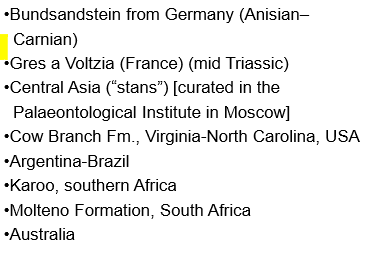
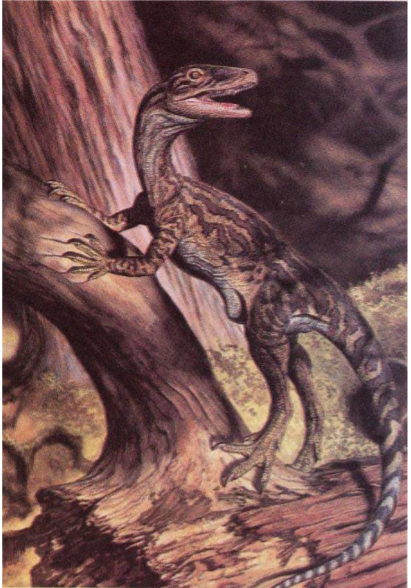
dinosaurs appear in middle-late triassic in Argentina/Brazil
small, bipedal
Diapsids→
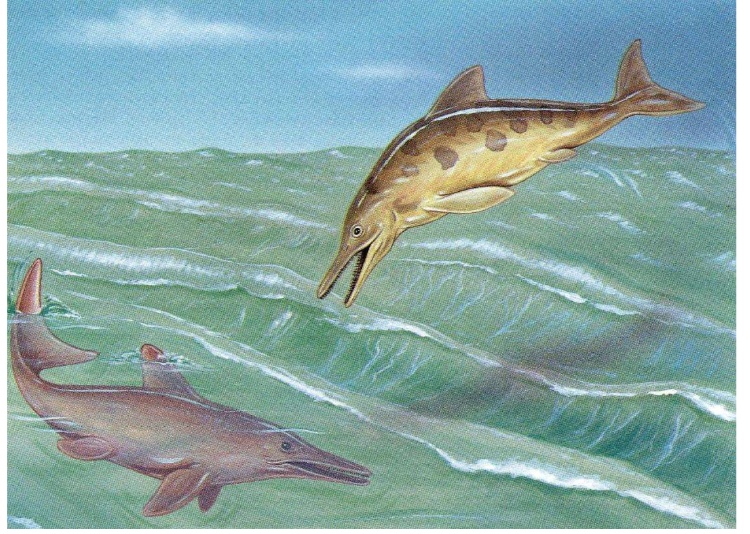
groups reinvade the sea, eating fish e.g. placodonts, ichthyosaurs
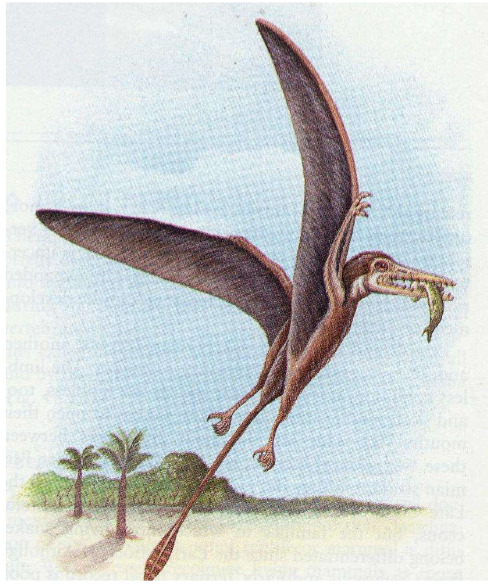
Pterosaurs→ first true fliers, bias to marine deposits but weren’t all fish eaters, morphologically diverse
Amniotes:
diapsids diversify following the P/T mass extinction→ gives rise to the groups that dominate the Triassic/Jurassic (crocodiles/dinosaurs)
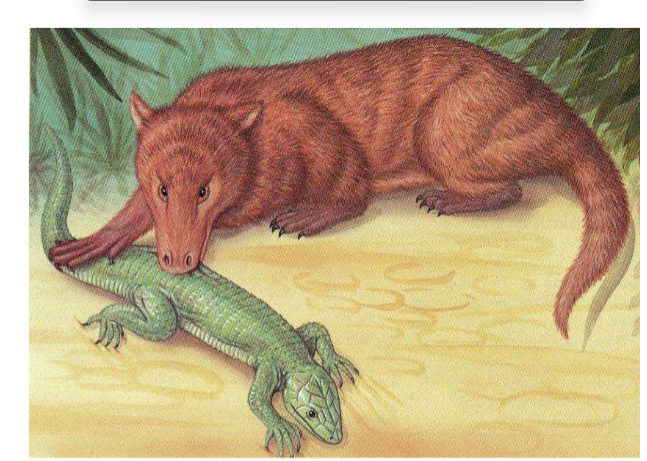
appear after P/T, hit hard at Triassic mass extinction, give rise to mammals→ evolved mammal like characters sequentially over 30-40million years so cannot say when the first mammal evolved
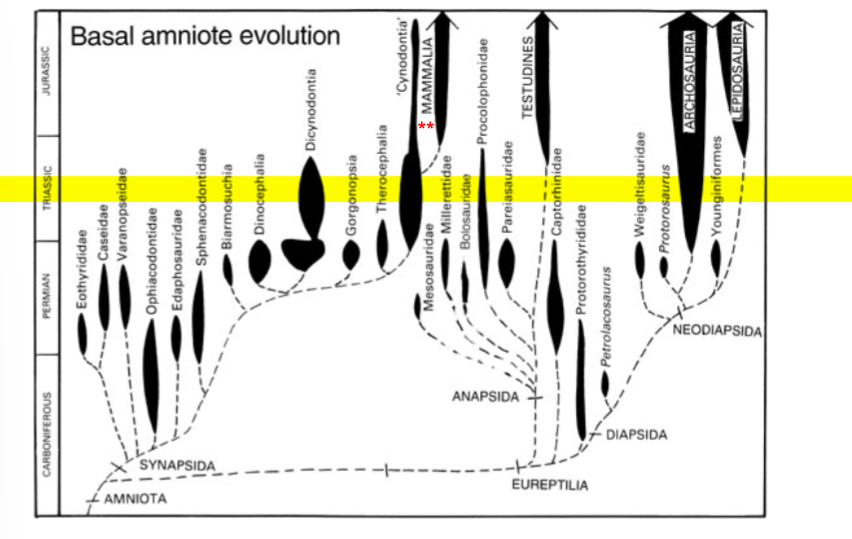
fossil taxa progressively become more mammal like
Mass extinctions:
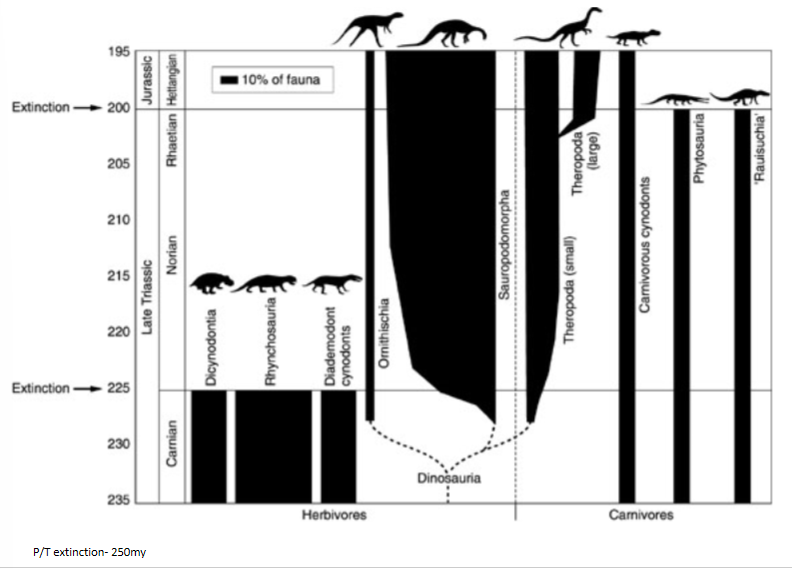
huge extinction at P/T 250mya→ slow re-radiation- lots of herbivores, start to get dinosaurs, major groups are there but are small
extinction at Mid Triassic→ lose herbivores from Carnian and replaced with Ornithiscians and Sauropods, major carnivore groups still there, therapods diversify a bit
caused by change from wet/damp/humid environment to drier environment
extinction at End Triassic→ phytosaurs and rauischia go extinct
caused by super heating
→ 3 mass extinctions rearrange therapods
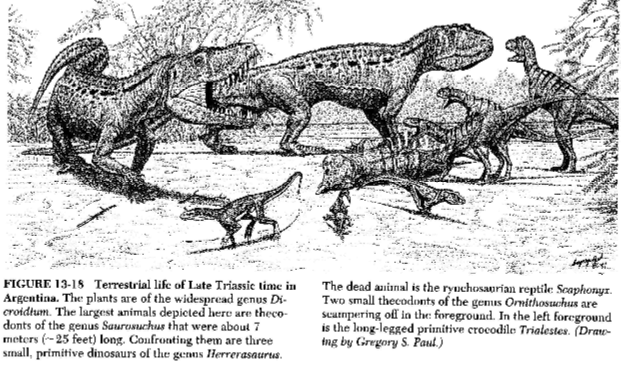
get classic dinosaur biotas in the Jurassic