How did life begin
How did life begin? 1
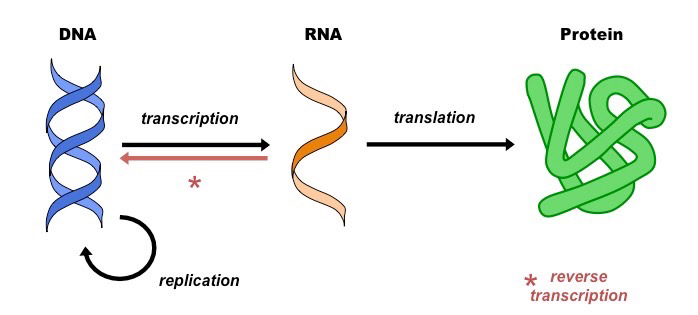
- Life as we know it requires nucleic acids (DNA and RNA) and proteins
DNA – information storage (genome)
RNA– information transfer from genome (transcription) so that it can be converted into proteins (translation)
Proteins – multiple functions e.g., enzymes (biological catalysts), structural components of the cell, receptors
- More recent studies show RNA can be Synthesised under plausible prebiotic conditions
( before life arose)
-may have also happened theough meteros
How did life begin? 2
- Problem:
- DNA can't replicate by itself – it needs a series of proteins/enzymes (e.g., polymerases) to replicate.
- can't have DNA-only life
- Proteins can't replicate directly – proteins are encoded by DNA.
- can't have protein-only life
- Life as we know it needs nucleic acids AND proteins!
- But... the DNA-RNA-protein system is probably too complicated to have evolved simultaneously.
- So which came first? Nucleic acids or proteins?
How did life begin? 3
- We now know that RNA molecules can act as enzymes (ribozymes) among other things. They can replicate themselves without the need for proteins.
- There may have been an "RNA world" made up of self-replicating RNA molecules before the evolution of the DNA-RNA-protein
Where did life originate? 4
- Darwin's idea:
- "a warm little pond with all sorts of ammonia and phosphoric salts, light, heat, electricity, etc., present" (1871 letter to Joseph Hooker)
Where did life originate? 5
- Alternative possibility — hydrothermal vents in the deep ocean
- water within the Earth’s crust is heated by geothermal energy then exits via fissures
- hot, chemically rich water spontaneously forms organic molecules
- porous structure of vents could have encouraged formation of cell-like structures
How did- cells -originate? - phospholipids🧫
- Phospholipids are organic molecules with:
- a hydrophilic (= water-loving) "head" (hydrophilic)
- a hydrophobic (= water-hating) fatty acid "tail"
- In water, phospholipids will spontaneously form a bilayer (a layer of two molecules thick):
- the hydrophilic heads face outwards (so that they are in contact with water)
- the hydrophobic tails face inwards (so that they are away from the water)
How did- cells -originate? -bilayer🧫
- A bilayer can spontaneously form a vesicle that encloses a volume of water inside.
- During the early stages in the evolution of life, vesicles could have enclosed self-replicating molecules, e.g., ribozymes.
- But... there's still a lot we don't know about the origin of life and the evolution of the first cells.
Prokaryotes consist of the domains bacteria and archea
the cell wall gives the prokaryotic cell its characteristic shape
Three common shapes are coccus, bacillus, spiral/ helical
Bacilli- rod shaped cells examples:
Bacillus
Lactobacillus
Eschericha( e. coli)
Salmonella
Listeria
Spiral or helical cells examples:
Heliobacter pylori
Treponema pallidum
Vibrio cholerae