WJEC GCSE Mathematics Unit 2 Foundation Tier (3300U20-1) - Complete Study Guide & Marking Scheme Notes
Examination Overview & Reference Formulas
- Exam Details: WJEC GCSE Mathematics Unit 2 (Calculator-Allowed), Foundation Tier, Paper Code 3300U20-1.
- Duration & Total Marks: 1 hour 30 minutes; total available marks = .
- Allowed Equipment: Calculator, ruler, protractor, and compasses.
- Approximation for Pi: Take or use the button on the calculator.
- Trapezium Area Formula:
where and are the lengths of the parallel sides and is the perpendicular height between them.

Arithmetic, Number Operations & BODMAS (Question 1)
1(a) Converting Words to Numerical Figures:
- Query: Calculate four times three hundred and seventy-two.
- Mathematical Statement:
- Final Answer:
- Marking Rule: Award mark [B1]. Do not accept the correct answer written purely in words.
1(b) Expressing Decimals in Words:
- Target Number:
- Written Form: "one point five two"
- Marking Rule: Award mark [B1]. Do NOT accept "one point fifty-two", "one decimal point five two", or "one dot five two".
1(c) Order of Operations (BIDMAS) & Bracket Insertion:
- Unbracketed Equation:
- Calculation Strategy: Without brackets, . Grouping gives
- Correct Placement:
- Marking Rule: Award mark [B1].
1(d) Ordering Real Numbers (Ascending Order):
- Given Numbers:
- Ordered List (Lowest to Highest):
- Marking Rule: Award mark [B1].
1(e) Multiples of an Integer:
- Target Number:
- Calculations:
First Three Multiples:
Marking Rule: Award mark [B1]. Condone inclusion of if is omitted.
- 1(f) Number Identification via Factor Analysis:
Given Factors: , and the number itself.
Property: A number with factors must be a multiple of and .
Calculation: or
Final Number:
Marking Rule: Award mark [B1].
Geometry: 2D Polygons & 3D Solids (Question 2)
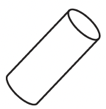
- 2(a) Identifying 3D Geometric Solids:
- Target Shape: Cylinder.
- Structural Definition: A 3D solid with two parallel circular bases connected by a curved surface.

Marking Rule: Award mark [B1] for correctly circling the cylinder.
- 2(b) Identifying 2D Polygons:
Target Shape: Hexagon.
Definition: Any 2D closed polygon containing exactly 6 straight sides.
- Marking Rule: Award mark [B1] for correctly circling the hexagon.
Perimeter Equivalence & Mathematical Communication (Question 3)
- Problem Statement: A square has a side length of . An equilateral triangle has a perimeter equal to the perimeter of the square. Find the side length of the equilateral triangle.
- Step 1: Calculate the Perimeter of the Square:
Award mark [B1] (may be implied in subsequent steps).
- Step 2: Calculate the Side Length of the Equilateral Triangle:
An equilateral triangle has 3 sides of equal length.
Award method mark [M1] for dividing total perimeter by , and accuracy mark [A1] for .
Follow-Through (FT) Rule: Allow FT on 'their derived perimeter' provided it is not equal to or 36$.\n\n- **OCW Assessment Criteria (2 Additional Marks):**\n - **OC1 (Organisation and Communication - 1 Mark):**\n - Present the response in a clear, structured manner.\n - State clearly what calculation is being performed at each step (e.g., explicitly label "Perimeter of square" and "Side length of triangle").\n - Lay out the explanation in a logical sequence leading to a final concluding sentence.\n - **W1 (Accuracy of Writing - 1 Mark):**\n - Show all working explicitly.\n - Ensure proper spelling, punctuation, and grammar.\n - Use correct mathematical syntax and notation.\n - Include correct units (cm) with the final numerical result.\n\n# Number Sequences & Pattern Recognition (Question 4)\n\n- **4(a) Continuing an Arithmetic Sequence:**\n - Sequence: 4, 28, 52, 76, \dots\n - Common Difference: 28 - 4 = 24\n - Calculation: 76 + 24 = 100\n - Final Answer: 100\n - Marking Rule: Award 1 mark [B1].\n\n- **4(b) Visual Dot Patterns:**\n - Pattern Breakdown:\n - Diagram 2: Height = 335 dots).\n - Diagram 3: Height = 447 dots).\n - Diagram 4: Height = 559 dots).\n - Deduction for Diagram 1: Height = 223 dots forming an L-shape).\n\n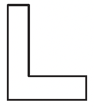\n\n - Marking Rule: Award 1 mark [B1] (Correct Answer Only).\n\n- **4(c) Linear Sequence Completion & Term-to-Term Rule:**\n - Sequence: 31, \text{__}, \text{__}, 16, 11\n - Common Difference d11 - 16 = -5\n - Missing Terms:\n\n\text{Second term} = 31 - 5 = 26\n\n\text{Third term} = 26 - 5 = 21\n\n - Checking: 21 - 5 = 16 (Matches given sequence).\n - Rule Statement: "Subtract 5" (or "Subtract 5 from the previous term").\n - Marking Rules: Award 126, 211 mark [B1] for the rule. Acceptable variations for rule: "-5", "take away 5", "going down in 5s".\n\n# Probability Scales & Event Analysis (Question 5)\n\n- **Context:** A bag contains 8 total counters (red, yellow, and green).\n - Probability scale runs from 018\frac{1}{8}.\n - Red counters marked at R = \frac{4}{8} = \frac{1}{2}.\n - Yellow counters in bag = 1.\n\n- **5(a) Marking Yellow Counter Probability:**\n - Probability Calculation:\n\nP(\text{Yellow}) = \frac{1}{8}\n\n - Action: Mark an arrow labelled Y0.\n\n\n\n - Marking Rule: Award 1 mark [B1]. Must be labelled and unambiguously positioned.\n\n- **5(b) Marking Green Counter Probability:**\n - Green Counter Count: 8 - 4 (\text{Red}) - 1 (\text{Yellow}) = 3\text{ green counters}.\n - Probability Calculation:\n\nP(\text{Green}) = \frac{3}{8}\n\n - Action: Mark an arrow labelled G0.\n\n\n\n - Marking Rules: Award 1P(G) = 0.5 - P(Y)P(G) \neq P(Y). Award Special Case SC1 in (b) if both arrows are correctly placed but unlabelled.\n\n# Statistical Measures: Range Adjustment (Question 6)\n\n- **Initial Data Set:** 13, 18, 4, 17\n - Initial Minimum = 4\n - Initial Maximum = 18\n - Initial Range = 18 - 4 = 14\n- **Condition:** A 5th number is added, increasing the range by 3.\n\n\text{New Range} = 14 + 3 = 17\n\n- **Case 1: The 5th number is a new minimum (x < 4):**\n\n\text{New Range} = 18 - x = 17 \implies x = 18 - 17 = 1\n\n- **Case 2: The 5th number is a new maximum (y > 18):**\n\n\text{New Range} = y - 4 = 17 \implies y = 17 + 4 = 21\n\n- **Final Answer:** The two possible values are 121\n- **Marking Scheme Breakdown:**\n - Award 3121.\n - Award 2121.\n - Award 1 mark [B1] for sighting any of the following partial steps:\n - 4 - 3\n - 18 + 3\n - Current range = 1418 - 4 = 14\n - New range = 17\n - Answers of 102013 - 317 + 3).\n\n# Calculator Computations & Precision Rounding (Question 7)\n\n- **7(a) Algebraic Fractional Expression:**\n - Target Expression: \n\n\frac{223 \times 15^2}{130}\n\n - Calculator Evaluation:\n\n15^2 = 225\n\n223 \times 225 = 50175\n\n\frac{50175}{130} = 385.961538…\n\n - Rounding Requirement: Round to the nearest 10.\n - Final Answer: 390\n - Marking Rules: Award 21385.961…390.0$.
- 7(b) Radical Square Root Expression:
Target Expression:
- Calculator Evaluation:
- Rounding Requirement: Round to 1 decimal place.
- Final Answer:
- Marking Rules: Award marks [B2]. Award mark [B1] for sight of rounded or truncated, or a final answer of 6.20$.\n\n# Algebraic Back-Calculation & Linear Equations (Question 8)\n\n- **Problem Context:** Ffion thinks of a number x834170.\n- **Formulating Equation:**\n\n8x + 34 = 170\n\n- **Step-by-Step Inverse Operations:**\n - Step 1: Subtract 34170:\n\n170 - 34 = 136\n\n (Award 1 mark [B1])\n - Step 2: Divide 1368:\n\n\frac{136}{8} = 17\n\n (Award 1 mark [B1])\n- **Marking Rules:**\n - Allow FT on 'their derived 136'. If 'their derived 136' divided by 8 yields a whole number, it must be evaluated for the second B1 mark.\n - Award full marks [B1 B1] for unsupported or embedded working (e.g., 17 \times 8 = 136136 + 34 = 170).\n - Deduct 117$.
Fractions, Percentages & Powers (Question 9)
- 9(a) Calculating a Fraction of a Quantity:
- Target: of
- Calculation:
Marking Rules: Award method mark [M1] for or . Award accuracy mark [A1] for (or exact fraction equivalents or ). Award M1 A0 for un-evaluated answers such as , , or rounded values or 92$.\n\n- **9(b) Calculating a Percentage of a Quantity:**\n - Target: 60\%315\n - Calculation:\n\n0.60 \times 315 = 189\n\n - Marking Rules: Award 10.60 \times 3151189$.
- 9(c) Integer Powers:
Target:
Calculation:
- Marking Rule: Award mark [B1].
Number Classification: Squares, Cubes & Multiples (Question 10)
Given Number Pool:
10(a) Identify a Square Number:
- Property:
- Answer:
- Marking Rule: Award mark [B1]. Answer line takes precedence.
10(b) Identify a Cube Number:
- Property:
- Answer:
- Marking Rule: Award mark [B1]. Answer line takes precedence.
10(c) Identify a Multiple of 14:
- Property:
- Answer:
- Marking Rule: Award mark [B1]. Answer line takes precedence.
Formula Substitution & Algebraic Rearrangement (Question 11)
- Given Formula:
Given Values: and
Standard Solution Method:
- Substitute values into formula:
- Simplify numeric product:
(Award method mark [M1])
- Isolate variable term:
(Award accuracy mark [A1] for seeing or )
- Final Evaluation:
(Award accuracy mark [A1])
- Alternative Rearrangement Method:
- Rearrange formula explicitly for :
(Award mark [B1])
- Substitute values:
(Award method mark [M1] and accuracy mark [A1])
Detailed Marking Instructions:
- Sight of without an equation receives M1 A0.
- An unsupported correct final answer of earns full marks [M1 A1 A1].
- Correct embedded answer earns M1 A1 A1 unless contradicted by stating (which drops to M1 A1 A0).
- If no other marks are scored, award Special Case SC1 for unsupported (from ) or sight of 105 = 5y$.\n\n# Symmetry of Quadrilaterals & Cuboid Volume (Question 12)\n\n- **12(a) Properties of Special Quadrilaterals:**\n - Target Requirements: Order of rotational symmetry = 22\n - Evaluation of Options:\n - Square: Rotational symmetry order 4; 4 lines of symmetry.\n - Trapezium: Rotational symmetry order 1; 0 or 1 line of symmetry.\n - Kite: Rotational symmetry order 1; 1 line of symmetry.\n - Parallelogram: Rotational symmetry order 2; 0 lines of symmetry.\n - Rhombus: Rotational symmetry order 2; 2 lines of symmetry (along diagonals).\n - Correct Shape: Rhombus\n\n\n\n - Marking Rule: Award 1 mark [B1] for circling Rhombus.\n\n- **12(b) Volume of a Cuboid:**\n - Dimensions: Length = 8\,cm13\,cm7\,cm\n - Formula:\n\n\text{Volume} = l \times w \times h\n\n - Calculation:\n\n\text{Volume} = 8 \times 13 \times 7 = 728\,cm^3\n\n - Marking Rules: Award 18 \times 13 \times 71728728 \div 2) invalidate the method mark (M0).\n\n# Transformations: Scale Enlargement & Vector Translation (Question 13)\n\n- **13(a) Grid Enlargement:**\n - Operation: Enlarge object shape by a scale factor of 4\n - Method: Multiply the length of every edge of the original shape by 4\n - Marking Rules: Award 2123$.
13(b) Vector Translation on Coordinate Grid:
- Operation: Translate shape units to the right and units down.
- Translation Vector Form:
- Action: Shift every vertex .
- Marking Rule: Award mark [B1] for correct final position.
Polygon Angles & Tessellation Analysis (Question 14)
14(a) Tessellation Proof for Regular Hexagons:
- Fact: Interior angle of a regular hexagon =
- Angle Fact Principle: For shapes to tessellate around a vertex, the sum of interior angles meeting at that vertex must equal exactly
- Valid Explanations:
- "Three interior angles add together to make (")."
- " is a factor of " / " is a multiple of "."
- "" or ""."
- Marking Rules: Award explanation mark [E1]. Do NOT accept vague statements like "they fit together" or "all exterior angles add up to 360".
14(b) Non-Tessellation Proof for Regular Pentagons:
- Step 1: Calculate the interior angle of a regular pentagon ():
- Method A (Exterior Angle Method):
- Method B (Interior Angle Sum Method):
(Award method marks [M2] for full method, or method mark [M1] for seeing or total; award accuracy mark [A1] for )
- Step 2: Test factorability of by :
- Explanation: is not a factor of (or is not a multiple of / is not a whole number).
- Marking Rule: Award explanation mark [E1] dependent on M2 previously awarded.
Data Analysis: Pie Charts, Pictograms & Probability (Question 15)
- Group A Survey Data (Pie Chart):
- Total people in Group A =
- Sector breakdown: Green sector represents a right-angle ( or of chart).
- Green Count in Group A:
(Award mark [B1])
- Group B Survey Data (Pictogram):
- Pictogram Key: (Each quarter circle = ).
- Green Row in Group B: Contains circle icons ( quarter circles).
- Green Count in Group B:
(Award mark [B1])
- Total Group B Population: Total icons = quarter circles:
- Combined Overall Population:
(Award marks [B2] for )
- Combined Green Probability:
- Total Green choices across both groups =
- Probability:
- Decimal/Percentage Equivalents: or
- Marking Rules: Award mark [B1] for . Penalize mark for incorrect non-fractional notation such as "43 in 152".
Algebraic Pyramids & Addition Walls (Question 16)
- Pyramid Rule: The expression in any block is the sum of the expressions in the two blocks directly below it.

- Top Row (Row 3):
- Middle Row (Row 2):
- Left Block =
- Right Block Calculation:
- Bottom Row (Row 1):
- Given Right Block =
- Middle Block Calculation:
- Left Block Calculation:
- Summary of Pyramid Blocks:
- Row 3:
- Row 2:
- Row 1:
- Marking Rules: Award marks [B3] for a fully correct diagram with simplified expressions. Award marks [B2] for seeing any two missing expressions correctly; award mark [B1] for seeing any one missing expression correctly.
Composite Area: Inscribed Circle in a Square (Question 17)
- Given Dimensions: Circle fits exactly inside a square; radius of circle
- Step 1: Calculate Dimensions and Area of Square:
- Side length of square
- Step 2: Calculate Area of Circle:
- Step 3: Calculate Total Shaded Region Area:
- Acceptable Numerical Bounds:
- Marking Rules:
- Award method marks [M2] for .
- Award accuracy marks [A2] for answer within range to .
- Award M1 for seeing , , , , or circle area in range to 78.55\,cm^2$.\n - Award A1 for exact form 100 - 25\u03C078.578.55\,cm^2$.
Map Scales & Compass Bearings (Question 18)
Map Scale:
18(a) Calculating Real Distance:
- Measurement on Map from A to B = (Tolerance range: to )
- Distance Calculation:
Acceptable Range: (Inclusive range to ).
Marking Rules: Award marks [B2]. Units () must be stated correctly. Award mark [B1] for or evaluating 'their 9.6' provided 'their 9.6' is strictly between and exclusive.
- 18(b) Finding a Compass Bearing:
Target: Bearing of town A from town B.
Measurement Procedure: Place protractor centered at town B, measure angle clockwise from North line pointing to A.
Angle Measurement =
Acceptable Range: (Inclusive range to ).
Marking Rule: Award mark [B1].