work and energy
Work, Power, and Energy
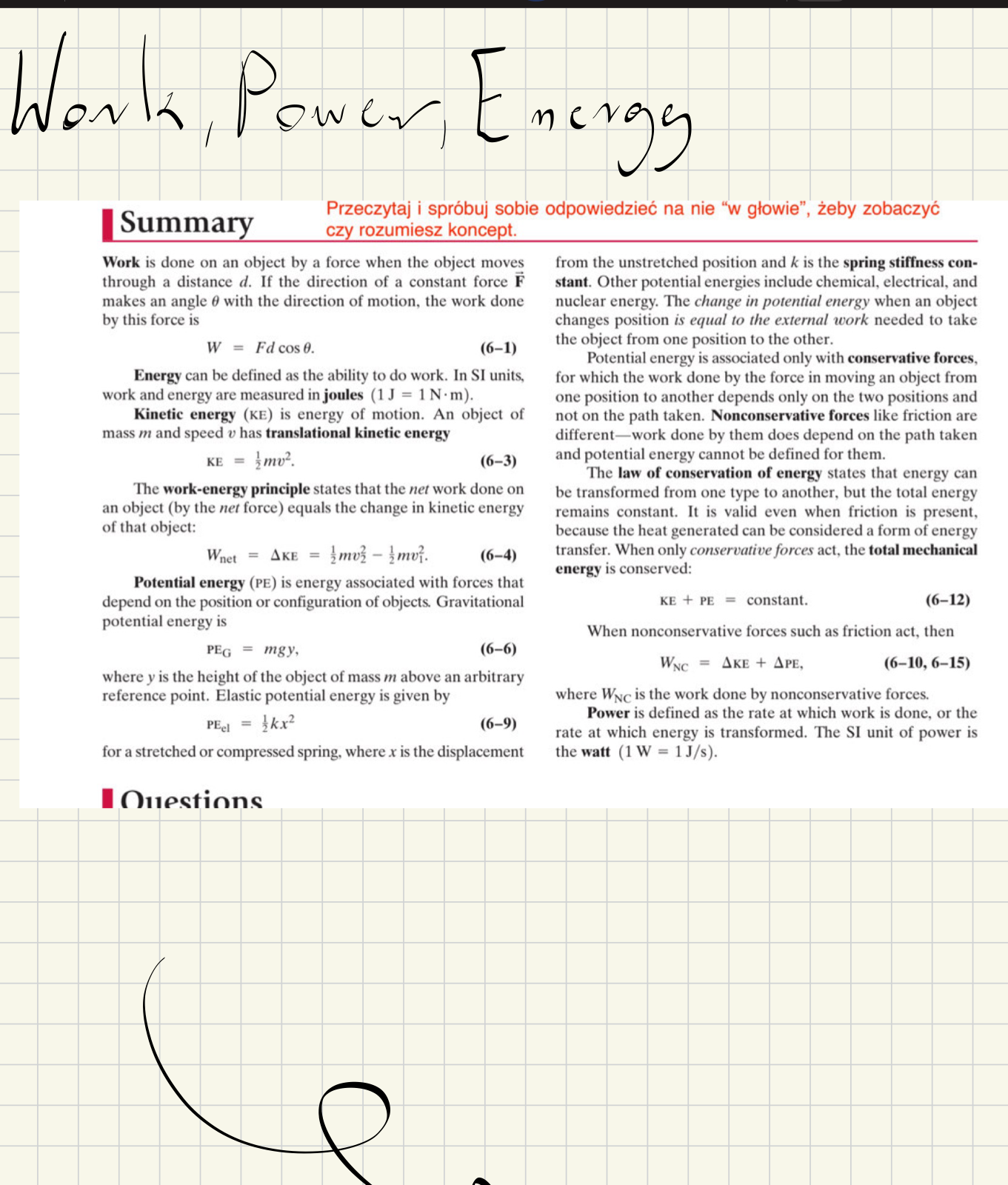
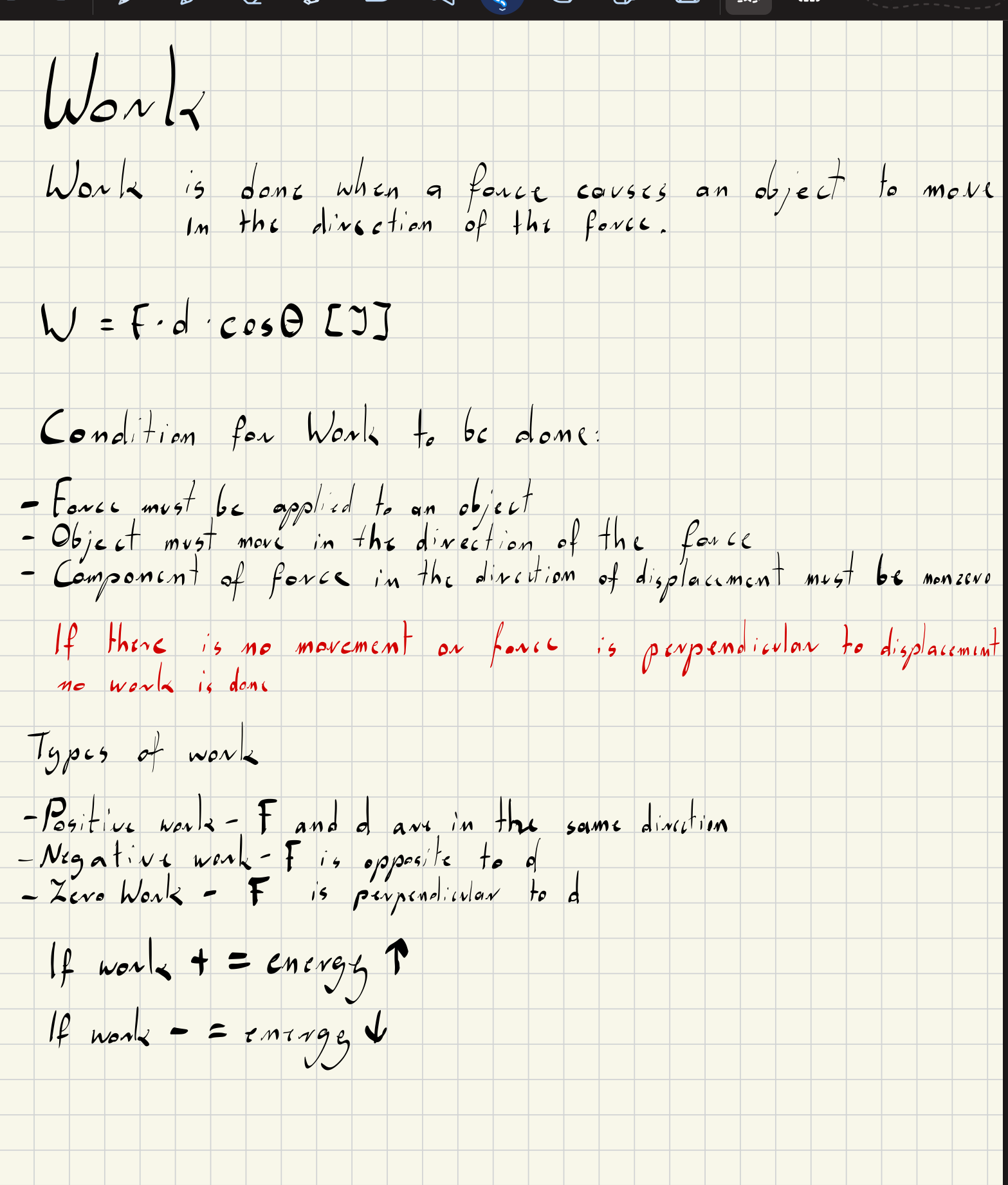
Work: Defined as the product of force and the distance over which it acts (W = F × d). Work is measured in joules (J). It occurs when a force causes an object to move in the direction of that force.
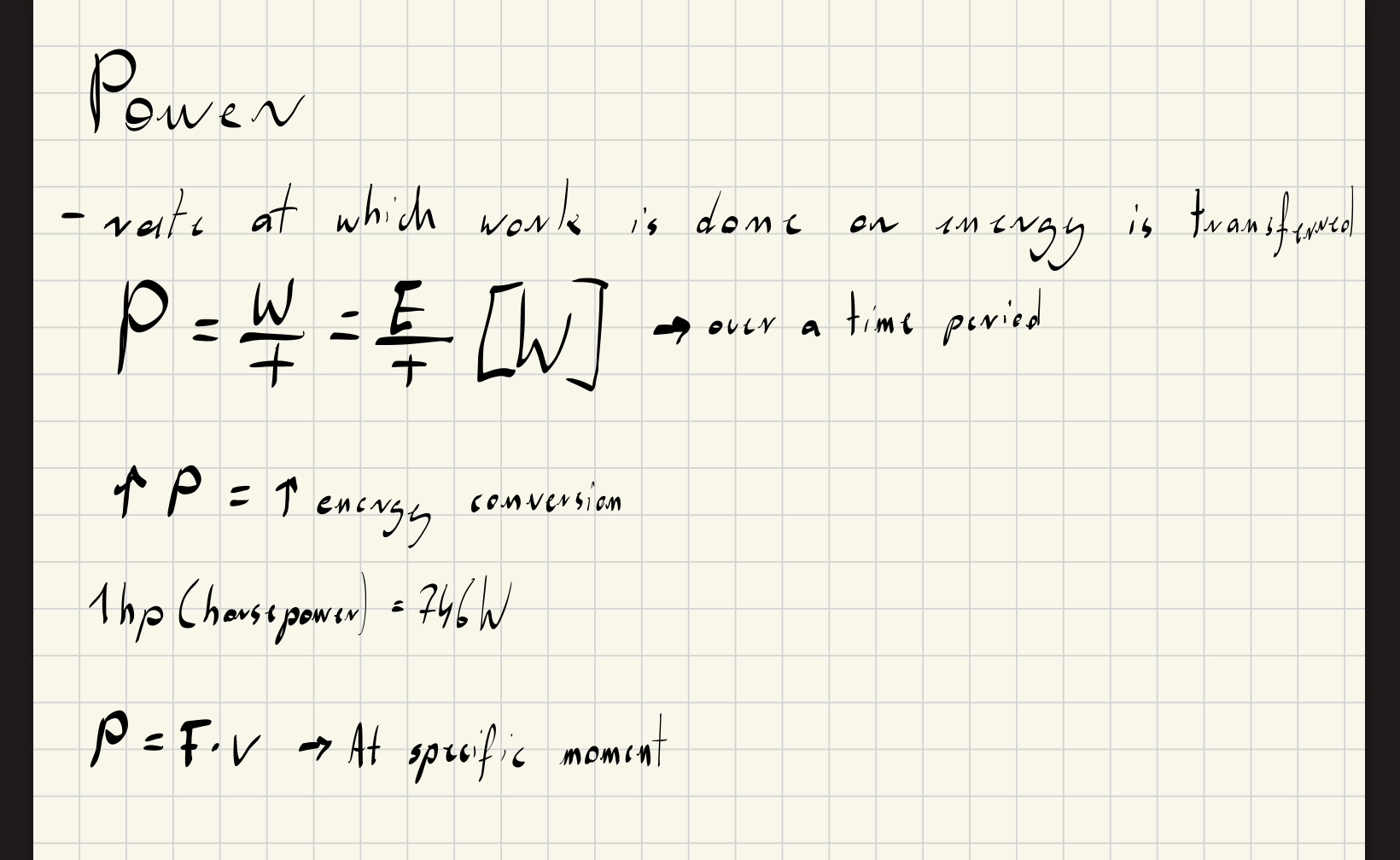
Power: The rate at which work is done or energy is transferred (P = W/t). Power is measured in watts (W), where 1 watt equals 1 joule per second.
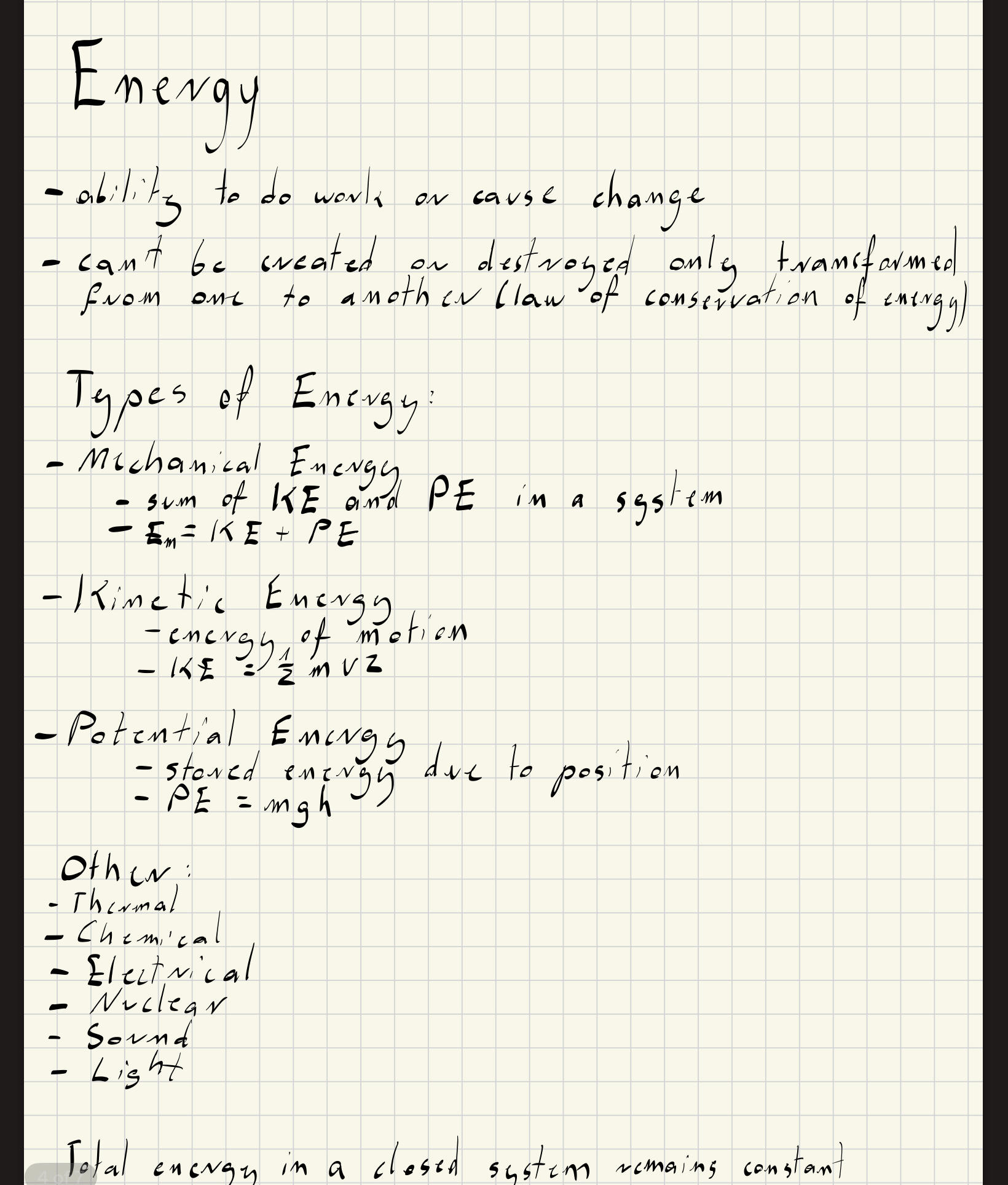
Energy: The capacity to do work. Energy takes various forms, including kinetic (energy of motion) and potential (stored energy due to position). The law of conservation of energy states that energy cannot be created or destroyed, only transformed from one form to another.
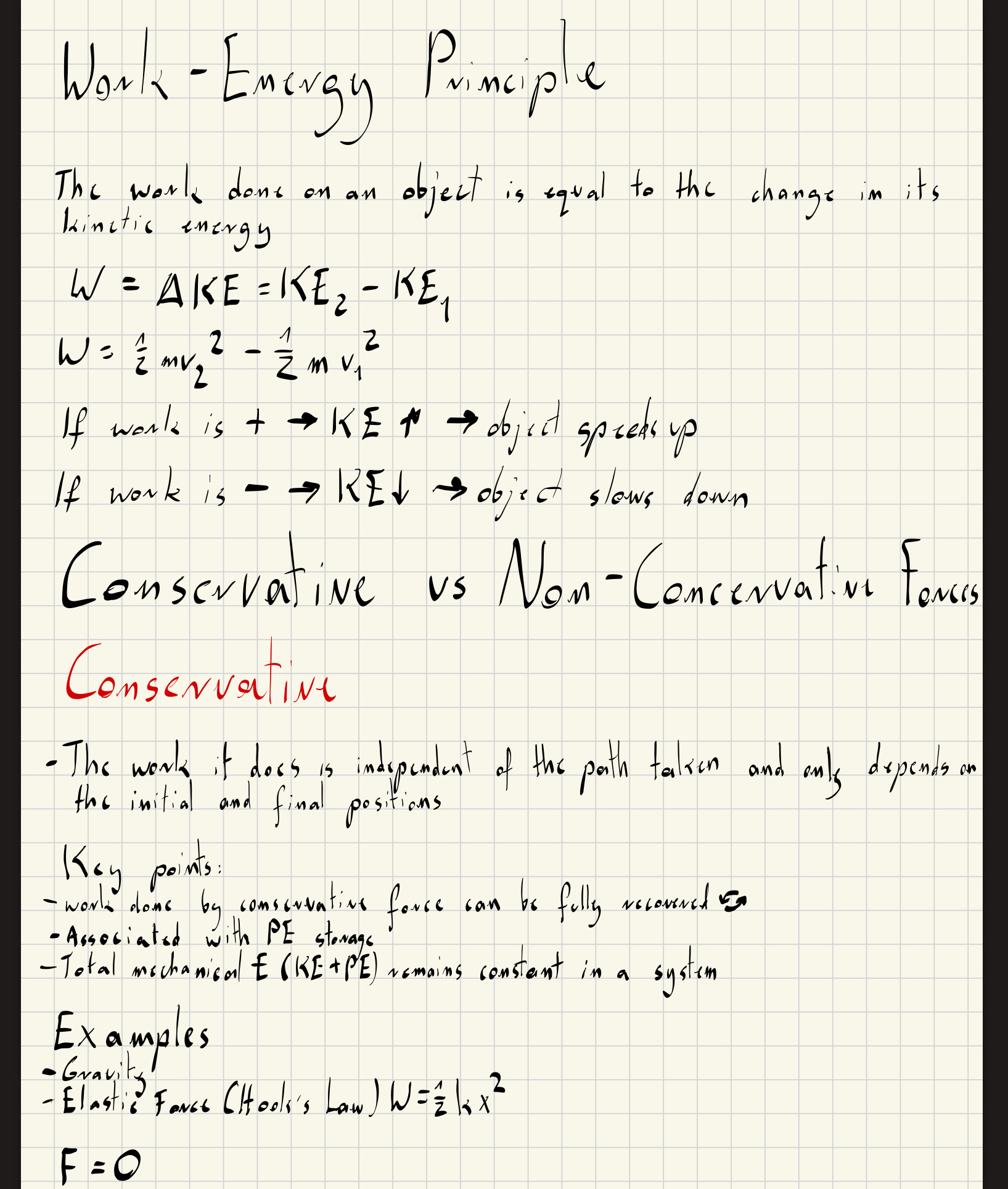
Conservative and Non-Conservative Forces
Conservative Forces: Forces that do work independent of the path taken. The work done by a conservative force on an object moving from one point to another is only dependent on the initial and final positions. Examples include gravitational force and elastic spring force. These forces store energy in the system, which can be fully recovered.
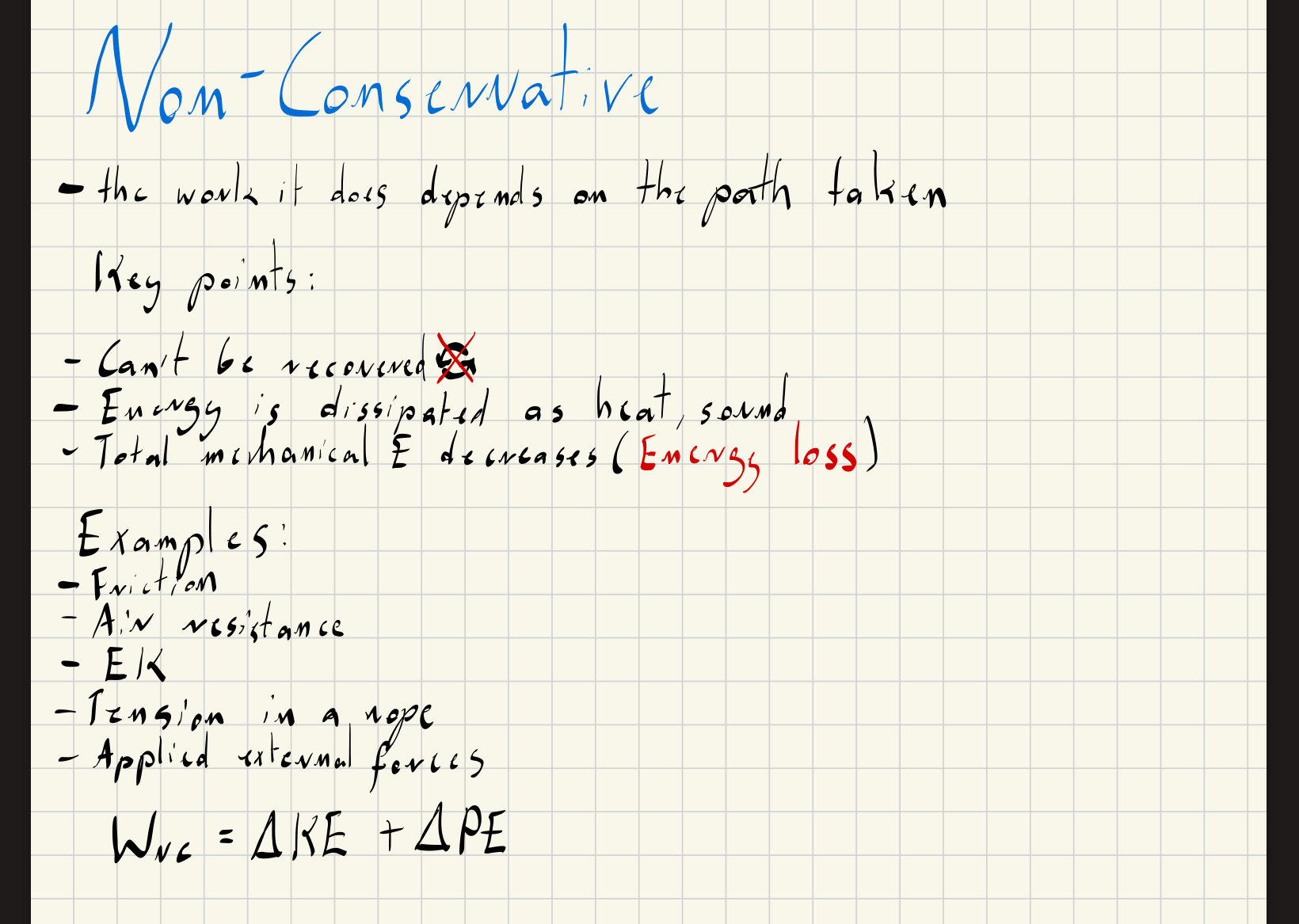
Non-Conservative Forces: Forces that do work that is path-dependent. The work done by non-conservative forces depends on the specific path taken. Examples include friction and air resistance. These forces dissipate energy as heat or sound, and energy cannot be fully recovered.