CHAPTER 14_Coordination & Response - pt.3 -> Phototropism & Geotropism
Condition | Process | Effect on Blood Vessels | Result |
|---|---|---|---|
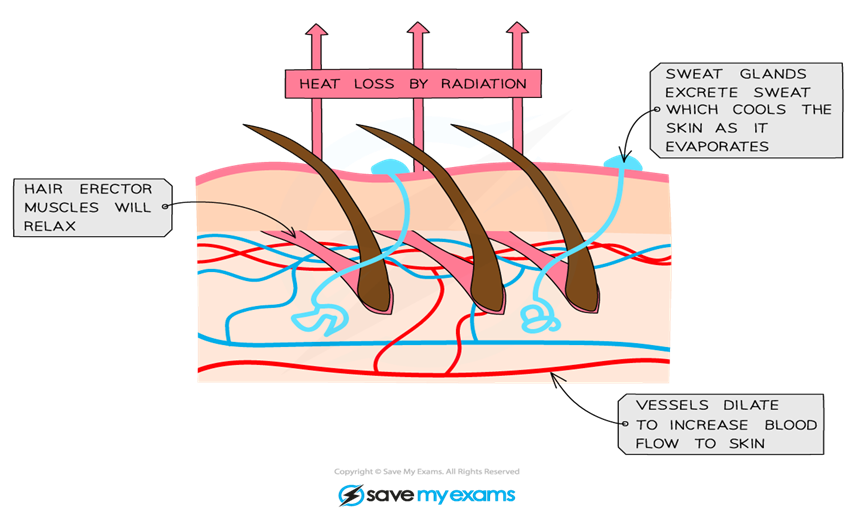
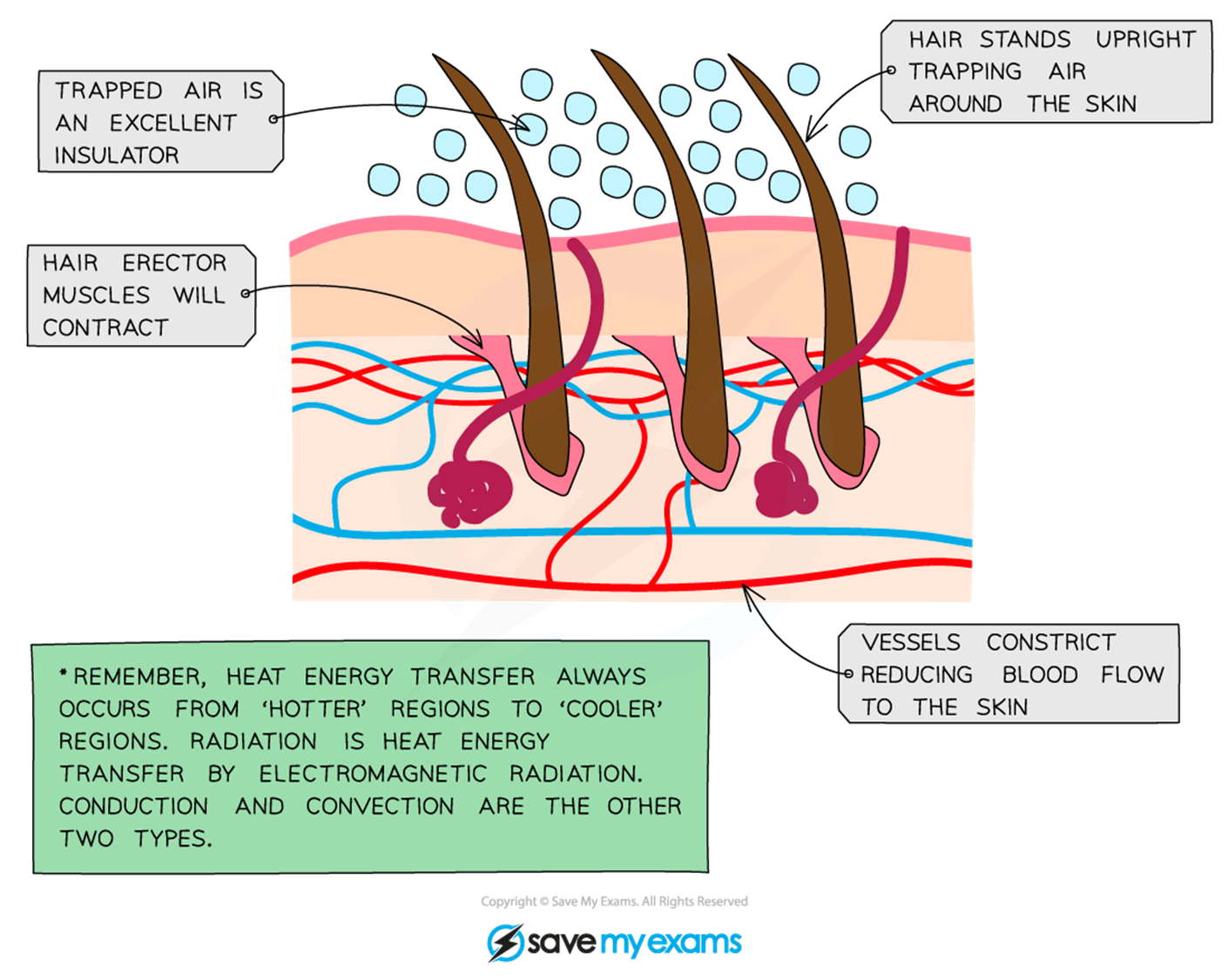
Cold | Vasoconstriction | Arterioles narrow | Less blood flows near skin surface → less heat lost by radiation |
Hot | Vasodilation | Arterioles widen | More blood flows near skin surface → more heat lost by radiation |
Key Points:
Vasoconstriction: Reduces heat loss when cold.
Vasodilation: Increases heat loss when hot.
Tropisms
Tropism: A growth response in plants to a stimulus.
Positive tropism → growth towards the stimulus.
Negative tropism → growth away from the stimulus.
Examples of stimuli: light, gravity, and water.
Plant responses are slow because they involve growth rather than movement.
Stimulus | Name of Response | Definition | Positive Response | Negative Response |
|---|---|---|---|---|
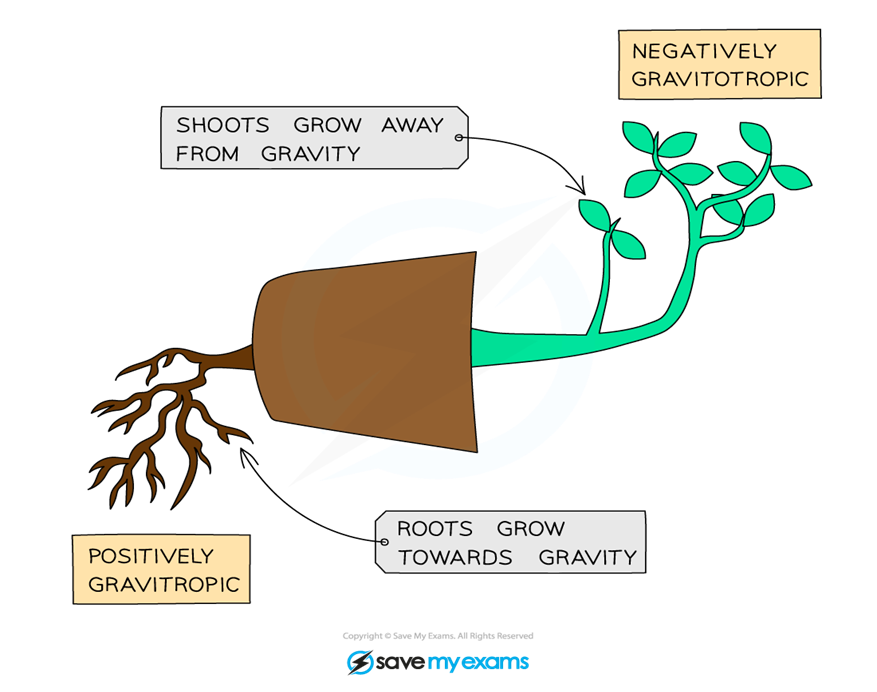
Gravity | Gravitropism (Geotropism) | Growth in response to gravity | Growth towards gravity (e.g. roots) | Growth away from gravity (e.g. shoots) |
Light | Phototropism | Growth in response to light | Growth towards light (e.g. shoots) | Growth away from light (e.g. roots) |
Shoots & Roots:
Shoots:
Grow upwards, away from gravity, and towards light
→ Positive phototropism, negative gravitropism
Roots:
Grow downwards, towards gravity, and away from light
→ Positive gravitropism, negative phototropism
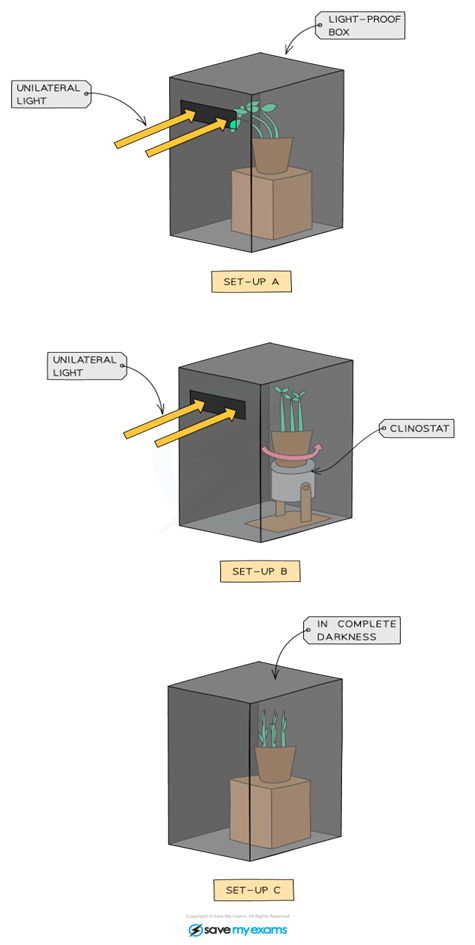
A - Investigating Phototropism
Setup | Conditions | Observation | Explanation |
|---|---|---|---|
A | Light from one side | Seedlings bend towards the light | Positive phototropism – shoot grows towards light |
B | Light evenly distributed (clinostat rotating) | Seedlings grow straight up | Equal light exposure → no phototropic response |
C | No light (darkness) | Seedlings grow tall, slender, yellow leaves | Grow upwards searching for light (no chlorophyll due to lack of light) |
B - Investigating Gravitropism
Setup | Conditions | Observation | Explanation |
|---|---|---|---|
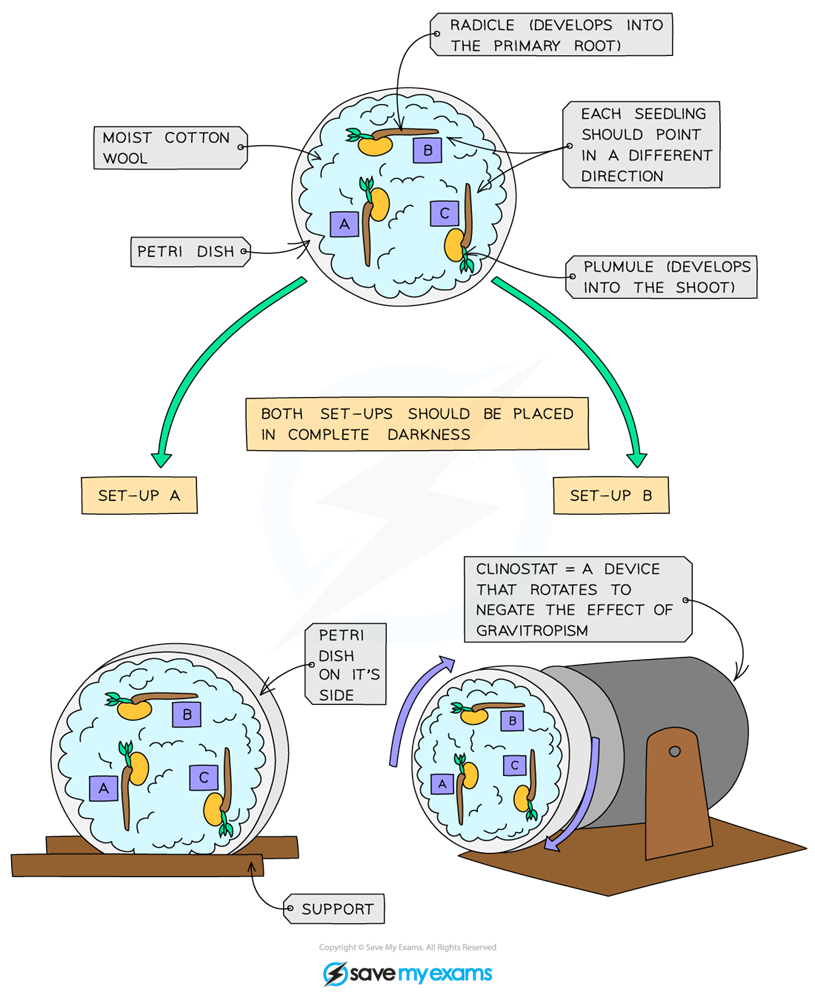
A | Petri dish on its side (still) | Radicles grow downwards (positive gravitropism) Plumules grow upwards (negative gravitropism) | Roots respond to gravity by growing down; shoots grow opposite to gravity |
B | Petri dish on clinostat (rotating) | Radicles and plumules grow in all directions, continuing as placed | Effect of gravity cancelled by rotation → no gravitropic response |
Auxins: Chemical Control of Tropisms
Auxin is a plant growth hormone that controls the direction of growth in roots and stems.
Plants control growth chemically using auxins.
Produced mainly in shoot and root tips, auxin diffuses from areas of high concentration (tips) to lower concentration further down.
Auxin stimulates cell elongation in the region just behind the tip (the meristem) — the more auxin, the faster the growth.
When light shines evenly, auxin is distributed equally, so the shoot grows straight up.
When light comes from one side, auxin moves to the shaded side, causing faster elongation there.
This uneven growth makes the shoot bend toward the light — a positive phototropic response.
Positive Phototropism
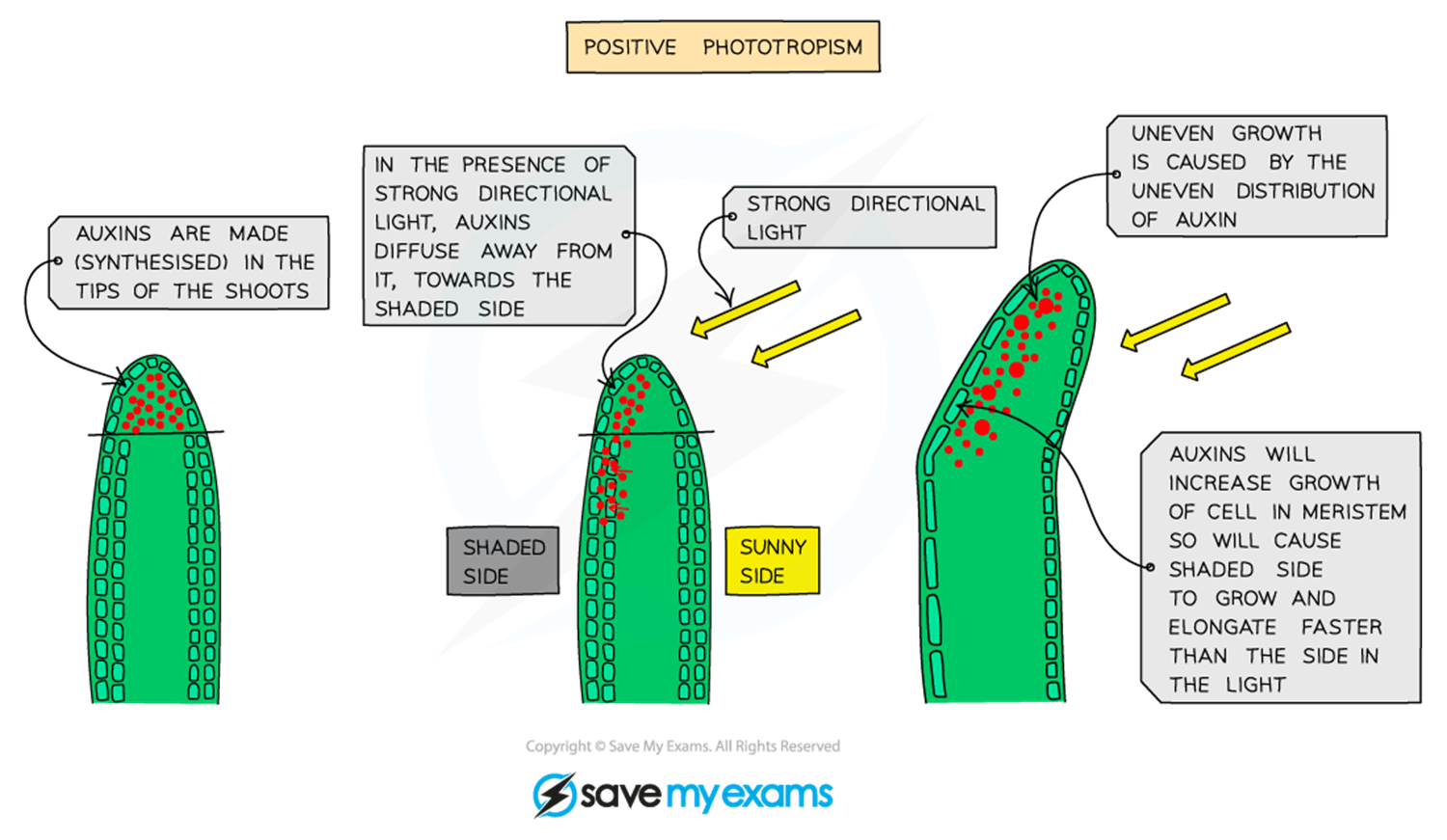
Auxins are produced in the tips of shoots.
When exposed to strong directional light, auxins move to the shaded side of the shoot.
This causes an uneven distribution of auxin.
Cells on the shaded side elongate faster than those on the light side.
This uneven growth causes the shoot to bend toward the light — showing positive phototropism.
Seedling Experiments – Evidence for Auxin Action
Seedling | Treatment | Effect on Auxin | Result | Reason / Conclusion |
|---|---|---|---|---|
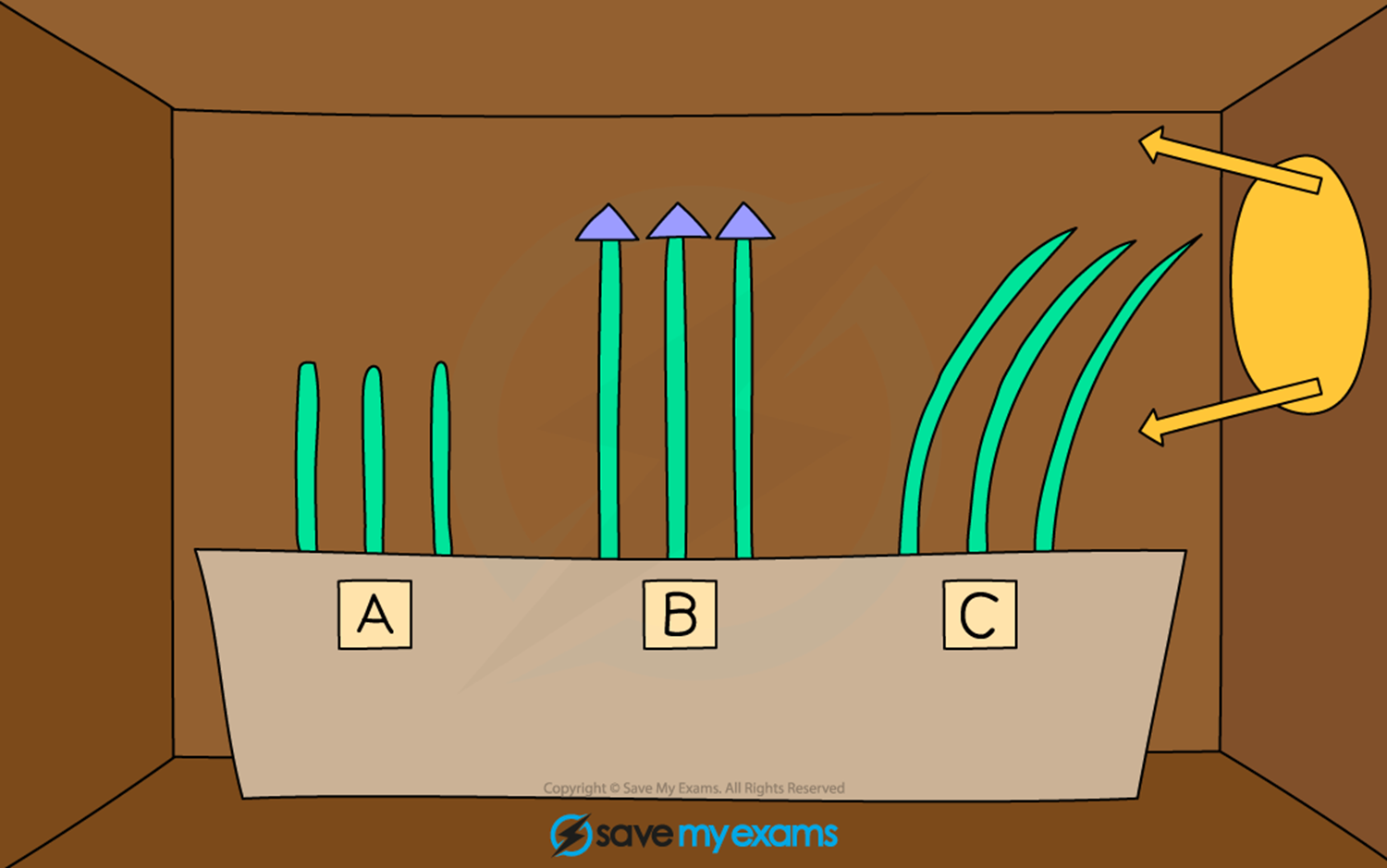
A | Tips removed | No auxin produced | Stems do not grow longer | Auxin is made in the tip and is needed for cell elongation and growth. Without the tip, no auxin → no growth. |
B | Equal light on all sides | Equal auxin concentration on both sides | Stems grow evenly and longer on both sides | Light affects auxin movement. With equal light, auxin is evenly distributed → even growth. |
C | More light on one side | Higher auxin concentration on shaded side | Cells on shaded side grow longer and faster, stem bends toward light | Shoots grow toward light because auxin accumulates on the shaded side, causing unequal growth → positive phototropism. |
Auxin & Gravitropism (Geotropism)
Auxin affects how plants respond to gravity, acting differently in shoots and roots.
When shoots grow away from gravity, it’s called negative geotropism.
Gravity causes auxin to accumulate on the lower side of the shoot.
Auxin increases cell elongation in shoots, so the lower side grows faster, bending the shoot upwards.
When roots grow towards gravity, it’s called positive geotropism.
Auxin accumulates on the lower side of the root.
In roots, high auxin concentrations inhibit cell elongation.
The upper side grows faster, so the root bends downwards.
Exam Tip: