papers and boards performance chacteristics
RAW MATERIALS
paper is made from plant fibres rich in cellulose, shredded cane (bagasse) can be used for producing paper. other sources are;
flax
hemp
straw
cotton
bamboo
normally wood
better fibres are from long and strong fibred wood, softwoods are more commonly used as they are quicker to grow
PRODUCTION
wood is debarked, chipped, water is added then acids are added to remove lignin bonds, fillers such as clay and calcium carbonate (chalk) are added. sometimes wood is bleached to increase brightness
wood free pulp is a solution at 140C, dyes and sizes are additives used to change the properties of the pulp, most water is reused in pulp production and the remaining lignin free fibres are called wood free pulp. 500 ml of water is used for one a4 sheet
PAPER QUALITIES
papers qualities are;
whiteness and brightness - bleach can be added to increase brightness
opacity - oils can be used to increase transparency
strength - uncoated paper has no sealant, meaning greater absorption, this makes a weaker colour but it can be textured better
absorbency (water and ink) - this can be affected by sizing agents which reduce absorbency. internal sizing means paper runs better through machines, surface sizing increases absorbance and printability, more agents more absorbance
finish - calendaring using rollers leaves a desired surface thickness and finish, fillers also smooth the paper
cost - higher quality paper is more expensive
impact resistant- papers and boards need to be impact resistant for transport and indentation for pens and pencils
weight - more light-weight paper, such as airmail, is cheaper to transport
longevity - lower quality paper can be used for products with a short lifespan, such as a newspaper
waste and cost efficiency - patterns and tessellates can be used tor educe costs when producing a certain stock size
FINISHES
the paper can also be finished with a UV varnish or texture. clay increases smoothness and polyethylene increases gloss and wet strength
paper can have a matte smooth finish, that is dull but good for printing. satin is less reflective than gloss but more that matte. gloss is a very shiny paper, often more expensive due to the high quality. a felt roller can be used to give the paper a texture
different materials when rolled produce a different texture, felt is smooth, wove is more smooth and velum is the most smooth, column linen and laid can add lines. cockle can be used to emulate handmade paper
TEAR RESISTANCE
the higher the strength the higher the tear resistance, this is affected by the fibres bonding, strength, length and the fillers use, fillers reduce strength.
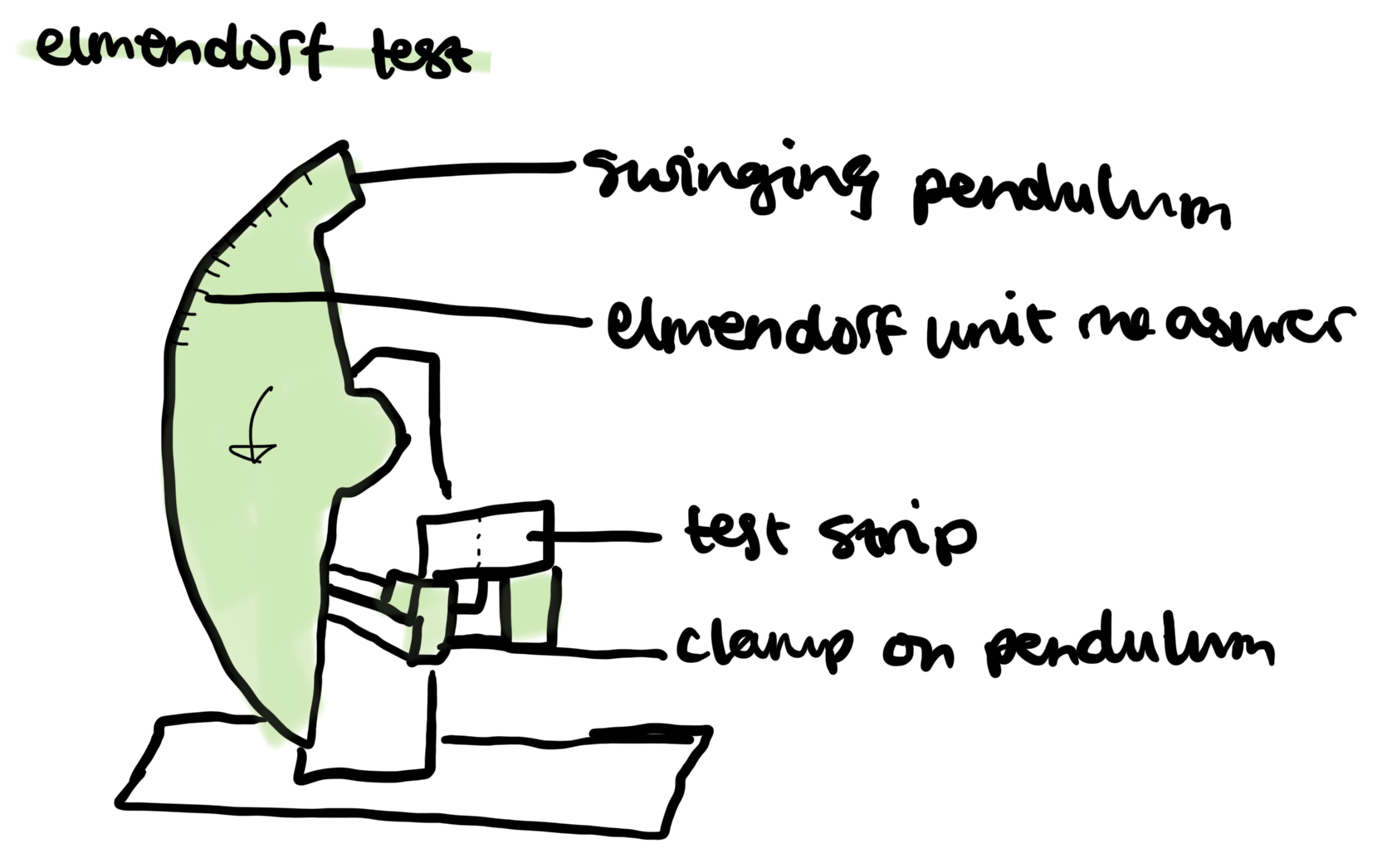
the Elmendorf tear test is used for paper and board, samples are clamped and cut, the pendulum swings to a resting point and gives a value using Elmendorf units. the Smithers Pira test can be used for multiple sheets
DIE CUTTING
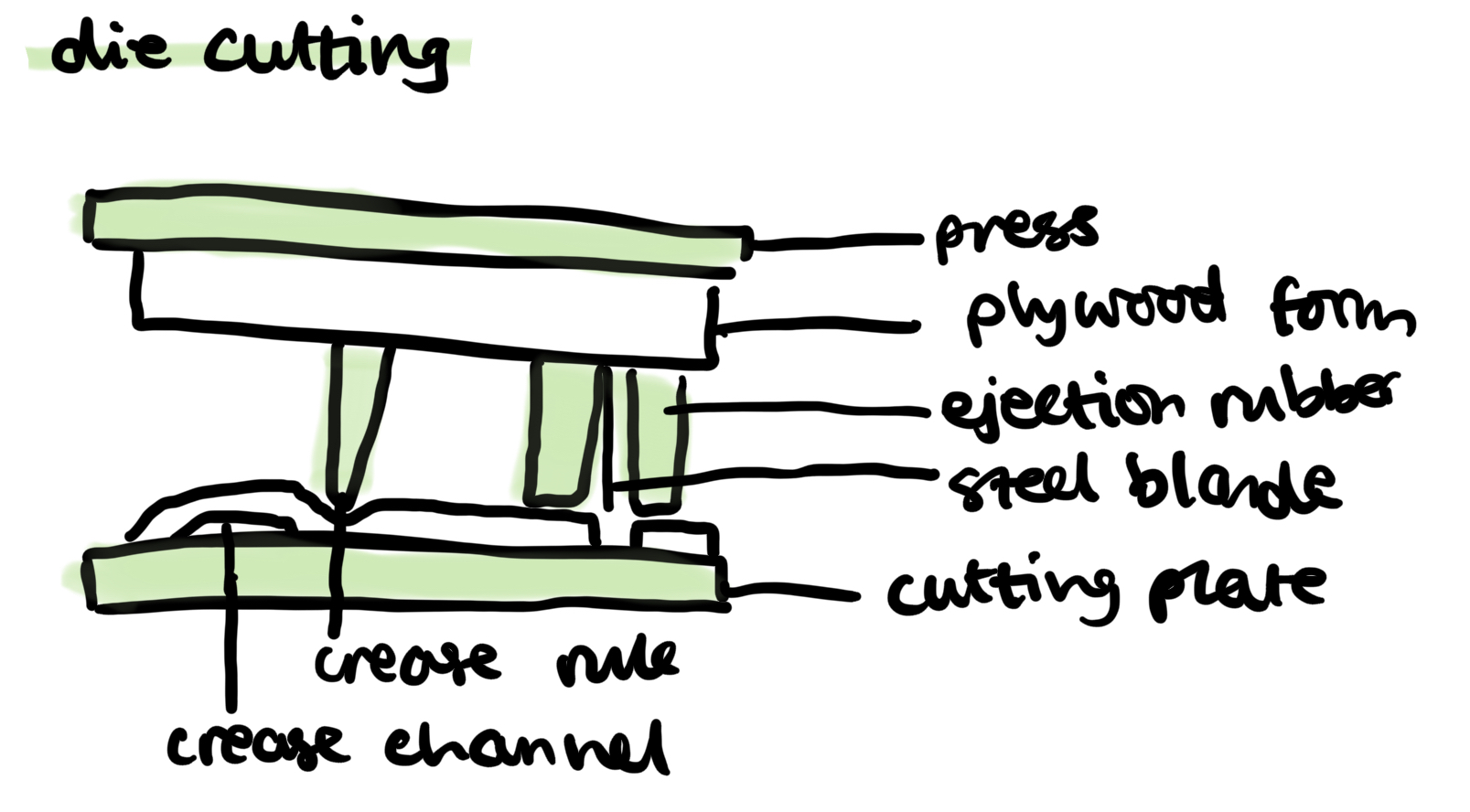
die cutting is used to make a repeatable paper shape that is not a stock form, this allows for easy reproduction and a die can be made by CAD and laser cut. nets can also be produce for packaging
metals blades (often steel) cut a plywood form, the material is put on the cutting plate and can be used to cut, score and crease a material, rubber bars can be used to stop sticking and creasers can be produced
FORMING
paper can be creased to make a permanent line, by crushing fibres. folding is used to create a shape and form
paper can be scored for a precise line, when paper isn’t fully cut. cutting and scoring in school must be done on a cutting mat with a safety rule for protection, a blunt knife is used for scoring and a scalpel for cutting
perforations can be produced using a die cutter, or a profile wheel
paper can be laser cut to create a precise and repeatable pattern, it is often used for high detail and it is often quicker. also cardboard and corrugated card can also be laser cut