unit 4- Cell Communication and Cell Cy
CELL COMMUNICATION:
Direct Contact:
type of cell communication where cells interact through physical connections, allowing the transfer of signals and molecules directly b/w adjacent
Chemical Signaling:
short distances- local regulators in the extracellular fluid
long distances- hormones in the blood stream
Autocrine- a cell targets itself
Signaling across gap junctions- a cell targets a cell connected by gap junctions
Paracrine- a cell targets a nearby cell
Endocrine- a cell targets a distant cell through the bloodstream
SIGNAL TRANSDUCTION:
Reception:
ligand(signaling molecule) binds to receptor
causes confirmational shape change
ex: G protein coupled receptor
Ligand:
Steroid Hormones:
Release: Simple Diffusion
Receptor: Intracellular
Ex: Testosterone, Estrogen
Protein Hormone:
Release: exocytosis
Receptor: extracellular
Ex: insulin
Transduction:
signaling cascades relay signals from receptors to cell targets often amplifying the incoming signals
Phosphorylation Cascade:
Protein kinase
Phosphorylate relay molecules
Secondary Hormones
Ca2+
cAMP
Response:
cell growth
secretion of molecules
gene expression
alter cell funciton/phenotype
apoptosis

FEEDBACK
Negative Feedback:
maintain homeostasis by reducing the intial stimulus
if system is disrupted, neg feedback returns it back to its target set spot
occurs at molecular, cellular, and organismal level
Positive Feedback:
mechanisms amplify responses and processes
variable initiating the response is moved further away from the initial set point
CELL CYCLE
G1(gap phase 1)-
metabolically active
duplicating organelles and cytosolic components
basically js doing its job as a cell
S(synthesis)-
DNA(chromatin) replicates to form sister chromatids
G2(gap phase 2)-
protein synthesis
ATP produced in large quanitites
centrosomes replicate
M(mitosis)-
nuclear division
G0-
no longer dividing, but can reenter the cell cycle in response to clue
Mitosis(expanded)
Prophase-
sister chromatides condense
mitotic spindle forms
centrosomes move to opposite poles

Metaphase-
spindle fibers align chromosomes along equator of the cell
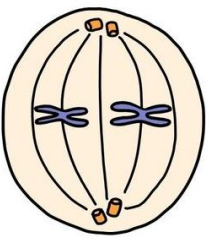
Anaphase-
paired sister chromatids separate and pulled toward poles

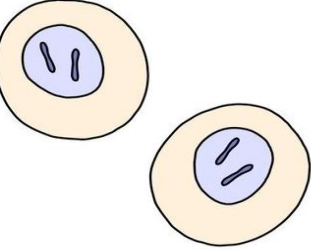
Telophase-
mitotic spindle breaks down
new nuclear envelope devlops
cytoplasm divides

Cytokinesis-
cleavage furrow(animal cells)
cell plate(plate cells)
divide cytoplasm
REGULATION OF CELL CYCLE
internal controls or checkpoints regulate progressive through the cell cycle
G1- determines whether to complete the cell cycle
growth factor
adequate reserves
check for DNA damage
if do not pass, enter G0

G2- check all DNA replicated and not damaged
if detect problems w/ DNA, cell cycle halted to complete DNA rep or repair damaged DNA

M- check sister chromatids attached to spindle microtubules
