Final Exam
Chapter 1: "An Invisible World"
Key Concepts:
Microorganisms (microbes) Overview:
organisms too small to be seen without a microscope (used to view); are ubiquitous and play major roles
decomposition and nutrient cycling, food production, normal microbiota, medicine, or infectious disease
Roles:
used microbes for food production, biotechnology, and environmental processes, organizing, and identifying organisms
Saccharomyces cerevisiae is responsible for yeast in bread
lumbar puncture:
used to take a sample of a patient’s cerebrospinal fluid (CSF).
The needle is inserted into the lumbar region (two vertebrae of the lower back)
should be clear; cloudy CSF may = infection
tested further to confirm microorganisms
Domains of life:
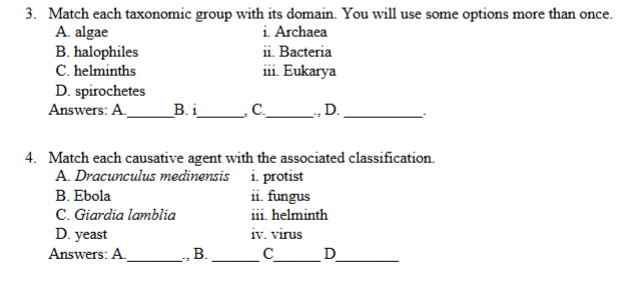
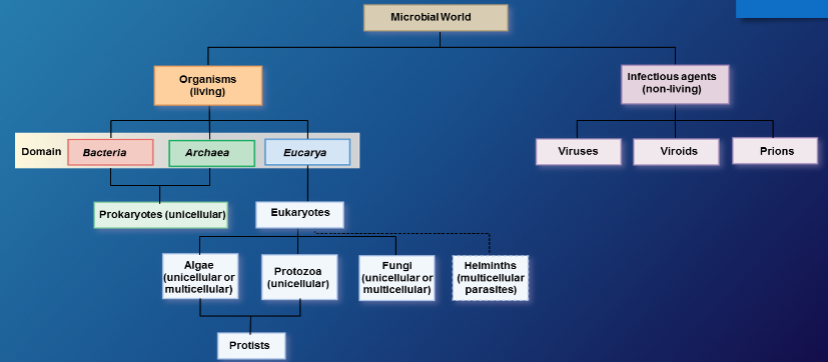
Bacteria (prokaryotes), Archaea (prokaryotes), Eukarya (eukaryotes)
Subdivisions of eukarya:
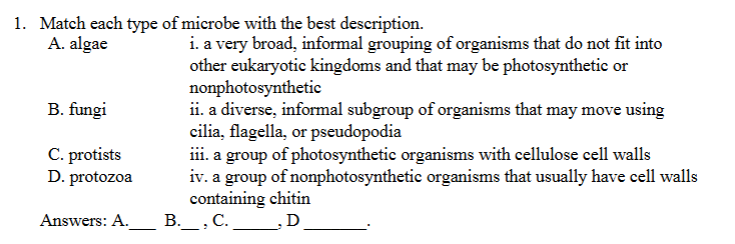
algae → group of photosynthetic organisms with cellulose cell walls
fungi → group of non-photosynthetic organisms that have cell walls made of chitin (e.g. yeast and candida albican)
protists → broad grouping of organisms that dont fit elsewhere but may be photosynthetic or not (e.g. Giardia lamblia)
protozoa → diverse subgroup of organisms that use cilia, flagella, or pseudopodia
helminths → dracunulus medinensis (infected water) and taenia saginata (beef tapeworm)
Subdivisions of archae:
halophiles
Subdivision of infectious agents: bacteria, virus, fungi, and parasites
viruses → acellular, nonliving20-300nm (e.g. ebola)
viroids → plant disease
prions → infectious proteins of misfolded brain proteins
Prokaryotes (no nucleus, unicellular, photosynthetic/non-photosynthetic) and eukaryotes (with a nucleus) begin
EUAKRYOTIC CELLS → PLANTS, ANIMALS, FUNGI, AND PROTISTS
Historical milestones:
Early ideas of disease: quarantine, bad air, and cloaca maxima and aqueduct
Individual | Contribution |
|---|---|
Hippocrates 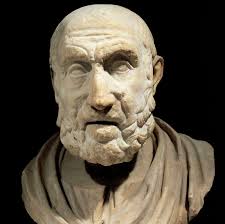 | Disease had natural causes |
Thucydides 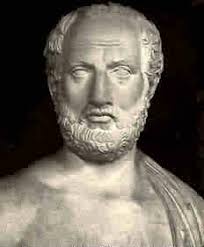 | Observed immunity after disease (plague of Athens); Father of Scientific History |
Marcus Terentius Varro 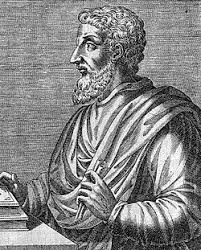 | Proposed invisible organisms cause disease (air) |
late century
Scientist | Contribution |
|---|---|
Antonie van Leeuwenhoek 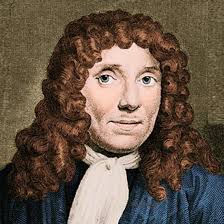 | First to observe microorganisms |
Robert Hooke 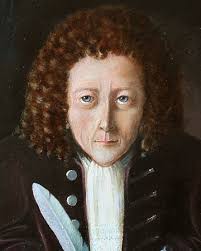 | Coined term “cell” |
Francesco Redi 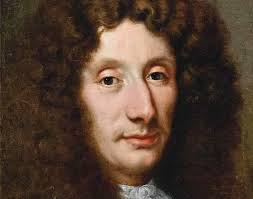 | Disproved spontaneous generation (large organisms) |
Louis Pasteur 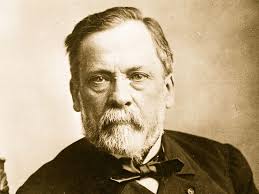 | Disproved spontaneous generation; pasteurization and fermentation |
Robert Koch 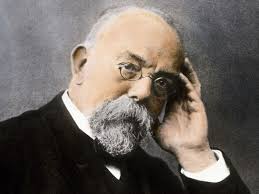 | Koch’s postulates; proved microbes causes disease |
Carolus Linnaeus | developed MODERN taxonomy and binomial nomenclature |
Robert Whittaker | create 5th kingdom of classification |
Ernst Haeckel | proposed adding protista and monera |
modern century
Woese and Fox → discovered Eukarya, archaea, and bacteria by comparing small subunit rRNA
Standard use for identifying bacteria:
Bergey's Manual of Systematic Bacteriology
Bacteria Shapes:
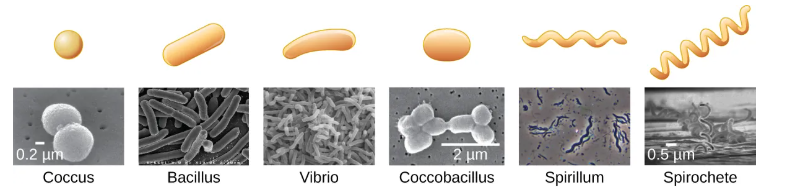
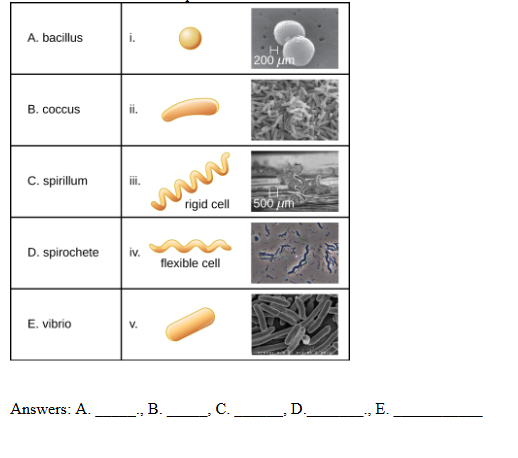
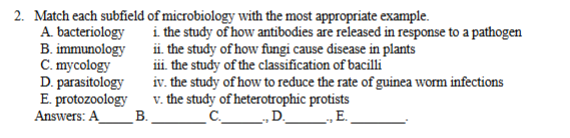
Subfields of Microbiology:
bacteriology
the study of classification of bacilli
immunology
study of how anitbodies are released
mycology
the study of how fungi cause disease in plants
parasitology
the study of how to reduce rate of guinea worm infections
protozoology
the study of hererotropic protists
Scientific Name:
Binomial Nomenclature: two words
Genus (capitalized)
Species name (lowercase)
Measurement:
micrometer and nanometer
phylogenetic tree:
shows evolutionary relationships among species
toxonomy:
identification, classification, and naming of all living things
Gene transfer:
Horizontal → transfer of DNA between different genome, common among prokaryotes, one way to become antibiotic resistant, and can involve transfer of plasmid
vertical → parent to offspring
Chapter 2: "How We See the Invisible World"
Key Concepts:
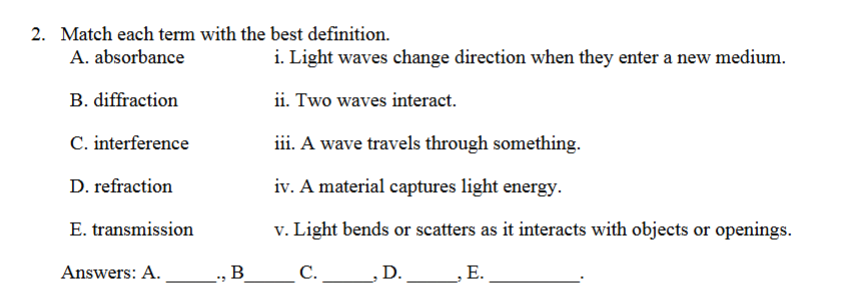
reflection
bouncing of light off a surface
Excess can reduce image clarity
refraction
bending of light as it passes between different materials
uncontrolled can blur images
diffraction
scattering of waves when they encounter an obstacle or pass through a narrow opening
transmission
passage of light through a substance rather than being absorbed or reflected
Characteristics of light:
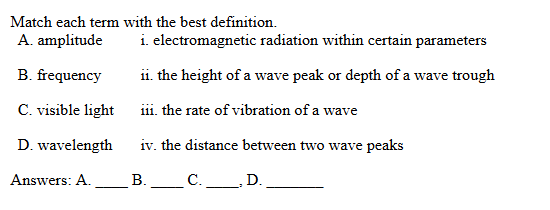
amplitude
height of wave peak or depth
frequency
rate of vibration of a wave
visible light
electromagnetic radiation within certain parameters
wavelength
distance between wave peaks
Types of microscopes:
simple
single convex lens for low power magnification
compound
uses two or more lenses to achieve high-power magnification
brightfield
commonly used in lab
produces images in a bright background
darkfield
increase contrast without staining by producing an image on a darker background
LIVE specimen
phase-contrast
refraction and interference to create high contrast images without staining
LIVE specimen
Differential interference contrast
interference to produce high-contrast images with 3-D appearance
structures within LIVE specimen
fluorescence
uses fluorescent stains to produce an image
identify pathogens and distinguish between live and dead cells
Confocal
laser to make 3-D images
THICK specimen
Two-photons
scanning technique and long wavelength to penetrate deep specimen
electron microscopy (TEM/SEM)
TEM → observe SMALL and THIN specimen via embedding specimen in thin sections of plastic
SEM → 3-D surface level detail via dehydration
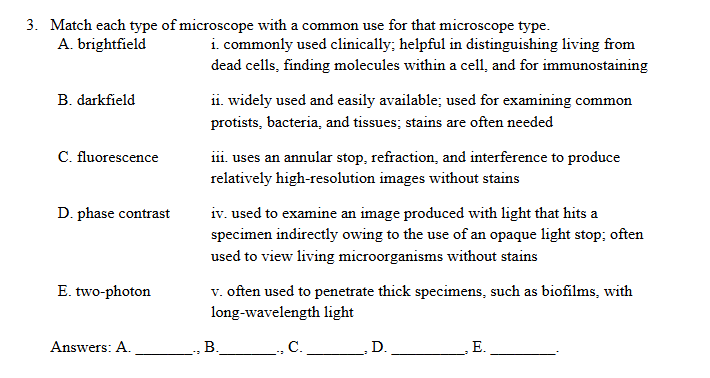
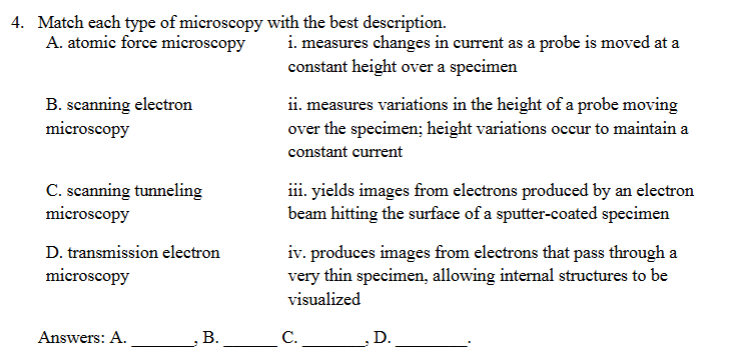
Staining:
why specimens are stained/fixed:
stained → allow observation of otherwise non-visual microorganism
fixed → kill microbe and attach specimen to slide
common stains:
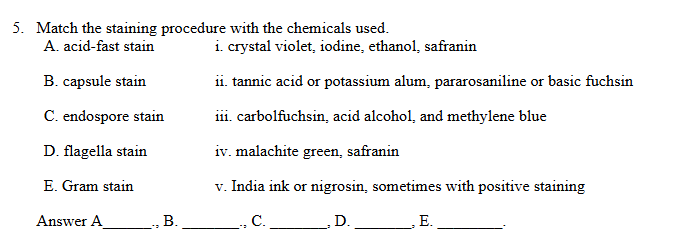
basic → methylene blue, crystal violet, malachite green, basic fuchsin, carbofuchsin, and safranin
acidic → eosin, acid fuchsin, rose bengal, and congo red; identifies cells with mycolic acid in wall
negative → india ink and nigrosin
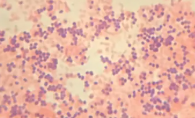
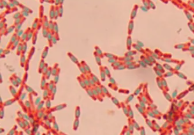
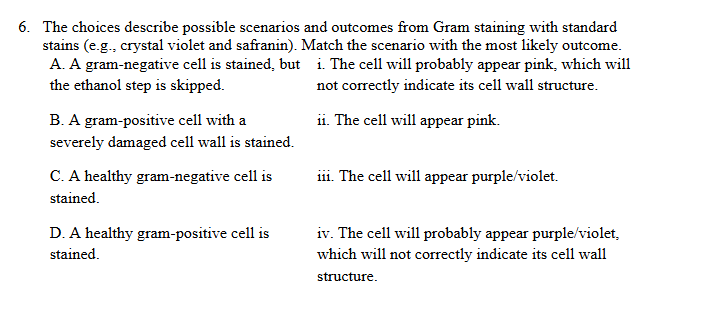
Gram → crystal violet, gram iodine, ethanol, and safranin
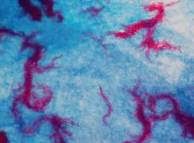
acid-fast → basic fuchsin and methylene blue
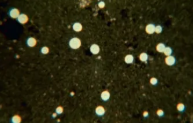
capsule → india ink or nigrosin
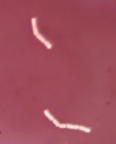
flagella → tannic acid, potassium alum, pararosaline or basic fuchsin
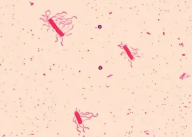
endospore →malachite green and safranin (appears green)
preparing specimens for microscopy.
Step 1:
specimen placed on slide
coverslip on top (prevent from drying out)
heat-fixed
Step 2:
stain with main dye (crystal violet)
iodine (binding agent)
decolorizing agent (ethanol)
safranin (counter-stain)
Step 3:
microscope (immersion oil for 100x)
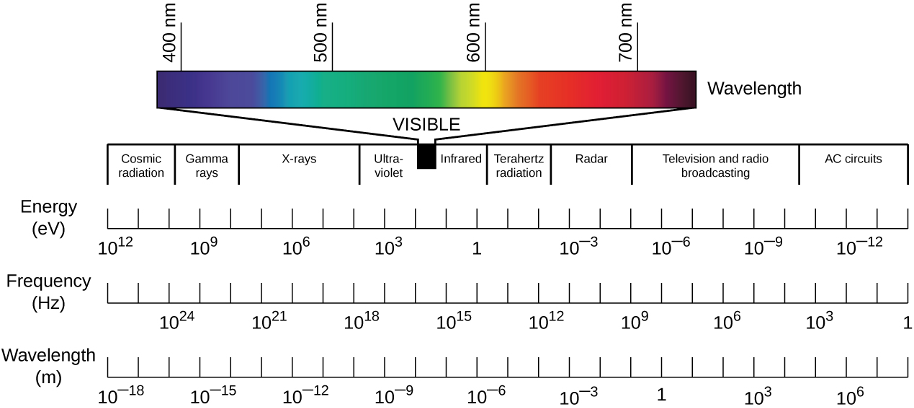
Electromagnetic Spectrum:
high energy → short wavelength and high frequency
wavelength → as increases, frequency and energy decreases
visible light rays → smallest section
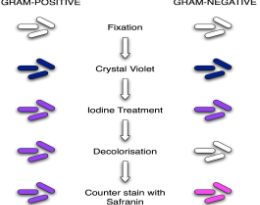
-Describe Gram-staining results for Gram-positive vs Gram-negative
bacteria
Lens Shape:
concave → spreads light apart
convex → focus light rays by curving outward and refracting light
Kinyoun and Zihel-neelsen (heat) technqiue
-reagant carbon fuchsin; counterstain → methylene blue
Chapter 3: "The Cell"
Key Concepts
- The spontaneous generation theory, and how experiments by Redi,
Spallanzani, Pasteur refuted it.
- Modern cell theory: all living things are composed of cells; cells
come from other cells; difference between prokaryotic and eukaryotic
cells
- Unique features of prokaryotic cells: nucleoid (not membrane‐bound
nucleus), plasmids, 70S ribosomes, cell wall (peptidoglycan),
etc
- Unique features of eukaryotic cells: nucleus, 80S ribosomes in
cytoplasm, membrane‐bound organelles, cytoskeleton,
etc.
Review Checklist
- Define "nucleoid" vs "nucleus" and which cell types have each.
- List 3 structural or functional differences between prokaryotic and
eukaryotic cells.
- Describe the role of the cytoskeleton in eukaryotic cells.
- Explain what an endospore is and which cells can form them
(prokaryotic).
- Summarize the major experiments that disproved spontaneous
generation.
Chapter 4: Prokaryotic Diversity
- Define: prokaryote, microbiota, microbiome, oligotroph, endosymbiosis.
- Give 2--3 examples of prokaryote habitats and what adaptations allow
survival there.
- Describe symbiotic relationships (mutualism, commensalism, parasitism)
and give microbial examples.
- List the five classes of Proteobacteria and an example genus/species
for each.
- Compare Gram-negative non-Proteobacteria groups and list at least one
key genus and trait.
- Create a comparative chart of Gram-positive bacteria: High G+C vs Low
G+C, giving key genera and significance.
- Explain what is meant by "deeply branching bacteria" and why they
matter.
- Contrast Archaea and Bacteria in terms of cell structure, habitats,
and roles in ecosystems.
- For each major group, note whether they include human pathogens,
beneficial organisms, or environmental specialists.
- Practice by explaining to someone (or writing out) why studying
prokaryotic diversity is important (ecology, industry, human health).
Chapter 5: "The Eukaryotes of Microbiology"
Key Concepts
- Eukaryotic microbes include protists (unicellular eukaryotes),
helminths (parasitic worms, where eggs/larvae are microscopic), fungi
(yeasts and molds), algae, and
lichens.
- Protists: diverse nutrition modes, locomotion (cilia, flagella,
pseudopodia), morphology; taxonomy is rapidly
changing
- Helminths: major groups are roundworms (nematodes) and flatworms
(platyhelminths) -- often studied in microbiology because of
microscopic
stages.
- Fungi: cell walls made of chitin; important medically; produce spores;
have ergosterol in membranes (drug
target).
- Algae: photosynthetic eukaryotes; may produce harmful algal blooms;
used in industry (agar,
carrageenan)
- Lichens: symbiotic association between a fungus and algae or
cyanobacterium; ecological
importance
Review Checklist
- Describe the difference between a protist and a helminth.
- List the two major groups of helminths and give an example of each.
- Explain why fungi are more challenging to treat medically than
bacteria.
- Give two industrial or ecological roles of algae.
- Define lichen and explain why it is considered a symbiosis.
Chapter 6: "Acellular Pathogens"
Key Concepts
- Acellular pathogens include viruses, viroids, prions: entities that
are not cellular organisms yet cause infection or disease.
- Virus structure (capsid, envelope, genome types), replication
mechanisms (lytic/lysogenic cycles, host cell takeover).
- Prions: misfolded proteins causing transmissible spongiform
encephalopathies.
- Satellite viruses, viroids, viral classification, disease-causing
mechanisms.
- Diagnostics and control of acellular pathogens (vaccines, antivirals,
hygiene).
Review Checklist
- Define a virus, viroid, and prion, and state one key difference among
them.
- Describe the basic steps of viral replication (attachment, entry,
replication, assembly, release).
- Explain the difference between lytic and lysogenic viral cycles.
- Give one example of a disease caused by a prion.
- Discuss one method used to control viral infections in humans.
Chapter 7: "Microbial Biochemistry"
Key Concepts
- Biomolecules: carbohydrates, lipids, proteins, nucleic acids -- their
structure/functions in microbes.
- Enzymes: biological catalysts, activation energy, factors affecting
enzyme activity.
- Metabolic pathways: how microbes transform nutrients and energy,
including anabolism and catabolism.
- The chemistry of life at the microbial scale: e.g., bond types, energy
storage, metabolic intermediates.
- Isomers, stereoisomers, and enantiomers
- Steroids and Sterols, hopanoids, ergosterol
- Other Microbial Identification Practices
-
Review Checklist
- List the four major classes of biomolecules and a microbial
example/use of each.
- Define "enzyme" and describe how temperature or pH can affect its
activity.
- Differentiate between anabolism and catabolism.
- Explain why ATP is central to microbial metabolism.
- Describe one biochemical adaptation microbes might have to survive
extremeconditions.
- **matrix assisted laser desorption/ionization time of flight mass
spectrometry (MALDI-TOF)**.
- fatty acid methyl esters (**FAME**) or **phospholipid-derived
fatty acids** (**PLFA**) analysis.
- Proteomic analysis,
- lectins or antibodies
Chapter 8:"Microbial Metabolism"
Key Concepts
- Energy generation in microbes: chemoheterotroph, chemoautotrophy,
phototrophy.
- Glycolysis, Kreb (TCA) cycle, fermentation, respiration
(aerobic/anaerobic) in microbial systems.
- Electron transport chain and proton motive force.
- Know the Different kinds of Enzyme Inhibition
- Know the following: Substrate-level phosphorylation, Oxidative
phosphorylation and Photophosphorylation
- Describe electron transport chain
Chapter 9: "Microbial Growth"
Key Concepts
- Microbial growth in terms of populations: division by binary fission,
generation (doubling)
time.
- Growth curves in closed systems: lag phase, log/exponential phase,
stationary phase, death/decline
phase.
- Methods for measuring growth: direct viable counts (plate counts,
MPN), indirect methods (turbidity, metabolic
activity).
- Environmental conditions affecting growth: oxygen requirements
(obligate aerobe, facultative anaerobe, microaerophile, aerotolerant,
etc.).
- Effects of pH, temperature, other factors (salt, light,
moisture).
- Types of culture media: chemically defined, selective, enriched,
differential.
- ,
TCA
Review Checklist
- Define "generation time" in microbial growth and explain how you
would calculate it.
- Sketch the four phases of a microbial growth curve and label key
events for each phase.
- Compare and contrast direct vs indirect methods of measuring
microbial growth.
- List the oxygen‐tolerance/growth‐types of microbes and describe one
enzyme or trait each uses (e.g., catalase, superoxide dismutase).
- Explain how pH, temperature, salt/osmotic pressure and other
environmental factors affect microbial growth (give examples:
psychrophile, thermophile, halophile).
- Define each type of culture medium (chemically defined, selective,
enriched, differential) and state when you might use each.
- Describe what a biofilm is, how it forms, and why it matters
clinically or environmentally.
Chapter 13:"Control of Microbial Growth"
Key Concepts
- The different levels/types of microbial control: sterilization,
disinfection, antisepsis,
sanitation.
- Factors affecting efficacy of antimicrobial treatments: microbial
load, type of organism, environment, time, concentration of agent.
- Methods of control: physical (heat, filtration, radiation,
lyophilization etc.), chemical (disinfectants, antiseptics),
mechanical.
- Biological safety levels (BSLs) for labs and their relevance to
microbial
control.
- Practical examples: controlling microbes on surfaces, in liquids, in
healthcare settings, food/water microbiology.
- The concept of microbial death curves and the importance of reducing
microbial load rather than absolute elimination in some cases.
- Testing the Effectiveness of Antiseptics and Disinfectants
Review Checklist
- Define sterilization, disinfection, degerming, antisepsis, and
sanitation and give an example of each.
- Explain how microbial characteristics (endospore forming,
mycobacteria, biofilms) affect resistance to control methods.
- List at least three physical methods and three chemical methods of
controlling microbes; state advantages/disadvantages.
- Describe what a laboratory biological safety level (BSL) is, and what
the different levels imply.
- Explain how environmental factors (organic matter, surface structure,
temperature) influence the effectiveness of antimicrobial treatments.
- Give an example of a scenario in food, healthcare, or water treatment
where microbial control is critical and outline the chosen control
strategy.
Chapter 15: "Microbial Mechanisms of Pathogenicity"
Key Concepts
Important terms
- MORBIDITY = the number of cases of a disease\
MORTALITY= the number of deaths due to a disease\
INFECTIOUS DISEASE = any disease caused by the direct effect of a
pathogen\
COMMUNICABLE DISEASE = disease capable of being spread from person
to person through either direct or indirect mechanisms\
C**ontagious** diseases = diseases easily spread from person to
person\
NONCOMMUNICABLE DISEASE = disease not spread from person to
person\
NONINFECTIOUS DISEASE = disease not caused by pathogens
- iatrogenic diseases (ahy-a-truh-jen-ik) = contracted as a result of a
medical procedure\
\
NOSOCOMIAL DISEASES (nos-uh-koh-mee-uh l) = acquired in hospital
setting\
\
ZOONOTIC DISEASES (zoh-uh-noh-tic) = transmitted from animals to
humans
- Definition of infectious disease: signs & symptoms; the difference
between infection, colonization, and
disease.
- Virulence factors: how pathogens cause disease --- e.g., adhesion,
invasion, toxins, proteases, evasion of host defenses.
- Pathogenic mechanisms in bacterial, viral and eukaryotic pathogens.
- The role of host--microbe interactions, pathogenicity islands,
plasmids, mobile genetic elements in pathogenesis.
- Epidemiological concepts linking to mechanisms of disease (this
overlaps more with Ch 16 but some mechanism content here).
- Pathogenicity versus Virulence (Know median lethal dose(LD 50) and
Median infectious dose (ID50)
- Know the definitions of the periods of diseases