Sensory Systems 3
Photoreceptors
photoreceptors covert light energy into changes in membrane potential
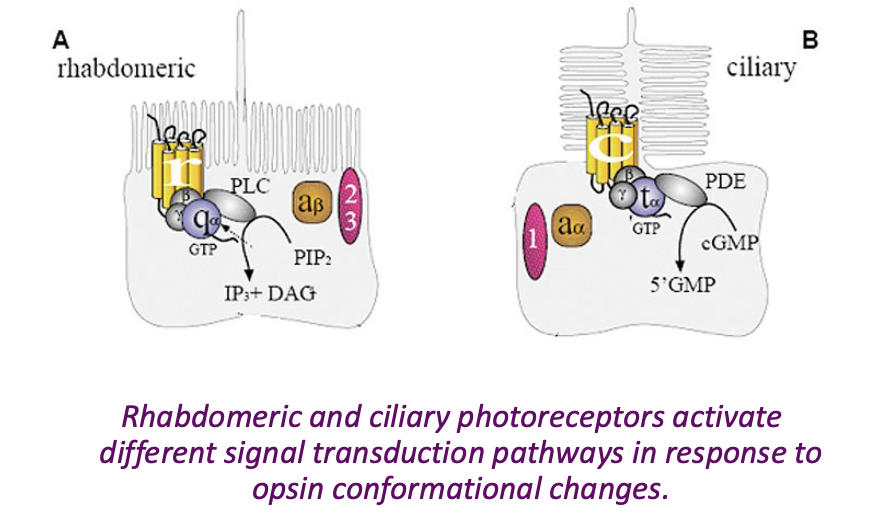
Rhabodomeric photoreceptors
Ciliary photoreceptors
Ciliary vs Rhabdomeric photoreceptors
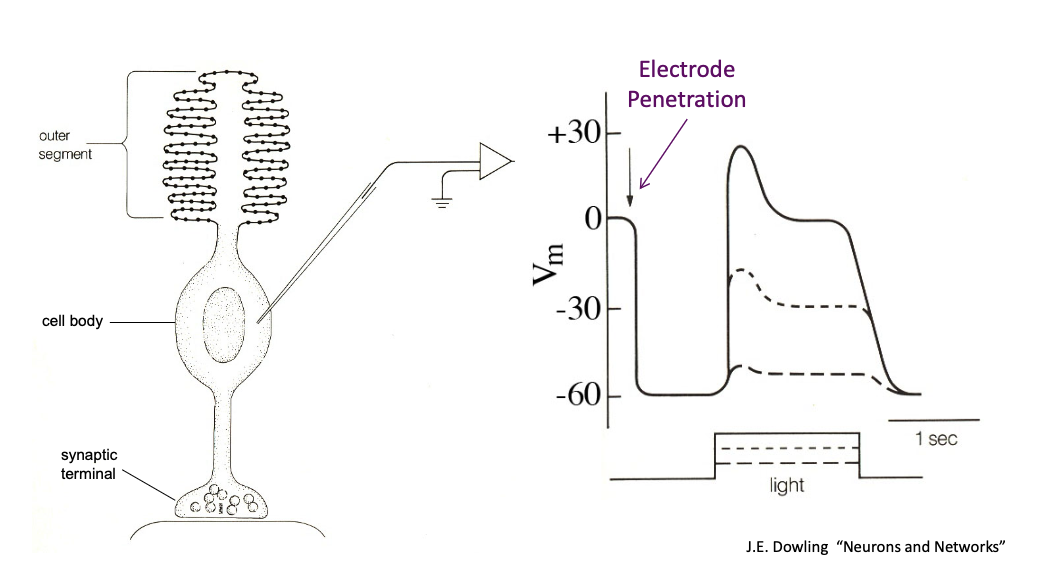
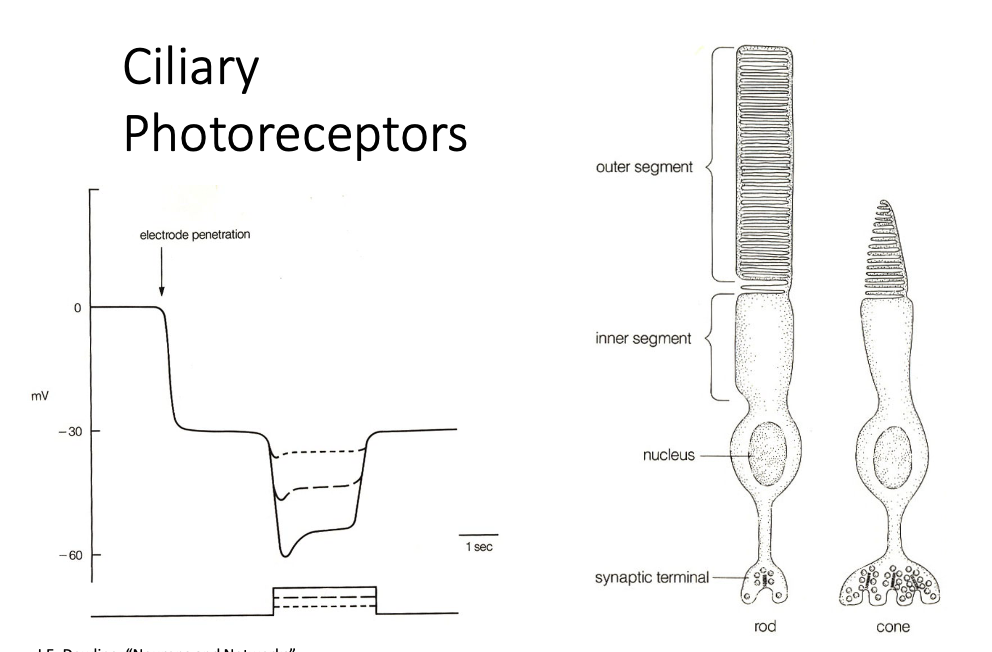
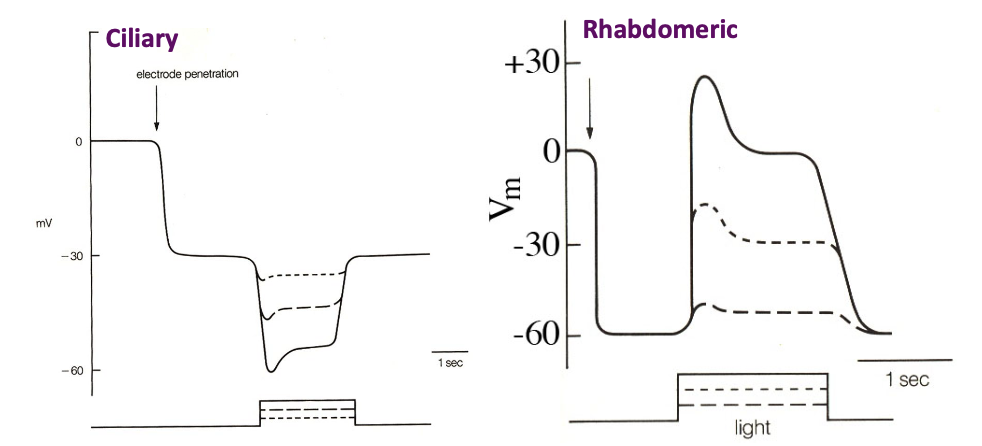
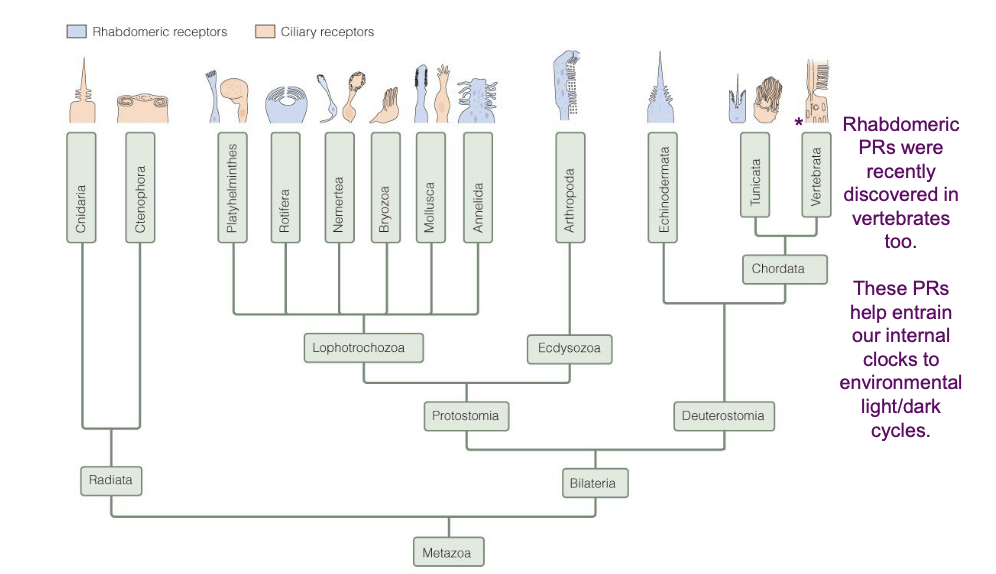
Both classes of photoreceptor are found throughout the animal kingdom
The photoreceptive opsin are seven-membrane spanning GPCRs
Opsins covalently bind vitamin-A-derived chromophores (pigments)
Photons cause the isomerization of chromophore
Isomerization of chromophore results in changes in opsin
Rhodopsin’s conformational change induces G-protein signaling
Rhabdomeric photoreceptors employ “R-opsins” which signal through Gq
Cilary photoreceptors express “C-opsins” which signal through
Light induced events
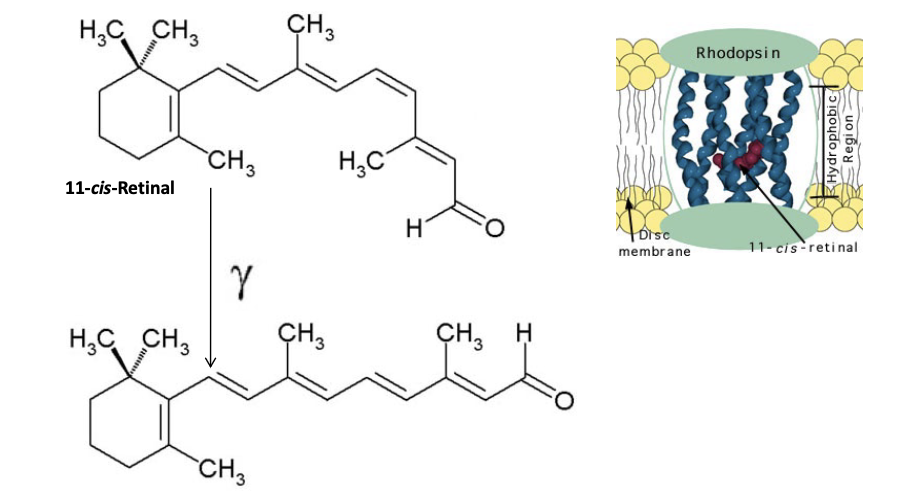
opsin covalently bonded to vit.A derived chromophores
chromophores are usually in a cis-conformation
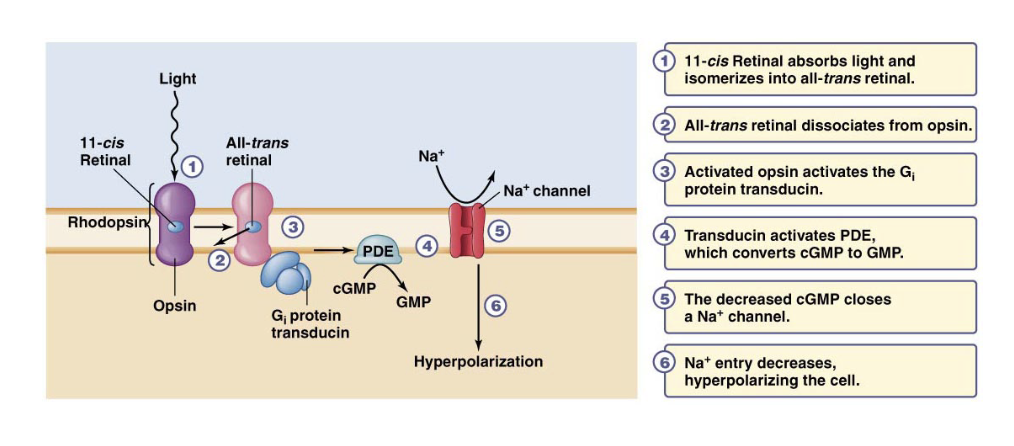
photon sensing causes isomerization to trans-conformation
isomerization leads to changes in the opsion
dissociation of chromophore from opsin (called bleaching)
conformotionchange in opsin
G-protein signaling causes changes in membrane potential
Mammalian eye
allows formation of a bright, focused image
Nocturnal animal
choroids of nocturnal animals contain a reflective layer
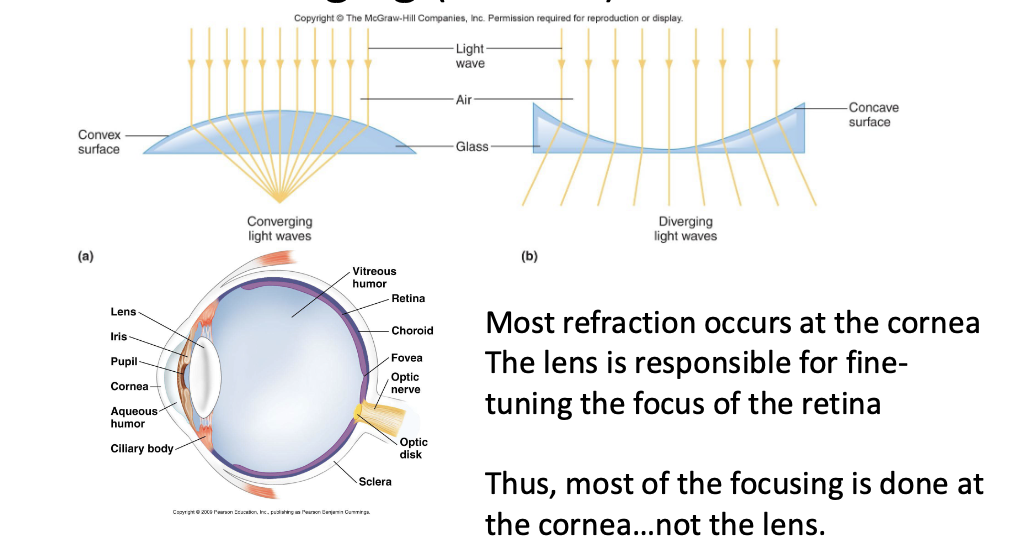
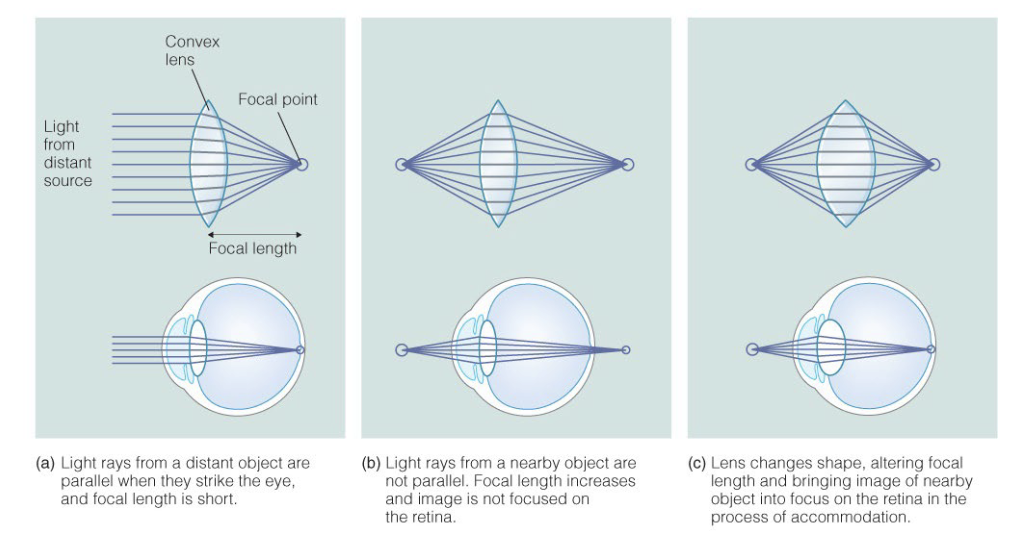
Cornea and lens are converging (convex) lenses
most refraction occurs at the cornea
the lens is responsible for the fine-tuning the focus of the retina
most of focusing done at the cornea nor the lens
Accommodation refers to the ability of the eye to focus light from different distances
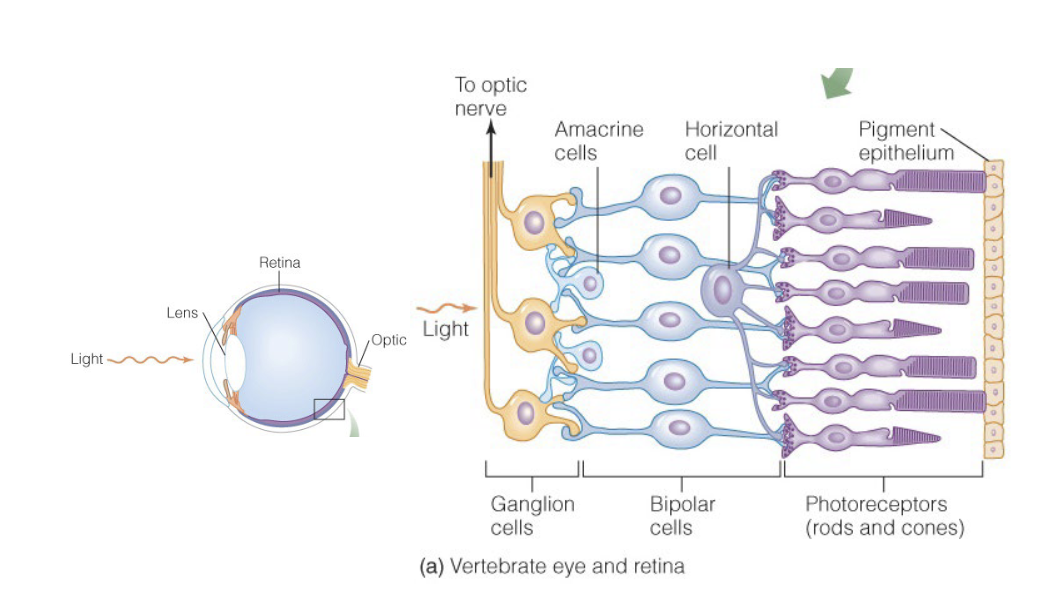
Mammals have two types of photoreceptor cells
Rods
ciliary photoreceptors
rod-shaped outer segment
sensitive to very dim light
Cones
ciliary photoreceptors
cone-shaped outer segment
sensitive to brighter light
Many rods synapse on single bipolar cell
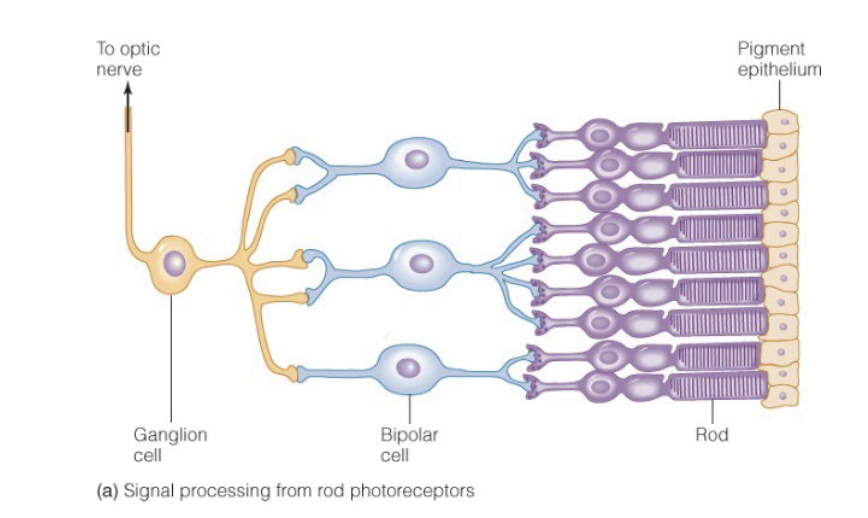
Cones in the fovea centrals connect to a single ganglion cell via a single bipolar cell
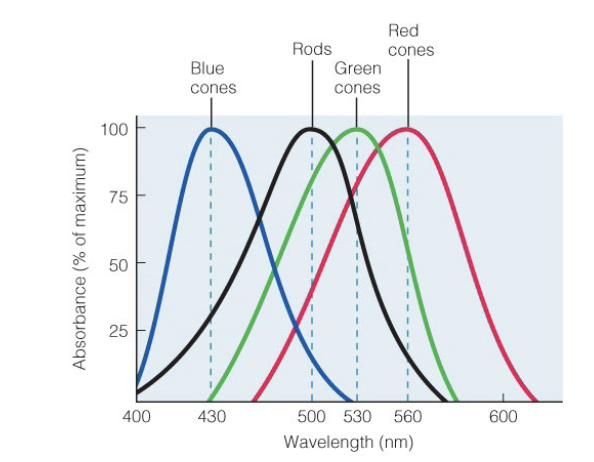
The absorbance spectra of human rods and cones are the basis for color discrimination
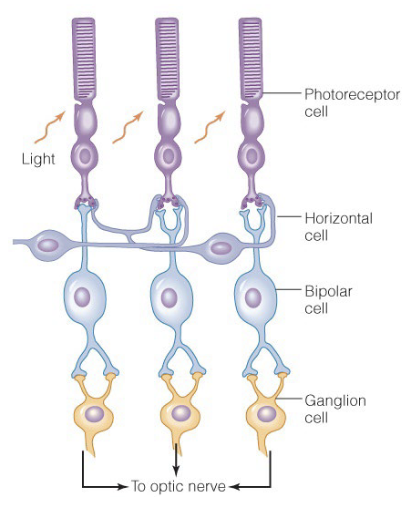
Activated horizontal cells inhibit neighboring bipolar cells
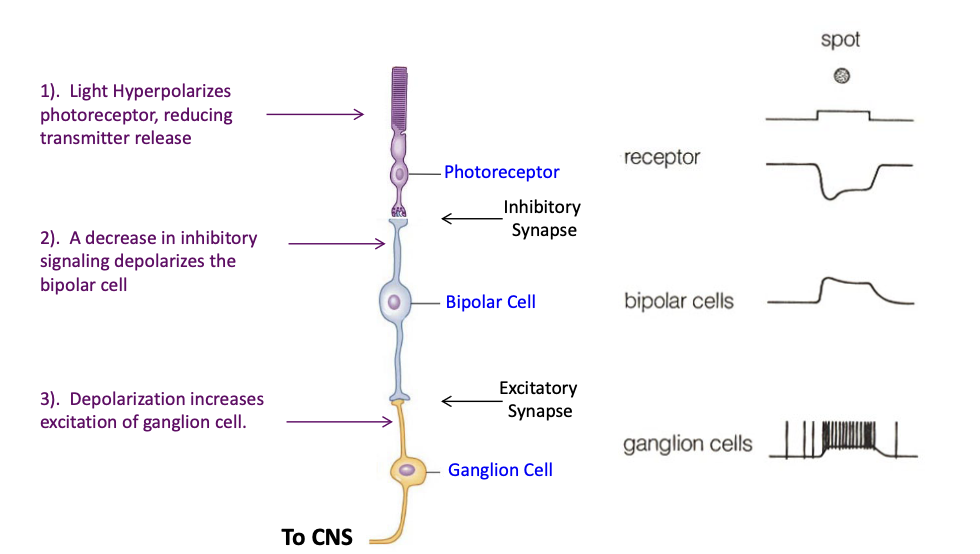
The neural circuitry of retinal processing
1) light hyper polarizes photoreceptor, reducing transmitter release
2) a decrease in inhibitory signaling depolarizes the bipolar cell
3) depolarization increases excitation of ganglion cell
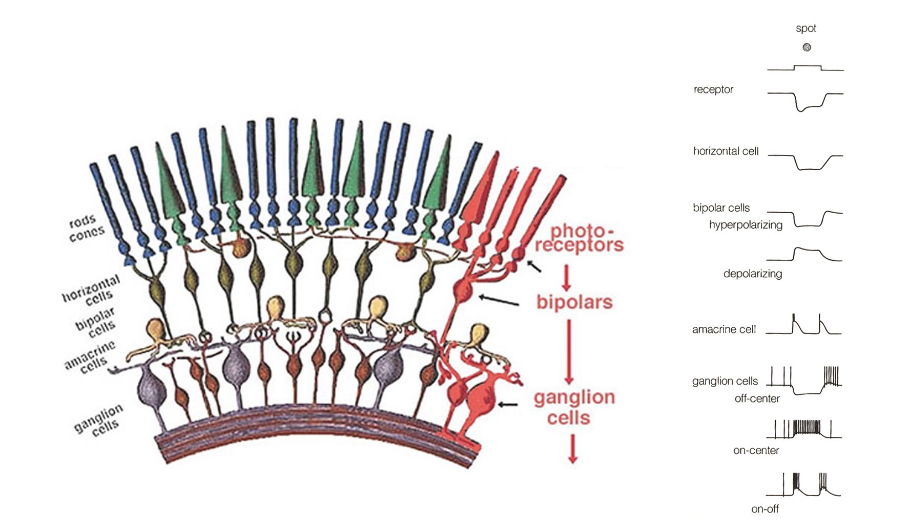
There are many variation on the pattern of retinal connectivity