Burns Ebook
Chapter 69: Burns
Dry heat, moist heat, direct contact with hot surfaces, chemicals, electricity, and ionizing radiation can cause burns, which result in cellular destruction of the skin layers and underlying tissue. The type and severity of the burn affect the treatment plan.
In addition to destruction of body tissue, a burn injury results in the loss of temperature regulation, sweat and sebaceous gland function, and sensory function. When the dermis is destroyed, skin can no longer regrow over the affected area. Metabolism increases to maintain body heat as a result of burn injury and tissue damage. Every body system can be affected following major burns.
Types of burns
Dry heat injuries result from open flames and explosions.
Moist heat injuries result from contact with hot liquid or steam. Scald injuries are more common in older adults and younger children.
Contact burns occur when hot metal, tar, or grease contacts the skin.
Chemical burns result from exposure to a caustic agent. Cleaning agents in the home (drain cleaner, oven cleaner, bleach) and agents in the industrial setting (caustic soda, sulfuric acid) can cause chemical burns.
Electrical burns result when an electrical current passes through the body and can cause severe damage, including loss of organ function, tissue destruction with subsequent need for amputation of a limb, and cardiac or respiratory arrest.
Thermal burns result when clothes ignite from heat or flames that electrical sparks produce.
Flash (arc) burns result from contact with an electrical current that travels through the air from one conductor to another.
Conductive electrical injury results when a person touches electrical wiring or equipment.
Radiation burns most often result from therapeutic treatment for cancer or from sunburn.
Severity of the burns
Percentage of total body surface area (TBSA): Use standardized charts for age groups to identify the extent of the injury and calculate medication doses, fluid replacement volumes, and caloric needs. QEBP
Depth of the burn: Classify burns according to the layers of skin and tissue involved: superficial, partial, full, and deep full thickness.
Body location of the burn: In areas where the skin is thinner, there is more damage to underlying tissue (any part of the face, hand, perineum, feet).
Age: Young clients and older adult clients have less reserve capacity to deal with a burn injury. Skin thins with aging, so more damage to underlying tissue can occur. G
Causative agent: Thermal, chemical, electrical, or radioactive.
Presence of other injuries: Fractures or other injuries increase the risk of complications.
Involvement of the respiratory system: Inhalation of deadly fumes, smoke, steam, and heated air can cause respiratory failure or airway edema. Carbon monoxide poisoning also can occur, especially if the injury took place in an enclosed area.
Overall health of the client: A client who has a chronic illness has a greater risk of complications and a worse prognosis.
Health Promotion and Disease Prevention
Ensure that the number and placement of fire extinguishers, smoke alarms and carbon monoxide detectors in the home are adequate and operable. Family members should know how to use the extinguishers.
Keep emergency numbers near the phone. QS
Have a family exit and meeting plan for fires. Reinforce that no one should ever re-enter a burning building.
Follow the principles of “stop, drop, and roll” to extinguish fire on clothing or skin.
Store matches and lighters out of reach and out of sight of children and adults who lack the ability to protect themselves.
Reduce the setting on water heaters to 48.9° C (120° F).
Have an annual professional inspection and cleaning of the chimney and fireplace.
Turn handles of pots and pans to the side, or use back burners.
Don’t leave hot cups on the edge of the counter.
Cover electrical outlets.
Keep flammable objects away from heat sources (candles, space heaters).
Wear gloves when handling chemicals and keep chemicals out of reach of children.
Wear protective clothing during sun exposure and use sunscreen.
Avoid using tanning beds.
Avoid smoking in bed and when under the influence of alcohol or sedating medications.
Do not smoke or have open flames in a room where oxygen is in use.
Never add flammable substances (gasoline, lighter fluid, kerosene) to an open flame.
Data Collection
Risk Factors
Exposure to sources of heat, flame, explosion, hot liquids, chemicals, or radiation
Older adults G
Higher risk for damage to subcutaneous tissue, muscle, connective tissue, and bone because of thinner skin
Higher risk for complications from burns because of chronic illnesses (diabetes mellitus, cardiovascular disease)
Expected findings
Report of burn agent (dry heat, moist heat, chemical, electrical, ionizing radiation)
Inhalation damage findings include singed nasal hair, eyebrows, and eyelashes; sooty sputum; hoarseness; wheezing; edema of the nasal septum; and smoky smelling breath. Indications of the impending loss of the airway include hoarseness, brassy cough, drooling or difficulty swallowing, and audible wheezing, crowing, and stridor. QS
Carbon monoxide inhalation (from burns in an enclosed area) findings include headache, weakness, dizziness, confusion, erythema (pink or cherry red skin), and upper airway edema, followed by sloughing of the respiratory tract mucosa.
Hypovolemia and shock can result from fluid shifts from the intercellular and intravascular space to the interstitial space. Additional findings include hypotension, tachycardia, and decreased cardiac output.
Depth of Injury
Superficial thickness | Superficial partial thickness | Deep partial thickness | Full thickness | Deep full thickness | |
|---|---|---|---|---|---|
Area involved | Damage to epidermis | Damage to the entire epidermis and some parts of the dermis | Damage to entire epidermis and deep into the dermis | Damage to the entire epidermis and dermis Can extend into the subcutaneous tissue Nerve damage | Damage to all layers of skin Extends to muscle, tendons, and bones |
Appearance | Pink to red No blisters Mild edema No eschar | Pink to red Blisters Mild to moderate edema No eschar | Red to white Blisters rare Moderate edema Eschar soft and dry | Red, black, brown, yellow, or white No blisters Severe edema Eschar hard and inelastic | Black No blisters No edema Eschar hard and inelastic |
Sensation/Healing | Painful/Tender Sensitive to heat Heals within 3 to 6 days No scarring | Painful Heals within 2 to 3 weeks No scarring, but minor pigment changes | Painful and sensitive to touch Heals in 2 to 6 weeks Scarring likely Possible grafting | Sensation minimal or absent Heals within weeks to months Scarring Grafting | No pain Heals within weeks to months Scarring Gradting |
Example | Sunburn Flash burn (sudden intense heat) | Flash flame and scalds Brief contact with hot object | Flame and scalds Grease, tar, or chemical burns Prolonged exposure to hot objects | Scalds Grease, tar, chemical, or electrical burns Prolonged exposure to hot objects | High-voltage or prolonged electrical burns Flames |
A nurse in a provider’s office is collecting data from a client who has a severe sunburn. Which of the following classifications should the nurse use to document this burn?
A
Superficial thickness
B
Superficial partial thickness
C
Deep partial thickness
D
Full thickness
A nurse is caring for a client who has sustained burns over 35% of total body surface area. The client’s voice has become hoarse, a brassy cough has developed, and the client is drooling. The nurse should identify these findings as indications that the client has which of the following?
A
Pulmonary edema
B
Bacterial pneumonia
C
Inhalation injury
D
Carbon monoxide poisoning
Methods of burn data collection
Rule of Nines: Quick method to approximate the extent of burns by dividing the body into multiples of nine. The sum equals the TBSA.
Lund and Browder method: A more exact method estimating the extent of burn by the percentage of surface area of specific anatomic parts, particularly the head and legs.
Palmar method: Quick method to approximate scattered burns using the palm of the client’s hand. The palm of the hand (including the fingers) is equal to 1% TBSA.
Laboratory Tests
Resuscitation phase: Initial fluid shift (occurs in the first 12 hr and continues for 24 to 36 hr) after the burn injury with peak approximately 6 to 8 hours after the burn injury
Hct and Hgb: elevated (hemoconcentration) due to the loss of fluid volume and the fluid shift into the interstitial space (third spacing)
Glucose: elevated due to stress
BUN: elevated due to fluid loss
Electrolytes
Sodium: decreased due to third spacing (hyponatremia)
Potassium: increased due to cell destruction (hyperkalemia)
Chloride: increased due to fluid volume loss and chlorine reabsorption in urine
Carboxyhemoglobin: more than 10% strongly indicates smoke inhalation
Plasma lactate: elevated if the client has cyanide toxicity
Other: total protein and blood albumin (decreased), ABGs (possible metabolic acidosis), liver enzymes (alterations due to hepatic edema, apoptosis, and insulin resistance), urinalysis, and clotting studies (rare decrease in platelets and prolonged clotting times in severe burns)
Fluid remobilization (starts at about 24 hr; diuretic stage begins at 48 to 72 hr after injury)
Hgb and Hct: decreased (hemodilution) due to the fluid shift from the interstitial space back into vascular fluid
Sodium: remains decreased due to renal and wound loss
Potassium: decreased due to renal loss and movement back into cells (hypokalemia)
WBC count: initial increase then decrease with left shift
Blood glucose: elevated due to the stress response
ABGs: slight hypoxemia and metabolic acidosis
Total protein and albumin: low due to fluid loss
A nurse is collecting data from a client who sustained deep partial-thickness and full-thickness burns over 40% of the body 24 hr ago. Which of the following findings are common during this phase?
Select all that apply.
A
Hypoglycemia
B
Decreased blood urea nitrogen
C
Hyperkalemia
D
Hyponatremia
E
Decreased hematocrit
Diagnostic Procedures
Diagnostic studies can include renal scans, computed tomography, ultrasonography, bronchoscopy, and magnetic resonance imaging to determine the extent of the burn injury.
Indirect calorimetry can help determine calorie needs (on admission to a burn center and weekly).
Evaluation of burn depth using indocyanine green video angiography and laser Doppler imaging. Thermography is not as reliable.
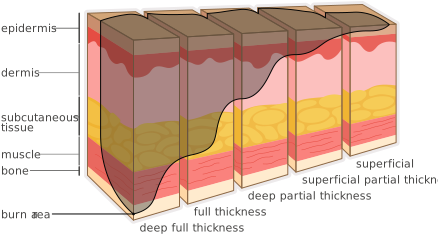
Burn staging
Patient-Centered Care
Phases of Burn Care
Emergent (resuscitative phase)
This phase begins with the injury and continues for 24 to 48 hr.
Phase ends with completion of fluid resuscitation.
Priorities include securing the airway, supporting circulation and organ perfusion by fluid replacement, managing pain, preventing infection through wound care, maintaining body temperature, and providing emotional support.
Acute
This phase begins 48 to 72 hr after injury when the fluid shift resolves.
Phase ends with closure of the wound.
Priorities include data collection and maintenance of the cardiovascular, respiratory, and gastrointestinal systems (including nutrition); wound care; pain control; and psychosocial interventions.
Rehabilitative
This phase begins when most of the burn area has healed.
Phase ends when the client achieves the highest level of functioning possible.
Priorities include psychosocial support; prevention of scars and contractures; and resumption of activities, including work, family, and social roles.
This phase can last for years.
Nursing Care
Stop the burning process. QEBP
If providing care at the burn scene, extinguish flames or remove the source of fire.
Remove clothing or jewelry that might conduct heat.
Apply cool water soaks or run cool water over injury; do not use ice.
Chemical burns.
Wear gloves if available
Liquid chemicals: flush with a large volume of water.
Dry chemicals: brush dry chemicals from skin before flushing with large amounts of water.
Cover the burn with a clean cloth to prevent contamination and hypothermia.
Provide warmth.
Perform an ABCDE primary survey and provide treatment.
Minor burns
Provide analgesics.
Cleanse with mild soap and tepid water. (Avoid excess friction.)
Use antimicrobial ointment.
Apply a dressing (nonadherent, hydrocolloid) if clothing is irritating the burn.
Encourage the family to avoid using greasy lotions or butter on the burn.
Reinforce teaching with the family to observe for evidence of infection.
Determine the need for a tetanus immunization.
Moderate and major burns
During the initial (resuscitation) phase (from the time of injury to up to 48 hr later) following a major burn, sympathetic nervous system manifestations (tachycardia, increased respiratory rate, decreased gastrointestinal motility, increased blood glucose) are expected findings.
Respiratory system
Monitor respiratory rate and depth. Monitor chest expansion during respiration to ensure that eschar or chest dressings on chest, neck, and back do not restrict movement.
Upper airway edema becomes pronounced 8 to 12 hr after the beginning of fluid resuscitation. Crowing, stridor, or dyspnea requires nasal or oral intubation.
Provide humidified supplemental oxygen.
Support the airway and ventilation. Mechanical ventilation and paralytic medications (atracurium or vecuronium) can become necessary if the PaO2 is less than 60 mm Hg. A tracheotomy can be required when long-term intubation is expected.
Monitor and maintain chest tubes.
Perform chest physiotherapy and have the client cough, breathe deeply, and use incentive spirometry.
Suction (endotracheal or nasotracheal) every hour or as needed. Consider the need for additional analgesics.
Cardiovascular system: Monitor central and peripheral pulses, capillary refill, pulse oximetry, invasive or noninvasive blood pressure, and for electrocardiographic changes or the presence of edema.
Fluid replacement
Third spacing (capillary leak syndrome) is a continuous leak of plasma from the vascular space into the interstitial space, which results in electrolyte imbalance and hypotension.
Ensure the initiation of IV access using a large-bore needle. If burns cover a large area of the body, the client requires insertion of a central venous catheter or intraosseous catheter.
Fluid resuscitation meets individual clients’ needs (TBSA of burn, burn depth, inhalation injury, associated injuries, age, urine output, cardiac output, blood pressure, status of electrolytes).
Ensure the administration of half of the total 24-hr IV fluid volume within the first 8 hr from the time the burn occurred and the remaining volume over the next 16 hr. QEBP
Assist with the infusion of isotonic crystalloid solutions (0.9% sodium chloride or lactated Ringer’s).
Ensure colloid solutions (albumin or synthetic plasma expanders) are infused by an RN after the first 24 hr of burn recovery.
Monitor vital signs.
Monitor for fluid overload: edema, engorged neck veins, rapid and thready pulse, lung crackles, and wheezes.
Weigh the client daily.
Monitor urine hourly for color, specific gravity, protein, and maintain urine output of 0.5 mL/kg/hr, which is around 30 mL/hr for the average client.
Administration of blood products can be needed.
Monitor for manifestations of shock.
Alterations in sensorium (confusion)
Increased capillary refill time
Urine output less than 30 mL/hr
Rapid elevations of temperature
Decreased bowel sounds
Blood pressure average or low
If urine output is below the expected reference range, request the RN to inquire about a prescription to increase fluid replacement, and do not administer diuretics.
A nurse is caring for a burn client whose calculated 24-hour intravenous fluid requirements are determined to be 5000 mL. What is the total volume (mL) that the nurse should infuse after the first 8 hours of fluid resuscitation has infused?
Comfort management
Monitor pain and the effectiveness of pain treatment.
Avoid routes other than IV during the resuscitation phase due to decreased absorption from other routes.
IV opioid analgesics can be administered for pain as needed (morphine, hydromorphone, and fentanyl or anesthetics [ketamine, nitrous oxide]). QEBP
Monitor for respiratory depression when opioids have been administered. QS
The use of patient-controlled analgesia (PCA) is appropriate for some clients. PCA helps manage pain, and the client benefits from having a sense of control.
Administer pain medication prior to dressing changes and procedures.
Use nonpharmacologic methods for pain control (guided imagery, music therapy, and therapeutic touch) to enhance the effects of analgesic medications and manage pain more effectively.
Provide a restful environment and nonpainful touch to help increase comfort (massage of non-burned areas) and promote rest.
Involve the client in decision-making (mutually agreeing on how long painful procedure will take), which can reduce pain-related anxiety.
Provide relief for pruritus, which can be highly stressful for the client. Administer oral antipruritics, keep skin lubricated, and provide diversions.
Instruct the client to pat rather than scratching to relieve itching.
A nurse is assisting with the care of a client who sustained deep partial-thickness and full-thickness burns over 60% of their body 24 hr ago and is requesting pain medication. The nurse should ensure the medication is administered using which of the following routes to administer the medication?
A
Subcutaneous
B
Oral
C
Intravenous
D
Transdermal
Thermoregulation
The skin helps control the body’s temperature. With skin injury, the body loses heat. Decreased temperatures can occur in the first few hours following burn injury.
For decreased temperature, use warm, inspired air, a warm room, warming blankets, and warmers for infusing fluids. Keep wounds covered or work quickly when wounds must be exposed.
Low-grade fever can occur later after the first few hours following injury due to increased metabolism, and the temperature can remain increased for several weeks.
Gastrointestinal system
Clients might need NG tube insertion to reduce the risk of aspiration or for bowel decompression. Some clients experience gastroparesis and vomiting.
Monitor stool, vomitus, and gastric secretions for blood.
Monitor for hypomotility and for tolerance of feedings.
Urinary system
Insert an indwelling urinary catheter.
Monitor I&O.
Monitor for red-tinged urine as an indication of damage to red blood cells or muscles.
Glycosuria is expected due to breakdown of glycogen as part of the stress response.
Infection prevention
Maintain a protective environment.
Restrict plants and flowers due to the risk of contact with Pseudomonas aeruginosa.
Check facility policy regarding consumption of fresh fruits and vegetables, which can be restricted.
Limit visitors; do not allow sick individuals, small children, or other clients to visit.
Monitor for manifestations of infection and report them to the provider.
Use client-dedicated equipment (blood pressure cuffs, thermometers).
Administer tetanus toxoid.
Administer antibiotics to treat infection. Monitor peak and trough levels.
Use strict asepsis with wound care.
Nutritional support
A loss of 10% or more body weight indicates a need for additional calorie intake.
Large burn areas create a hypermetabolic and hypercatabolic state, requiring 5,000 calories/day. Caloric needs double or triple 4 to 12 days after the burn.
Increase caloric intake to meet increased metabolic demands and prevent hypoglycemia.
Increase protein intake to prevent tissue breakdown and promote healing, and provide high carbohydrates (55% to 60% of intake) to decrease protein catabolism.
Decreased gastrointestinal motility and increased caloric needs require enteral therapy or total parenteral nutrition.
Perform a calorie count daily.
Restoration of mobility
Maintain correct body alignment, splint extremities, and facilitate position changes to prevent contractures.
Maintain active and passive range of motion.
Assist with ambulation as soon as the client is stable.
Apply pressure dressings to prevent contractures and scarring.
Monitor areas at high risk for pressure sores (heels, sacrum, back of the head).
Psychological support of client and family
Provide emotional support. QPCC
Assist with coping.
The client might require antianxiety medications.
Address body image with the client and discuss any concerns about altered appearance.
Assist client through the stages of grieving.
Provide peer support, with the client’s approval.
A nurse is contributing to the plan of care for an adult client who sustained severe burn injuries. Which of the following interventions should the nurse recommend for inclusion in the plan of care?
Select all that apply.
A
Assign the client to a private room.
B
Perform a 24 hour calorie count once a week.
C
Increase dietary protein intake.
D
Instruct the client to consume 2,000 calories/day.
E
Restrict fresh flowers in the client’s room.
Medications
Silver nitrate 0.5%
Apply with a gauze dressing.
Advantages
Reduces fluid evaporation
Bacteriostatic
Inexpensive
Disadvantages
Does not penetrate eschar
Stains clothing and linen
Depletes sodium and potassium
Silver sulfadiazine 1%
Apply a thin layer with a clean glove.
Advantages
Usually pain-free
Effective against gram-negative bacteria, gram-positive bacteria, and yeast
Disadvantages
Can cause transient neutropenia
Sulfa allergy, which is a contraindication
Penetrates eschar minimally
Can cause a gray or blue-green discoloration
Decreases granulocyte formation
Mafenide acetate
Apply twice daily.
Advantages
Penetrates eschar and goes into underlying tissues
Bacteriostatic against gram-negative and gram-positive bacteria
Disadvantages
Painful to apply and remove
Can cause metabolic acidosis
Polymyxin B-bacitracin
Apply every 2 to 8 hr to keep the burn moist.
Advantages
Bacteriostatic against gram-positive organisms
Painless and easy to apply
Disadvantages: Hypersensitivity can develop.
Mannitol
Used following some electrical burns when obstruction of the renal tubules with protein myoglobin hinders urine output
Other medications
Antianxiety and antipruritic medications
Antimicrobial ointment
Electrolyte replacement
Therapeutic Procedures
Wound care
Nursing Actions QPCC
Premedicate the client with an analgesic.
Remove all previous dressings.
Note any odors, drainage, and discharge. Monitor for sloughing, eschar, bleeding, and new skin-cell regeneration.
Cleanse the wound thoroughly, removing all previous ointments.
Assist with debridement.
Mechanical: Scissors and forceps are used to cut away the dead tissue during the hydrotherapy treatment.
Hydrotherapy: Assist the client into a warm tub of water or use warm running water, as if to shower, to cleanse the wound.
Use mild soap or detergent to wash burns gently, and then rinse with room-temperature water.
Encourage the client to exercise the joints during hydrotherapy treatment.
Chemical: Apply a topical enzyme to break down and remove dead tissue.
Apply topical enzyme agents (collagenase) to the wound during a daily dressing change.
Use surgical asepsis while applying a thin layer of topical antibiotic ointment and cover it with a dressing.
Escharotomy
Incision through the eschar relieves pressure from the constricting force of fluid buildup under circumferential burns on the extremity or chest and improves circulation.
Fasciotomy
Incision through eschar and fascia relieves tissue pressure when escharotomy alone does not.
Skin coverings
Biologic skin coverings temporarily promote healing of large burns. Additionally, biologic skin coverings promote the retention of water and protein and provide coverage of nerve endings, thus reducing pain. The provider stipulates whether to leave skin coverings open or protect them with a dressing.
Allograft (homograft): Skin donations from human cadavers for partial- and full-thickness burn wounds
Xenograft (heterograft): Skin from animals (pigs) for partial-thickness burn wounds
Amnion: From human placenta; requires frequent changes
Artificial skin: Two layers of skin made from beef collagen and shark cartilage
Synthetic skin coverings are made from plastic or silicone and are usually clear. They allow for wound visualization and reduce pain.
Biosynthetic dressings contain both synthetic and biological materials.
Used for superficial partial-thickness burns or donor site dressing
Allows exudate to drain through the wound
Wound grafting can be the treatment of choice for burns covering large areas of the body.
Autografts: Skin from another area of the client’s body
Sheet graft: Sheet of skin for covering the wound
Mesh graft: Sheet of skin in which a mesher has created small slits, so the graft can stretch over large areas of the burn
Artificial skin: Synthetic product for faster healing of partial- and full-thickness burns
Cultured epithelium: Epithelial cells to use for clients who have few grafting sites; biopsies are taken from client’s unburned skin and small sheets of skin are grown
Nursing Actions
Maintain immobilization of graft sites.
Elevate extremities.
Provide wound care to the donor site.
Administer analgesics.
Monitor for infection before and after applying skin coverings or grafts. QEBP
Discoloration of unburned skin surrounding burn wound
Green subcutaneous fat
Degeneration of granulation tissue
Development of subeschar hemorrhage
Hyperventilation indicating systemic involvement of infection
Unstable body temperature
Determine the client’s level of pain, and provide additional measures to control donor site pain.
Client Education
Keep the extremity elevated.
Report manifestations of infection.
Continue to perform range-of-motion exercises and work with a physical therapist to prevent contractures.
Observe the wound for infection and perform wound care.
Identify if the following skin coverings are used as temporary or permanent grafts.
Drag and drop skin coverings to type of grafts.
Allograft
Autograft
Cultured Epithelium
Xenograft
Temporary
Permanent
Excision of wound tissue or surgical debridement
Removal of thin layers of necrotic tissue until bleeding occurs, which indicates viable tissue. Can be replaced throughout the restoration process.
Cosmetic or reconstructive surgeries
The client might elect to have these procedures following recovery, which might be years after the injury.
Interprofessional care
Recommend referrals to a dietitian, social worker (for community support services), psychological counselor, and physical therapist.
Respiratory therapy can help improve pulmonary function.
Recommend consultation with a case manager to coordinate the client’s postdischarge care, and assist the client with reintegration into the community, work, or school.
Recommend a referral for home health nursing care. QTC
Recommend a referral to occupational therapy for evaluation of the home environment and assistance to relearn how to perform ADLs.
Specialists can evaluate vision and hearing if eyes and ears are affected.
Speech therapy can be indicated.
Prosthetics might be required.
Client Education
Infection control precautions are extremely important to prevent harm.
In the acute phase, it is common to experience many feelings (confusion, anxiety, fear). Talk about these feelings with the provider and people you care about.
Peer or support groups can be helpful in coping.
Anticipate changes in appearance from wounds or surgical procedures, and understand that scarring and discoloration will occur.
Wear compression dressings and garments as prescribed (usually 23 hr daily) to minimize scarring and prevent difficulty with mobility.
Massage scars with moisturizers daily.
Avoid tight clothing over burned areas. Loose fitting clothing from dye-free fabric is best.
Participate in sexual activity as desired.
Use splints and assistive devices as instructed.
Follow-up appointments are often required for 2 years following burn injury.
Complications
Airway injury
Thermal injuries to the airway can result from steam or chemical inhalation, aspiration of scalding liquid, and external explosion while breathing. If the injury took place in an enclosed space, suspect carbon monoxide poisoning.
Effects might not manifest for 24 to 48 hr. They include progressive hoarseness, brassy cough, difficulty swallowing, drooling, copious secretions, adventitious breath sounds, and expiratory sounds that include audible wheezes, crowing, and stridor.
Nursing Actions: Support the airway and ventilation, and administer supplemental oxygen.
Client Education: Perform airway management (deep breathing, coughing, and elevating the head of the bed).
Fluid imbalances
Hypovolemic shock is possible with inadequate fluid replacement. Excessive or rapid replacement can lead to heart failure.
Nursing Actions
Monitor for indications of inadequate perfusion, confusion, hypotension, or decreased urine output.
Monitor for indications of excessive hydration (bounding pulse, lung crackles, persistent edema, venous distention).
Sepsis
Most common cause of death following burn injury
Nursing Actions
Monitor for discoloration, edema, odor, and drainage.
Monitor for fluctuations in temperature and heart rate.
Obtain specimens for wound culture.
Administer antibiotics.
Monitor laboratory results, observing for anemia and infection.
Use surgical aseptic technique with dressing changes.
Reinforce education with the client and family about the importance of infection control.
Impaired muscle and joint mobility
Scarring and contractures: Deep burns can limit movement of bones and joints. Scar tissue can form and cause shortening and tightening of skin, muscles, and tendons (contractures).
Nursing actions
Assist with active or passive range-of-motion exercises at least three times daily.
Encourage neutral positions with limited flexion. Encourage the use of splints.
Encourage ambulation as soon as possible.
Use compression dressings for up to 24 months to increase mobility and reduce scarring.
Compartment syndrome
Can develop as edema increases and the skin has lost elasticity due to damage
Nursing Actions: Monitor peripheral circulation on affected extremities, and report adverse findings to the provider.
Paralytic ileus
Nursing Actions
Monitor bowel sounds and for abdominal distention.
Provide NG decompression until motility returns.
Report paralytic ileus to the provider because it can be an indicator of systemic infection.
Post-traumatic stress disorder
Nursing Action: Encourage the client to discuss feelings regarding the event. Recommend referral to a mental health professional.
Active Learning Scenario
A nurse is reviewing the care of a client who has an autograft skin covering over a burn injury with a nurse who will assume care of the client at the end of the day. What should the nurse include in the review? Use the ATI Active Learning Template: Therapeutic Procedure to complete this item.
Description of Procedure
Nursing interventions: Describe at least four.
Click to download this file.
Active Learning Scenario Key
Click to reveal sample responses.