Marine Aquatic Biomes
Includes: open oceans, coral reefs, coastal wetlands, estuaries; high salt content
Coastal zones:
From high-tide to continental shelf
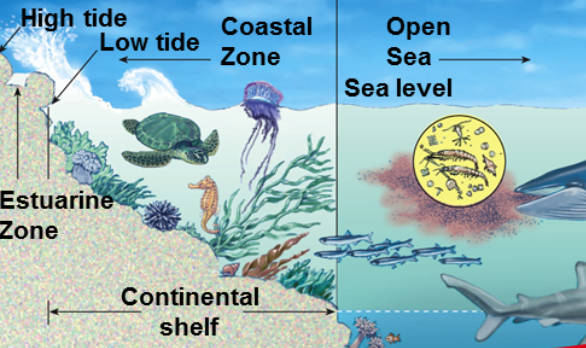
10% of ocean ecosystems, but 90% of biodiversity
due to abundance of sunlight and nutrients, the biggest limiting factors
warm, nutrient-rich, shallow water
Coastal Wetlands:
Estuaries: partially enclosed body where freshwater spills from stream/rivers into ocean
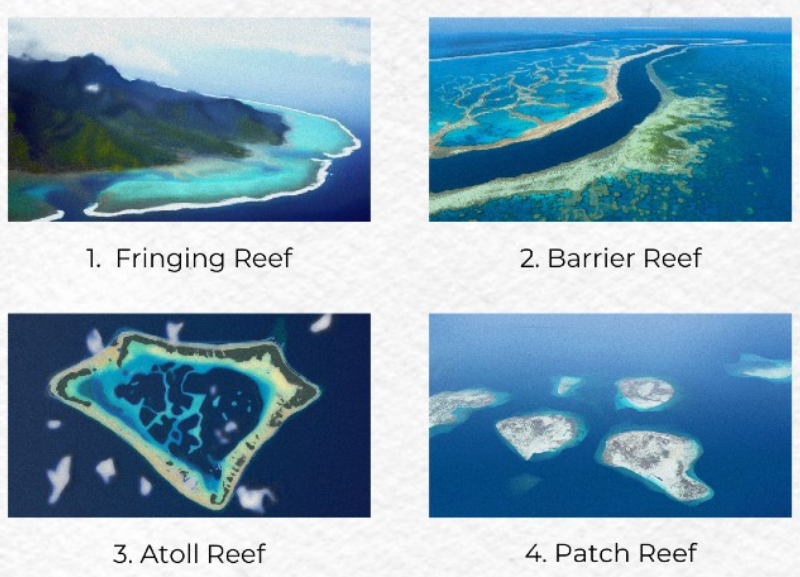
Coastal & Atoll Lagoons: Seperated from larger bodies by sandbars, barrier reefs, coral reefs, and natural barriers
Atoll forms when island is submerged and coral grow upward, and center is pool of water (takes thousands of years to form)
Coastal Lagoons: form along coasts with gentle slopes, and are seperated from ocean by island, reef, or sand bank (deposit of sand)
Tidal Flats: areas where sediments from river runoff / tides deposite mud/sand
border estuary
Salt Marsh: tidal flat that is dominated by herbaceous plants (grasses and shrubs)
SeaGrass Beds: Wetlands w/ plants that have long narrow leaves
shalow marine life, highly diverse and productive
Mangrove Forests: Wetlands w/ trees that evolved to survive high-salt low-oxygen water & wave action
where rainforrests meets oceans
Wetlands are highly productive, serve as nurseries (protects aquatic species & support biodiversity), slow influxes of water → prevent floods, and filter out sediment and pollution
Intertidal Zone: moon/sun gravitational pull causes tides to rise/fall, so there exists zone that’s submerged during hightide and exposed during lowtide
Coral Reefs
contain coral polyps = small animals that live in warm coastal waters of tropics/subtropics
coral provides home, photosynthetic algae produce for polyps
most diverse & productive ecosystem in ocean
Open Ocean: (more distance from coast → less nutrients, a limiting factor for life)
Open Ocean = marine deserve due to lack of life → animals must be able to travel long distance for food
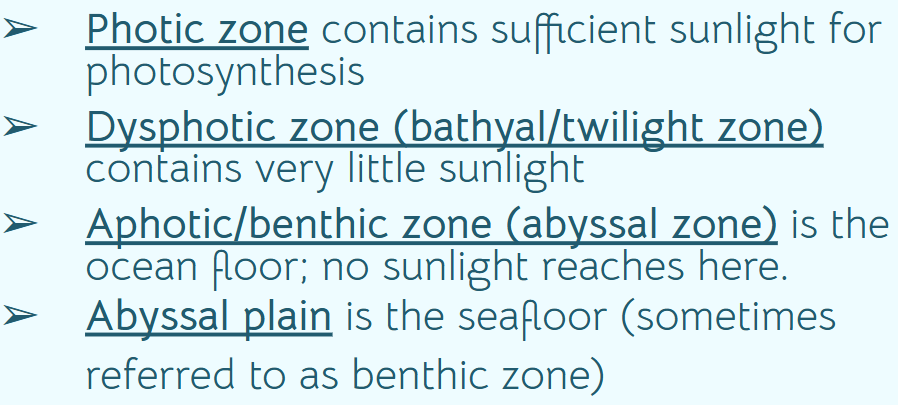
Food webs in abyssal plain/benthic zone are based on scavenging and decomposing
Many species are bioluminescent (attracts prey / mates)
Hydrothermal Vents: heated water & minerals are released into water
some organisms use as source of energy: chemosynthesis
Ocean Acidification: ocean absorbs 30% of CO2 that is released into atmosphere, so increased CO2 → more hydrogen ions released → more carbonic acid in water→ carbonic acid steals carbonate ions
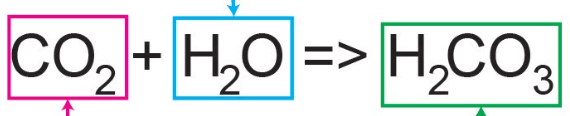
carbonate ions are vital for sea shells, coral skeletons,