1.2.8 consumer and producer surplus
Distinction between producer and consumer surplus
Consumer surplus is the difference between the price the consumer is willing and able to pay and the price they actually pay. Based on what the consumer perceives their private benefit () will be from consuming the good
Producer surplus is the difference between the price the producer is willing to charge and the price they actually charge. Private benefit gained by the producer that covers their costs and is measured by profit
Use of supply and demand diagrams to illustrates consumer and producer surplus
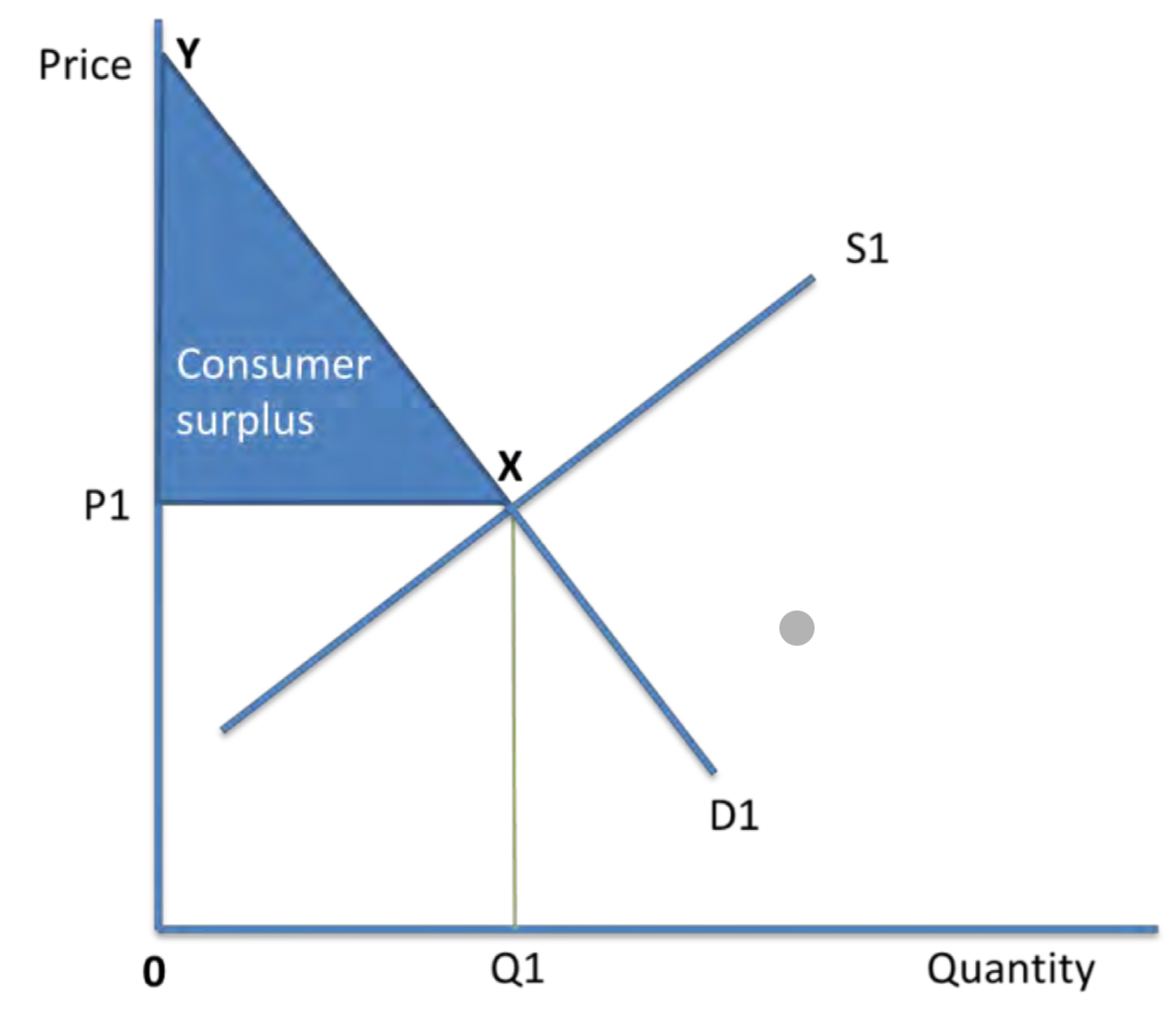
Consumers pay price P1 and demand a quantity of Q1
The total benefit to the consumer is area 0Q1XY but because they pay price P10Q1X, the net gain to the consumer P1XY, the shaded triangle is the consumer surplus
It is always the area above market price and below the demand curve
Consumer surplus generally declines with extra units consumed due to the law of diminishing marginal utlity
Increasing consumer surplus
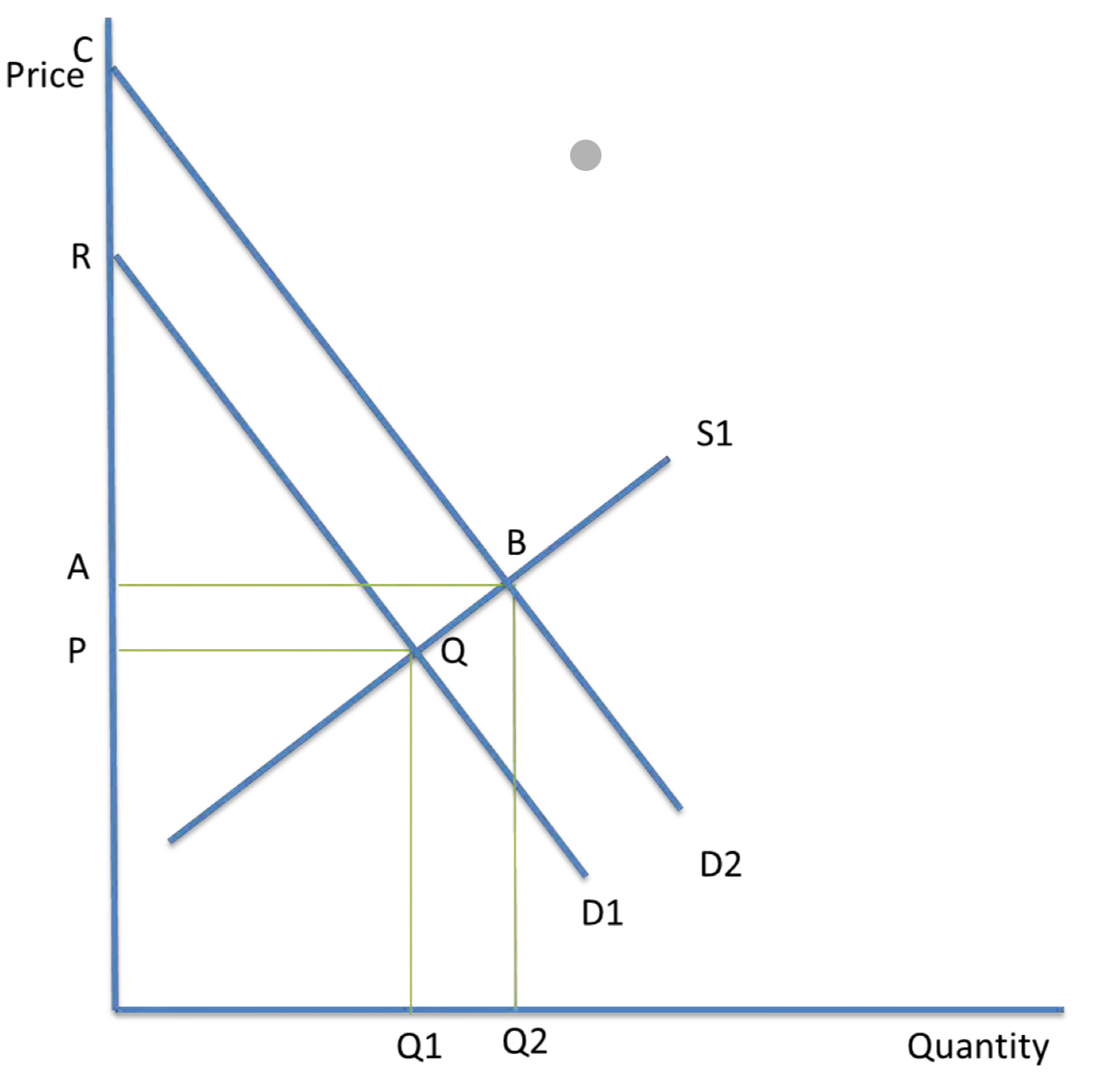
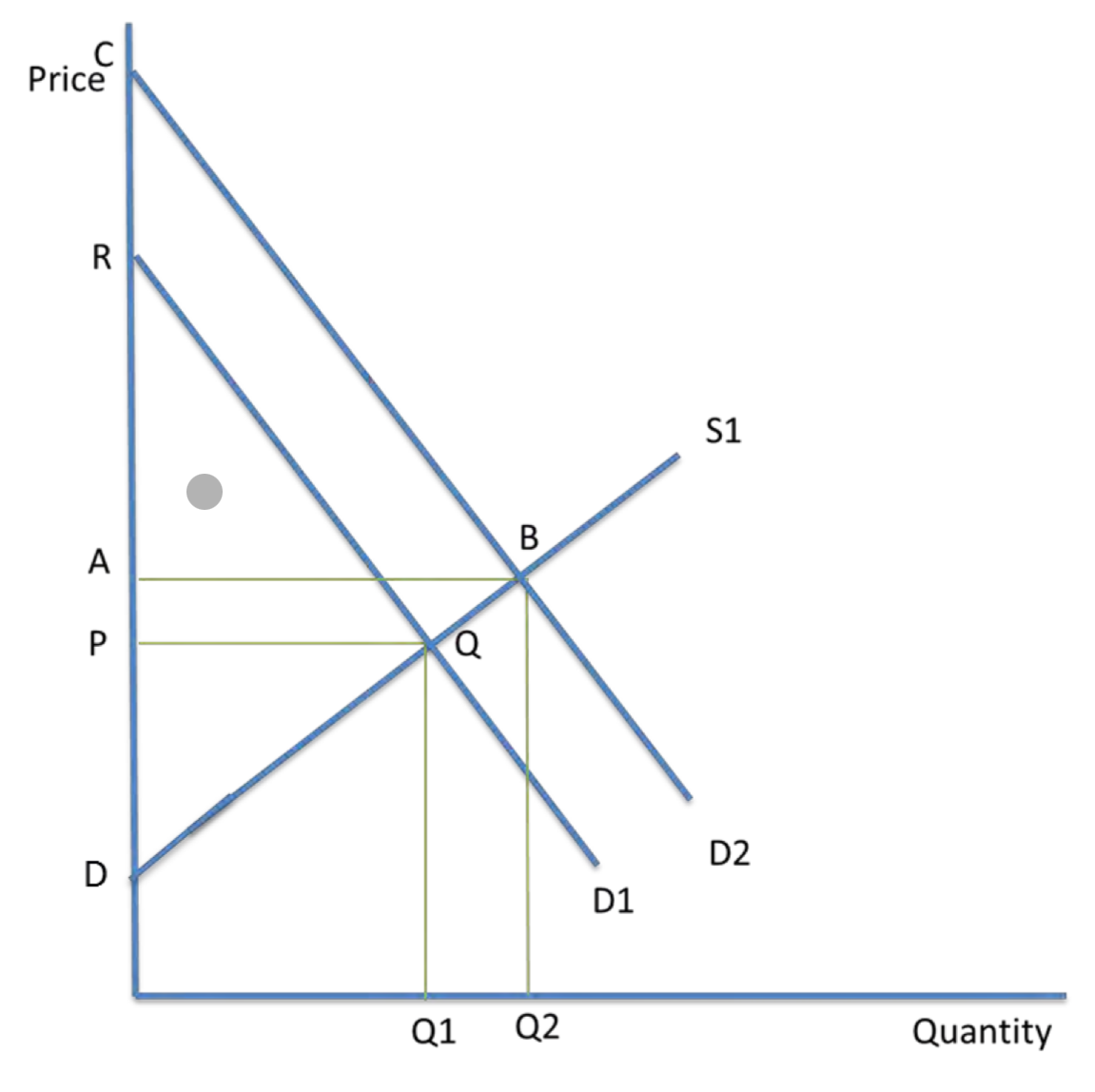
An increase in demand from D1 to D2 increases consumer surplus from PQR to ABC
Decreasing consumer surplus
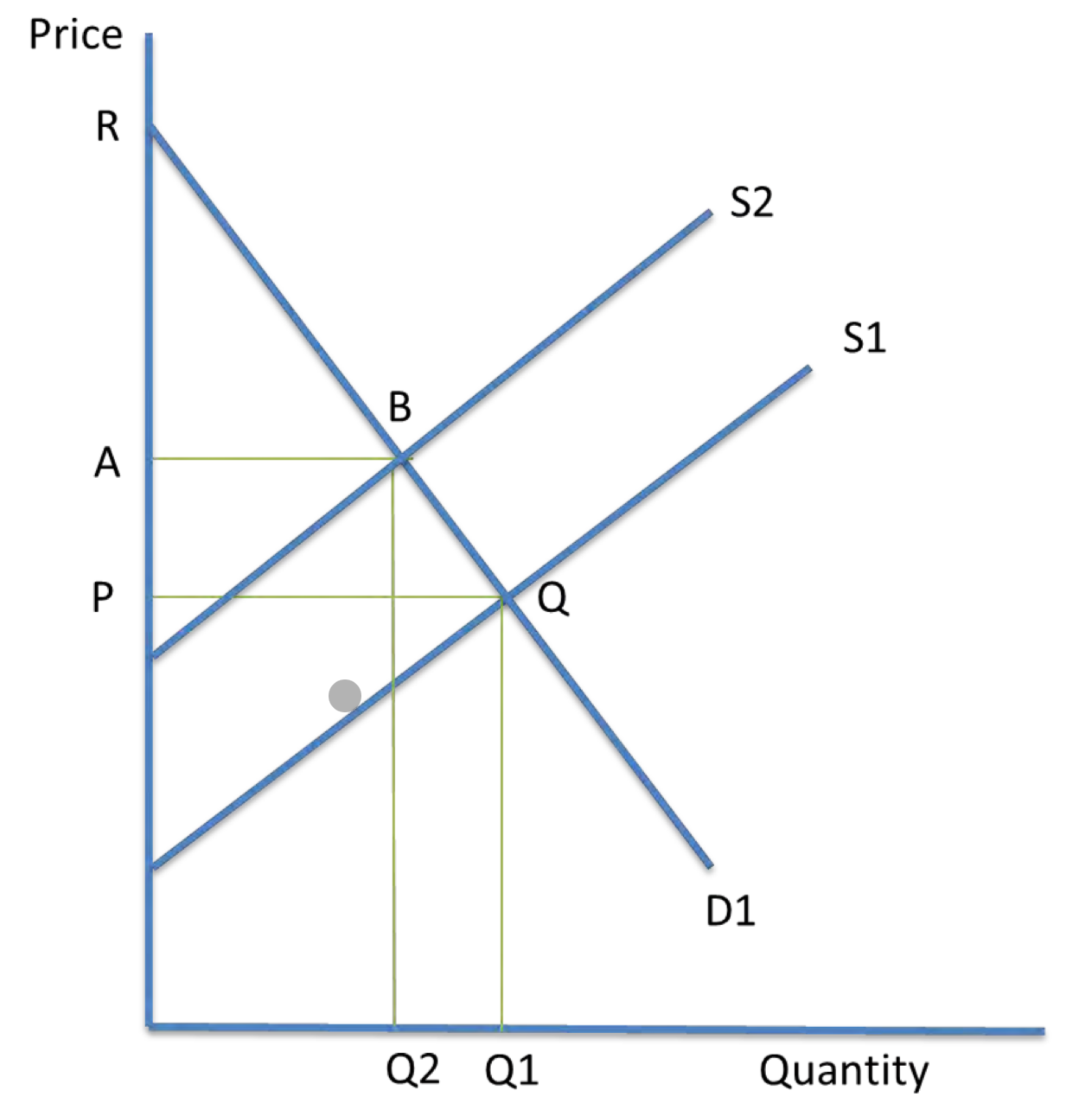
Supply has shifted to the left, which could be due to higher costs of production. This causes market price to increase and consumer surplus decreases from PQR to ABR
Producer surplus
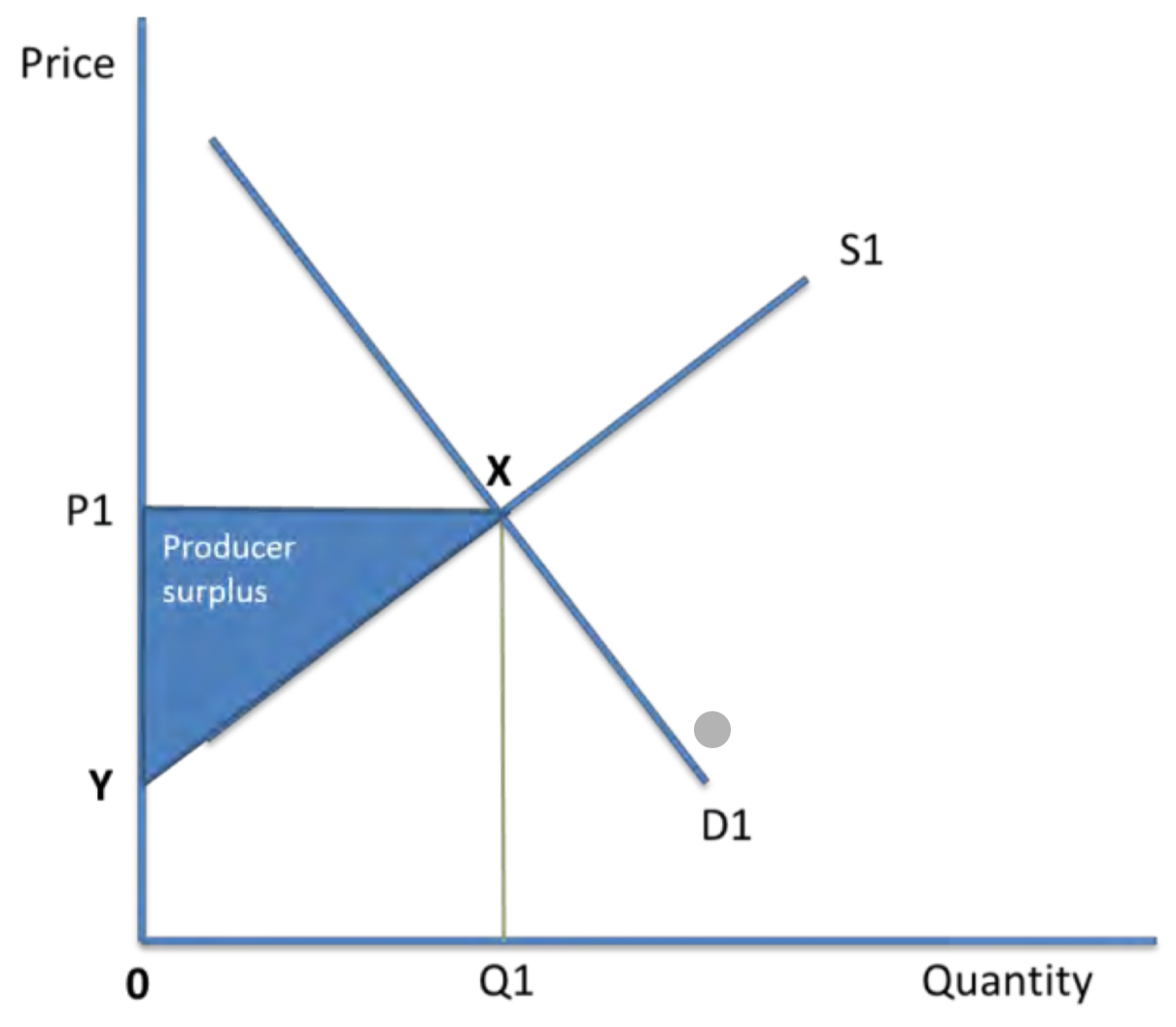
This is always the area below the market price and above the supply curve
Increasing producer surplus
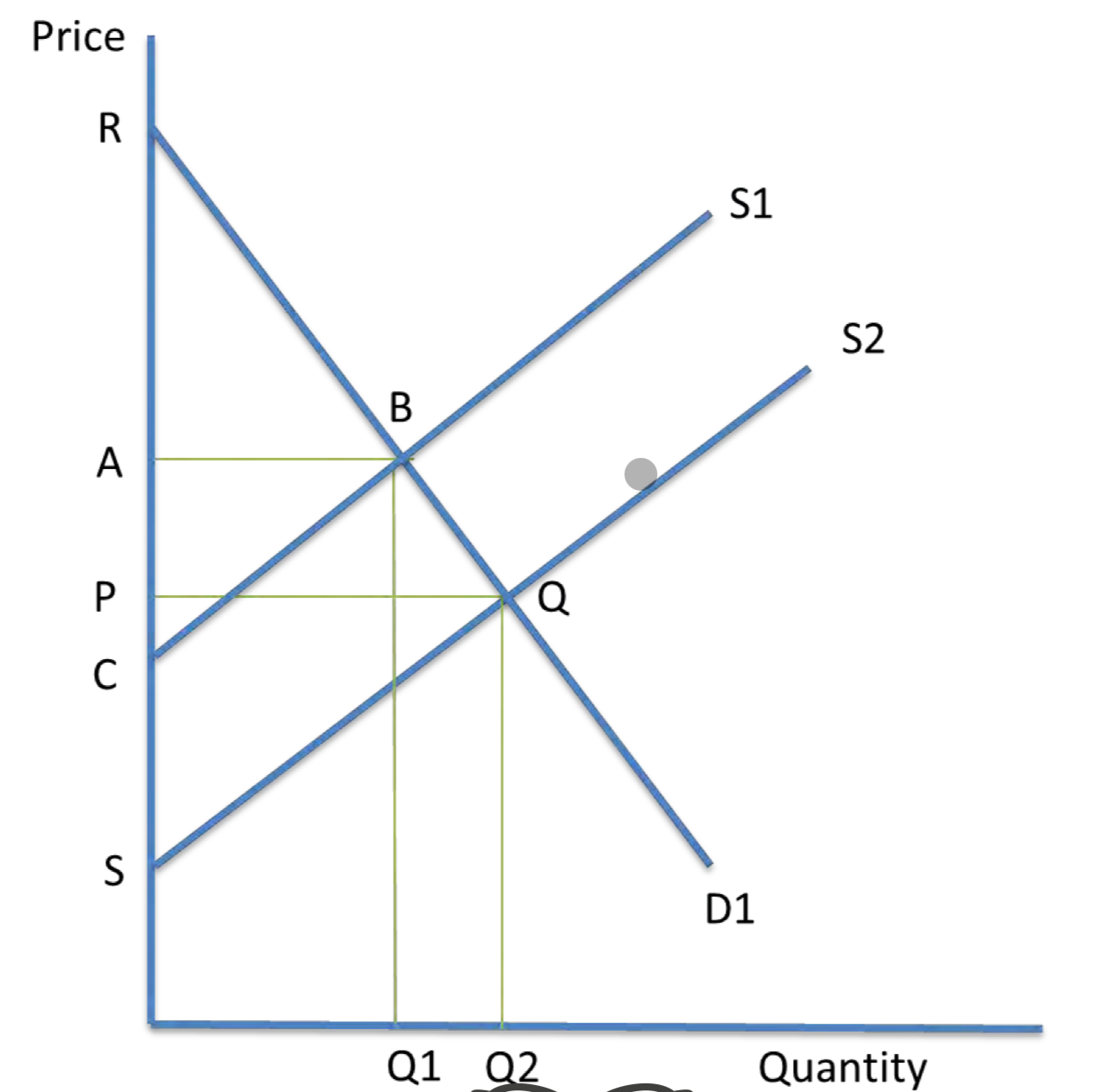
Caused by a shift in the supply curve from S1 to S2 which could be due to lower average production costs. Therefore, market price decreases and producer surplus increases.
Could also be due to an increase in demand which causes price to increase as shown below
Economic welfare
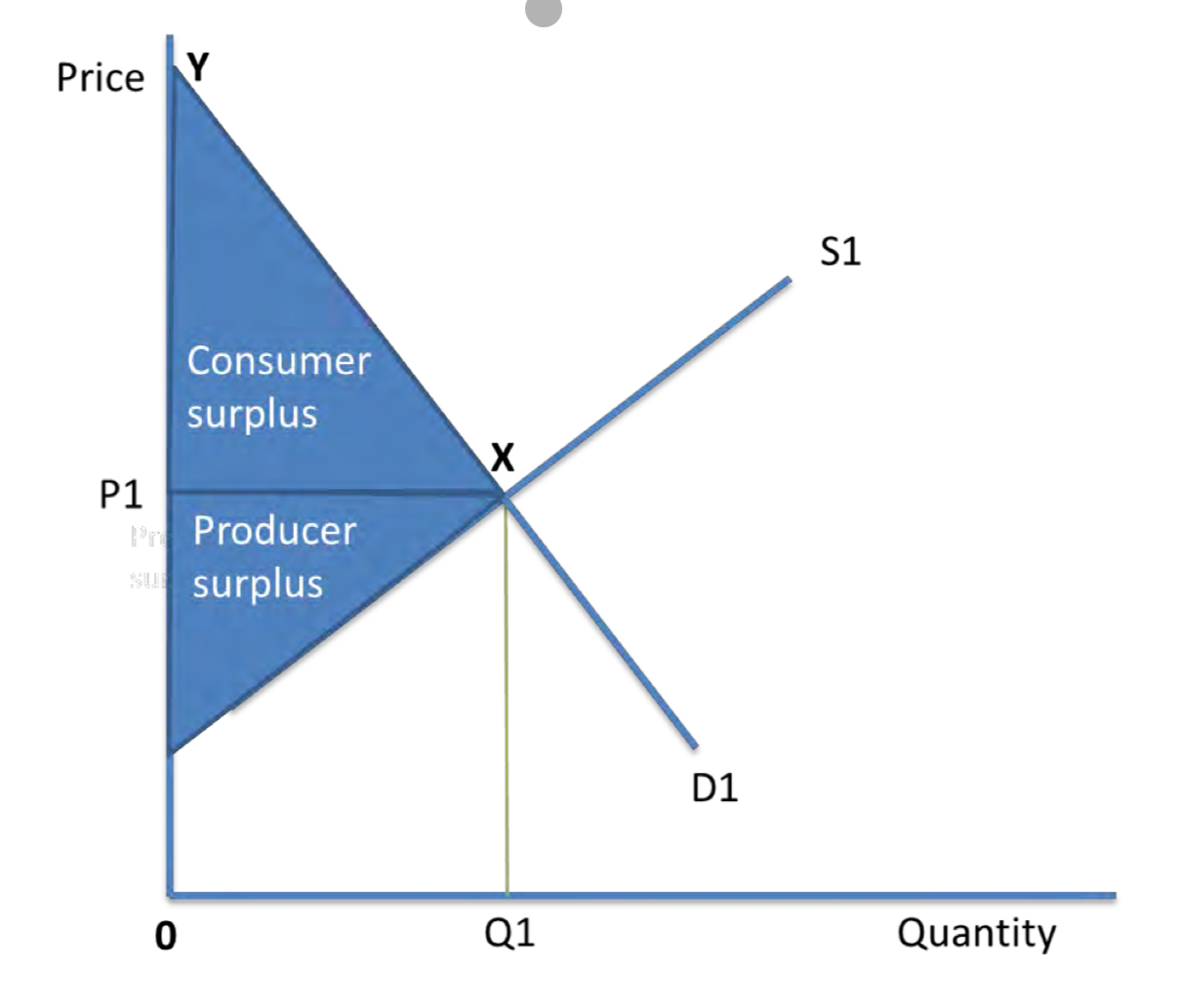
Total benefit society receives from an economic transaction. Calculated by the area of producer surplus and consumer surplus added together.
Sum of the consumer surplus and producer surplus is the community surplus